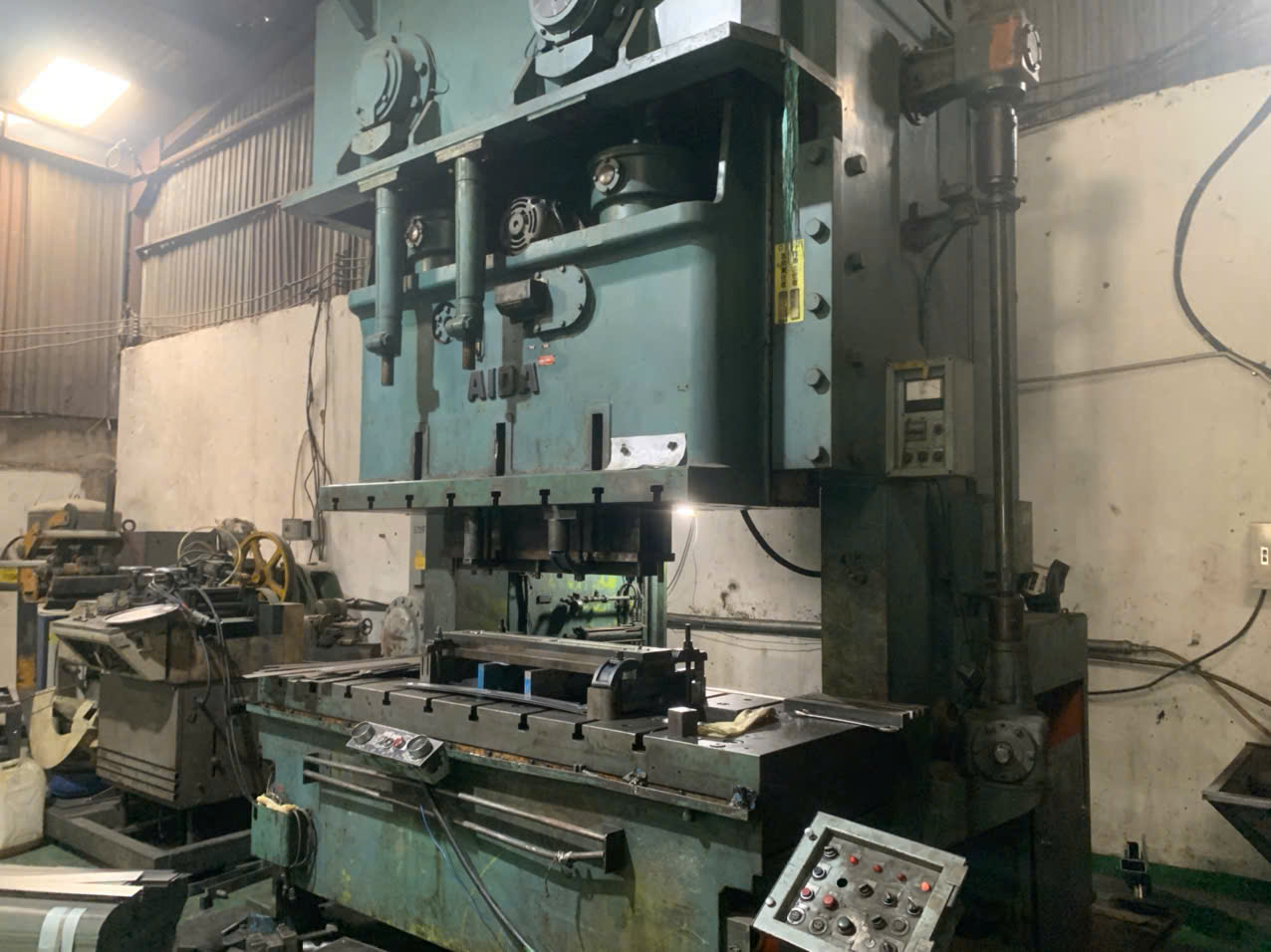

Negotiating stamping parts from Vietnam nearly cost us a key account last year — not because of quality, but because our U.S. client’s direct approach clashed with the supplier’s expectations.
Handling cultural differences when negotiating stamping parts from Vietnam requires prioritizing relationship-building over speed, understanding indirect communication cues, respecting hierarchy and face-saving culture, and adapting your pricing discussions to a long-term partnership framework rather than a transactional one.
The gap between Western directness and Vietnamese indirectness is real, and it shows up in every email, factory visit, and pricing conversation. Below, I break down what our team in Vietnam has learned from years of managing these supplier relationships on behalf of U.S. buyers.
What communication styles should I expect when negotiating with Vietnamese stamping suppliers?
One lesson hit us early when coordinating a precision metal stamping 1 project from our Vietnam office: a supplier said "yes" to a tight tolerance spec, but three weeks later, the first samples were off by 0.3 mm — they had never truly agreed.
Vietnamese stamping suppliers typically use high-context communication, where "yes" means "I hear you" rather than "I agree." Expect indirect responses, implied concerns, and a preference for harmony over blunt honesty, especially when discussing technical feasibility or delivery timelines.

Why "Yes" Rarely Means Agreement
In Vietnam's business culture, saying "no" directly is uncomfortable. It risks embarrassing you or the speaker. So suppliers soften their language. They say "maybe," "we will try," or simply nod. Our team learned to treat every verbal confirmation as a starting point, not a final answer.
When you send a drawing with critical tolerances for a stamping bracket — say, ±0.05 mm on a bent flange — and the supplier responds with "OK, can do," pause. Ask follow-up questions. "What is the tightest tolerance your press can hold on this bend?" "Have you made a similar part before?" Open-ended questions draw out real capability without putting anyone on the spot.
How to Read Between the Lines
Here is a practical decoder we use internally:
| What They Say | What They Often Mean | What You Should Do |
|---|---|---|
| "Yes, we understand." | "I heard you, but I may not fully agree." | Confirm with a written summary and ask for sign-off. |
| "Maybe we can try." | "This will be difficult or impossible." | Ask what specific challenges they foresee. |
| "We need more time to study." | "We have concerns but don't want to say no." | Schedule a follow-up call and bring technical visuals. |
| "It is interesting." | "We are not sure this works for us." | Probe gently: "What part is most challenging?" |
| Silence or a long pause | Disagreement or discomfort | Do not fill the silence. Wait, then ask softly. |
The Role of Visuals and Interpreters
Our engineers in Vietnam always prepare annotated diagrams for supplier meetings. Text-heavy spec sheets in English create confusion. A clear 3D rendering of a stamping bracket — showing the bend angles, hole positions, and surface finish expectations — communicates more than five pages of text.
If your supplier's English is limited, arrange an interpreter beforehand. Speak in short, simple sentences. Pause after each point. Do not use idioms like "ballpark figure" or "back of the envelope." These confuse even fluent non-native speakers. Our Vietnam team handles this translation layer daily, and it prevents the kind of miscommunication that leads to non-conforming parts and costly rework.
How do I avoid misunderstandings over pricing and payment terms with Vietnamese manufacturers?
A U.S. client once sent us a request: "Get me the best price on these mounting clips, and I need it by Friday." We knew that pushing a Vietnamese supplier for a final quote within three days would either get us an inflated safety number or damage the relationship entirely.
To avoid pricing misunderstandings with Vietnamese stamping manufacturers, never lead with your best offer, allow time for their internal review process, clearly define tooling and mold costs separately from unit prices, and discuss international payment terms only after establishing mutual trust and commitment.

The "Never Start with Your Best Offer" Rule
Vietnamese negotiation style is distributive — both sides expect a back-and-forth. If you open with your target price, they assume it is your ceiling and will push lower. Leave room. Start 10–15% above your target so concessions feel meaningful.
More importantly, frame every price discussion as a partnership conversation. "We want to grow this program to 50,000 pieces per year. How can we structure pricing to make that work for both of us?" This long-term framing resonates deeply with Vietnamese suppliers who prioritize stable, recurring orders over one-time wins.
Separating Tooling Costs from Unit Pricing
One of the most common sources of confusion in stamping part negotiations is tooling and mold costs. Some suppliers bundle die costs into the unit price. Others quote them separately but bury conditions — like who owns the die after production ends.
We always insist on a clear cost breakdown:
| Cost Component | What to Clarify | Why It Matters |
|---|---|---|
| Die/Tooling Cost | One-time or amortized? Who owns the die? | Prevents disputes if you switch suppliers later. |
| Unit Price | Does it include material, labor, finishing? | Ensures apples-to-apples comparison across quotes. |
| Surface Treatment | Zinc plating, brushed finish — included or extra? | Stamping brackets often need specific finishes. |
| Minimum Order Quantity 3 | What is the MOQ per run? Per year? | Affects inventory planning and cash flow. |
| Packaging & Shipping | FOB, CIF, or DDP? | Misalignment here causes surprise costs at customs. |
We learned the hard way to negotiate sample and tooling costs early. On one project, a supplier considered the stamping die their property because they manufactured it — even though our client paid for it. This is not unusual in Vietnam. Put it in writing before production starts.
Payment Terms and Trust
International payment terms 5 are a sensitive topic. Many Vietnamese suppliers prefer T/T (telegraphic transfer) with 30–50% upfront. U.S. buyers often want net-60 or net-90 open account terms. This gap creates friction.
Our approach is to build a bridge. We start with T/T terms for the first order, then transition to more favorable terms as trust grows. Because DEWIN offers open account payment terms to qualified U.S. clients, we absorb much of this tension on behalf of the buyer. The supplier gets paid on time; the buyer gets breathing room. But this only works because we have built years of credibility with our Vietnamese partners.
Do not bring up payment terms in your first meeting. Discuss them only after you have established rapport and shown commitment to production lead times and volume. Raising payment demands too early signals that you view the supplier as a vendor, not a partner — and in Vietnam, that distinction matters.
What business etiquette should I follow to build trust with Vietnamese stamping parts suppliers?
During our first supplier audit at a stamping factory outside Ho Chi Minh City 6, I made a mistake that still sticks with me. I handed my business card with one hand while checking my phone with the other. The factory director's expression shifted — just slightly — and the rest of that meeting felt uphill.
To build trust with Vietnamese stamping parts suppliers, present business cards with both hands, greet the most senior person first, avoid public criticism, offer and accept gifts graciously, and invest in social meals before discussing contracts — these gestures of Vietnamese business etiquette signal long-term commitment.

Hierarchy Matters — Always
Vietnamese organizations are hierarchical. The most senior person in the room holds the final decision-making authority, even if a younger engineer handles the technical discussion. Greet the senior leader first. Use their title — "Director Nguyen" or "Mr. Tran" — until they invite informality. Never interrupt or contradict them in front of their team.
This has direct implications for stamping part negotiations. If you need to push back on a tolerance or surface finish, do it in a private side conversation, not in the main meeting room. Protecting face is not optional — it is foundational. A supplier who feels publicly embarrassed will not argue back. They will simply become less cooperative going forward.
The North-South Divide
Our Vietnam office works with suppliers in both the North (around Hanoi and Hai Phong) and the South (around Ho Chi Minh City). The cultural differences are real:
| Factor | Northern Vietnam (Hanoi) | Southern Vietnam (Ho Chi Minh City) |
|---|---|---|
| Formality Level | High — formal titles, structured meetings | Moderate — more relaxed, flexible |
| Decision Speed | Slower — more layers of approval | Faster — more pragmatic approach |
| Relationship Emphasis | Very high — trust built over many visits | High — but moves quicker with proven results |
| Gift Giving | More traditional, more formal protocols | Common but less rigid |
| Negotiation Style | Conservative, cautious | More open to creative deal structures |
If your stamping supplier is in the North, plan for longer timelines and more formal interactions. In the South, you can move a bit faster — but do not skip the relationship-building phase entirely.
Gift Giving and Social Dining
Gifts matter. They do not need to be expensive, but they should be thoughtful. A quality item from your home country — specialty coffee, a branded notebook, a local craft — works well. Wrap it neatly. Present it with both hands. Never give anything in sets of four (the number is associated with death in some Asian cultures) or wrap gifts in black or white paper.
Social dining is where real trust forms. Accept every dinner invitation. Do not rush through the meal to "get back to business." The meal is the business. Our team has closed more deals over pho and bia hoi than in any conference room. When your supplier sees you as someone who values their time and company — not just their ISO quality certifications 7 and production capacity — they open up.
A Practical Etiquette Checklist
- Arrive on time, but do not expect the meeting to start on time.
- Bring extra copies of all presentation materials.
- Use diagrams and annotated photos of your stamping parts rather than dense text.
- Speak slowly if using an interpreter.
- Do not show frustration or raise your voice — ever.
- Follow up every meeting with a written summary in simple English.
How can I bridge language and time zone gaps when managing Vietnamese supplier relationships?
There is a 12-hour time difference between the U.S. East Coast and Vietnam. That means when our client in Ohio sends an urgent email at 2 PM, it arrives at 2 AM in Ho Chi Minh City. Without a local team managing this gap, responses lag by a full business day — and for precision metal stamping projects with tight production lead times, that delay compounds fast.
Bridge language and time zone gaps with Vietnamese suppliers by establishing a local liaison or sourcing partner in Vietnam, using visual communication tools like annotated drawings and real-time production dashboards, scheduling overlapping work hours for critical calls, and keeping all written communication in simple, jargon-free English.

Why a Local Presence Changes Everything
Our seven-person team in Vietnam exists precisely for this reason. They share the same time zone, speak the language, and understand the face-saving culture that governs every interaction. When a stamping die needs a modification, our local engineer walks into the factory, reviews the die in person, and communicates the change in Vietnamese — with the correct level of politeness and indirectness.
For U.S. buyers who do not have their own local team, working with a sourcing partner who does is the most effective way to collapse this gap. Email chains across 12 time zones, filtered through imperfect English, are where quality issues hide. A local presence catches problems before they become shipments.
Scheduling for Overlap
Even with a local team, direct buyer-supplier calls matter. We typically schedule calls in the early morning U.S. time (7–8 AM EST), which catches the end of the Vietnamese workday (7–8 PM). This narrow overlap window is precious. Prepare your agenda in advance. Send it 24 hours before the call so the supplier can prepare answers — this respects their time and avoids putting them on the spot, which ties back to face-saving dynamics.
Digital Tools as a Cultural Bridge
We have adopted real-time production tracking dashboards for our stamping projects. These tools show order status, inspection results, and shipping milestones without requiring anyone to "report a problem." This is critical in a culture where highlighting defects can feel like assigning blame. The dashboard is neutral — it presents data. If a dimension is out of spec, the system flags it. No one loses face. The Vietnam manufacturing sector 8 is increasingly comfortable with these digital tools, and they dramatically reduce the back-and-forth that time zones make painful.
Keeping Written Communication Simple
Every email to a Vietnamese supplier should follow these rules:
- One topic per email. Do not bundle five questions into one message.
- Use numbered lists for action items.
- Attach annotated images. Circle the area you are referencing.
- Avoid idioms, slang, and abbreviations.
- End with a clear ask: "Please confirm by [date]."
When discussing minimum order quantity, surface finish specifications 9, or material grade changes, attach the relevant section of the drawing with a red arrow pointing to the exact callout. Do not assume the reader will find it themselves. This is not about intelligence — it is about eliminating ambiguity across a language barrier. For more strategies on overcoming language and time zone barriers when sourcing from Vietnam, consider establishing structured communication protocols early in the relationship.
Conclusion
Negotiating stamping parts from Vietnam is not just a procurement exercise — it is a relationship commitment. Invest in trust, respect hierarchy, decode indirect communication, and bridge the logistical gaps with local support.
Frequently Asked Questions
What communication styles should I expect when negotiating with Vietnamese stamping suppliers?
One lesson hit us early when coordinating a precision metal stamping 1 project from our Vietnam office: a supplier said "yes" to a tight tolerance spec, but three weeks later, the first samples were off by 0.3 mm — they had never truly agreed.
How do I avoid misunderstandings over pricing and payment terms with Vietnamese manufacturers?
A U.S. client once sent us a request: "Get me the best price on these mounting clips, and I need it by Friday." We knew that pushing a Vietnamese supplier for a final quote within three days would either get us an inflated safety number or damage the relationship entirely.
What business etiquette should I follow to build trust with Vietnamese stamping parts suppliers?
During our first supplier audit at a stamping factory outside Ho Chi Minh City 6 , I made a mistake that still sticks with me. I handed my business card with one hand while checking my phone with the other. The factory director's expression shifted — just slightly — and the rest of that meeting felt uphill.
Footnotes
1. Background on the metal stamping manufacturing process referenced throughout the article. ↩︎
2. Explains the cultural communication framework underlying Vietnamese negotiation behavior. ↩︎
3. Alibaba is a leading manufacturing sourcing platform where MOQ terms are commonly negotiated. ↩︎
4. WTO intellectual property rules relate to tooling and die ownership disputes in trade. ↩︎
5. World Bank trade resources provide context on cross-border payment practices in manufacturing. ↩︎
6. Background on the Vietnamese city referenced as a key manufacturing hub. ↩︎
7. ISO is the authoritative standards body for manufacturing quality certifications mentioned. ↩︎
8. World Bank country data offers authoritative context on Vietnam’s manufacturing economy. ↩︎
9. ISO maintains international standards governing surface finish and material specifications. ↩︎