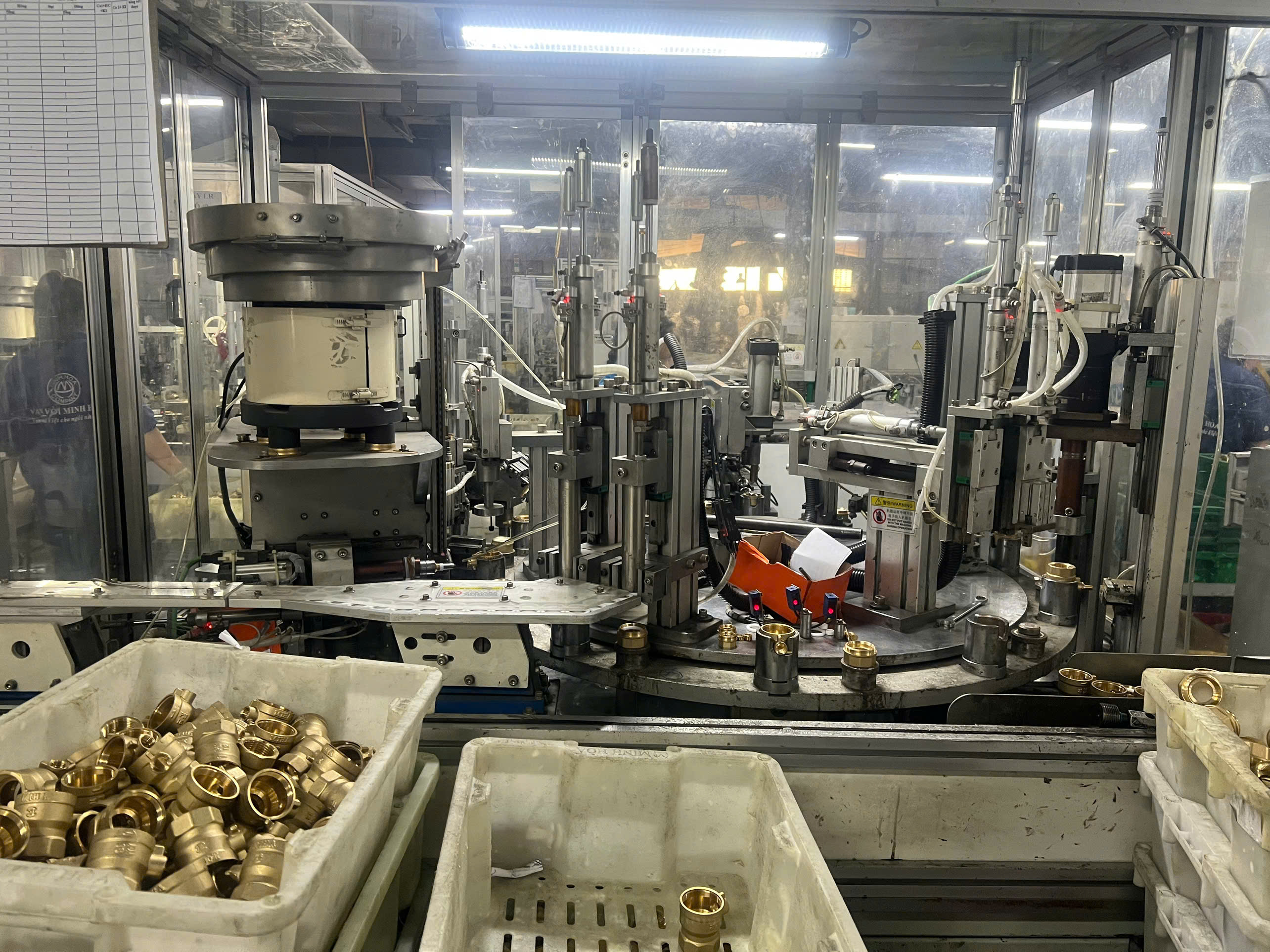

ISF documentation for stamping parts sourced from Vietnam tripped up one of our longest-running U.S. clients last year—a $5,000 penalty on a single bracket shipment that could have been avoided with better data coordination.
To handle ISF documentation when sourcing stamping parts from Vietnam, the importer of record must transmit all 10+2 data elements to CBP at least 24 hours before loading at the Vietnamese port, ensuring the manufacturer name, HTS codes, and country of origin are linked at the line-item level to avoid costly liquidated damages.
This article walks through every step of the ISF process for metal stamping manufacturing imports from Vietnam. I will cover what data you need, how to dodge penalties, who should file, and the mistakes that catch importers off guard.
What Information Do I Need to Prepare for ISF Filing on Stamping Parts?
When our Vietnam office coordinates a stamping parts shipment from factories near Ho Chi Minh City, the data-gathering phase is where most delays start. I have seen booking confirmations stall for days because a single field—like the container stuffing location—was missing from the supplier's paperwork.
To prepare for ISF filing on stamping parts, you need 10 importer data elements—including seller, buyer, manufacturer address, ship-to party, container stuffing location, consolidator, importer of record number, consignee number, country of origin, and HTSUS number—plus 2 carrier elements filed by your ocean freight forwarder.

The 10 Importer Elements at a Glance
Here is a breakdown of each element and what it means in the context of Vietnamese stamping parts:
| # | Data Element | What It Means for Stamping Parts |
|---|---|---|
| 1 | Seller | The entity selling the parts to you (could be a trading company or factory) |
| 2 | Buyer | Your company (the purchaser on the commercial invoice) |
| 3 | Manufacturer/Supplier | The actual Vietnamese factory performing the stamping—not a middleman |
| 4 | Ship-to Party | The physical warehouse or plant receiving the goods in the U.S. |
| 5 | Container Stuffing Location | The address where parts are loaded into the container in Vietnam |
| 6 | Consolidator | The party consolidating cargo (often the forwarder in Vietnam) |
| 7 | Importer of Record Number | Your IRS or CBP-assigned number |
| 8 | Consignee Number | Often the same as IOR; the party listed on the bill of lading 1 |
| 9 | Country of Origin | Must read "VIETNAM"—not a city or province name |
| 10 | HTSUS Number | The 6-digit (minimum) tariff classification for your stamping parts |
The 2 carrier elements—vessel stow plan and container status messages—are filed by the shipping line, not by you. But you still need to confirm that your ocean freight forwarder has coordinated with the carrier so the data matches.
Why "Manufacturer" Is the Trickiest Field
For stamping parts, CBP requires the actual factory that performs the metal stamping manufacturing operation. If you buy through a trading company, you cannot list the trading company as the manufacturer. Our team in Vietnam physically verifies the factory address during supplier audits because an incorrect manufacturer field is one of the top triggers for CBP examinations.
Getting the HTSUS Number Right
Stamping parts fall under various tariff headings depending on material (steel vs. aluminum), shape, and end use. You must classify at 8 digits for your entry, but the ISF requires at least 6 digits. I always recommend confirming the full 8-digit HTS code 2 with your customs broker before the first shipment. A mismatch between the ISF classification and the entry classification raises a red flag.
The CO Form B Requirement
Every shipment from Vietnam needs a Certificate of Origin Form B 3. This is an original paper "blue form" stamped by the Vietnam Chamber of Commerce and Industry (VCCI) 4. The country of origin on the CO Form B, the commercial invoice, the packing list, and the ISF filing must all say "VIETNAM"—identically, line by line. If one document says "Ho Chi Minh City" instead of "Vietnam," you risk an exam.
Supporting evidence matters too. When our team works with stamping suppliers, we require production records showing the stamping operations performed in Vietnam and raw material purchase records. This documentation proves the "transformation story" and defends against transshipment audits.
How Can I Avoid Costly ISF Penalties When Importing from Vietnam?
A buyer I work with regularly once told me he assumed the ISF filing deadline was 24 hours before the vessel arrived in the U.S. That single misunderstanding nearly cost him $10,000 in liquidated damages on two containers of steel brackets.
To avoid ISF penalties, submit your filing at least 24 hours before the container is loaded at the Vietnamese port—not before U.S. arrival—and build a 72-hour safety buffer before departure to allow your customs broker time to verify data, correct errors, and prevent the $5,000-per-violation liquidated damages that CBP enforces.

The Real Deadline vs. the Legal Deadline
The CBP 10+2 rule 5 states the ISF must be transmitted 24 hours before loading. But operationally, that legal deadline is too tight. Here is why:
| Timeline | What Should Happen |
|---|---|
| 72 hours before vessel departure | All ISF data collected from supplier and forwarder; sent to broker |
| 48 hours before vessel departure | Broker reviews, cross-checks with bill of lading, and files ISF |
| 24 hours before container loading | Legal deadline—ISF must already be on file with CBP |
| Up to 24 hours before U.S. arrival | Last window for amendments (limited changes only) |
If you wait until the 24-hour mark, there is zero room for corrections. A typo in the manufacturer address or a wrong HTS code cannot be fixed in time. The filing goes in wrong, and CBP flags it.
What Triggers Penalties
Penalties range from $5,000 to $10,000 per violation. The most common triggers I see in our supply chain work include:
- Late filing: Data arrives from the Vietnamese supplier after the vessel has already been loaded.
- Missing elements: The container stuffing location or consolidator name is left blank.
- Data mismatch: The country of origin on the ISF says "Vietnam" but the commercial invoice lists a Chinese sub-supplier.
- Habitual late filing: CBP flags repeat offenders for exam-heavy scrutiny, meaning every future container gets physically opened and inspected.
The Continuous Bond Requirement
You need a valid continuous bond 6 to cover both ISF filings and formal entries. A single-entry bond works for occasional shipments, but if you import stamping parts regularly, a continuous bond reduces administrative burden and collateral requirements. I recommend setting this up before your first shipment clears, not during.
Record Retention
CBP requires you to keep all ISF-related records for 5 years. This includes the commercial invoice, packing list, bill of lading, CO Form B, and any correspondence with your broker about the filing. Our team maintains digital archives for every shipment we manage, cross-referenced by purchase order number.
Packaging and Logistics Details That Affect Timing
While not an ISF data element, packaging specifications can cause delays that compound ISF timing problems. For stamping parts, we specify VCI (vapor corrosion inhibitor) packaging, desiccants inside sealed poly bags, and ISPM-15 compliant pallets 7. If wooden crates fail the heat-treatment stamp inspection, the entire container can be held—pushing your timeline backward and creating cascading compliance issues.
Who Should File My ISF Documentation—Me, My Broker, or My Supplier?
During a recent project moving automotive stamping brackets from a factory outside Hanoi, our U.S. client assumed the Vietnamese supplier would handle the ISF because the terms were FOB. The supplier had no idea what an ISF was. Nobody filed. The container was flagged, and the client received a penalty notice three months later.
The importer of record is always legally responsible for ISF filing, regardless of Incoterms. In practice, most importers delegate the filing to a licensed customs broker, but the raw data—manufacturer details, HTS codes, container stuffing location—must come from the Vietnamese supplier and freight forwarder on time.

Legal Responsibility vs. Practical Workflow
This distinction trips up nearly every new importer I work with. Let me break it down:
| Question | Answer |
|---|---|
| Who is legally responsible for ISF? | The Importer of Record (IOR)—always the U.S. buyer |
| Does FOB shift ISF responsibility to the seller? | No. FOB determines freight cost responsibility, not ISF compliance |
| Does DDP shift ISF responsibility to the seller? | Not legally. The IOR is still liable, though a DDP seller may coordinate filing |
| Who actually files the ISF? | Typically a licensed customs broker authorized by the IOR |
| Who provides the data? | The supplier provides manufacturer details; the forwarder provides vessel and container info |
| Can I file ISF myself? | Yes, if you have ACE system access, but it is risky without expertise |
The Data Handoff Problem
The most common failure mode is not a legal misunderstanding—it is a logistics breakdown. Nobody "owns" the data handoff. The Vietnamese supplier assumes the forwarder will share the manufacturer address. The forwarder assumes the buyer already has it. The customs broker waits for data that never arrives. By the time everyone realizes the gap, the ISF filing deadline has passed.
Our approach at DEWIN is to assign ISF data responsibility explicitly in the booking procedure. Before the first container ships, we run a test: can the supplier provide all 10 data elements within 48 hours of the booking confirmation? If not, we identify the bottleneck and fix it before real cargo is at stake.
What Your Supplier Must Provide
At minimum, your Vietnamese stamping supplier needs to give you:
- Full legal name and street address of the factory (not a P.O. box)
- The container stuffing location (the warehouse or factory where parts are loaded into the container)
- The CO Form B with VCCI stamp
- Commercial invoice and packing list with country of origin listed as "VIETNAM" on every line
What Your Broker Needs from You
Your customs broker needs your IOR number, consignee number, the ship-to party address (your actual receiving warehouse, not a corporate headquarters), and the confirmed HTS codes. They also need the bill of lading number to synchronize the ISF with the Automated Manifest System (AMS). A "no-match" error between the ISF and the AMS creates an automatic hold.
Contractual Safeguards
I recommend adding a clause in your purchase order that requires the Vietnamese supplier to submit ISF-related data within 48 hours of booking confirmation. Specify the exact fields. This turns a vague expectation into a contractual obligation with teeth.
What Common ISF Mistakes Should I Watch for When Sourcing Vietnamese Stamping Parts?
One lesson we learned early in our Vietnam operations was that stamping parts carry unique ISF risks that generic import guides never cover. Steel and aluminum stampings sit at the intersection of anti-dumping scrutiny, transshipment suspicion, and origin documentation complexity.
The most common ISF mistakes for Vietnamese stamping parts include listing a trading company instead of the actual manufacturer, misclassifying HTS codes, failing to match the country of origin across all documents line by line, missing the 24-hour filing deadline, and neglecting to provide material traceability records that defend against AD/CVD reviews.

Mistake 1: Confusing the Seller with the Manufacturer
This is the single most frequent error I encounter. A U.S. buyer purchases stamping parts from a Vietnamese trading company. The trading company appears on the invoice, so it gets listed as the manufacturer on the ISF. CBP flags it because the trading company has no factory. The fix is straightforward: always list the physical stamping facility. If your supplier is a middleman, demand the factory name and address upfront.
Mistake 2: Incorrect or Vague HTS Classification
Stamping parts can fall under multiple tariff headings. An automotive bracket made of carbon steel is classified differently from the same shape made of stainless steel or aluminum. If the ISF lists one HTS code and the formal entry uses another, CBP sees a discrepancy. Work with your customs broker to pre-classify every part number before the first shipment.
Mistake 3: Country of Origin Inconsistency
The country of origin must read "VIETNAM" on the ISF, the commercial invoice, the packing list, the bill of lading, and the CO Form B. I have seen shipments flagged because the invoice said "VN" instead of "VIETNAM." Consistency is not optional—it is a line-by-line requirement that CBP enforces rigorously.
Mistake 4: Ignoring Anti-Dumping and Countervailing Duty Exposure
Steel and aluminum stamping parts are high-risk categories for AD/CVD orders 8. The ISF country of origin declaration is the primary trigger for these reviews. If your Vietnamese supplier uses Chinese-origin steel coils, the stamping process in Vietnam may or may not constitute "substantial transformation." You need material certifications showing raw material sourced from non-Chinese mills, plus production records demonstrating that the stamping operation in Vietnam significantly altered the material.
Our team helps clients build a defensible origin story. This includes collecting mill test certificates, purchase orders for raw coils, and ISO 9001 9 production records from the stamping factory. Without this paper trail, a CBP audit can result in retroactive duties that dwarf the original ISF penalty. For a deeper look at how U.S. origin rules apply to stamping parts from Vietnam, understanding the substantial transformation test is essential.
Mistake 5: Relying on Electronic-Only CO Form B
While some brokers accept electronic copies of the CO Form B, the official CBP requirement remains an original paper "blue form" with a VCCI stamp and authorized signature. An unsigned or digital-only CO can be rejected at entry. Always request the original paper document and keep an electronic backup for your 5-year records.
Mistake 6: Wrong Ship-to Party Address
Designate the actual delivery location—your warehouse or manufacturing plant—as the ship-to party. Listing a corporate office address when the goods go to a distribution center creates a mismatch that can trigger examination.
Supply Chain Mapping for UFLPA Compliance
Beyond traditional ISF concerns, U.S. importers of stamping parts must now consider Uyghur Forced Labor Prevention Act (UFLPA) 10 requirements. This means tracing raw steel or aluminum coils back to the smelter or mill. Even for Vietnam-stamped parts, if the raw material originates from a UFLPA-restricted entity, the shipment can be detained. We recommend implementing a "Tier 3" supply chain mapping protocol that documents every link from raw material to finished part.
Conclusion
Handling ISF documentation for stamping parts from Vietnam demands precision in data collection, strict deadline discipline, and clear accountability between you, your broker, and your supplier. Start early, verify every field, and treat ISF compliance as a critical supply chain function—not an afterthought. For additional guidance on the full scope of U.S. customs documentation needed when sourcing stamping parts from Vietnam, review the complete requirements before your first shipment.
Frequently Asked Questions
What Information Do I Need to Prepare for ISF Filing on Stamping Parts?
When our Vietnam office coordinates a stamping parts shipment from factories near Ho Chi Minh City, the data-gathering phase is where most delays start. I have seen booking confirmations stall for days because a single field—like the container stuffing location—was missing from the supplier's paperwork.
How Can I Avoid Costly ISF Penalties When Importing from Vietnam?
A buyer I work with regularly once told me he assumed the ISF filing deadline was 24 hours before the vessel arrived in the U.S. That single misunderstanding nearly cost him $10,000 in liquidated damages on two containers of steel brackets.
Who Should File My ISF Documentation—Me, My Broker, or My Supplier?
During a recent project moving automotive stamping brackets from a factory outside Hanoi, our U.S. client assumed the Vietnamese supplier would handle the ISF because the terms were FOB. The supplier had no idea what an ISF was. Nobody filed. The container was flagged, and the client received a penalty notice three months later.
Footnotes
1. Background on the shipping document that must synchronize with ISF and AMS data. ↩︎
2. Official U.S. Harmonized Tariff Schedule database for classifying stamping parts. ↩︎
3. Background explanation of certificate of origin documents used in international trade. ↩︎
4. Official VCCI site, the body that issues and stamps the CO Form B. ↩︎
5. Authoritative Wikipedia entry defining the ISF 10+2 rule for ocean cargo. ↩︎
6. Authoritative definition of customs bonds and continuous bond requirements. ↩︎
7. International Plant Protection Convention governs ISPM-15 wood packaging standards mentioned. ↩︎
8. U.S. government trade page detailing anti-dumping and countervailing duty enforcement. ↩︎
9. Official ISO page describing the quality management standard cited for production records. ↩︎
10. CBP’s official UFLPA enforcement page clarifies supply chain compliance requirements. ↩︎