When our Vietnam office started fielding panicked calls from U.S. clients about anti-dumping duties 1 on steel sheet metal fabrication, we knew the landscape had shifted dramatically overnight.
To handle US anti-dumping duties on steel sheet metal fabrication from Vietnam, importers must calculate total landed costs including duties of 40–110%+, verify product scope, seek manufacturers with individual lower duty rates, and diversify supply chains before the final ruling expected August 2025.
This article breaks down the duty landscape, walks through cost calculations, and offers practical steps our team has refined while helping U.S. buyers navigate these trade defense measures in real time.
How do I calculate the total landed cost of my sheet metal parts after US anti-dumping duties?
A buyer we work with in Texas sent us a purchase order last month, then paused it within 48 hours — he realized he had no idea what the true landed cost would be after the US Department of Commerce 2 preliminary ruling.
To calculate total landed cost, add the product price, ocean freight, insurance, customs processing fees, standard import tariffs (including any Section 301 or reciprocal tariffs), and the applicable anti-dumping duty rate (40–110%+ for Vietnamese steel) to your base FOB cost.
Understanding the Duty Stack
The challenge is not just one duty. It is a stack of costs layered on top of each other. Let me walk you through each layer.
First, you have the base product cost — the FOB price from your Vietnamese supplier. Then you add freight and insurance to get your CIF value. U.S. Customs and Border Protection uses this as the dutiable value.
On top of CIF, you pay the standard Harmonized Tariff Schedule (HTS) 3 duty rate. For most steel sheet metal parts, this falls between 0% and 6.5%, depending on exact classification.
Then comes the anti-dumping duty. This is where the numbers get painful. The US Department of Commerce announced preliminary anti-dumping duty rates in April 2025 ranging from roughly 40% to 88% on coated steel products from Vietnam. Final rates on certain corrosion-resistant steel (CORE) 4 products have reached 110.21%.
Additionally, there may be countervailing duties 5 if the DOC finds subsidies. Preliminary CVD rates came in at 0% for Hoa Sen and Ton Dong A, but final rates could add 10–30% or more.
And do not forget Trump's reciprocal tariff of 46% on Vietnamese goods announced April 9, 2025. This stacks on top of everything else.
Sample Landed Cost Calculation
Here is a simplified example for a $10,000 FOB shipment of galvanized steel brackets from Vietnam:
| Cost Component | Rate / Amount | Running Total |
|---|---|---|
| FOB Price (Vietnam) | $10,000 | $10,000 |
| Ocean Freight + Insurance | $800 | $10,800 |
| Standard HTS Duty (3.4%) | $367 | $11,167 |
| Anti-Dumping Duty (59% — Hoa Sen rate) | $6,372 | $17,539 |
| Countervailing Duty (0% preliminary) | $0 | $17,539 |
| Reciprocal Tariff (46%) | $4,968 | $22,507 |
| Customs Broker 6 Fee | $250 | $22,757 |
| Total Landed Cost | — | $22,757 |
That $10,000 order now costs $22,757. The effective duty burden is over 125%. If your supplier falls under the Vietnam-wide entity rate of 88.12%, the anti-dumping portion alone jumps to $9,518, pushing total landed cost above $25,000.
For a more detailed methodology on estimating total landed cost for sheet metal fabrication from Vietnam to the US, including freight, insurance, and customs processing breakdowns, see our dedicated guide.
Retroactive Risk Multiplies the Problem
Here is what many buyers miss: these duties can apply retroactively. The DOC has indicated that duties may reach back to entries since September 2024 for the new investigation, and even to August 2, 2018 for circumvention cases. That means shipments you already received and paid for could suddenly incur massive additional cash deposits.
Our advice to every client: audit every unliquidated entry immediately. Work with a customs broker to identify exposure. Do not wait for the final ruling.
How can I determine if my specific custom steel fabrication falls under the scope of these duties?
One lesson we learned the hard way: not every steel part triggers anti-dumping duties. The scope language in each DOC order is precise, and a single word can mean the difference between 0% and 88%. product scope description 7
To determine if your custom steel fabrication falls under anti-dumping duty scope, review the DOC's product scope description for the specific order, check your HTS classification, and consult a trade attorney — duties target specific steel forms like coated flat-rolled products, not all fabricated steel parts.
What Products Are Covered?
The current investigations target specific product categories. The key ones are:
- Corrosion-Resistant Steel (CORE): This includes galvanized steel, Galvalume, and other coated flat-rolled steel products.
- Coated Steel Sheet: Flat-rolled steel products with metallic coatings, including hot-dip galvanized steel.
- Certain boltless steel shelving: A separate case with Vietnam-wide rates reaching 224.94%.
These orders generally cover flat-rolled steel in coils, sheets, or strips. They specify minimum and maximum thicknesses and widths.
Where Custom Fabrication Gets Complicated
Here is the critical question: does your custom part qualify as a "further manufactured" product outside the scope?
If you import raw galvanized steel sheet and cut it in the U.S., the sheet itself is covered. But if a Vietnamese fabricator takes that same sheet and performs substantial transformation — laser cutting, CNC bending, welding, powder coating, assembly — the finished bracket or enclosure may fall outside the scope.
However, the DOC looks at this closely. Minor processing does not save you. This is exactly how circumvention cases are built. If a Korean-origin steel substrate is shipped to Vietnam, lightly processed, and exported to the U.S., the DOC has imposed cash deposits up to 456.23%.
Scope Determination Checklist
| Question | If Yes | If No |
|---|---|---|
| Is your product flat-rolled coated steel in sheet/coil form? | Likely in scope | May be out of scope |
| Has the steel undergone substantial transformation (welding, machining, complex assembly)? | Possibly out of scope | Likely in scope |
| Does the product's HTS code fall under the DOC order's listed codes? | In scope | Needs further review |
| Does the steel substrate originate from China, Korea, or Taiwan? | Circumvention risk — even higher duties possible | Lower circumvention risk |
| Is the product classified as CORE or HDG? | In scope for CORE order | Check other orders |
When we help clients source precision-engineered brackets and mounting components — parts with multiple bends, weld joints, drilled holes, and powder coating — we work with trade counsel to document the substantial transformation. The fabrication process matters. A part like the complex angular mounting brackets our suppliers produce, with precise folds, cutouts, and welding, has a stronger argument for being outside scope than a simple flat sheet cut to size.
How to Get a Formal Ruling
If you are uncertain, you can request a formal scope ruling from the DOC. This takes time — often 6 to 12 months — but it gives you a binding answer. In the meantime, customs compliance requires you to classify correctly and deposit duties if there is any doubt. Your customs broker and trade attorney should be your first calls.
What are my options for finding a Vietnamese manufacturer with a lower anti-dumping duty rate?
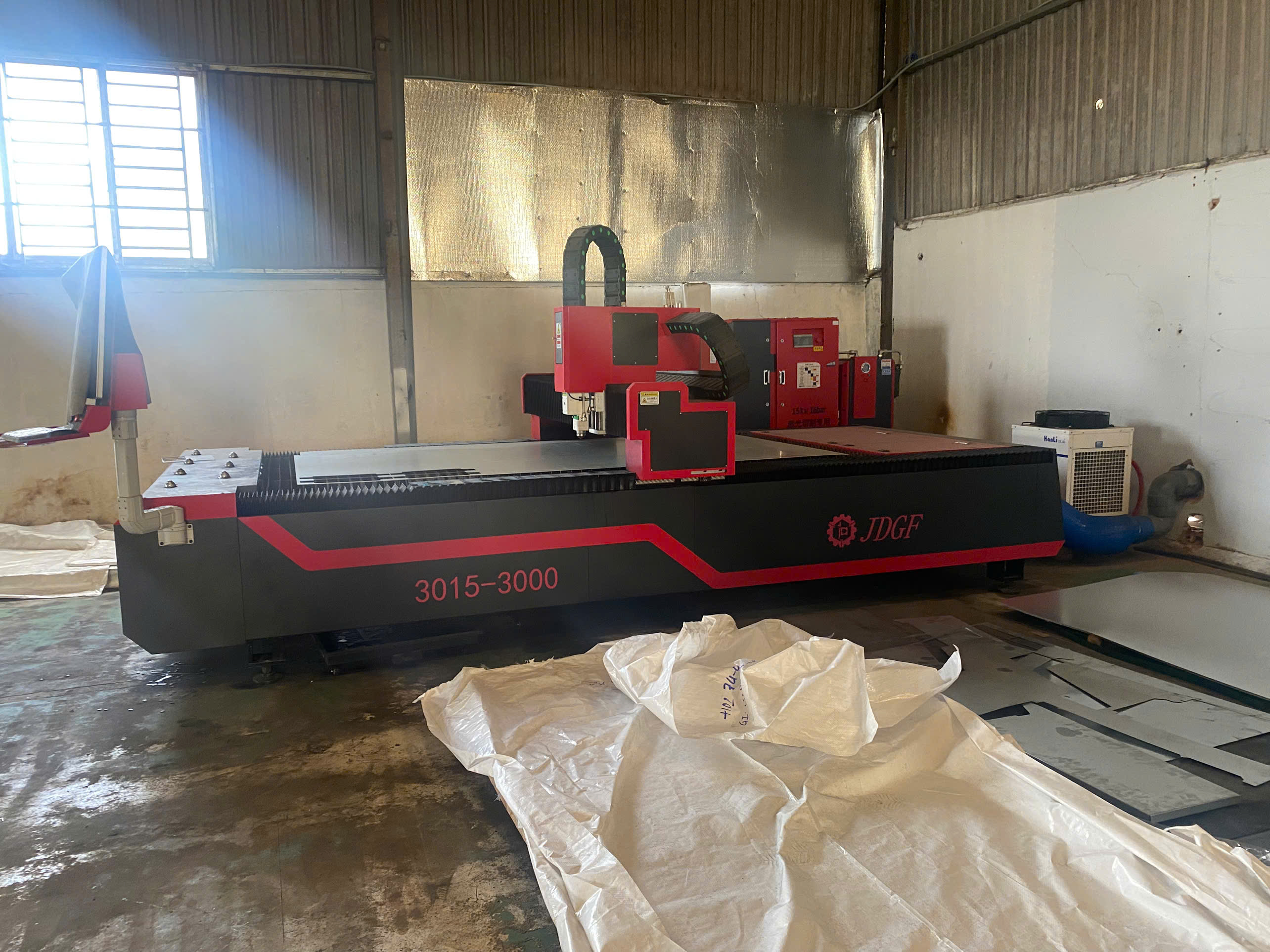
During a recent supplier audit at a steel fabrication plant outside Ho Chi Minh City, our Vietnam team discovered that the manufacturer had never applied for an individual dumping margin — they were stuck paying the Vietnam-wide entity rate of 88.12%.
Your best option is to source from Vietnamese manufacturers that received individual duty rates from the DOC (e.g., Ton Dong A at ~40% or Hoa Sen at 59%), or to work with fabricators using domestically produced Vietnamese steel substrate that avoids circumvention triggers.
Why Individual Rates Matter
The DOC assigns different duty rates depending on whether a company cooperated with the investigation and provided verifiable data. Companies that did not cooperate — or were not individually examined — get the "all others" or Vietnam-wide entity rate. This rate is always higher. Sometimes dramatically higher.
Here is the current breakdown of known preliminary and final rates:
| Vietnamese Company | Preliminary AD Rate | CVD Rate | Total Duty |
|---|---|---|---|
| Ton Dong A | 39.84% | 0% | ~40% |
| Hoa Sen Group | 59.00% | 0% | 59% |
| China Steel & Nippon Steel Vietnam | 49.42% | Pending | 49.42%+ |
| Nam Kim Steel | 49.42% | Pending | 49.42%+ |
| Hoa Phat Steel Sheet (Final — CORE) | 94.89% | Pending | 94.89%+ |
| Vietnam-Wide Entity Rate (Preliminary) | 88.12% | Pending | 88.12%+ |
| Vietnam-Wide Entity Rate (Boltless Shelving — Final) | 224.94% | — | 224.94% |
The difference between 40% and 88% is enormous. On a $100,000 order, that is $48,000 in additional cost.
Strategies for Sourcing Smarter
There are several approaches we recommend to our U.S. clients:
1. Source from individually examined companies. If your product is in scope, work with a manufacturer that has a lower individual rate. Ton Dong A at ~40% is the lowest currently available.
2. Use fabricators, not steel producers. If your part requires substantial transformation, the fabricator may not be the exporter of record for the steel. The duty applies to the steel product, not necessarily the fabrication service. This is a nuanced area — get legal advice.
3. Verify substrate origin. The circumvention investigation revealed that some Vietnamese fabricators import steel substrate from Korea or Taiwan, process it minimally, and re-export. This triggers catastrophic duty rates — up to 456.23%. Our supply chain team always verifies where the raw steel comes from before qualifying a supplier.
4. Encourage suppliers to apply for individual rates. During the next administrative review, Vietnamese manufacturers can request individual examination. If they cooperate fully and provide accurate cost data, they may receive a rate significantly lower than the entity rate.
5. Consider tariff engineering. If your product can be redesigned or reclassified under a different HTS code that falls outside the order's scope, you may avoid duties entirely. This requires careful engineering and customs expertise — but it is legitimate and effective when done correctly.
The Non-Market Economy Problem
One thing to understand: Vietnam is classified as a non-market economy 8 by the U.S. This means the DOC does not trust Vietnamese production costs at face value. Instead, it uses surrogate country data — typically from Thailand or Indonesia — to calculate what "fair" production costs should be. This methodology often inflates the dumping margin far beyond what Vietnamese producers actually experience.
This is a structural disadvantage that no single manufacturer can overcome on its own. It requires government-level negotiation. But in the meantime, individual rate applications and full cooperation with DOC investigations remain the best tools available.
How can I protect my supply chain from unexpected tariff increases when sourcing from Vietnam?
The numbers tell a stark story: Vietnam's galvanized steel exports to the U.S. collapsed from 62,188 tonnes in the months before the September 2024 investigation to just 896 tonnes afterward — a 99%+ drop. Many of our clients who had built their entire sourcing strategy around Vietnamese steel were suddenly scrambling.
To protect your supply chain, diversify sourcing across multiple countries, build tariff escalation clauses into supplier contracts, maintain bonded warehouse options, engage trade counsel before the International Trade Commission's final injury ruling, and develop contingency plans for domestic U.S. sourcing.
Build a Multi-Country Sourcing Strategy
Relying on a single country for critical steel components is risky in today's trade environment. The September 2024 investigation did not just target Vietnam — the DOC also filed cases against steel from Australia, Brazil, Canada, Mexico, and other countries. But the duty rates vary widely.
Our team helps clients build what we call a "sourcing portfolio." Instead of putting all volume into one country, we spread it across two or three qualified suppliers in different regions. If one country gets hit with duties, the others can absorb the volume.
Supply Chain Adjustments You Can Make Now
Here are concrete steps to take before the final ruling on August 18, 2025:
Audit your current entries. Identify every unliquidated entry of Vietnamese steel products. Calculate your maximum retroactive duty exposure. Set aside reserves.
Negotiate duty-sharing agreements. Some Vietnamese suppliers are willing to absorb part of the duty burden through price reductions. This is especially true for suppliers desperate to maintain U.S. market access.
Use bonded warehouses strategically. Goods held in a bonded warehouse do not trigger duty payment until they are formally entered into U.S. commerce. This can buy you time until the final ruling provides clarity.
Explore alternative sourcing geographies. India, Thailand, and Malaysia all have growing steel fabrication capabilities. Our Singapore headquarters gives us access to supplier networks across Southeast Asia, and we have been actively qualifying new fabrication partners outside Vietnam for clients affected by these duties.
Invest in customs compliance infrastructure. Hire or contract a licensed customs broker who specializes in trade remedies. Set up an early warning system — monitor Federal Register notices, International Trade Commission 9 hearing schedules, and DOC case updates. For a broader overview of what US tariffs and duties apply when sourcing sheet metal fabrication from Vietnam, our comprehensive tariff guide covers all the layers beyond anti-dumping.
Contract Protections
Every purchase agreement should now include tariff escalation clauses. Here is a framework:
- Price adjustment trigger: If applicable duties increase by more than 10% from the rate at time of order, both parties renegotiate pricing within 15 business days.
- Termination right: If total duties exceed a specified threshold (e.g., 80% of product value), the buyer may cancel outstanding orders without penalty.
- Retroactive duty allocation: Define clearly who bears the cost of retroactive duties — the importer, the exporter, or a shared split.
- Origin certification: The supplier must certify the country of origin of all steel substrate and provide mill certificates on request.
The Bigger Picture
Trade analysts warn that high import tariffs on steel from Vietnam could drive U.S. construction and manufacturing costs higher. The International Trade Commission will make its final injury determination in October 2025. If it finds that U.S. domestic industry is not materially injured, the duties could be revoked. But betting on that outcome is risky.
The smartest approach is to prepare for duties to stay — and build supply chain adjustments that make your business resilient regardless of the outcome. When we work with our U.S. clients on custom parts sourcing, we always stress that the cheapest supplier today may be the most expensive one tomorrow if trade policy shifts. Understanding how to compare sourcing costs for sheet metal fabrication from China vs. Vietnam can help you evaluate alternative origins with full cost transparency.
Conclusion
US anti-dumping duties on steel sheet metal fabrication 10 from Vietnam demand immediate, informed action — calculate your true landed costs, verify product scope, choose suppliers strategically, and build resilient, multi-country supply chains before the August 2025 final ruling.
Frequently Asked Questions
What Products Are Covered?
The current investigations target specific product categories. The key ones are:
How do I calculate the total landed cost of my sheet metal parts after US anti-dumping duties?
A buyer we work with in Texas sent us a purchase order last month, then paused it within 48 hours — he realized he had no idea what the true landed cost would be after the US Department of Commerce 2 preliminary ruling.
How can I determine if my specific custom steel fabrication falls under the scope of these duties?
One lesson we learned the hard way: not every steel part triggers anti-dumping duties. The scope language in each DOC order is precise, and a single word can mean the difference between 0% and 88%. product scope description 7
Footnotes
1. Replaced 404 link with an authoritative guide from trade.gov on anti-dumping measures. ↩︎
2. Official website of the U.S. government agency responsible for trade rulings. ↩︎
3. Official source for the Harmonized Tariff Schedule of the United States. ↩︎
4. Explains corrosion-resistant steel, including its composition and properties. ↩︎
5. Explains the purpose and application of countervailing duties. ↩︎
6. Official information from U.S. Customs and Border Protection about customs brokers. ↩︎
7. Replaced 404 link with an authoritative page from trade.gov that defines and explains the ‘scope’ in trade remedy investigations. ↩︎
8. Replaced 404 link with an authoritative page from trade.gov listing non-market economy countries and related information. ↩︎
9. Official website of the independent federal agency that investigates trade matters. ↩︎
10. Replaced 404 Wikipedia link with a working, relevant Wikipedia page on sheet metal, which encompasses fabrication. ↩︎