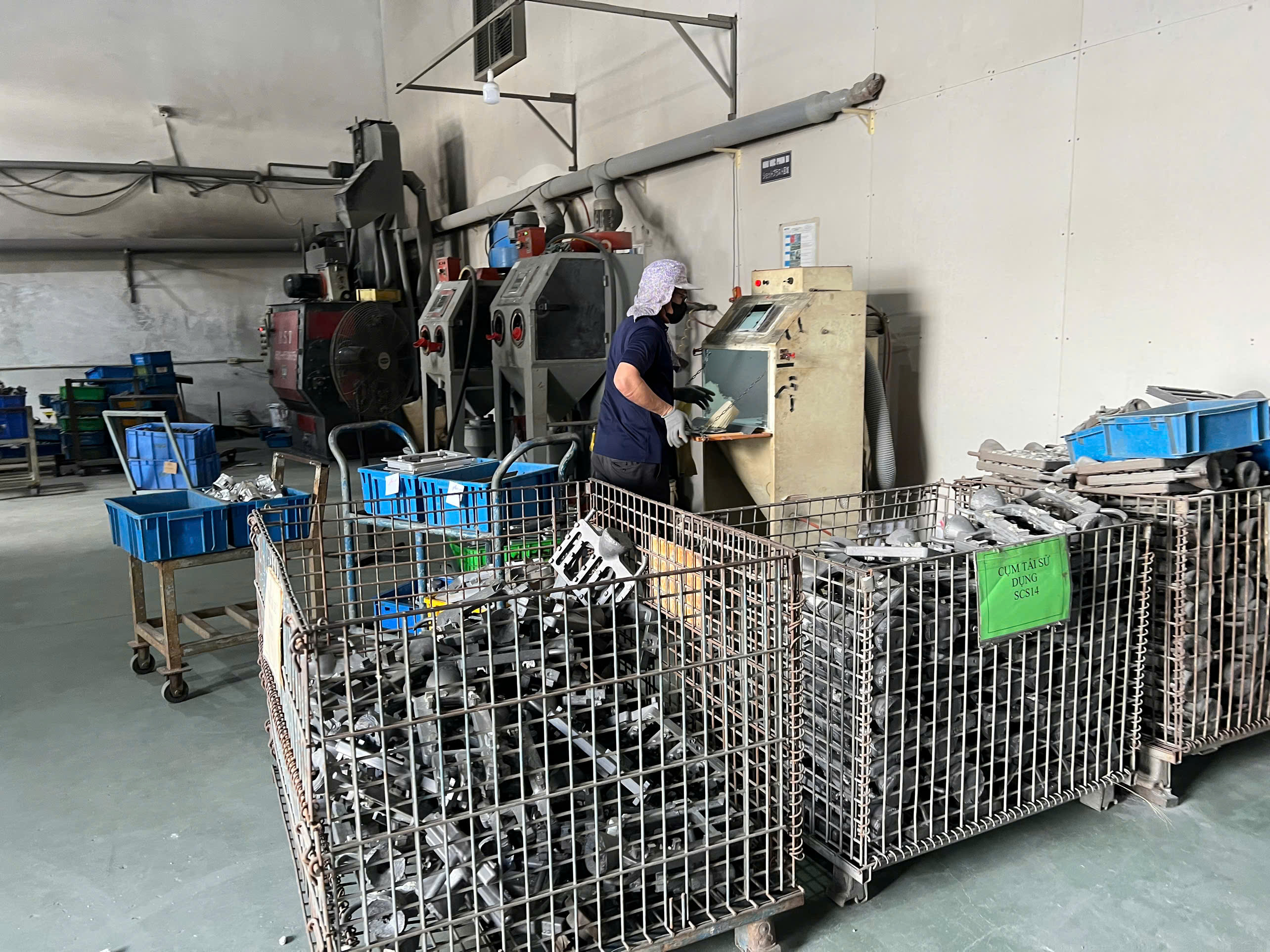

Finding a reliable one-stop sheet metal and machining supplier can feel overwhelming — especially when a wrong choice means wasted time, scrapped parts, and stalled production lines.
To identify a true one-stop sheet metal and machining supplier, verify that the vendor offers end-to-end in-house capabilities from design and prototyping through cutting, welding, precision machining, finishing, and assembly, backed by integrated engineering review and strict quality control systems under a single accountable partner.
Below, I break down the exact steps our team uses when evaluating integrated manufacturing solutions for U.S. and European clients. Each section tackles a specific concern purchasing managers face when sourcing custom parts from Asia.
How do I verify if a supplier truly has integrated sheet metal and precision machining capabilities?
A lesson we learned early in our sourcing work across Vietnam and China: a supplier's website can list twenty processes, but the factory floor tells a different story Coordinate Measuring Machine (CMM) 1.
Verify integrated capabilities by requesting a factory walkthrough or video audit that shows sheet metal fabrication equipment, CNC machining centers, and finishing lines under one roof — then cross-check with recent production samples, equipment lists, and operator certifications to confirm nothing is outsourced.
What "One-Stop" Actually Means on the Ground
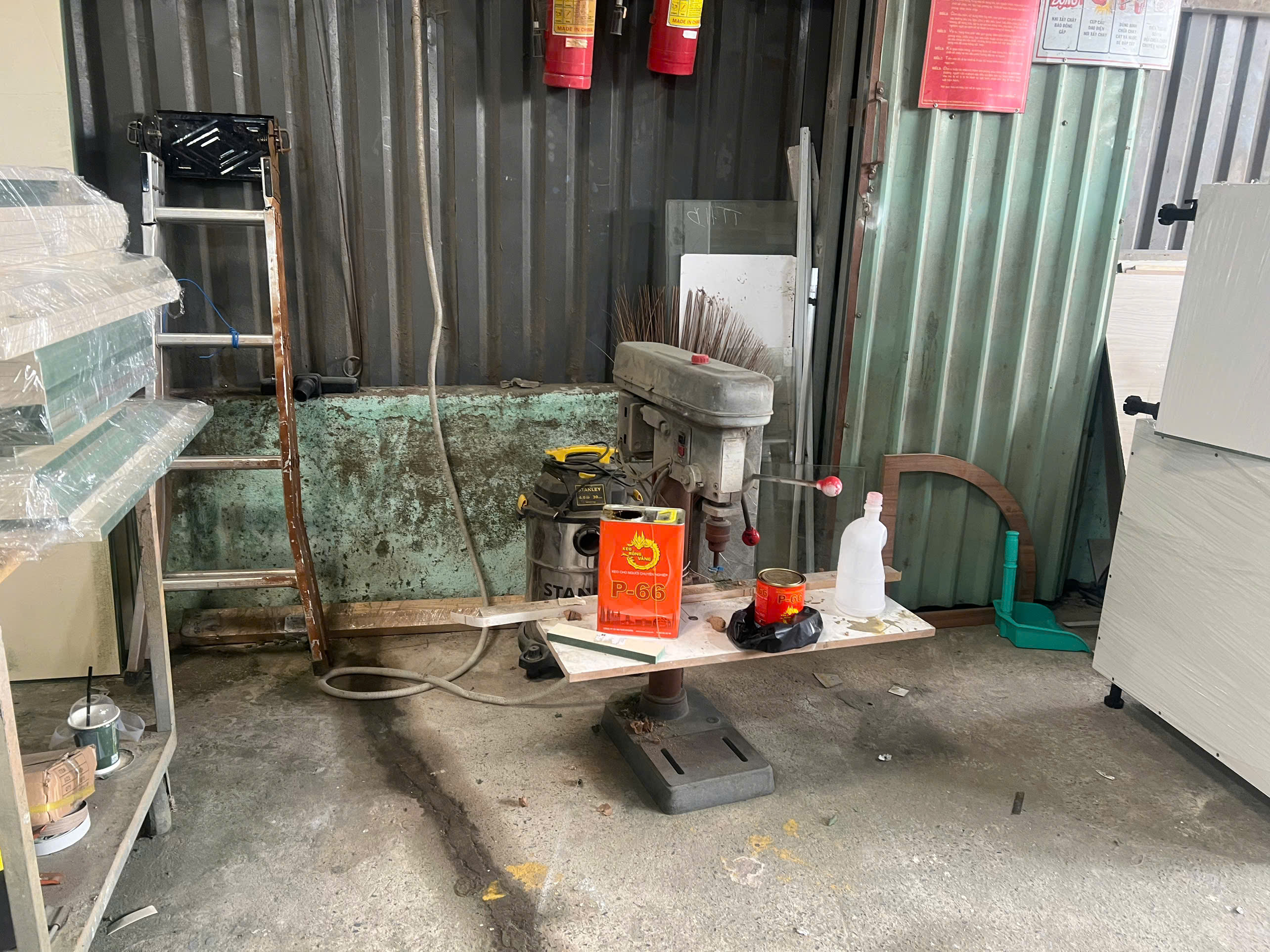
A genuine one-stop supplier controls the full workflow internally Laser scanning system 2. That means raw material intake, laser cutting, CNC punching, bending, welding, CNC milling, CNC turning, surface treatment, and final assembly all happen within the same facility — or at least within a tightly managed campus. When our team in China audits a potential partner, we walk the production line station by station PPAP documentation 3. We check whether the laser cutter feeds directly into the bending area, whether there is a dedicated quality hold zone between processes, and whether the finishing booth sits inside the same building or requires a truck ride to a subcontractor.
Many suppliers claim integrated manufacturing solutions but quietly farm out precision machining services or powder coating to third parties IATF 16949 4. That gap is where quality problems hide. Parts sit in transit, tolerances drift, and nobody owns the defect.
A Practical Checklist for Capability Verification
Use the table below as a starting framework when you evaluate a supplier's claims.
| Capability Area | What to Ask For | Red Flag If Missing |
|---|---|---|
| Design & Engineering | DFM feedback within 48 hours; named engineer on your project | No engineering team; quotes without reviewing drawings |
| Sheet Metal Fabrication | Laser cutting, CNC punching, bending, hardware insertion in-house | Only one cutting method available; outsourced bending |
| Precision Machining | CNC milling and turning centers with stated tolerances | No machining equipment; vague tolerance claims |
| Welding | MIG, TIG, or robotic welding with certified operators | No welder certifications; inconsistent weld bead samples |
| Finishing | Powder coating, anodizing, painting, or plating done on-site | Finishing sent to an unnamed subcontractor |
| Assembly | Mechanical and hardware assembly with fixtures and jigs | Assembly done "at the customer's request only" |
Why Integrated Engineering Review Matters
One thing we have seen repeatedly is that the best one-stop suppliers do not just execute drawings. They question them. Their engineering team looks at your part and decides if it is best made by progressive die stamping, laser cutting, CNC milling, or a combination. This integrated review prevents overengineered parts and unnecessary cost.
For example, a mounting bracket with multiple bends and cutouts might seem like a sheet metal job. But if the tolerances on two mounting holes are ±0.02 mm, those holes may need a secondary CNC machining operation. A supplier with both sheet metal fabrication and CNC machining capabilities will flag this upfront and propose the optimal sequence. A supplier with only sheet metal equipment will either ignore the tolerance or silently outsource the drilling — and you lose traceability.
Equipment Versus Capability
Owning a machine is not the same as being capable. Ask for the equipment list, but also ask for operator qualifications, maintenance records, and recent part samples at the tolerances you need. When our Vietnam office evaluates a new factory, we request sample parts cut and machined to our client's actual drawing — not a generic demo piece. That single step eliminates about half of the candidates.
What quality control standards should I demand to ensure my custom parts are right the first time?
One interaction changed how we approach quality conversations with new suppliers. A U.S. client received a shipment of custom brackets where every hole was 0.3 mm off — the supplier had no incoming material inspection and no in-process check.
Demand at minimum ISO 9001:2015 certification, a documented inspection plan covering incoming material, in-process, and final inspection stages, and access to objective measurement data from calibrated tools such as CMMs, laser scanners, and pin gauges — all tied to your specific drawing requirements.

The "Right First Time" Standard
Getting parts right the first time is not just a nice goal. It is a financial necessity. Every rework cycle adds cost, delays delivery, and erodes trust. Quality control systems must be built into the production flow, not bolted on at the end.
When we manage contract manufacturing projects, we insist on a layered inspection approach. The table below shows the three inspection gates we require and what happens at each.
| Inspection Gate | Timing | Key Activities |
|---|---|---|
| Incoming Material Inspection | Before production starts | Verify material certificates, thickness, hardness, and surface condition against drawing specs |
| In-Process Inspection | At critical operations (after bending, after welding, after machining) | Dimensional checks using calipers, gauges, or CMM; visual weld inspection; surface quality check |
| Final Inspection | Before packing | Full dimensional report against drawing; cosmetic check; functional fit check if applicable; packaging verification |
Manufacturing Certifications That Matter
ISO 9001:2015 is the baseline. It tells you the supplier has a quality management system with documented procedures, internal audits, and corrective action processes. For aerospace or defense parts, AS9100 5 is essential. For automotive, IATF 16949 applies.
But a certificate on the wall is not enough. Ask when the last external audit happened. Ask to see a corrective action report from the past year. A supplier that can show you how they responded to a real quality escape is far more trustworthy than one that simply waves a certificate.
Measurement Tools and Documentation
Modern quality control demands objective data. Here are the tools we expect to see in a capable supplier's quality lab:
- Coordinate Measuring Machine (CMM): For 3D geometry verification on machined features.
- Laser scanning system: For flat sheet metal part verification and profile checks.
- Surface roughness tester: For machined surfaces where Ra values are specified.
- Calibrated hand tools: Calipers, micrometers, height gauges, pin gauges — all with current calibration stickers.
We also require suppliers to provide a First Article Inspection Report (FAIR) 6 or PPAP documentation at the start of a new project. This locks in the measurement method, the acceptance criteria, and the responsible inspector. It eliminates ambiguity before mass production begins.
Why Single-Source Quality Accountability Works
When you split your supply chain across multiple vendors — one for cutting, another for machining, a third for finishing — quality ownership becomes blurry. If a finished part fails, each vendor points at the other. A one-stop supplier cannot do that. They own the outcome from start to finish. That single accountability is one of the strongest reasons purchasing managers consolidate their supply chains.
How can I assess a supplier's ability to manage my entire supply chain from co-development to door-to-door delivery?
A trade-off we weigh on every new project is whether a supplier can truly handle end-to-end supply chain management 8 — or whether they are strong in production but weak in logistics, communication, and project tracking.
Assess full supply chain capability by confirming the supplier offers co-development engineering support, prototyping services, production planning with milestone tracking, process control documentation, final inspection, export packing, and door-to-door logistics coordination — all managed by a dedicated project team with clear communication channels.

Breaking Down the Supply Chain Into Stages
A complete supply chain engagement for custom parts goes far beyond cutting metal. It involves multiple stages, each requiring different skills. The table below maps out what a capable partner should deliver at each phase.
| Supply Chain Stage | What the Supplier Should Provide | Why It Matters to You |
|---|---|---|
| Co-Development | DFM analysis, material selection advice, tolerance review | Prevents costly redesigns after tooling is made |
| Prototyping | Rapid prototypes for fit and function testing | Validates design before committing to production tooling |
| Production Planning | Capacity allocation, material procurement, timeline milestones | Ensures realistic lead times and on-time delivery |
| Process Control | Control plans, SPC data, operator work instructions | Reduces variation and defect rates during production |
| Final Inspection | Dimensional reports, visual inspection, functional checks | Confirms parts meet drawing requirements before shipping |
| Logistics | Export packing, customs documentation, freight coordination | Ensures parts arrive undamaged and on schedule |
The Role of a Local Team
One advantage we bring through our offices in Vietnam and China is proximity to the factory floor. When a production issue arises — a material delay, a tooling adjustment, a drawing clarification — our local engineers can walk into the factory the same day. For U.S. purchasing managers working across a 12-hour time zone gap, having a local team that speaks the factory's language and understands the client's expectations is a force multiplier.
This is not just about translation. It is about cultural fluency in manufacturing. Knowing how to escalate a quality issue at a Vietnamese factory is different from doing so at a Chinese factory. Knowing which logistics providers handle door-to-door shipments from Ho Chi Minh City versus Shenzhen requires hands-on experience.
How to Evaluate Project Management Maturity
Ask the supplier how they track projects. Do they use a shared timeline or Gantt chart 9? Do they send weekly status updates without being asked? Can they provide a single point of contact who knows your project inside and out?
Suppliers who manage your supply chain well will also handle value-added services like kitting, sub-assembly, custom packaging, and labeling. These small additions save enormous time at your receiving dock.
Digital Integration and Communication
Seamless CAD/CAM data exchange is a baseline expectation. Beyond that, look for suppliers who can share inspection data digitally, provide order tracking through an online portal, and respond to emails within a business day. Proactive communication — flagging a potential delay before it becomes a crisis — is the hallmark of a mature supply chain partner.
When evaluating prototyping services, confirm that the supplier can produce prototypes using the same process and material as the final production run. A 3D-printed prototype looks nice, but it does not validate sheet metal forming behavior or machining surface finish. The best suppliers offer functional prototypes cut, bent, and machined on the same equipment that will run the production order.
Will a one-stop sourcing partner offer the flexible payment terms I need to alleviate my cash flow pressure?
A buyer interaction last year brought this question into sharp focus. A purchasing manager in Ohio told us plainly: "I can find suppliers with good quality. What I cannot find is one that will also give me 60-day terms."
Yes — experienced one-stop sourcing partners, especially those focused on long-term B2B relationships, often offer flexible payment terms such as open account with 60 to 90-day credit periods, which directly alleviate your cash flow pressure and reduce upfront financial risk when importing custom parts.
Why Payment Terms Matter as Much as Price
Cash flow is the lifeline of any sourcing operation. When you import custom parts from Asia, you may wait 4–8 weeks for production plus 3–5 weeks for ocean freight. If you pay 100% upfront or even 70% before shipment, your money is tied up for two to three months before you can invoice your own customer. That gap kills working capital.
Flexible payment terms shift the financial risk. With open account terms of 60 or 90 days, you receive the goods, inspect them, and often deliver them to your end customer before payment is due. This is a significant competitive advantage.
What Payment Structures to Expect
Not every supplier offers the same flexibility. Here is a comparison of common payment structures in the custom parts sourcing industry.
| Payment Structure | Cash Flow Impact | Typical Supplier Willingness |
|---|---|---|
| 100% T/T in Advance | Maximum strain; all risk on buyer | Common with new, unproven suppliers |
| 50% Deposit / 50% Before Shipment | Moderate strain; risk shared | Standard for many Asian manufacturers |
| 30% Deposit / 70% Net 30 After Shipment | Lower strain; buyer retains leverage | Available from established suppliers |
| Open Account — Net 60 or Net 90 | Minimal strain; buyer pays after receiving goods | Offered by trusted, relationship-focused partners |
Our approach at DEWIN is to offer open account terms to qualified clients because we understand the realities of U.S. distribution. Tying up your capital in overseas inventory does not help either party. We would rather build a long-term partnership where both sides benefit from predictable cash flow.
How to Qualify for Better Terms
Suppliers who offer generous payment terms need to trust your creditworthiness. Be prepared to share:
- Your company's trade references.
- A brief financial overview or Dun & Bradstreet report.
- Your projected annual spend and order frequency.
In return, expect the supplier to demonstrate financial stability of their own. A supplier who extends credit but then cuts corners on material or quality to manage their own cash flow is not a partner — they are a liability.
Linking Payment Terms to Total Value
When comparing suppliers, do not just compare unit price. Factor in the total cost of doing business: administrative overhead from managing multiple vendors, the carrying cost of prepaid inventory, the cost of rework from poor quality, and the hidden cost of delayed deliveries. A one-stop supplier with slightly higher unit pricing but open account terms, integrated quality control systems, and on-time delivery may deliver far better total value than a cheaper alternative that demands full prepayment and ships late.
To systematically weigh all of these factors, consider building a supplier evaluation system that scores vendors across quality, cost, delivery, and financial terms rather than relying on unit price alone.
Conclusion
Identifying a true one-stop sheet metal and machining supplier requires verifying in-house capabilities, demanding rigorous quality systems, assessing full supply chain management, and securing flexible payment terms that support your business growth.
Frequently Asked Questions
How do I verify if a supplier truly has integrated sheet metal and precision machining capabilities?
A lesson we learned early in our sourcing work across Vietnam and China: a supplier's website can list twenty processes, but the factory floor tells a different story Coordinate Measuring Machine (CMM) 1 .
What quality control standards should I demand to ensure my custom parts are right the first time?
One interaction changed how we approach quality conversations with new suppliers. A U.S. client received a shipment of custom brackets where every hole was 0.3 mm off — the supplier had no incoming material inspection and no in-process check.
How can I assess a supplier's ability to manage my entire supply chain from co-development to door-to-door delivery?
A trade-off we weigh on every new project is whether a supplier can truly handle end-to-end supply chain management 8 — or whether they are strong in production but weak in logistics, communication, and project tracking.
Footnotes
1. Explains CMMs as essential metrology equipment for quality control. ↩︎
2. Wikipedia page providing a general overview of laser scanning technology. ↩︎
3. Comprehensive guide to the Production Part Approval Process (PPAP) and its documentation. ↩︎
4. Describes IATF 16949 as the automotive quality management system standard. ↩︎
5. Wikipedia page explaining the AS9100 aerospace quality management system standard. ↩︎
6. Wikipedia page defining First Article Inspection and its importance. ↩︎
7. Official standard for quality management systems. ↩︎
8. Authoritative definition and scope of supply chain management from a professional association. ↩︎
9. Wikipedia page defining and explaining Gantt charts in project management. ↩︎