
Vietnam’s labor cost advantages for sourcing stamping parts look great on paper CPTPP 1. But I have watched buyers lose those savings through bad tooling decisions, weak audits, and hidden logistics costs. Our Vietnam team sees it monthly.
To leverage Vietnam’s labor cost advantages when sourcing stamping parts, target light-to-medium complexity parts in mid-volume programs, verify supplier tooling and QC capability through on-site audits, calculate total landed cost including tariffs and freight, and lock in quality with PPAP and inspection protocols before committing die investment.
Let me walk you through how this works in practice. I will cover the real cost gap, quality control, hidden costs, and supplier selection.
What Makes Vietnam's Labor Costs Lower Than China's for Stamping Parts Production?
Last quarter, I compared two quotes for the same steel mounting bracket—one from a Dongguan press shop, one from a supplier near our Vietnam office. The gap surprised even me.
Vietnam's manufacturing wages run roughly 40–60% below coastal China, with factory labor often quoted at $250–350 per month versus $500–800 in China. Lower die-making rates, cheaper factory overhead, and tariff advantages for US-bound goods compound the savings on stamped parts.

The wage gap is only the starting point. When our team breaks down a stamping quote, labor shows up in more places than most buyers expect. It sits in press operation, die maintenance, secondary finishing, deburring, inspection, and packing. Each of those line items shrinks when the hourly rate drops.
Where the Labor Savings Actually Sit
Die making is the big one. Industry estimates put Vietnamese die-making labor around $8–15 per hour, against $20–35 in China and $35–65 in US job shops. For a progressive die with hundreds of toolroom hours, that difference alone can cut tooling cost by 30–50%.
Here is how the cost structure typically compares:
| Cost Element | Vietnam | Coastal China | US Job Shop |
|---|---|---|---|
| Factory wages (monthly) | $250–350 | $500–800 | $3,500+ |
| Die-making labor (hourly) | $8–15 | $20–35 | $35–65 |
| Tooling cost index | 30–50% below China | Baseline | 2–3x China |
| Piece price (typical range) | 25–40% below China | Baseline | 35–50% above Vietnam |
| Section 301 tariff exposure (US) | Generally none | Yes | N/A |
Why the Advantage Is Structural
Vietnam's wage growth has been managed to stay competitive. Minimum wage increases have often trailed productivity growth. So this is not a temporary arbitrage window. It is a structural position, reinforced by trade agreements like EVFTA 2, CPTPP, and RCEP that lower duties into the EU and other member markets.
But be careful with these numbers. They are directional ranges from vendor quotes and industry estimates, not guaranteed pricing. Your actual savings depend on part complexity, volume, and the supplier you pick. Simple brackets, clips, and Z-fold fasteners capture the full gap. Tight-tolerance progressive stamping 3 captures less, because capability—not labor—becomes the bottleneck.
How Can I Ensure Quality Control Stays Strong When I Switch to a Lower-Cost Vietnam Supplier?
A US purchasing manager once told me his biggest fear was not price—it was a container of non-conforming brackets arriving after a 30-day sail. That fear is legitimate, and our QC process in Vietnam was built around it.
Protect quality by auditing the factory before award, requiring ISO 9001 or IATF 16949 certification, running a full PPAP with documented first articles, defining critical dimensions on drawings, and enforcing in-process checks plus pre-shipment final inspection—ideally through a local team on the ground.

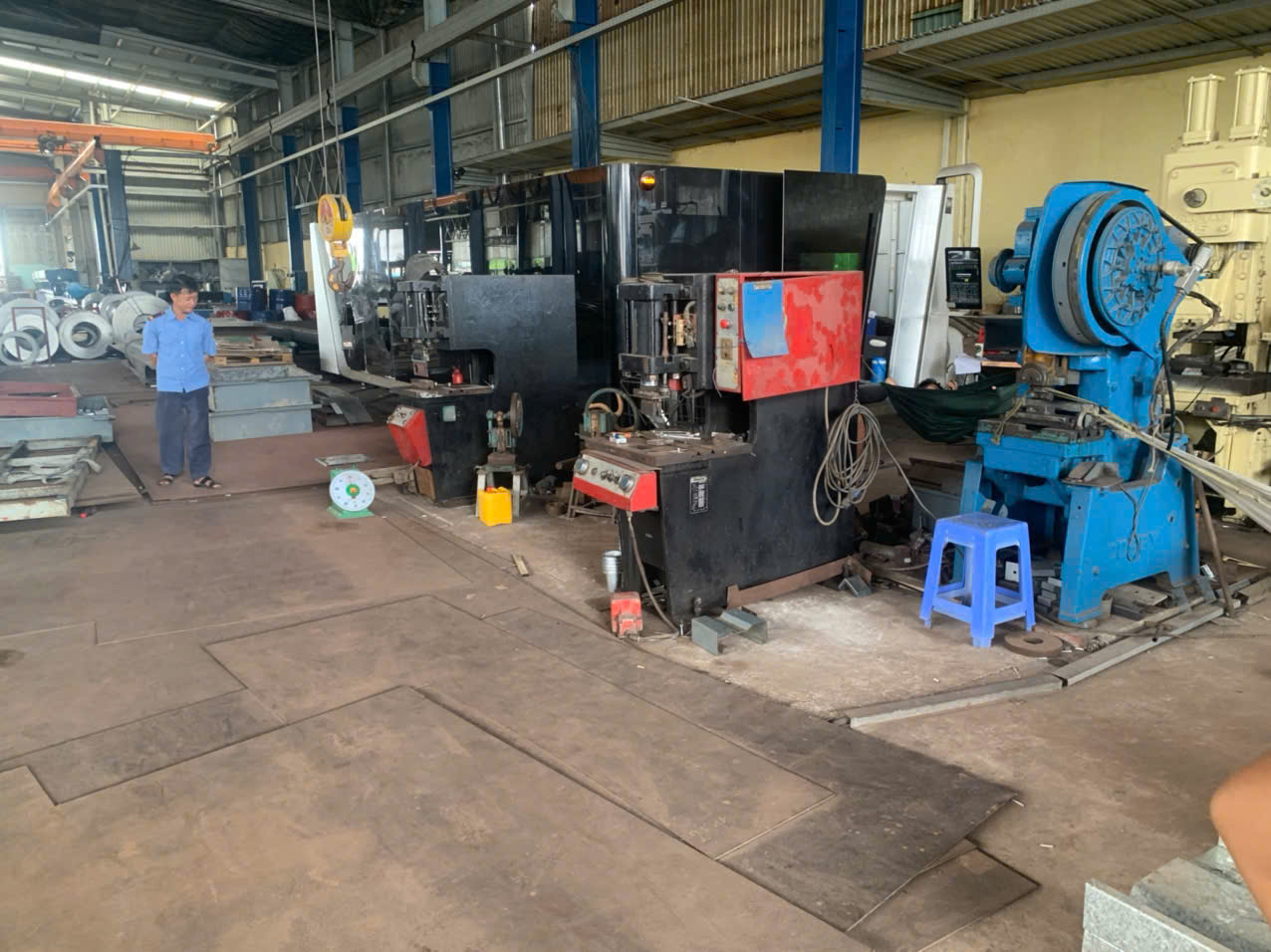
Vietnam's stamping ecosystem is still maturing. Capability varies widely between suppliers. One shop may run a modern press fleet with an in-house toolroom. The shop next door may subcontract dies and rely on aging equipment. Low labor cost tells you nothing about which one you are talking to.
A Practical Quality Protection Sequence
Our team follows a fixed sequence before we let any client commit die money. I recommend the same steps to every buyer:
- Audit before award. Walk the floor. Check press tonnage, die storage, maintenance logs, and calibration records. Do not rely on photos.
- Verify certifications. ISO 9001 4 is the floor. For automotive-grade parts, look for IATF 16949 5 experience.
- Freeze the drawing. Vietnamese engineers may not flag ambiguous callouts. Mark critical dimensions, tolerances, flatness, and burr direction explicitly.
- Run PPAP properly. First article inspection, dimensional reports, material certs, and process capability data—all documented before mass production.
- Control the process, not just the output. Require in-process checks at set intervals, especially after die changes or coil changes.
- Inspect before shipment. A final inspection against an agreed AQL catches problems while they can still be fixed locally.
Why a Local Presence Matters
One thing I learned from years of managing projects between our Singapore headquarters and our Vietnam office: email alone does not catch problems. When an issue surfaces—a burr spec missed, a bend angle drifting—someone needs to be at the press within a day, not on a video call a week later. That is why buyers who lack local staff should work through a sourcing partner with people physically in Vietnam. The labor savings only survive if quality fallout stays near zero.
Also budget for workforce turnover. Vietnamese manufacturing zones see 15–20% annual labor turnover. Ask your supplier how they train replacement operators and how they retain skilled die technicians. It is a due diligence question most buyers skip.
What Hidden Costs Should I Watch for When Calculating True Savings from Vietnam Sourcing?
The trade-off I weigh on every project is piece price versus total landed cost. A bracket quoted 35% cheaper can end up only 12% cheaper once everything real is counted—and I have seen the math go worse than that.
Watch for tooling investment and amortization, ocean freight and inland logistics, longer lead times tying up working capital, scrap and quality fallout, minimum order quantities, engineering change costs, and currency effects. True savings equal total landed cost difference, not the piece-price gap alone.

Buyers who only compare unit prices make expensive mistakes. Stamping economics hinge on amortizing die cost over real annual volume. If your volume forecast is soft, a no-tooling route—laser cutting plus press-brake bending—may beat stamping entirely at low quantities. I always ask clients for honest annual volume before recommending a die investment.
The Full Cost Model
Here is the framework we use when quoting stamped brackets and clips for US clients:
| Cost Category | What to Include | Common Blind Spot |
|---|---|---|
| Piece price | Material, labor, overhead, margin | Assuming quoted price holds at lower volumes |
| Tooling | Die cost, trials, maintenance, spare inserts | Who owns the die and where it is stored |
| Logistics | Ocean freight, inland trucking, port fees | Northern vs southern Vietnam port routing |
| Duty and tariffs | HS code, origin rules, FTA eligibility | Assuming zero duty without checking rules of origin 7 |
| Lead time | Production plus 25–35 day sailing | Inventory carrying cost and safety stock |
| Quality risk | Scrap, sorting, rework, returns | Cost of a rejected lot discovered stateside |
| Change management | Engineering change orders, die modifications | Frequent revisions eroding all labor savings |
Situations Where Vietnam Savings Shrink
Be honest about part fit. Savings shrink when parts need frequent design changes, because each revision means die rework across a long communication chain. They shrink when tolerances are tight, because scrap rates climb. They shrink at very low volumes, because tooling never amortizes. And they shrink when your logistics chain is inefficient—for example, shipping small lots frequently instead of consolidating.
On the upside, some levers push savings higher. VND depreciation trends and Vietnam's VAT export refund scheme can be built into long-term contracts. And for US-bound parts, avoiding China-specific Section 301 tariffs 8 is often the single largest line item—some estimates put Vietnam's total landed cost 25–35% below China for US buyers largely on tariff grounds. We also offer open account terms to our clients, which softens the working-capital hit from longer ocean transit. Cash flow is a hidden cost too, and payment terms are part of the total cost equation.
How Do I Find a Reliable Stamping Parts Manufacturer in Vietnam Without Sacrificing Communication or Delivery Reliability?
Early in our Vietnam operations, a promising supplier missed a delivery by three weeks because their die subcontractor fell behind—and nobody told us until we asked. That lesson shaped how we vet stamping partners today.
Find reliable Vietnamese stamping manufacturers by targeting established industrial clusters, verifying in-house toolrooms and press capacity on-site, testing communication responsiveness during quoting, checking export track records to your market, and starting with a pilot order before scaling—or working through a partner with local staff.

Geography matters more in Vietnam than many buyers realize. The industry has regional character. Northern provinces like Bac Ninh and Hai Phong grew up around electronics supply chains, so they skew toward precision, thin-gauge stamping. Southern regions like Dong Nai and Binh Duong developed around motorcycle and automotive supply chains, so they handle heavier-gauge structural work better.
| Region | Key Zones | Stamping Strength | Best For |
|---|---|---|---|
| North | Bac Ninh, Hai Phong | Precision, thin-gauge, electronics-grade | Clips, connectors, small brackets |
| South | Dong Nai, Binh Duong | Heavier gauge, automotive-adjacent | Structural brackets, chassis parts |
The Vetting Questions That Separate Good from Risky
When our engineers evaluate a new stamping supplier, we focus on a handful of decisive questions:
- Is the toolroom in-house? Subcontracted dies mean you inherit a hidden supplier and their delays.
- What is the press fleet? Tonnage range, age, and whether they run progressive dies or only single-stage operations.
- Who reads your drawing? Ask a technical question during quoting. A supplier who catches an ambiguity before you point it out will catch problems in production too.
- What is their export history? A shop that ships regularly to the US or EU already understands packaging, documentation, and quality expectations.
- How do they handle labor turnover? Skilled press operators and die technicians leaving mid-program is a real delivery risk.
Communication Is the Real Bottleneck
In my experience serving US purchasing managers, delivery failures rarely come from press capacity. They come from silence. A supplier hits a problem, hopes to fix it quietly, and tells you only when the ship date passes. Test responsiveness during the RFQ stage—slow, vague answers before you place an order will not improve after you place it.
This is exactly why we keep a team on the ground in Vietnam while managing client relationships from Singapore in native business English. Buyers get one accountable point of contact, weekly status updates, and someone who can stand at the press when it matters. Whether you build that capability yourself or borrow it through a sourcing partner, do not skip it. Start with a pilot order, verify the full cycle from PO to door delivery, and only then commit serious die investment.
Conclusion
Vietnam's labor cost advantages are real, structural, and capturable—but only for buyers who match the right parts, audit suppliers hard, model total landed cost, and keep eyes on the ground.
Frequently Asked Questions
What Makes Vietnam's Labor Costs Lower Than China's for Stamping Parts Production?
Last quarter, I compared two quotes for the same steel mounting bracket—one from a Dongguan press shop, one from a supplier near our Vietnam office. The gap surprised even me.
How Can I Ensure Quality Control Stays Strong When I Switch to a Lower-Cost Vietnam Supplier?
A US purchasing manager once told me his biggest fear was not price—it was a container of non-conforming brackets arriving after a 30-day sail. That fear is legitimate, and our QC process in Vietnam was built around it.
What Hidden Costs Should I Watch for When Calculating True Savings from Vietnam Sourcing?
The trade-off I weigh on every project is piece price versus total landed cost. A bracket quoted 35% cheaper can end up only 12% cheaper once everything real is counted—and I have seen the math go worse than that.
Footnotes
1. Explains the multilateral trade pact reducing tariffs for Vietnam-sourced goods. ↩︎
2. Background on the EU-Vietnam trade agreement mentioned as a structural cost advantage. ↩︎
3. Background on the manufacturing process central to the article’s tooling discussion. ↩︎
4. Official ISO standard page defining the quality management certification discussed. ↩︎
5. Explains the automotive quality standard referenced for supplier certification requirements. ↩︎
6. ISO context for the Production Part Approval Process used in supplier quality validation. ↩︎
7. WTO reference explaining origin rules relevant to duty and FTA eligibility calculations. ↩︎
8. Official US trade source explaining the tariff mechanism affecting China-sourced goods. ↩︎