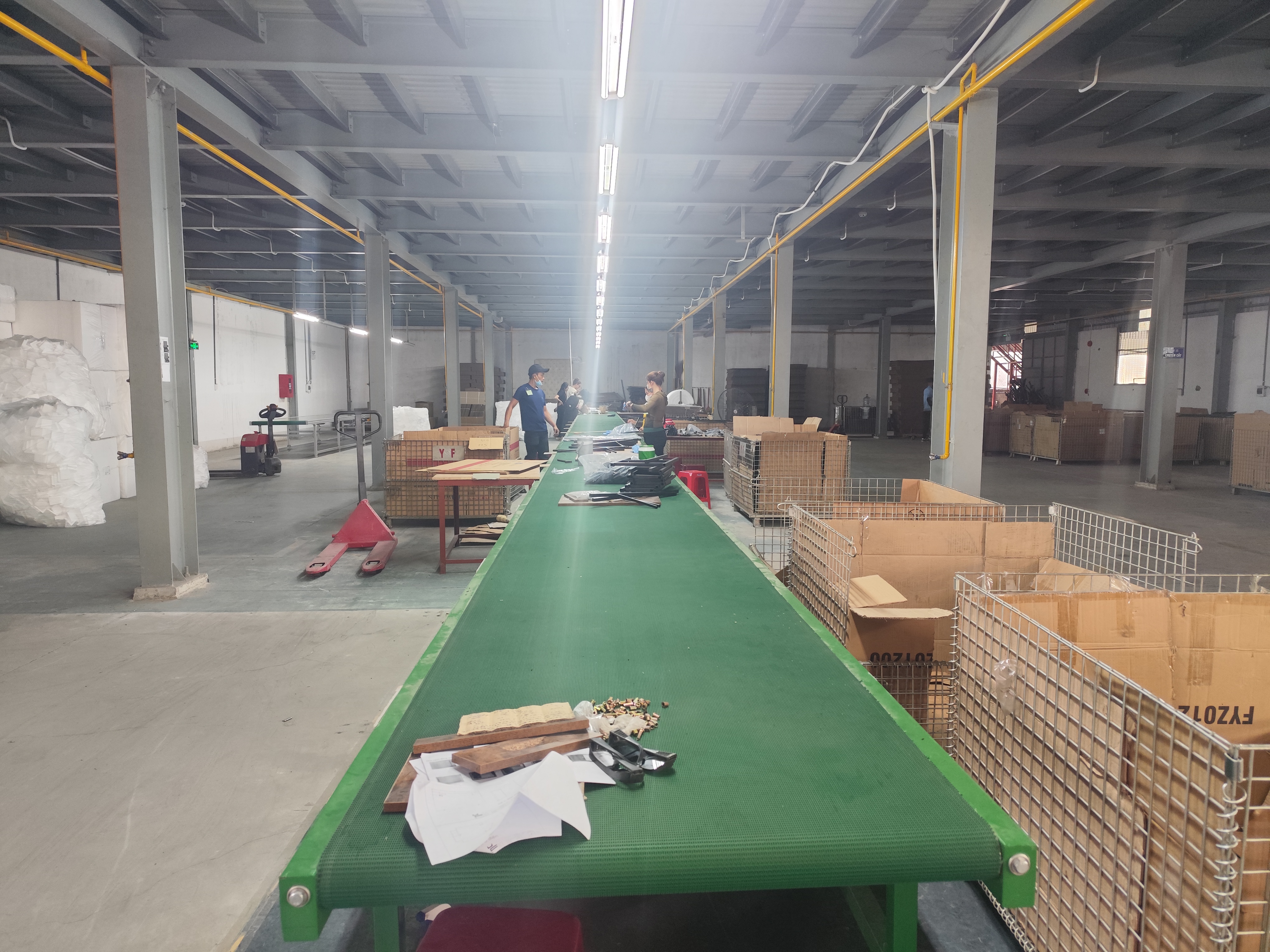

Finding the right balance between cost savings and technical quality in sheet metal fabrication 1 keeps many purchasing managers up at night. I’ve watched our Vietnam office team walk factory floors, inspect weld seams, and negotiate tooling costs — and the gap between expectation and reality can be brutal when you pick the wrong partner supply chain team 2. The good news? Vietnam’s competitive labor costs 3 and rising technical capabilities make it a genuine alternative to China, but only if you know how to navigate the landscape.
To leverage Vietnam’s labor costs for skilled sheet metal fabrication, source from audited Vietnamese factories equipped with advanced CNC and laser cutting capabilities, verify welder certifications and quality documentation upfront, and partner with a supply chain team that manages inspection, logistics, and flexible payment terms end to end.
This article breaks down exactly how to find the right supplier, protect your engineering intent, manage quality on the ground, and structure payment terms that help your cash flow. Let’s walk through it step by step.
How can I find a Vietnam sheet metal supplier that balances low labor costs with high technical precision?
A buyer we work with in the Midwest once told me he'd contacted twelve Vietnamese factories directly and received wildly different quotes — some missing key bend tolerances entirely. That experience is common when you don't know what to look for in a manufacturing hub like Vietnam.
Find a Vietnam sheet metal supplier that balances low labor costs with high precision by requesting equipment lists, welder certifications, and sample parts upfront, then validating capabilities through an on-site audit before committing to production orders.
Why Vietnam's Cost Advantage Is Real
Vietnam's manufacturing workers earned an average monthly wage of $280 in 2022. Compare that to $4,000 per month in the United States. That is a 93% reduction in labor expenses alone. But low labor costs mean nothing if the factory cannot hold your tolerances. The key is matching the right capability tier to your project.
Top-tier Vietnamese factories now operate fiber laser systems 4 from Trumpf, Amada, or Bystronic. These machines cut up to 20mm steel and 15mm stainless steel. Bending is performed on Amada or Accurpress brake presses with CNC back gauges. Routine tolerances of ±0.005" on cut features are standard on good equipment. This is not a compromise — this is parity with a capable China supplier.
What to Look for in a Supplier
When I send our Vietnam team to audit a potential factory, we check specific things. Here is a breakdown of criteria that separate serious fabricators from shops that will waste your time:
| Evaluation Criteria | What to Request | Red Flag If Missing |
|---|---|---|
| Equipment list | Brands, models, capacities (laser, press brake, welding) | Generic descriptions like "advanced machines" |
| Welder certifications 5 | AWS D1.1 / D1.3 certificates, welder ID logs | No certification records available |
| Quality system | ISO 9001 certificate, internal inspection procedures | No documented QC process |
| Sample parts | Physical samples or photos of similar work | Refusal to share past work examples |
| Tolerance capability | Stated tolerances with supporting inspection reports | Vague claims like "high precision" |
| Welding documentation | Welding Procedure Specifications (WPS) | No WPS on file for structural work |
Matching Capability to Your Project
Not every project needs the most expensive factory. For simple brackets and enclosures, a mid-tier shop with good CNC bending services and basic laser cutting capabilities will deliver fine results at the lowest cost. For structural components with weld-critical joints — like the precision mounting brackets we recently sourced for a U.S. industrial client — you need a facility with certified welders and documented WPS 6.
The tooling cost gap between Vietnam and China has narrowed to 15–20% for most components. Tooling for medium-complexity parts runs $8,500–$12,000 in Vietnam. Unit prices for a 5,000-piece annual run fall between $4.20 and $5.80 per unit. These numbers make outsourcing sheet metal to Vietnam a financially sound decision for mid-to-high quality requirements.
Our Singapore headquarters coordinates the supplier vetting process. Our seven-person Vietnam office handles factory visits, capability audits, and ongoing relationship management. That local presence eliminates the guesswork.
What steps should I take to ensure my Vietnam-based manufacturer follows my specific engineering drawings?
One lesson we learned early on: sending a PDF drawing to a factory and assuming they will catch every callout is a recipe for rework. I recall a project where a critical countersink depth was noted only in a general tolerance block — the supplier missed it, and 800 parts came back wrong.
Ensure your Vietnam manufacturer follows engineering drawings by conducting a detailed drawing review meeting before production, issuing a formal First Article Inspection report requirement, and having your local representative verify critical dimensions at the factory.

The Drawing Review Process
Before any metal is cut, we hold a drawing review call with the factory's engineering team. This is not optional. We go through every dimension, every surface finish callout, every weld symbol. We flag critical-to-quality (CTQ) dimensions and mark them on a ballooned drawing. This step alone eliminates most non-conformance issues.
Here is the process we follow for every custom project:
- Receive client drawings — Verify file format (STEP, DXF, PDF) and completeness.
- Internal engineering review — Our team checks for manufacturability issues.
- Factory pre-production meeting — Walk through every callout with the factory's engineers.
- Balloon drawing creation — Number every dimension for systematic inspection.
- First Article Inspection (FAI) — Measure and document every CTQ dimension on the first production pieces.
- Client approval — Share FAI report with the buyer before mass production starts.
- PPAP submission — For clients requiring formal Production Part Approval Process documentation.
Why Communication Gaps Happen
Language barriers are real but manageable. Most Vietnamese factory engineers read technical drawings competently. The bigger risk is cultural — in many Asian manufacturing contexts, a supplier may say "yes" to a requirement they do not fully understand rather than ask a clarifying question. This is why having a local team that speaks the language and understands the technical context matters enormously.
Our Vietnam office staff attend the pre-production meetings in person. They translate not just words but intent. When a drawing says "break all sharp edges," they confirm with the factory what radius range is acceptable. When a GD&T callout specifies flatness within 0.010", they verify the factory has the measuring equipment to check it.
Critical Documentation for Structural Applications
For structural sheet metal — the kind of heavy-duty mounting brackets with multiple bends, weld joints, and mounting holes shown in our recent projects — documentation requirements go beyond basic dimensions.
| Document | Purpose | When Required |
|---|---|---|
| Welding Procedure Specification (WPS) | Defines welding parameters, filler metal, technique | All structural welded assemblies |
| Procedure Qualification Record (PQR) | Proves the WPS produces acceptable welds | Before first production run |
| Welder Performance Qualification | Confirms individual welder skill | Each welder on the project |
| First Article Inspection Report 7 | Verifies all dimensions on initial parts | Before mass production |
| Material Test Reports 8 (MTR) | Confirms raw material grade and properties | All projects with material specs |
Not all Vietnamese shops maintain these records. That is a fact. The audited facilities in our network do. If you are sourcing directly, request these documents during the quoting stage. If a factory cannot provide them, move on.
How do I manage quality control on-site in Vietnam to avoid the risk of receiving non-conforming parts?
The worst phone call I've taken was from a U.S. buyer who received a full container of sheet metal enclosures with powder coat adhesion failure. No one had checked adhesion during production. The entire shipment was rejected. That experience reinforced a principle we now follow without exception: quality is verified at the source, not at the receiving dock.
Manage on-site quality control in Vietnam by deploying local inspectors who perform in-process checks, final dimensional inspections against ballooned drawings, and functional verifications before shipment, ensuring non-conforming parts never leave the factory.
Building a QC Framework That Works
Quality control in contract manufacturing is not a single event. It is a system. Here is how we structure QC for every sheet metal project running through our Vietnam supply chain:
Incoming Material Inspection. Before fabrication begins, verify raw material against the Material Test Report. Check thickness, grade, and surface condition. A 0.5mm deviation in sheet thickness can throw bend dimensions off by enough to cause assembly problems.
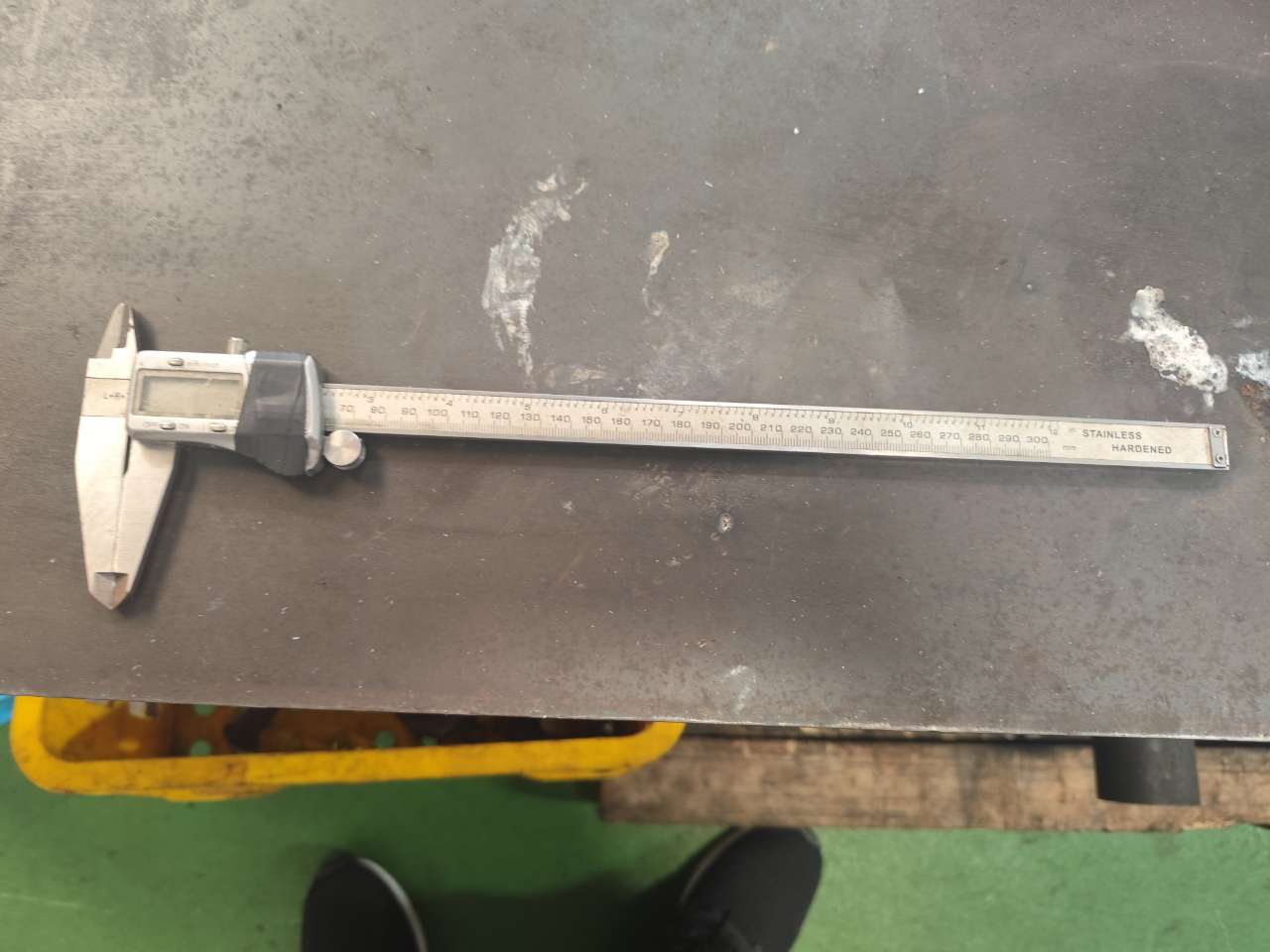
In-Process Inspection. Our Vietnam-based inspectors visit the factory floor during production. They check critical dimensions after laser cutting, after bending, and after welding. They use calibrated tools — calipers, micrometers, CMM when required. They photograph every checkpoint.
Final Inspection. Before packing, every lot goes through a final inspection based on the ballooned drawing. We use AQL sampling 9 for large runs and 100% inspection for small batches or first orders. Surface finish, weld quality, hole positions, bend angles — everything gets measured and documented.
What Gets Checked and When
| Inspection Stage | Key Checks | Tools Used | Frequency |
|---|---|---|---|
| Incoming material | Thickness, grade, surface quality | Micrometer, MTR review | Every material lot |
| After laser cutting | Profile dimensions, hole positions, edge quality | Calipers, optical comparator | First piece + sampling |
| After CNC bending | Bend angles, flange lengths, flatness | Protractor, height gauge, CMM | First piece + sampling |
| After welding | Weld bead appearance, penetration, distortion | Visual, weld gauge, dye penetrant | Every welded assembly |
| After surface treatment | Coating thickness, adhesion, color match | DFT gauge, cross-hatch test | Per batch |
| Final pre-shipment | All CTQ dimensions, cosmetics, packing | Full measurement set | AQL or 100% |
Addressing Common Failure Modes
In sheet metal fabrication, certain defects recur. Weld spatter on visible surfaces. Springback causing out-of-tolerance bend angles. Burrs on laser-cut edges. Powder coat orange peel. Each of these has a prevention strategy, and our inspectors know what to look for because they see these issues regularly.
For the complex angular mounting brackets we recently produced — the ones with mirrored geometry, multiple precise folds, and pre-drilled mounting holes — we implemented fixture-based inspection. A check fixture confirms that both left-hand and right-hand parts match their mirror geometry within tolerance. This is faster and more reliable than measuring dozens of individual dimensions.
Supply chain resilience depends on getting quality right at the source. When you have a local team in the country doing the inspections, you catch problems in hours, not weeks. That is the difference between a minor production adjustment and a full container rejection.
Can I secure flexible payment terms while sourcing custom sheet metal parts from Vietnam to improve my cash flow?
A conversation I had last quarter with a purchasing manager in Texas summed up the cash flow challenge perfectly. He said: "I'm paying 100% upfront to my current supplier, and my customer doesn't pay me for 60 days. I'm financing the entire supply chain out of my own pocket." That is an unsustainable position, and it is more common than people realize.
Yes, you can secure flexible payment terms such as 60–90 day open account credit when sourcing custom sheet metal parts from Vietnam through a supply chain partner with established supplier relationships and the financial structure to extend credit to qualified buyers.
Why Most Factories Demand Upfront Payment
Most Vietnamese factories — especially smaller ones — operate on thin margins. They need cash to buy raw materials and pay workers. Asking them for 60-day payment terms is asking them to be your bank. Most will refuse. Those that accept may build the financing cost into their unit price, or worse, they may prioritize cash-paying customers when capacity gets tight.
This is where our business model creates real value. Because we maintain ongoing relationships with our factory partners and manage consistent order volumes, we handle the factory payment on terms they are comfortable with. We then extend open account payment terms — typically 60 to 90 days — to our qualified U.S. and European clients.
How the Payment Structure Works
Here is a typical payment flow comparison:
| Scenario | Payment to Factory | Payment from Buyer | Buyer's Cash Tied Up |
|---|---|---|---|
| Direct sourcing (typical) | 30% deposit + 70% before shipment | N/A | Full amount before receiving goods |
| Through DEWIN | We pay factory per agreed terms | 60–90 day open account after shipment | Zero until goods arrive and invoice is due |
| Letter of Credit | LC opened before production | Payment at sight or deferred | Bank fees + tied credit line |
For a purchasing manager managing multiple SKUs and seasonal demand, the difference is significant. You receive the parts, inspect them, put them into your inventory or ship them to your customer, and then you pay. Your cash flow stays healthy.
Qualifying for Credit Terms
We do not extend open account terms to every new client on day one. There is a qualification process. We review credit references, order history, and company financials. Typically, after one or two successful prepaid orders, we can move to credit terms. This protects both sides.
The strategic location of Vietnam, combined with efficient logistics through deep-water ports, means transit times to the U.S. West Coast run about 18–22 days. East Coast is 25–30 days. With 60-day payment terms starting from the bill of lading date, you have meaningful time to receive, inspect, and even resell the goods before payment is due.
Government tax incentives further enhance the overall economics. Qualifying foreign investment projects in Vietnam receive a 50% corporate income tax reduction for up to nine subsequent years. These savings flow through to more competitive pricing from factories that benefit from them. Combined with Vietnam's extensive network of free trade agreements 10 — including EVFTA, RCEP, and CPTPP — tariff advantages on exports make the total cost proposition even stronger than the labor cost comparison alone suggests.
For metal stamping production and sheet metal fabrication alike, the combination of competitive pricing, verified quality, and buyer-friendly payment terms is what turns Vietnam from an interesting option into a practical, scalable sourcing strategy.
Conclusion
Vietnam's competitive labor costs, advanced laser cutting capabilities, and strategic trade advantages make it a proven destination for skilled sheet metal fabrication. Success depends on rigorous supplier vetting, local quality control, and a supply chain partner who manages the details so you receive conforming parts on time — with payment terms that protect your cash flow.
Frequently Asked Questions
How can I find a Vietnam sheet metal supplier that balances low labor costs with high technical precision?
A buyer we work with in the Midwest once told me he'd contacted twelve Vietnamese factories directly and received wildly different quotes — some missing key bend tolerances entirely. That experience is common when you don't know what to look for in a manufacturing hub like Vietnam.
What steps should I take to ensure my Vietnam-based manufacturer follows my specific engineering drawings?
One lesson we learned early on: sending a PDF drawing to a factory and assuming they will catch every callout is a recipe for rework. I recall a project where a critical countersink depth was noted only in a general tolerance block — the supplier missed it, and 800 parts came back wrong.
How do I manage quality control on-site in Vietnam to avoid the risk of receiving non-conforming parts?
The worst phone call I've taken was from a U.S. buyer who received a full container of sheet metal enclosures with powder coat adhesion failure. No one had checked adhesion during production. The entire shipment was rejected. That experience reinforced a principle we now follow without exception: quality is verified at the source, not at the receiving dock.
Footnotes
1. Provides a comprehensive overview of sheet metal fabrication, its methods, and applications. ↩︎
2. Explains the responsibilities and functions of a supply chain team. ↩︎
3. Offers detailed analysis and statistics on factory worker salaries in Vietnam. ↩︎
4. Explains the functionality and industrial applications of fiber laser systems. ↩︎
5. Official source for various welding certifications and their benefits. ↩︎
6. Provides an authoritative explanation of Welding Procedure Specifications (WPS) and PQR from the American Welding Society. ↩︎
7. Defines First Article Inspection Reports and their purpose in manufacturing. ↩︎
8. Explains what Material Test Reports are and their importance in the metals industry. ↩︎
9. Defines AQL sampling and its application in quality control inspections. ↩︎
10. Provides an overview of Vietnam’s free trade agreements and their benefits. ↩︎