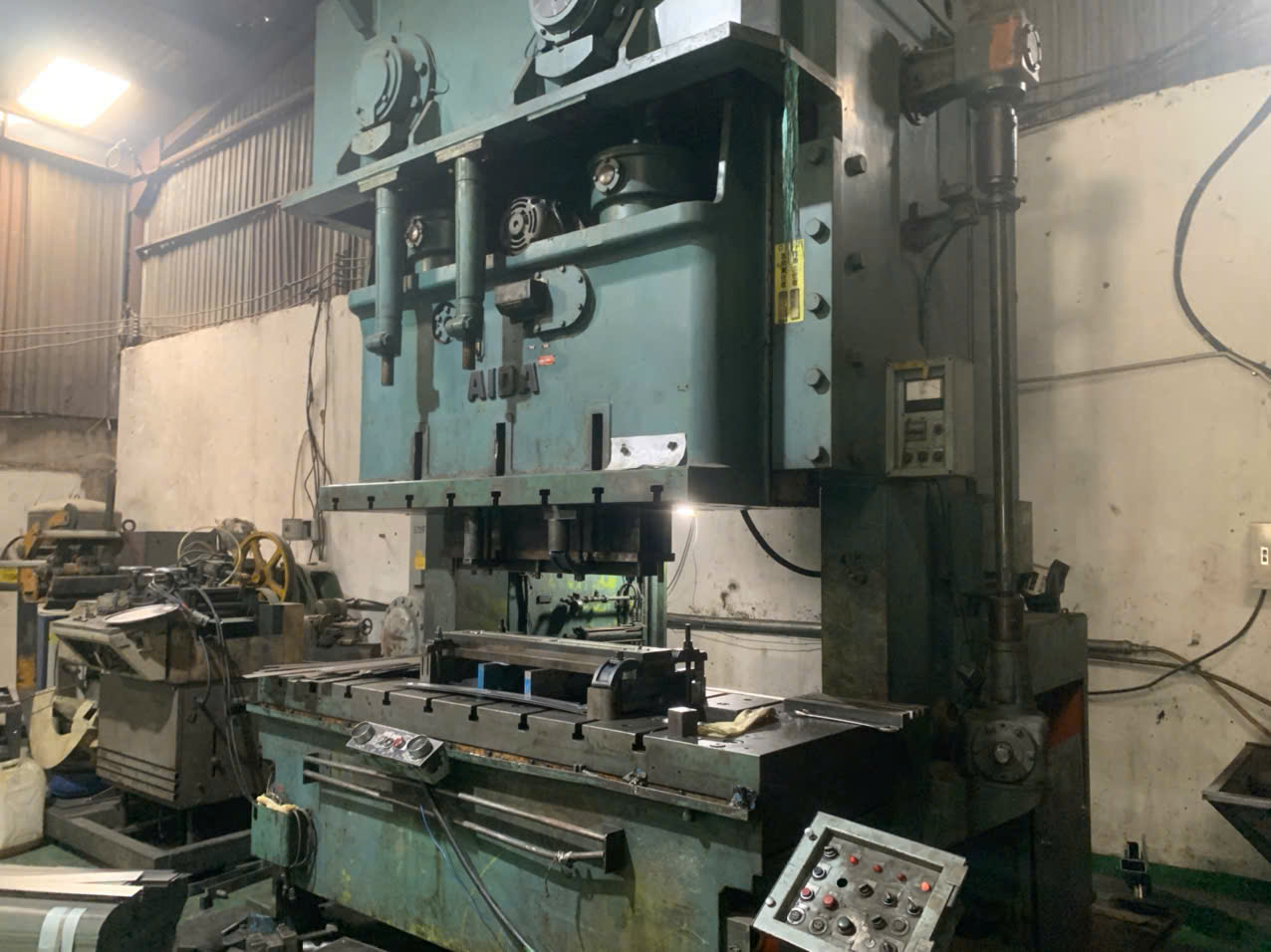

Every week, our team in Vietnam fields the same question from purchasing managers across the U.S.: “When will my parts arrive?” The frustration is real — missed deadlines cascade into halted assembly lines, delayed product launches, and strained customer relationships. And the worst part? Most delays are preventable with the right planning upfront.
Stamping parts from Vietnam typically take 11 to 19 days for expedited air freight orders without new tooling, or 8 to 14 weeks for standard production requiring new tooling and die design shipped via ocean freight. The timeline depends on tooling complexity, production volume, shipping method, and customs clearance.
The total delivery window breaks into distinct phases. Each phase has its own variables, risks, and acceleration levers. Let me walk you through every stage so you can plan with confidence and avoid the common traps that catch first-time buyers off guard.
What Factors Can Affect My Stamping Parts Lead Time from Vietnam?
A buyer we work with in the Midwest once assumed his order would arrive in four weeks — the same timeline his domestic supplier quoted. He didn't account for tooling, raw material sourcing, or the holiday calendar in Vietnam. The order took eleven weeks, and his production line sat idle for three of them.
The biggest factors affecting your stamping parts production lead time from Vietnam are tooling complexity, raw material availability, part geometry, secondary processing requirements, seasonal shutdowns like Tet, and your chosen shipping method. Each factor can add days or weeks to the total timeline.

Tooling and Die Design: The Largest Variable
The single biggest swing factor is whether you need new tooling. If your dies already exist from a previous run, you can skip straight to production. But if you need a new progressive die or a set of compound dies, expect 4 to 8 weeks for standard builds. Simple prototype tooling in P20 steel 1 can be ready in 15 to 20 days. Expedited tooling — something we offer through our Vietnam partner factories — compresses that to 12 to 18 days.
Here is a quick reference for how tooling complexity maps to lead time:
| Tooling Type | Standard Lead Time | Expedited Lead Time |
|---|---|---|
| Simple single-station die | 15–20 days | 10–12 days |
| Progressive die (moderate) | 20–35 days | 12–18 days |
| Complex progressive die | 35–56 days | 18–25 days |
| Multi-station fourslide tooling | 25–40 days | 15–20 days |
Raw Material Sourcing
Many Vietnamese stamping facilities source specialized steel, stainless steel alloys 2, and copper alloys from China or South Korea. Standard materials like SPCC or SUS304 in common gauges are usually in stock. But unusual thicknesses, specialty alloys, or high-volume orders can add 2 to 4 weeks while the factory procures material. Our procurement team always confirms material availability within the first 24 hours of quoting, which helps us flag potential delays early.
Secondary Processing and Surface Treatment
The brackets and clips we regularly produce for U.S. clients often require zinc plating, heat treatment, powder coating, or passivation. These secondary operations can add 5 to 10 days to the production schedule, especially if the plating facility is not co-located within the same industrial park. A growing trend among top-tier Vietnamese suppliers is co-located secondary processing — keeping plating and coating lines inside the same facility — which cuts that inter-factory transit window significantly.
Seasonal and Environmental Disruptions
Two calendar events catch overseas buyers by surprise every year. The Lunar New Year (Tet) shuts factories down for roughly 4 weeks. Orders must be finalized by early November to ship before the holiday. Additionally, peak summer months from May through July bring power load shedding in some industrial hubs, which can introduce 5 to 10 unexpected days of delay.
How Can I Speed Up Production Without Sacrificing Quality Control?
One trade-off we constantly weigh on behalf of our clients is speed versus reliability. Rushing a die build to save a week means nothing if the first-article dimensions are out of tolerance and the whole tool needs rework. Over time, our engineering team has developed a checklist of acceleration levers that do not compromise the final part.
You can speed up stamping parts production by providing complete engineering drawings upfront, approving soft tooling for prototype runs, pre-qualifying raw materials, using expedited die fabrication, overlapping production phases, and shipping via air freight — all while maintaining ISO 9001 certification-level quality controls throughout.

Start With a Complete Data Package
The fastest way to lose time is to submit an incomplete request for quote. When our engineers receive a full data package — 2D drawings with GD&T callouts 3, a 3D STEP or IGES file, material specification, surface finish requirements, and annual volume — we return a quote within 24 hours. Missing information forces back-and-forth that can waste a full week before the clock even starts.
Overlap Tooling and Material Procurement
On standard orders, material is procured after tooling is confirmed. But when time is critical, we instruct our contract manufacturing partners to begin raw material sourcing in parallel with die fabrication. This overlap can save 1 to 2 weeks on the total timeline without any impact on quality.
Use Soft Tooling for Validation
For first-time parts, consider a short-run prototype tooling approach. Soft tooling in P20 steel takes only 15 to 20 days and supports validation runs under 5,000 pieces. This lets you confirm fit and function before committing to hardened production tooling. It is a strategy our team regularly recommends to purchasing managers who want to minimize risk on new part introductions.
Here is a comparison of the expedited versus standard approach:
| Phase | Standard Timeline | Expedited Timeline | Time Saved |
|---|---|---|---|
| Quote and engineering review | 1–3 days | 1 day (24 hours) | 1–2 days |
| Tooling fabrication | 20–35 days | 12–18 days | 8–17 days |
| Material procurement | 14–28 days (sequential) | 0 days (overlapped) | 14–28 days |
| Production run | 20–30 days | 12–18 days | 8–12 days |
| Shipping (air vs. sea) | 18–32 days (sea) | 3–5 days (air) | 15–27 days |
| Total | ~73–128 days | ~28–42 days | ~45–86 days |
Maintain Quality While Moving Fast
Speed without quality is waste. Every expedited order still goes through the same PPAP documentation 4, dimensional inspection, and final inspection process. The key is that quality control is built into each phase — not bolted on at the end. Our Vietnam office has seven team members dedicated to supplier audits, in-process checks, and first-article verification. That local presence means problems are caught on the shop floor, not at your receiving dock.
What Should I Expect During Tooling and Sample Approval Before Mass Production?
The prototyping and sampling phase is where most miscommunication happens between buyer and supplier. I learned this early in my career when a client approved a sample based on photos alone, and the actual parts had a 0.15mm dimensional shift that made them unusable. Since then, we have insisted on structured first-article procedures.
During tooling and sample approval, expect a 4-to-8-week die fabrication period followed by first-article samples with a full dimensional inspection report. You will review and approve samples before mass production begins. Tooling modifications, if needed, are included before sign-off.

The Die Build Process
Once your purchase order is confirmed and tooling design is approved, the die shop begins fabrication. For a progressive die of moderate complexity, this takes 20 to 35 days. The die is built from tool steel (D2, SKD11, or similar), hardened, and assembled. Wire EDM 5, CNC milling, and surface grinding are the primary processes. Throughout this phase, our project managers provide weekly photo updates so you can track progress without guessing.
First-Article Inspection
After the die is complete, the factory runs a small batch — usually 50 to 200 pieces — and produces a first-article inspection (FAI) report. This report documents every critical dimension against your drawing tolerances. The FAI typically adds 1 to 2 days to the timeline. If dimensions are within spec, you approve and mass production begins. If adjustments are needed, the die shop modifies the tool and re-runs samples. Most modifications take 3 to 5 days.
What the Approval Timeline Looks Like
| Step | Duration | Your Action Required |
|---|---|---|
| Die design review and approval | 2–3 days | Review and sign off |
| Die fabrication | 20–35 days | Monitor weekly updates |
| First-article sample run | 1–2 days | None |
| FAI report and sample shipment | 2–3 days | Review report and physical samples |
| Your approval or revision request | 3–7 days | Approve or provide feedback |
| Tool modification (if needed) | 3–5 days | None |
| Mass production begins | Day 1 after approval | Confirm production quantity |
Short-Run Tooling as a Risk Reduction Strategy
If your design is new and unvalidated, there is real value in building soft tooling first. P20 steel dies cost less and build faster. You validate the part geometry, test fit in your assembly, and only then invest in hardened production tooling. This approach is especially common among engineering design firms we work with, where the product is still in development and changes are likely.
How Do Shipping and Customs Clearance Impact My Total Delivery Timeline?
Last quarter, a client's shipment cleared the port in Ho Chi Minh City in record time — only to sit at Long Beach for six days waiting for customs release because of an incomplete HS code 6 on the commercial invoice. Supply chain logistics failures like this are entirely preventable, but they require attention to paperwork that many buyers overlook.
Shipping and customs clearance can add 3 to 8 weeks to your total delivery timeline. Ocean freight shipping from Vietnam to the U.S. West Coast takes 18 to 32 days port-to-port, plus 5 to 7 days for customs clearance and inland delivery. Air freight reduces transit to 3 to 5 business days but costs significantly more.

Ocean Freight vs. Air Freight
For most stamping parts orders, ocean freight is the default choice. The parts are heavy relative to their value, and the per-kilogram savings of sea shipping are substantial. But when deadlines are tight — a line-down situation, a product launch, or an emergency replacement order — air freight makes the math work even at higher cost.
Here is how the two methods compare for stamping parts shipped from Vietnam:
| Shipping Method | Transit Time (to U.S. West Coast) | Transit Time (to U.S. East Coast) | Relative Cost | Best For |
|---|---|---|---|---|
| Sea freight (FCL) | 18–25 days port-to-port | 30–40 days port-to-port | Low | Bulk production orders |
| Sea freight (LCL) | 22–32 days port-to-port | 35–45 days port-to-port | Medium-low | Smaller volume orders |
| Air freight | 2–3 days to LAX | 3–5 days to JFK/ORD | High | Urgent or lightweight orders |
| Air + sea hybrid | 10–15 days | 15–20 days | Medium | Balanced urgency and cost |
FOB Shipping Terms and Incoterms
Most of our shipments are quoted under FOB shipping terms 7 (Free On Board), meaning the price includes delivery to the Vietnamese port. From there, you or your freight forwarder handles ocean freight, insurance, and destination customs. We also offer DDP (Delivered Duty Paid) for clients who want us to manage the full door-to-door logistics chain. Understanding your Incoterms upfront prevents surprises in both cost and responsibility.
Customs Clearance: The Hidden Days
Customs clearance at the origin port typically takes 1 to 2 days. In Vietnam, manufacturers located in Free Trade Zones 8 can use the "On-the-spot Export" mechanism, which shaves 48 to 72 hours off the standard customs export declaration. At the U.S. destination, expect 3 to 5 days for customs processing, inspection (if flagged), and release. Incomplete or inaccurate documentation — wrong HS codes, missing material certifications, incorrect country-of-origin declarations — is the most common cause of holds.
Vietnam vs. China vs. U.S. Domestic: A Speed Comparison
One reason buyers are shifting orders from China to Vietnam is the tariff advantage. Vietnam-origin stamping parts face zero Section 301 tariffs 9, while Chinese parts can carry 25% or more. But speed matters too. The shipping gap between Vietnam and China is operationally small — only about 4 days longer from Ho Chi Minh City versus Shanghai to the U.S. West Coast. And Vietnam's tooling lead times are dramatically faster than domestic U.S. suppliers.
| Factor | Vietnam | China | U.S. Domestic |
|---|---|---|---|
| Tooling lead time (standard) | 20–30 days | 20–30 days | 8–12 weeks |
| Tooling lead time (expedited) | 12–18 days | 15–20 days | 5–8 weeks |
| Sea freight to U.S. West Coast | 14–22 days | 10–14 days | N/A |
| Section 301 tariffs | 0% | 25–145%+ | N/A |
| Total order-to-dock (air, no tooling) | 11–19 days | 13–21 days | 5–10 days |
| Total order-to-dock (sea, with tooling) | 8–14 weeks | 8–14 weeks | 12–20 weeks |
The numbers make a clear case. Vietnam offers tooling speed comparable to China, a small shipping time premium, and a massive tariff advantage — all while maintaining the mid-to-high quality standards that U.S. purchasing managers require.
Planning for the Unexpected
Build a buffer. Even in a well-managed supply chain, congestion at ports, weather delays, and documentation errors happen. We recommend adding 5 to 7 days of buffer to any quoted transit time. That way, a minor disruption does not cascade into a missed delivery commitment to your end customer.
Conclusion
Receiving stamping parts from Vietnam takes as little as 11 days or as long as 14 weeks. The timeline depends on tooling needs, material availability, shipping method, and customs preparation. Plan each phase carefully, work with an audited supplier with proven capabilities, and build in buffer days. If you need project-specific timelines, reach out to our team at sa***@*******ch.com.
Frequently Asked Questions
What Factors Can Affect My Stamping Parts Lead Time from Vietnam?
A buyer we work with in the Midwest once assumed his order would arrive in four weeks — the same timeline his domestic supplier quoted. He didn't account for tooling, raw material sourcing, or the holiday calendar in Vietnam. The order took eleven weeks, and his production line sat idle for three of them.
How Can I Speed Up Production Without Sacrificing Quality Control?
One trade-off we constantly weigh on behalf of our clients is speed versus reliability. Rushing a die build to save a week means nothing if the first-article dimensions are out of tolerance and the whole tool needs rework. Over time, our engineering team has developed a checklist of acceleration levers that do not compromise the final part.
What Should I Expect During Tooling and Sample Approval Before Mass Production?
The prototyping and sampling phase is where most miscommunication happens between buyer and supplier. I learned this early in my career when a client approved a sample based on photos alone, and the actual parts had a 0.15mm dimensional shift that made them unusable. Since then, we have insisted on structured first-article procedures.
Footnotes
1. Updated ASTM standard for alloy tool steels, replacing the previous version of the A681 specification. ↩︎
2. Definition and properties of stainless steel alloys used in manufacturing. ↩︎
3. Official ASME standard for Geometric Dimensioning and Tolerancing (GD&T) in engineering. ↩︎
4. Overview of the Production Part Approval Process standard for quality assurance. ↩︎
5. Technical explanation of the electrical discharge machining process used in die fabrication. ↩︎
6. U.S. Census Bureau resource for identifying and classifying products using HS codes. ↩︎
7. Official ITA guide to Incoterms 2020, including specific rules for Free on Board (FOB) shipping. ↩︎
8. Official U.S. government resource for Foreign-Trade Zones, providing regulatory information and trade benefits. ↩︎
9. Authoritative USTR landing page for all Section 301 trade enforcement investigations and actions. ↩︎