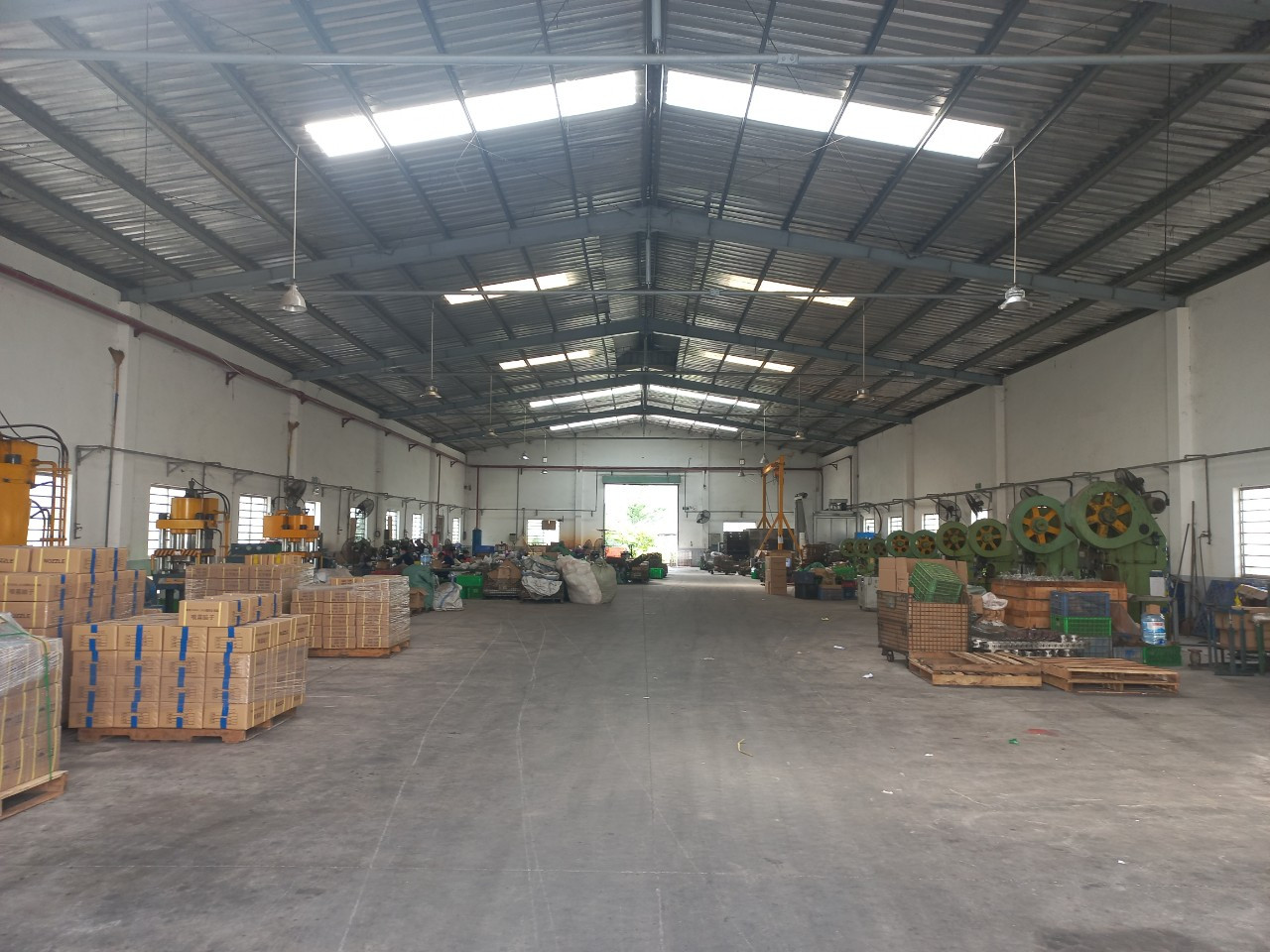

I learned the hard way that managing communication with Vietnam sheet metal fabrication 1 suppliers is where most projects succeed or fail — long before a single bracket gets laser-cut.
Managing communication and reporting with Vietnam sheet metal fabrication suppliers requires clear technical documentation, structured production reports, proactive update schedules, and time-zone-aware workflows. Buyers who establish these systems early avoid quality errors, rework, and costly delivery delays on custom sheet metal orders.
Over the past several years, our team in Vietnam has coordinated hundreds of custom sheet metal projects for U.S. and European buyers. The patterns are consistent: when communication breaks down, parts come back wrong technical documentation 2. When reporting is structured, first-pass yield goes up and lead times shrink. This article walks through four critical areas — technical alignment, production reporting, error-prevention workflows, and time zone management — so you can build a supplier relationship that actually works.
How do I ensure my technical drawings and sheet metal specs are fully understood by my Vietnam supplier?
A U.S. client once sent us a 3D STEP file 3 with no 2D drawing, no tolerance callouts, and a one-line email: "Quote this." The factory quoted it in three days — and got nearly every critical dimension wrong on the first sample.
To ensure your technical drawings and sheet metal specs are fully understood, provide complete 2D and 3D CAD files, a detailed bill of materials, written tolerance callouts, surface finish requirements, and compliance standards. Then confirm understanding through a formal Design for Manufacturability review before production begins.
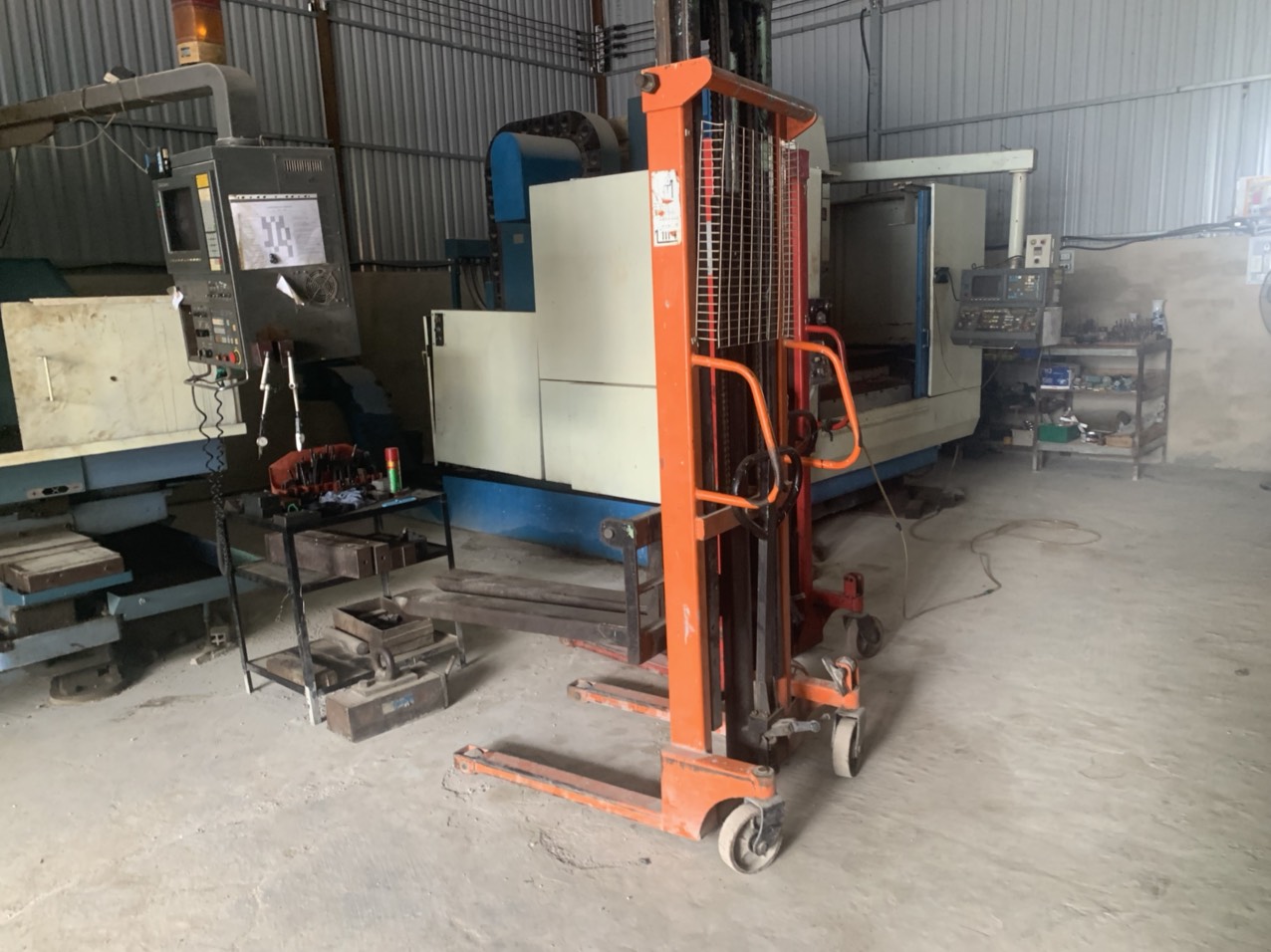
Why Incomplete Documentation Causes the Biggest Problems
Most quality failures on Vietnam sheet metal projects trace back to one root cause: unclear or incomplete technical specifications. Language barriers amplify the problem. A Vietnamese engineer may read your drawing differently than you intended, especially when GD&T symbols 4 are ambiguous or missing. I have seen a simple note like "deburr all edges" interpreted three different ways across three different shops.
The fix is not to send more emails. The fix is to send a complete technical package from the start.
What Your Technical Package Must Include
Here is a checklist our team uses before forwarding any drawing to a Vietnam factory:
| Document | Purpose | Format |
|---|---|---|
| 2D Engineering Drawing | Dimension callouts, tolerances, GD&T | PDF or DWG |
| 3D CAD Model | Geometry for CNC programming, laser cutting | STEP or IGES |
| Bill of Materials (BOM) 5 | Part numbers, quantities, materials | Excel or PDF |
| Surface Finish Spec | Coating type, color, thickness | Written spec sheet |
| Assembly Instructions | How parts fit together | Annotated drawings or photos |
| Compliance Requirements | CE, RoHS, FCC, IP ratings | Written spec with test protocols |
If any of these are missing, the factory will fill in the blanks with assumptions. Those assumptions are where errors start.
The DFM Review: Your First Line of Defense
Before any metal gets cut, we run a Design for Manufacturability review 6 with the factory's engineering team. This is a structured conversation — not a casual email. We go through every bend radius, every hole position, every weld joint, and every tolerance. We ask the factory to flag anything they cannot hold, anything that will drive cost up, and anything that needs a different process.
This step alone eliminates 60–70% of first-article failures in our experience. It also surfaces cultural differences in how specs are read. For example, in some Vietnamese shops, a tolerance written as ±0.5mm on a non-critical dimension may be treated loosely unless you explicitly mark it as mandatory.
Confirm Understanding in Writing
After the DFM review, we require the factory to send back a written confirmation — a summary of all key specs, tolerances, materials, and finishes they will follow. This document becomes the quality benchmark for inspection. If the factory cannot produce this summary accurately, that is a red flag before production even begins.
What production reports should I require to track the progress of my custom sheet metal orders?
One lesson we learned early in our Vietnam operations: if you do not define what reports you want and when you want them, you will get vague WeChat messages like "production is going well" — and then silence until the container ships.
You should require five core production reports: a pre-production checklist, raw material inspection report, in-process quality checkpoints, first-article inspection report, and a final inspection report with photos and measurements. These reports must follow a fixed schedule tied to your order milestones.

Building a Reporting Framework That Works
Production monitoring on sheet metal orders is not just about knowing where your parts are. It is about catching problems early enough to fix them without blowing your delivery date. The reporting framework below is what we use on every project we manage through our Vietnam office.
The Five Essential Reports
| Report | When It Is Due | What It Covers |
|---|---|---|
| Pre-Production Checklist | Before cutting starts | Material verification, tooling readiness, drawing confirmation |
| Raw Material Inspection | Upon material receipt | Mill certs, material grade, thickness measurement |
| In-Process Quality Checkpoints | At each major operation | Dimensional checks after cutting, bending, welding |
| First Article Inspection (FAI) 8 | After first piece is complete | Full dimensional layout vs. drawing, photos, go/no-go |
| Final Inspection Report | Before packing | AQL sampling, visual inspection, packing verification |
Each report should include photos, measurement data, and a pass/fail status. We require our suppliers to use standardized templates so that every report looks the same regardless of which factory produces it. This makes it easy for the buyer's quality team to review without learning a new format each time.
Why In-Process Checkpoints Matter Most
Many buyers only ask for a final inspection. That is too late. If a bending operation goes wrong on piece number 50 out of 500, you want to know at piece 50 — not at piece 500. In-process quality checkpoints tied to each major fabrication step (laser cutting, punching, bending, welding, finishing) let you catch drift before it becomes scrap.
Our quality control procedures 9 require the factory to measure and photograph at least the first five pieces after each setup change. If dimensions are within tolerance, production continues. If not, the line stops until the issue is resolved.
Tying Reports to Payment Milestones
A practical tip: tie your payment schedule to report submissions. For example, release the second payment tranche only after receiving and approving the FAI report. This creates a financial incentive for the factory to complete reports on time and accurately. It also gives you leverage if quality issues surface during production.
Digital Tools for Real-Time Tracking
Cloud-based platforms have changed how we do production monitoring. Instead of waiting for email attachments, we use shared dashboards where the factory uploads inspection data in real time. The buyer can log in from any time zone and see exactly where the order stands. This level of supply chain logistics transparency 10 was rare five years ago in Vietnam. Today, it is becoming standard among the better fabricators.
How can I establish a communication flow that prevents quality errors and rework in my Vietnam projects?
Last year, a client came to us after losing $40,000 on a batch of powder-coated steel brackets from a different Vietnam supplier. The parts looked fine in photos but failed assembly — mounting holes were 1.2mm off-center. The root cause was not a bad factory. It was a broken communication flow where nobody confirmed the hole pattern after a mid-project design change.
To prevent quality errors and rework, establish a structured communication flow that includes a single point of contact, weekly status calls, mandatory change-order confirmations, in-process hold points for buyer approval, and a two-way feedback loop. Proactive communication — discussing problems before they grow — is the key.

The Cost of Reactive Communication
Reactive communication means the factory calls you after something goes wrong. Proactive communication means the factory alerts you when something might go wrong. The difference in cost and timeline impact is enormous. In our experience managing projects between U.S. buyers and Vietnam factories, proactive suppliers save 15–20% on total project cost compared to reactive ones — simply because problems are caught earlier when fixes are cheaper.
Designing Your Communication Flow
Here is the framework we use. It is not complicated, but it must be followed consistently.
Step 1: Assign a Single Point of Contact (SPOC)
Both sides need one person who owns the communication. On the factory side, this should be a project manager — not a salesperson. Evaluate their English fluency early. If the SPOC cannot clearly explain a technical problem in English, you will get filtered information.
Step 2: Establish a Weekly Cadence
Schedule a fixed weekly call or video meeting. Do not rely on ad-hoc emails. The agenda should cover: current production status, upcoming milestones, any issues or risks, and open action items. Keep meeting notes in a shared document.
Step 3: Mandatory Change-Order Confirmation
Any design change — no matter how small — must go through a formal change-order process. The factory must acknowledge the change in writing, update their production documents, and confirm the impact on cost and lead time. This is where most rework originates: verbal changes that never get documented.
Step 4: In-Process Hold Points
Identify critical operations where the factory must stop and get your approval before proceeding. For complex sheet metal brackets with multiple bends and weld joints, a hold point after welding but before finishing is essential. This prevents you from discovering a weld defect after the part is already powder-coated.
Step 5: Two-Way Feedback Loop
Encourage the factory to give you feedback on your designs. Vietnamese engineers often have practical insights on manufacturability — a bend radius that is too tight for their press brake, a weld joint that would be stronger with a different configuration. A supplier relationship management approach that values this input leads to better parts and fewer surprises.
Evaluating Supplier Communication Quality Before You Commit
Before placing a large order, test the supplier's communication during the quoting phase. How fast do they respond? Do they ask clarifying questions about your drawing, or do they just quote a price? Do they proactively flag potential issues? If a supplier is passive during quoting, they will be passive during production — and that is when mistakes happen.
| Communication Signal | Good Sign | Red Flag |
|---|---|---|
| Response time to RFQ | Within 24–48 hours with questions | Instant quote with no questions |
| Technical questions asked | Asks about tolerances, finish, assembly | Asks only about quantity and delivery |
| Change-order handling | Documents changes, confirms impact | Agrees verbally, no written record |
| Problem escalation | Alerts buyer immediately with options | Hides problem until buyer discovers it |
| English fluency of PM | Clear written and verbal communication | Relies on translation apps or third parties |
Bridging Cultural Differences
Vietnamese business culture values harmony and relationship-building. A factory manager may say "yes" to avoid confrontation even when they have concerns about a spec. This is not dishonesty — it is cultural. Our local team in Vietnam has learned to ask open-ended questions instead of yes/no questions. Instead of "Can you hold this tolerance?" we ask "What tolerance can you hold on this feature with your current equipment?" The answers are more honest and more useful.
Working with sourcing agents or western-managed firms like ours can manage cultural communication gaps. We translate not just language but context — making sure both sides understand what was actually agreed upon, not just what was said.
What is the most effective way for me to manage time zone differences and get timely updates from Vietnam?
When our Singapore office coordinates between a buyer in Texas and a factory in Ho Chi Minh City, we are juggling a 12-hour time gap. A question sent at 9 AM Central Time arrives at 10 PM in Vietnam. If the factory waits until their next morning to reply, the buyer does not see the answer until their next morning. That is a 24-hour round trip for a single question.
The most effective way to manage time zone differences is to create a structured overlap window — typically 1–2 hours where both sides are online simultaneously — combined with asynchronous reporting tools, pre-set escalation protocols, and a local intermediary who can act on your behalf during your off-hours.
Finding Your Overlap Window
Vietnam is in the GMT+7 time zone. For U.S. buyers on the East Coast (EST/EDT), Vietnam is 11–12 hours ahead. For West Coast buyers (PST/PDT), it is 14–15 hours ahead. European buyers have a narrower gap — typically 5–6 hours.
| Buyer Location | Time Zone Gap | Best Overlap Window (Buyer's Local Time) | Vietnam Local Time |
|---|---|---|---|
| U.S. East Coast | +12 hours | 7:00–9:00 AM | 7:00–9:00 PM |
| U.S. West Coast | +15 hours | 5:00–7:00 PM | 8:00–10:00 AM (next day) |
| Western Europe | +5–6 hours | 1:00–3:00 PM | 7:00–9:00 PM |
The overlap window is when you schedule your live calls, urgent discussions, and real-time problem-solving. Everything else runs asynchronously.
Asynchronous Reporting: The Backbone of Time-Zone Management
The overlap window handles urgent issues. But the bulk of production monitoring happens through asynchronous reports. This is why the reporting framework from the previous section matters so much. When a factory uploads an in-process inspection report to a shared platform at 4 PM Vietnam time, the U.S. buyer can review it at 7 AM their time and respond with feedback. No one waits for the other to be online.
We set up shared folders or project management tools where every document — drawings, reports, photos, measurement data — lives in one place. Both sides can access it 24/7. This eliminates the "I didn't get the attachment" problem and creates a clear audit trail for regulatory compliance and factory audits.
The Role of a Local Intermediary
Time zone management is not just about scheduling. It is about having someone who can make decisions and take action when you are asleep. This is one of the core reasons our clients work with us. Our seven-person team in Vietnam operates on Vietnam time. When the factory has an urgent question at 2 PM in Ho Chi Minh City — and it is 2 AM in Chicago — our local team can step in, review the issue against the approved specs, and give the factory a go/no-go answer. The buyer gets a summary report in the morning with full context.
Without a local presence or a trusted sourcing agent, buyers face a difficult choice: either the factory makes decisions without your input, or production stops for 24 hours every time a question comes up. Neither option is good for on-time delivery.
Escalation Protocols for Urgent Issues
Not every issue can wait for the next scheduled call. Define escalation protocols in advance. For example:
- Level 1 (routine): Handled via shared platform or email within 24 hours.
- Level 2 (quality concern): Local intermediary reviews and responds within 4 hours; buyer notified via email.
- Level 3 (production stop): Immediate phone call or video call to buyer, regardless of time zone. Production halts until buyer approves a resolution.
This tiered approach prevents small questions from clogging your phone at midnight while ensuring critical issues get immediate attention.
Making Time Zones Work for You
There is an underappreciated advantage to the time difference. When you send feedback at the end of your workday, the Vietnam factory receives it at the start of theirs. They can implement changes during their shift and send you results by your next morning. If managed well, the time gap creates a 24-hour work cycle where progress happens around the clock. The key is disciplined reporting and clear action items — so neither side wastes their working hours waiting for clarification.
Conclusion
Managing communication and reporting with Vietnam sheet metal fabrication suppliers comes down to structure, documentation, and proactive habits — not luck. Build these systems before your first order, and you will avoid the rework cycles and delivery delays that derail most sourcing projects.
Frequently Asked Questions
How do I ensure my technical drawings and sheet metal specs are fully understood by my Vietnam supplier?
A U.S. client once sent us a 3D STEP file 3 with no 2D drawing, no tolerance callouts, and a one-line email: "Quote this." The factory quoted it in three days — and got nearly every critical dimension wrong on the first sample.
What production reports should I require to track the progress of my custom sheet metal orders?
One lesson we learned early in our Vietnam operations: if you do not define what reports you want and when you want them, you will get vague WeChat messages like "production is going well" — and then silence until the container ships.
How can I establish a communication flow that prevents quality errors and rework in my Vietnam projects?
Last year, a client came to us after losing $40,000 on a batch of powder-coated steel brackets from a different Vietnam supplier. The parts looked fine in photos but failed assembly — mounting holes were 1.2mm off-center. The root cause was not a bad factory. It was a broken communication flow where nobody confirmed the hole pattern after a mid-project design change.
Footnotes
1. Provides a general overview of the industrial process of forming metal into thin, flat pieces. ↩︎
2. Replaced HTTP unknown with an authoritative Wikipedia page. ↩︎
3. Describes STEP files as a standard format for exchanging 3D models in engineering and manufacturing. ↩︎
4. Details the standardized symbolic language of Geometric Dimensioning and Tolerancing for precise design communication. ↩︎
5. Clarifies the function of a BOM as a comprehensive list of materials for product manufacturing and repair. ↩︎
6. Explains the DFM process to optimize product design for easier and more cost-effective manufacturing. ↩︎
7. Defines engineering tolerances and their critical role in manufacturing specifications for part usability. ↩︎
8. Replaced HTTP 403 with an authoritative Wikipedia page. ↩︎
9. Replaced HTTP 403 with a current article explaining quality control procedures. ↩︎
10. Discusses the practice of sharing supply chain information to improve compliance, resilience, and brand loyalty. ↩︎