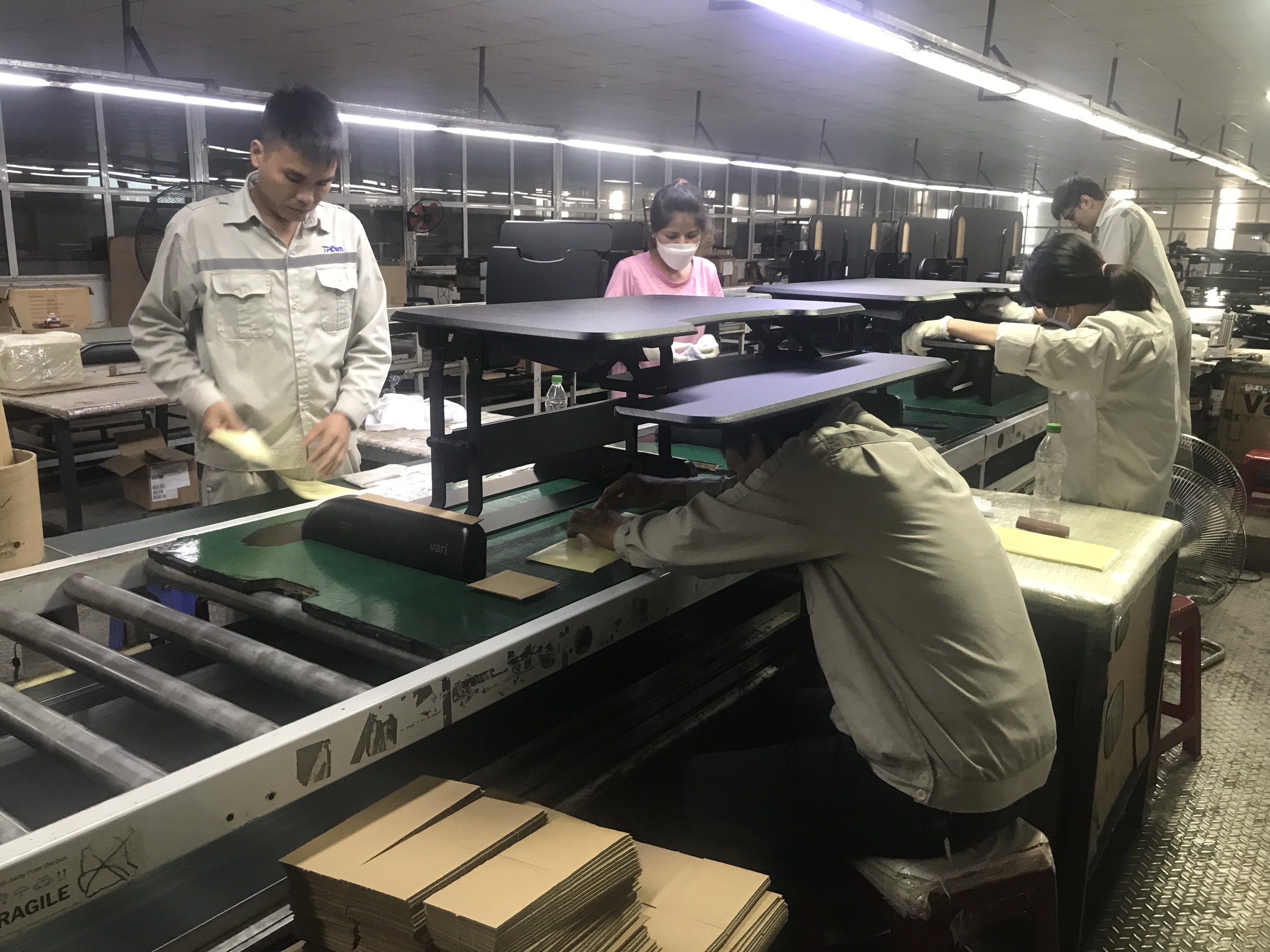

When our Vietnam office first started coordinating sheet metal fabrication 1 projects for U.S. buyers, we quickly learned that technical skill alone does not guarantee success — cultural communication gaps can quietly derail even the most well-planned orders.
Managing cultural communication when sourcing sheet metal fabrication from Vietnam requires understanding indirect communication norms, confirming all specifications in writing, using visual tools like annotated CAD files, building long-term supplier relationships, and establishing structured feedback loops that respect Vietnamese business culture and the concept of saving face.
This article breaks down the specific challenges and practical solutions I have seen work across dozens of custom sheet metal projects annotated CAD files 2. Each section addresses a real pain point that purchasing managers face when working with Vietnamese fabrication partners.
How do I ensure my technical sheet metal drawings and tolerances are accurately interpreted by Vietnamese suppliers?
A lesson we learned early on came when a U.S. client sent a detailed PDF drawing with GD&T callouts, assuming the Vietnamese shop floor team would read them the same way an American machinist would. The parts came back within dimensional spec — but the datum references were interpreted differently, causing assembly issues.
To ensure accurate interpretation, provide annotated CAD files with visual tolerance callouts, use JIS or ASTM standard terminology familiar to Vietnamese engineers, include 3D models alongside 2D drawings, and always confirm critical dimensions in a written specification review before production begins.
Why Drawing Interpretation Differs
Vietnamese engineers are highly proficient at reading technical drawings. However, they are often trained on JIS (Japanese Industrial Standards) 3 or GB (Chinese national standards) rather than ASME Y14.5 4. This means your GD&T symbols may look familiar but carry slightly different interpretation habits. The risk is not ignorance — it is assumption. Both sides assume they understand the same thing.
At our Vietnam office, we now run a mandatory "drawing review meeting" before any sheet metal project enters production. We go through every tolerance, every surface finish callout, and every critical feature. We ask the supplier to mark up the drawing with their understanding. This simple step has eliminated most first-article failures.
Practical Steps to Improve Drawing Accuracy
| Step | Action | Why It Works |
|---|---|---|
| 1 | Send 3D STEP files alongside 2D PDFs | Reduces ambiguity on complex bends and cutouts |
| 2 | Highlight critical tolerances in red | Draws immediate attention to must-hold dimensions |
| 3 | Use simple English notes, not paragraphs | Avoids language barriers with technical jargon |
| 4 | Reference ASTM or JIS standards explicitly | Matches terminology Vietnamese engineers already know |
| 5 | Request a marked-up drawing back from supplier | Forces them to confirm their understanding in writing |
| 6 | Include sample photos of acceptable vs. rejected parts | Visual references cut through any language gap |
The Role of 3D Models and Visual Tools
Language barriers are real. Most Vietnamese engineers can read technical English terms, but long sentences or ambiguous notes cause confusion. A 3D model 5 removes most of that ambiguity. When we send a STEP or IGES file along with an annotated PDF, the supplier's programming team can directly import the model into their CNC laser or press brake software. This reduces manual interpretation errors.
Video calls with screen sharing have also become a powerful tool. Instead of exchanging emails back and forth about a fillet radius or a bend relief, we open the 3D model on screen and point to the exact feature. This takes ten minutes and saves days of rework.
Confirming Everything in Writing
One rule I never break: every verbal agreement gets followed up in writing. If we discuss a tolerance change on a call, I send an email summary within the hour. I ask the supplier to reply with confirmation. This is not about distrust. It is about creating a clear record that both sides can reference. In Vietnamese business culture 6, verbal agreements are respected, but written records prevent the kind of quiet misunderstandings that lead to production delays.
What is the best way for me to communicate strict quality requirements without causing misunderstandings in Vietnam?
During a recent project involving precision mounting brackets — parts with multiple folds, pre-drilled holes, and weld joints — we had to communicate a very specific weld appearance standard to the Vietnamese shop floor. Simply telling them "no visible porosity" was not enough. We needed to explain what "acceptable" looked like without making anyone feel criticized.
Communicate strict quality requirements by providing visual acceptance criteria with photos of good and defective parts, using structured inspection checklists rather than verbal instructions, framing feedback as collaborative improvement rather than blame, and respecting the cultural importance of saving face when discussing non-conformances.

Understanding "Face" in Quality Discussions
The concept of saving face 7 runs deep in Vietnamese business culture. If you point out a defect in front of a team, the person responsible may feel publicly shamed. The result is not improvement — it is withdrawal. They become less likely to report problems proactively. They may even hide minor defects to avoid embarrassment.
I have seen this pattern firsthand. A Western quality auditor visited a partner factory and openly criticized a batch of brackets in front of the production team. The factory's response was not anger — it was silence. After that visit, the factory became less communicative. They stopped sending progress photos. It took weeks to rebuild the relationship.
A Better Approach: Structured Quality Systems
Instead of relying on verbal feedback, we build quality into the process with documentation. Here is what works:
| Quality Tool | Purpose | Cultural Benefit |
|---|---|---|
| Visual acceptance standard (photos) | Shows exactly what is OK and what is not | Removes subjective judgment and personal blame |
| First Article Inspection Report (FAIR) | Validates the process before mass production | Catches issues early without confrontation |
| In-process inspection checklist | Guides operators step by step | Reduces fear of making mistakes |
| Final inspection report with photos | Documents actual results vs. spec | Creates objective evidence, not opinion |
| Corrective action request (CAR) | Formal process for fixing root causes | Frames issues as system problems, not people problems |
Framing Feedback as Partnership
When quality issues arise, I frame them as "let us solve this together" rather than "you made a mistake." This is not just politeness — it is strategy. Vietnamese fabricators respond much better to collaborative problem-solving. They are more likely to invest in corrective action when they feel respected.
Our team in Vietnam also acts as a cultural bridge during quality discussions. They understand both the American expectation of direct, data-driven feedback and the Vietnamese preference for indirect communication. When a U.S. client sends a blunt rejection email, our local team translates the intent into language that motivates action without causing defensiveness.
Implementing ISO-Aligned Quality Control
Many Vietnamese sheet metal companies now hold ISO 9001 certification 8. This is a strong foundation. When a supplier has ISO 9001, you can reference their own quality procedures in your discussions. Instead of saying "your welds are bad," you can say "let us review the welding procedure in your quality plan and see if something shifted." This keeps the conversation professional and process-oriented.
We also recommend implementing PPAP (Production Part Approval Process 9) for critical sheet metal components. PPAP forces both sides to agree on manufacturing capabilities, measurement methods, and acceptance criteria before production starts. It removes ambiguity and reduces the chance of misunderstandings later.
How can I manage my project timeline effectively when dealing with different communication styles in Vietnam?
One trade-off I constantly weigh is speed versus clarity. A U.S. purchasing manager wants a quick "yes, we can deliver by March 15." But the Vietnamese supplier may respond with "we will try our best," which sounds positive but is actually an indirect way of signaling uncertainty. If you do not probe further, you will not discover the real timeline risk until it is too late.
Manage project timelines by setting explicit milestone dates with written confirmations, asking specific follow-up questions when you receive vague responses, building buffer time into your schedule for indirect communication patterns, and using shared project trackers that both sides update regularly.
Decoding the "Soft No"
In Vietnamese business culture, a direct refusal is rare. Instead, you hear phrases like:
- "That might be difficult."
- "We will try our best."
- "We need to check with our manager."
- "Let us discuss internally first."
Each of these can mean "no" or "not likely." The key is to follow up with specific questions. Instead of accepting "we will try our best," ask: "What is the earliest date you can guarantee? What are the risks to that date? What do you need from us to meet this deadline?"
This is not aggressive. It is precise. Vietnamese suppliers appreciate specificity because it removes the pressure of having to give a vague, face-saving answer.
Building a Realistic Timeline
Here is how we structure project timelines for sheet metal fabrication in Vietnam:
| Phase | Typical Duration | Communication Action |
|---|---|---|
| Drawing review and clarification | 3–5 days | Written confirmation of all specs and tolerances |
| Quotation | 2–3 days | Request itemized breakdown, not just total price |
| Material procurement | 7–14 days | Confirm material grade and source in writing |
| Tooling or fixture setup | 5–10 days | Request photos of fixtures before production |
| First article production | 3–5 days | Require FAIR report with measurement data |
| First article approval | 2–3 days (buyer side) | Respond quickly to avoid compounding delays |
| Mass production | 7–21 days (volume dependent) | Request in-process inspection updates |
| Final inspection and packing | 2–3 days | Require inspection report and packing photos |
| Shipping and logistics | 14–30 days (sea freight) | Confirm booking and ETD/ETA in writing |
The Hierarchy Factor
Decisions in Vietnamese companies often require approval from senior management. If you are negotiating with a sales engineer, they may not have authority to commit to a timeline. They need to check with their boss, who may need to check with the factory director. This is normal. Do not pressure for an immediate answer. Instead, set a clear deadline: "Please confirm the production schedule by Thursday."
Our Vietnam team understands this hierarchy well. We know which person in the supplier's organization has decision-making authority, and we make sure critical questions reach that person directly. This avoids the telephone-game effect where information gets diluted through layers of management.
Using Digital Tools for Transparency
Some progressive Vietnamese fabricators now offer real-time monitoring tools. These include camera access to the shop floor, ERP system updates, and shared dashboards. We encourage our supply chain partners to adopt these tools because they reduce the need for constant check-in calls. You can see production status without asking. This respects the supplier's time and avoids putting them in a position where they feel pressured to give overly optimistic updates.
Even simple tools help. A shared Google Sheet where the supplier updates production quantities daily has worked well on several of our projects. It creates accountability without confrontation.
How do I build a professional relationship that encourages proactive updates from my Vietnamese fabrication partner?
When we first set up our Vietnam office, I spent time visiting fabrication shops in both the northern and southern regions. I noticed a clear difference. Northern Vietnam tends to be more traditional and hierarchical. Southern Vietnam, especially around Ho Chi Minh City, is more business-oriented and open to Western practices. But across both regions, one thing remained constant: relationships matter more than contracts.
Build proactive relationships by investing time in face-to-face visits, showing genuine long-term commitment rather than transactional behavior, creating safe channels for honest feedback, understanding regional differences in Vietnamese business etiquette, and recognizing that trust — not contractual obligation — drives the best communication from your fabrication partner.
Why Relationships Drive Communication
In the West, a signed contract is the foundation of a business relationship. In Vietnam, the contract is important but secondary to personal trust. A Vietnamese supplier who trusts you will go above and beyond — alerting you to material shortages, suggesting design improvements, and flagging potential quality issues before they become problems. A supplier who sees you as a transactional buyer will do the minimum required.
I have experienced both sides of this. With suppliers where we have built deep relationships over multiple years, we get proactive updates without asking. They send us photos of material arrivals, first-off samples, and packing progress. With new suppliers where the relationship is still forming, we often have to chase for updates. The difference is trust, not capability.
Signaling Long-Term Intent
Vietnamese fabricators value long-term partnerships. Here are concrete ways to signal your commitment:
- Share your annual forecast, even if approximate.
- Discuss future projects during current production.
- Visit the factory at least once a year if possible.
- Pay on time, every time. This builds enormous trust.
- Acknowledge good work publicly. A simple "great job on this batch" email, copied to their management, goes a long way.
Foreign direct investment from Japan, South Korea, and increasingly from Western companies has shaped Vietnam's manufacturing landscape. Vietnamese suppliers are accustomed to long-term partnerships with Japanese firms and understand the value of continuous improvement within a stable relationship. Tap into this existing cultural framework.
Creating Safe Feedback Channels
The fear of losing face means Vietnamese partners may not volunteer bad news. To counter this, create explicit channels where honesty is rewarded. For example:
- Hold weekly check-in calls where the first question is always "What challenges are you facing this week?"
- Respond to bad news calmly and constructively. If the supplier tells you about a problem and you react with anger, they will never tell you about problems again.
- Celebrate problem-finding. When a supplier catches a defect early, thank them publicly.
Our local team in Vietnam plays a critical role here. They speak the language, understand the culture, and can have informal conversations that surface issues before they escalate. This is one reason we maintain a dedicated Vietnam office with seven employees rather than managing everything remotely from Singapore.
Regional Nuances Within Vietnam
| Region | Cultural Tendency | Communication Style | Business Approach |
|---|---|---|---|
| Northern Vietnam (Hanoi area) | More traditional, hierarchical | Formal, careful, slower to commit | Relationship-heavy, cautious with new partners |
| Southern Vietnam (HCMC area) | More entrepreneurial, pragmatic | More direct, faster decision-making | Business-oriented, open to Western negotiation strategies |
| Central Vietnam (Da Nang area) | Mix of both | Moderate formality | Growing manufacturing hub, eager to prove capability |
Understanding these regional differences helps you calibrate your communication approach. A negotiation style that works well in Ho Chi Minh City may feel too aggressive in Hanoi. Our team adjusts accordingly based on the supplier's location and cultural context.
The Power of Patience
Patience is not a weakness in supply chain management 10 — it is a strategic advantage. When you give a Vietnamese supplier time to respond thoughtfully instead of demanding instant answers, you get better answers. You get honest assessments rather than rushed promises. And you build a relationship where the supplier feels safe being transparent with you.
Vietnam now has over 500 metal fabrication shops. The market is competitive. But the best partnerships are not built on price alone. They are built on mutual respect, clear communication, and a shared commitment to getting the product right the first time.
Conclusion
Managing cultural communication when sourcing sheet metal fabrication from Vietnam is not optional — it is the foundation of quality, delivery, and long-term success. Use written confirmations, visual tools, and relationship-building to bridge every gap.
Frequently Asked Questions
How do I ensure my technical sheet metal drawings and tolerances are accurately interpreted by Vietnamese suppliers?
A lesson we learned early on came when a U.S. client sent a detailed PDF drawing with GD&T callouts, assuming the Vietnamese shop floor team would read them the same way an American machinist would. The parts came back within dimensional spec — but the datum references were interpreted differently, causing assembly issues.
What is the best way for me to communicate strict quality requirements without causing misunderstandings in Vietnam?
During a recent project involving precision mounting brackets — parts with multiple folds, pre-drilled holes, and weld joints — we had to communicate a very specific weld appearance standard to the Vietnamese shop floor. Simply telling them "no visible porosity" was not enough. We needed to explain what "acceptable" looked like without making anyone feel criticized.
How can I manage my project timeline effectively when dealing with different communication styles in Vietnam?
One trade-off I constantly weigh is speed versus clarity. A U.S. purchasing manager wants a quick "yes, we can deliver by March 15." But the Vietnamese supplier may respond with "we will try our best," which sounds positive but is actually an indirect way of signaling uncertainty. If you do not probe further, you will not discover the real timeline risk until it is too late.
Footnotes
1. Explains the process of transforming flat metal sheets into specific shapes. ↩︎
2. Details the importance and methods of annotating CAD files for manufacturing. ↩︎
3. Official website of the Japanese Industrial Standards Committee. ↩︎
4. Authoritative guideline for geometric dimensioning and tolerancing in engineering. ↩︎
5. Authoritative and comprehensive explanation of 3D modeling. ↩︎
6. Guide to understanding business etiquette and communication in Vietnam. ↩︎
7. Provides a clear explanation of the ‘saving face’ concept in a cultural context. ↩︎
8. Official information on the international standard for quality management systems. ↩︎
9. Authoritative and comprehensive explanation of the Production Part Approval Process (PPAP). ↩︎
10. Overview of the design, planning, and control of supply chain activities. ↩︎