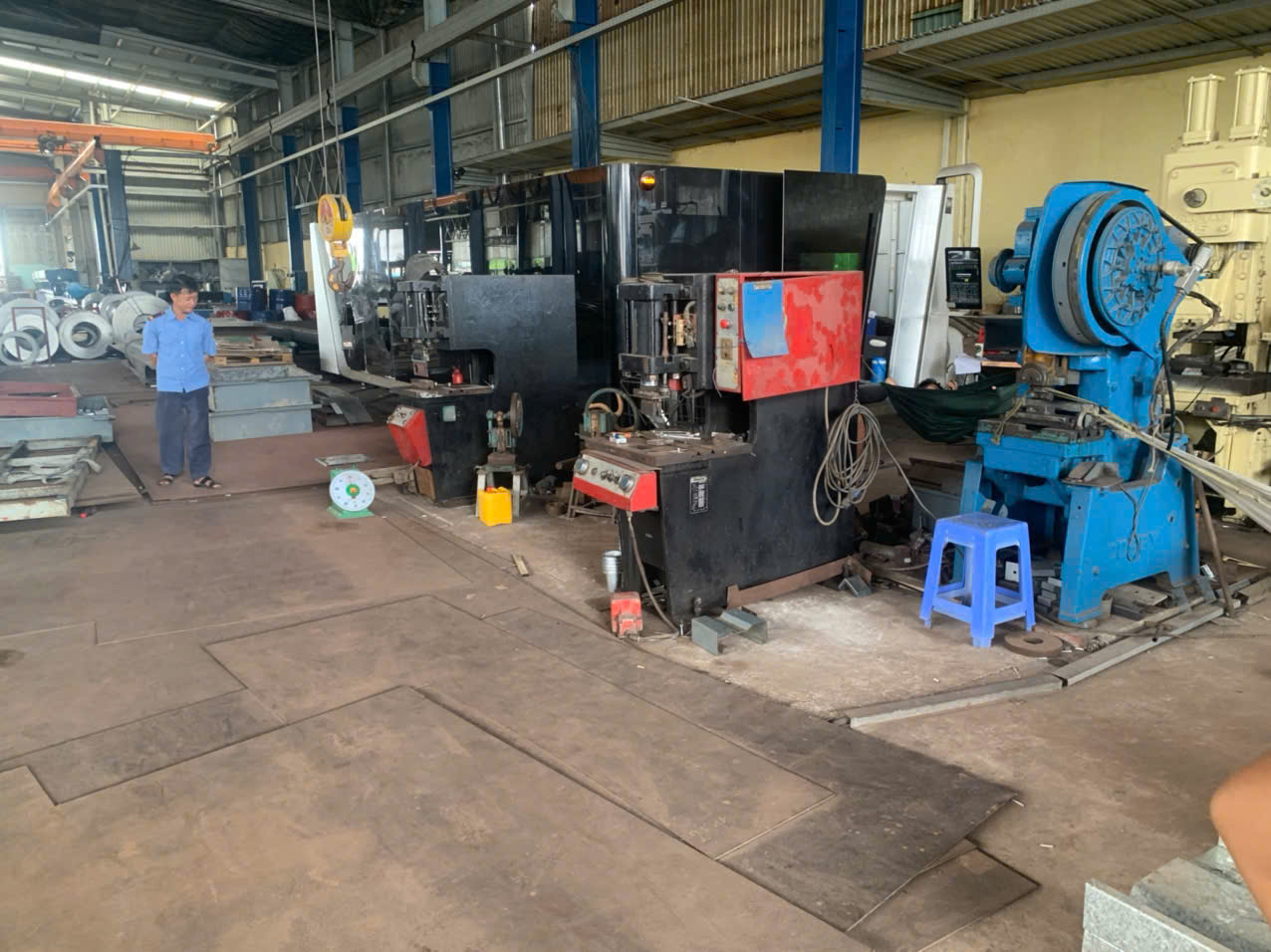

When we started coordinating stamping parts production through our Vietnam office, one shipment’s landed cost jumped 5% overnight — not because steel prices moved, but because the Vietnamese Dong (VND) 1 shifted against the dollar.
To manage exchange rate fluctuations when sourcing stamping parts from Vietnam, use a combination of forward exchange contracts, USD-denominated pricing agreements, extended payment terms, and supplier diversification. These FX risk management strategies protect profit margins and stabilize international procurement budgets against VND volatility.
Currency risk is one of the most overlooked costs in global sourcing challenges FX risk management strategies 2. Below, I will walk through the practical tools and contract strategies our team uses every day to keep stamping parts procurement predictable and profitable.
How can I protect my profit margins from USD to VND exchange rate volatility?
A buyer we work with in the Midwest once told me his entire quarterly margin on a bracket assembly order disappeared because he had not accounted for a 3% currency swing between order placement and payment XE Rate Alerts 3. That conversation changed how we structure every quotation.
Protect your profit margins by combining financial hedging tools — like FX forwards and currency swaps — with contractual safeguards such as currency adjustment clauses and USD-denominated pricing. Adding a 3–5% risk buffer into your landed cost calculation also absorbs minor transaction exposure.

Understanding Vietnam's Managed Float Exchange Rate System
Vietnam does not let the VND float freely. The State Bank of Vietnam 4 sets a daily central reference rate for VND/USD. Commercial banks can then trade within a permitted fluctuation band of ±3% from that central rate. In practice, this means the dong moves, but within guardrails.
For a U.S. buyer, this managed float exchange rate 5 creates a unique situation. Large overnight swings are rare, but gradual drift over a 60–90 day production cycle can quietly erode margins. On a $200,000 stamping parts order, a 4% shift means $8,000 gone — often more than the profit on the deal.
How Currency Risk Flows Through Your Stamping Parts Cost
Every stage of stamping parts production is touched by exchange rates. Here is how:
| Cost Component | Currency Exposure | Impact of VND Depreciation |
|---|---|---|
| Raw steel / coil stock | Often priced in USD globally | Supplier's VND cost rises; they may pass it on |
| Labor (die setting, press operation, QC) | Paid in VND | Relatively stable for buyer in USD terms |
| Tooling and die fabrication | Mixed — some imported steel, local labor | Moderate impact |
| Domestic logistics (factory to port) | VND | Minor impact |
| International freight | Usually USD | Neutral |
| Supplier's profit margin | VND-based target | Supplier may raise USD price to preserve margin |
When the VND weakens against the dollar, your cost in USD may actually drop — but your supplier may adjust prices upward to protect their own margins. The reverse is also true. This is why a one-sided view of currency hedging strategies is dangerous.
Practical Steps to Build a Margin Buffer
- Calculate your true landed cost including customs duties, freight, and a 3–5% FX risk margin.
- Track historical VND/USD rates over the past 12 months. Free tools like XE.com or OANDA give you trend lines.
- Coordinate with your finance team before placing large orders. If the rate is favorable, lock it in with a forward exchange contract through your bank. forward exchange contracts 6
- Review your pricing quarterly. Do not let a 12-month fixed quote expose you to a full year of currency drift.
I have seen buyers save thousands simply by timing their wire transfers to coincide with favorable rate windows. It is not speculation — it is informed supply chain finance Vietnam decision-making.
Should I negotiate fixed USD pricing with my Vietnamese stamping parts supplier?
Last quarter, one of our U.S. clients asked us to lock in a 12-month USD price on a custom steel bracket — the kind with multiple right-angle bends, precision-cut holes, and tight tolerances typical of automotive stamping. The request seemed simple, but the trade-offs were real.
Yes, negotiating fixed USD pricing simplifies your budgeting and shifts transaction exposure to the supplier. However, expect suppliers to build a 3–5% currency speculation premium into the price. For orders over six months, consider hybrid pricing with a currency adjustment clause instead of a pure fixed-rate contract.

The Trade-Off: Simplicity vs. Hidden Cost
Fixed USD pricing is the most common approach in international procurement from Vietnam. It is clean. Your purchase order says $0.85 per piece, and that is what you pay. But behind the scenes, the supplier is guessing where the VND/USD rate will be in 3, 6, or 12 months. If they guess wrong, they lose money. So they hedge by inflating their quote.
Our experience managing supplier relationships in Vietnam tells us this premium typically runs 3–5% of contract value. On a $150,000 annual order, that is $4,500 to $7,500 you are paying for rate certainty — whether the rate actually moves or not.
Comparing Pricing Currency Options
| Pricing Approach | Who Bears FX Risk? | Complexity | Best For |
|---|---|---|---|
| Fixed USD pricing | Supplier | Low | Short-term orders (< 6 months) |
| VND pricing with buyer conversion | Buyer | Medium | Buyers with FX hedging capability |
| Hybrid: USD base + currency adjustment clause 7 | Shared | Medium-High | Long-term contracts (6–12+ months) |
| Spot-rate agreement at time of shipment | Shared (market-dependent) | Low | Small, frequent orders |
When Fixed USD Makes Sense — and When It Does Not
Fixed USD works well for short production runs where the time between order and delivery is 8–12 weeks. The rate does not have much room to move. We use this structure for most of our stamping parts projects with delivery under 90 days.
For longer commitments — annual blanket orders, for example — I recommend a hybrid approach. You agree on a base USD price tied to a reference VND/USD rate. If the actual rate at time of payment deviates beyond a set threshold (say ±2%), the price adjusts proportionally. This way, neither party absorbs all the risk, and the supplier does not need to pad their quote.
Negotiation Tips From the Field
- Ask for the breakdown. When a supplier quotes in USD, ask what VND/USD rate they used. This tells you how much buffer they built in.
- Propose a rate corridor. Agree that the price holds as long as VND/USD stays within a defined range. Outside that range, both parties renegotiate.
- Put it in writing. Currency clauses must be in the purchase agreement, not just discussed over email. We draft these clauses into every long-term contract our Vietnam team manages.
- Benchmark against spot. Before signing, compare the supplier's implied rate to the current central rate published by the State Bank of Vietnam. If the gap is more than 3%, push back.
This approach has helped our clients avoid overpaying while keeping supplier relationships healthy. No one likes surprises — on either side of the transaction.
How do extended payment terms help me hedge against currency risks when sourcing from Vietnam?
One lesson we learned early while building our credit-term offering was that payment timing is itself a hedging tool. A buyer who pays on NET 60 or NET 90 has a fundamentally different currency exposure profile than one who pays 100% upfront via T/T.
Extended payment terms — such as NET 60 or NET 90 — give you more time to monitor VND/USD movements and execute your wire transfer at a favorable rate. They also let you layer in forward exchange contracts that mature on the payment due date, turning uncertain future costs into locked-in obligations.

Why Payment Timing Matters for FX Risk Management
When you pay upfront, you lock in whatever exchange rate exists on that day. You have no flexibility. But when your supplier extends NET 60 or NET 90 terms — something we offer to qualifying U.S. clients to ease cash flow pressure — you gain a window of time.
During that window, you can:
- Watch the rate. If VND strengthens against USD in week three, your payment in week eight may cost less.
- Buy a forward contract. Your bank can sell you a forward exchange contract that locks in today's rate for settlement in 60 or 90 days. FX forward contracts in Vietnam-related transactions can have terms up to one year.
- Split payments. Pay 30% at order confirmation and 70% at shipment. This averages your rate exposure across two points in time.
How to Coordinate Payment Terms With Hedging Tools
Here is a practical workflow we recommend to our clients:
| Step | Timing | Action |
|---|---|---|
| 1 | Order placement (Day 0) | Confirm USD price and payment terms (NET 60/90). Note the spot VND/USD rate. |
| 2 | Within 5 business days | Consult your bank or treasury team about a forward contract maturing on the payment due date. |
| 3 | Production period (Day 1–45) | Monitor VND/USD daily using XE, Bloomberg, or your bank's FX platform. |
| 4 | Shipment (Day 45–50) | Final inspection complete. Confirm shipment and invoice date. |
| 5 | Payment window (Day 50–90) | Execute wire transfer at locked-in forward rate, or at spot if favorable. |
This process turns payment terms for imports from a simple cash flow tool into an active component of your currency hedging strategies. The key is coordination between your procurement and finance teams. When these two departments operate in silos, opportunities to hedge at favorable points get missed.
The Real-World Math
Suppose you place a $100,000 order for precision stamping brackets. The spot rate at order time is 25,000 VND/USD. Your supplier quotes $100,000 fixed. You have NET 90 terms.
Over the next 90 days, the VND weakens to 25,500 VND/USD. Your supplier's actual VND revenue increases — they are happy. Your USD cost stays at $100,000 because you locked in USD pricing. No impact.
But consider the reverse. If you had agreed to VND pricing at 2,500,000,000 VND, and the rate moved to 25,500 VND/USD, your USD cost would drop from $100,000 to about $98,039. That is a $1,961 savings — real money on a single order.
Extended terms give you the breathing room to make these calculations and act on them. Without that window, you are simply reacting.
A Note on Supplier Willingness
Not every Vietnamese supplier offers extended payment terms 8. Many small stamping shops require 30% deposit and 70% before shipment. Our ability to offer open-account terms of NET 60–90 is one reason U.S. buyers work with us — it removes cash flow strain and creates space for smarter FX risk management. We absorb the credit risk so the buyer can focus on optimizing their landed cost. For more on structuring favorable terms, see our guide on how to negotiate payment terms and methods when sourcing stamping parts from Vietnam.
What can I do if a sudden currency shift impacts my custom parts procurement budget?
Three months ago, a client called in a near-panic. He had budgeted his Q2 stamping parts spend based on a VND/USD rate that had held steady for weeks. Then, over one weekend, the State Bank of Vietnam adjusted the central rate, and his planned cost jumped by over 4%. His question was blunt: "What do I do now?"
If a sudden currency shift hits your procurement budget, act immediately: renegotiate pricing with your supplier using a pre-agreed currency clause, accelerate or delay pending payments based on rate direction, explore spot hedging through your bank, and redistribute future orders across suppliers in different currency zones to limit ongoing exposure.

Immediate Response Checklist
When the rate moves against you mid-order, here is what I recommend based on real situations we have navigated:
- Review your contract. Does it include a currency adjustment clause? If yes, trigger it. If not, this is a lesson for next time.
- Contact your supplier immediately. A good supplier — one invested in a long-term relationship — will discuss sharing the impact. We have split unexpected FX losses 50/50 with clients on more than one occasion.
- Talk to your bank. If you have unpaid invoices due in 30–60 days, ask about buying a forward or an FX option right now to prevent further damage.
- Delay non-urgent orders. If the shift is temporary (central rate adjustments often partially reverse), postponing a new PO by two to four weeks can save money.
- Accelerate payments on favorable orders. If you have an open invoice on a deal where the current rate is still good, pay early to lock it in.
Diversification as a Long-Term Shield
The best defense against a single-currency shock is not being dependent on a single currency. We help clients split their sourcing across Vietnam, other ASEAN countries 9, and sometimes Mexico. This way, a VND move does not derail the entire procurement budget. You can learn more about this approach in our article on how to manage multiple Vietnamese stamping parts suppliers to mitigate supply chain risk.
| Sourcing Region | Currency | Typical Stamping Parts Strength | Currency Correlation to USD |
|---|---|---|---|
| Vietnam | VND | High-volume brackets, clips, mounting hardware | Managed float, low volatility |
| Thailand | THB | Automotive stamping, progressive dies | Moderate float, medium volatility |
| Mexico | MXN | Nearshore for U.S. buyers, heavy-gauge parts | Free float, higher volatility |
| India | INR | Cost-sensitive runs, large volume | Managed float, moderate volatility |
By distributing even 20–30% of your volume to a second region, you create a natural hedge. If VND moves against you, THB or MXN may move in your favor. This is not theory — one of our clients reduced their overall currency risk exposure by roughly 30% after we helped them split production between our Vietnam facility partners and a Thai supplier.
Building a Proactive Monitoring System
Reacting to currency shifts is expensive. Anticipating them is much cheaper. Here are free and low-cost tools any procurement manager can set up in an afternoon:
- XE Rate Alerts: Set a threshold (e.g., VND/USD crosses 25,200) and get an email notification.
- OANDA Historical Charts: Review 6–12 month trends before budget season.
- State Bank of Vietnam website: Check the daily central rate and compare it to your contract assumptions.
- Bloomberg Terminal (if available): Use FX forecasting models for more sophisticated analysis.
- Monthly check-ins with your bank's FX desk. Many commercial banks offer free quarterly outlook reports for major Asian currencies.
The goal is not to become a currency trader. The goal is to know when conditions change before they hit your invoice. Integrating procurement and finance teams for real-time monitoring is a trend that is paying dividends for companies sourcing from Vietnam. Similar principles apply when managing exchange rate fluctuations for Vietnam sheet metal fabrication costs. AI-powered predictive analytics tools are also emerging, though for most mid-market buyers, simple rate alerts and quarterly reviews are sufficient.
Conclusion
Managing exchange rate fluctuations when sourcing stamping parts from Vietnam requires a proactive blend of financial hedging, smart contract terms, diversified sourcing, and real-time monitoring — not just hoping the rate holds steady.
Frequently Asked Questions
How can I protect my profit margins from USD to VND exchange rate volatility?
A buyer we work with in the Midwest once told me his entire quarterly margin on a bracket assembly order disappeared because he had not accounted for a 3% currency swing between order placement and payment XE Rate Alerts 3 . That conversation changed how we structure every quotation.
Should I negotiate fixed USD pricing with my Vietnamese stamping parts supplier?
Last quarter, one of our U.S. clients asked us to lock in a 12-month USD price on a custom steel bracket — the kind with multiple right-angle bends, precision-cut holes, and tight tolerances typical of automotive stamping. The request seemed simple, but the trade-offs were real.
How do extended payment terms help me hedge against currency risks when sourcing from Vietnam?
One lesson we learned early while building our credit-term offering was that payment timing is itself a hedging tool. A buyer who pays on NET 60 or NET 90 has a fundamentally different currency exposure profile than one who pays 100% upfront via T/T.
Footnotes
1. Provides comprehensive information about Vietnam’s official currency. ↩︎
2. Outlines various strategies for managing foreign exchange risk in business operations. ↩︎
3. Explains how XE Rate Alerts work to notify users of desired exchange rates. ↩︎
4. Provides information on the central bank of Vietnam and its functions. ↩︎
5. Defines the managed floating exchange rate system and how central banks intervene. ↩︎
6. Explains the definition and application of forward exchange contracts in managing currency risk. ↩︎
7. Explains what a currency adjustment clause is and its importance in international contracts. ↩︎
8. Defines extended payment terms and their role in cash flow and risk management. ↩︎
9. Provides official information about the member states of the Association of Southeast Asian Nations. ↩︎
10. Highlights the strategy of distributing procurement volume to reduce risk. ↩︎