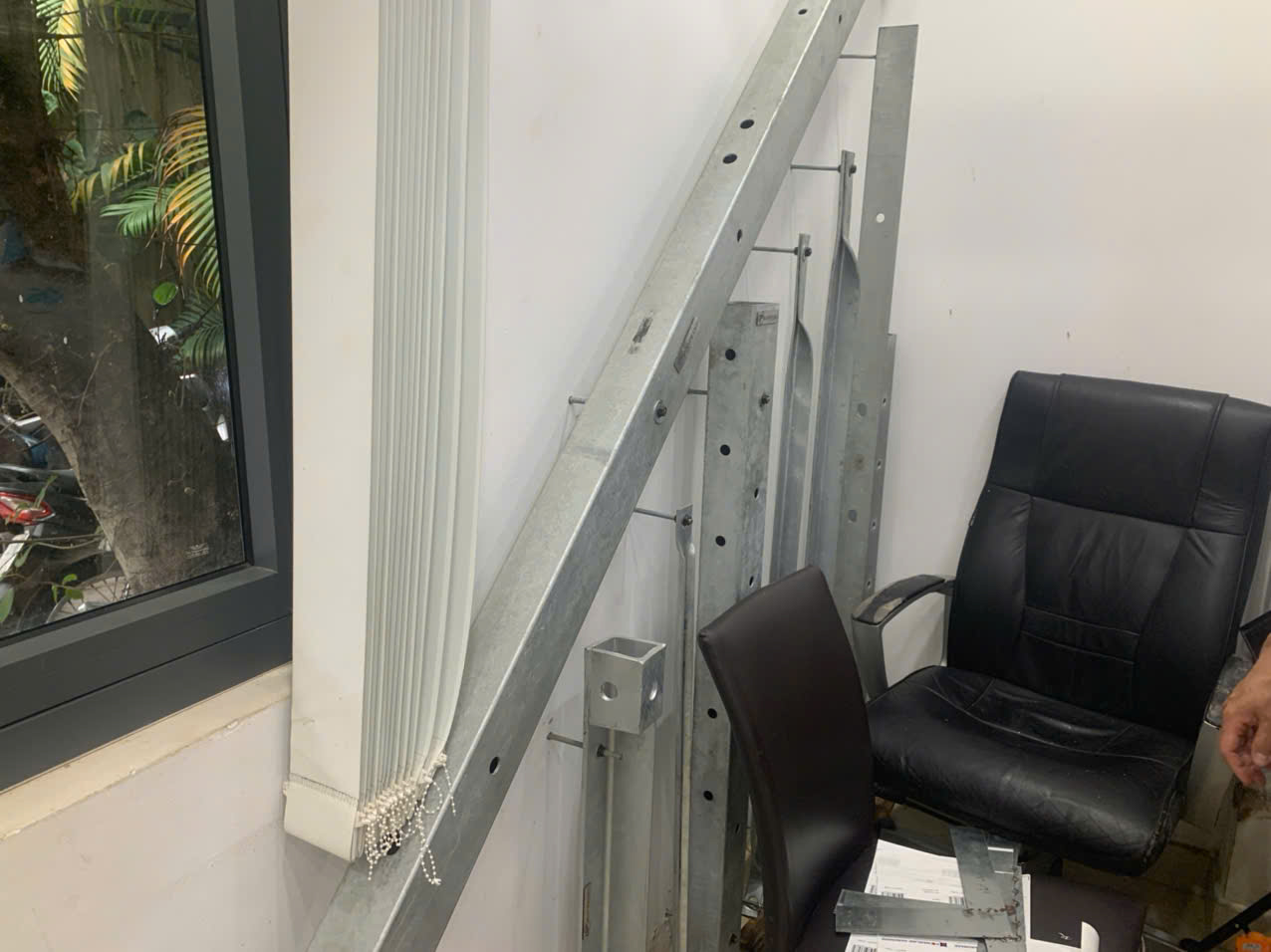
Managing returns and exchanges for defective sheet metal parts from Vietnam is a challenge we deal with regularly at DEWIN formal RMA process 1. A client recently received a batch of precision-engineered mounting brackets with dimensional drift on the bend angles — and the clock was ticking on their assembly schedule. The frustration of halted production, the cost of holding non-conforming inventory, and the uncertainty of who pays for return shipping can paralyze even experienced purchasing managers.
To manage returns and exchanges for defective sheet metal parts from Vietnam, establish a formal RMA process with your supplier before production begins. Define defect criteria, document issues with photos and measurements, agree on cost responsibilities, and use third-party inspection to minimize claims in the first place.
This guide walks through every step of the process — from setting up a bulletproof return workflow to protecting your payment terms when quality disputes arise. Let’s get into it.
How do I set up a reliable return and replacement process for defective sheet metal parts from Vietnam?
A lesson we learned early in our Vietnam operations: the time to negotiate your return process is before the first purchase order ships, not after a defect shows up on your receiving dock. Our team in Ho Chi Minh City has helped multiple U.S. clients draft RMA frameworks that actually work across borders.
Set up a reliable return and replacement process by including an RMA clause in your supplier quality agreement. This clause should define defect categories, required documentation, response timelines, and whether parts are returned, scrapped locally, or replaced in the next shipment.
What Is an RMA and Why Does It Matter for Imports?
RMA stands for Return Merchandise Authorization 2. It is the manufacturer-authorized process for returning defective or unused parts to receive a refund, replacement, or credit. The process begins when you contact your vendor about a defective part, provide your purchase information, and receive an RMA number along with shipping instructions. Without an RMA number, most suppliers will refuse to accept returned goods.
For international imports, the RMA process is more complex than domestic returns. You are dealing with customs duties refunds, reverse logistics international freight, and potential language barriers. That is why we always recommend building the full workflow into your contract before production starts.
Step-by-Step RMA Workflow for Vietnamese Sheet Metal Parts
Here is the workflow we use with our clients:
- Detect the defect. Inspect incoming parts against your drawing and specifications. Use calipers, CMMs, or gauges as required.
- Document the issue. Take clear photos and videos. Record measurements. Reference the specific drawing dimension or tolerance that is out of spec.
- Notify the supplier. Send a formal quality claim via email with all evidence attached. Include your PO number, part number, and quantity affected.
- Receive an RMA number. The supplier reviews your claim and issues an RMA number if the defect qualifies under the agreed policy.
- Decide on disposition. Depending on the contract, you may ship parts back, scrap them locally with supplier approval, or hold them for credit on the next order.
- Supplier inspects and resolves. The supplier inspects returned or photographed parts and decides whether to repair, replace, or refund.
- Close the claim. Both parties sign off on the resolution and update records.
Key Elements to Include in Your RMA Agreement
| Element | What to Define | Why It Matters |
|---|---|---|
| Defect categories | Critical, major, minor (with examples) | Determines response urgency and resolution type |
| Documentation requirements | Photos, measurements, inspection reports | Prevents disputes over whether defect is real |
| Response timeline | e.g., 48 hours to acknowledge, 5 days to propose resolution | Keeps your production schedule on track |
| Disposition method | Return, local scrap, or hold for credit | Avoids confusion over who holds defective inventory |
| Cost responsibility | Who pays freight, duties, and inspection costs | Prevents surprise expenses |
| Replacement timeline | e.g., replacement parts shipped within 14 days | Ensures you get usable parts quickly |
One thing I always tell clients: do not assume the supplier will agree to the same RMA terms you use with domestic vendors. Vietnamese suppliers may push back on certain clauses, especially around freight costs. Negotiate early.
Who is responsible for the shipping costs and duties if I need to exchange my parts with a Vietnam supplier?
One trade-off we weigh on almost every project is the cost of shipping defective parts back to Vietnam versus scrapping them locally and requesting replacement parts on the next order. The math changes depending on the part's value, weight, and how urgently you need a replacement.
Shipping cost and duty responsibility should be explicitly defined in your supply contract. In most cases, the supplier covers replacement production costs for verified defects, while the buyer bears return freight unless the contract states otherwise. Duty drawback programs may recover some customs duties on defective imports.
Breaking Down the Cost Layers
When you return defective sheet metal parts to Vietnam, you face several cost layers. Understanding each one helps you negotiate a fair split with your supplier.
| Cost Layer | Typical Responsibility | Notes |
|---|---|---|
| Return freight (buyer → Vietnam) | Often buyer, unless contract assigns to supplier | Ocean freight for heavy brackets can cost more than the parts themselves |
| Replacement production | Supplier (for verified defects) | Supplier remakes parts at no charge |
| Replacement freight (Vietnam → buyer) | Negotiable — often split or supplier-covered | Depends on contract language and defect severity |
| Import duties on original shipment | Buyer initially; may be recoverable | U.S. Customs duty drawback programs 3 allow refunds on re-exported defective goods |
| Import duties on replacement shipment | Buyer | Treated as a new import for customs purposes |
| Inspection and testing | Typically shared or buyer-funded | Third-party inspection 4 fees at origin or destination |
How Duty Drawback Works for Defective Imports
If you import sheet metal parts into the United States and they turn out to be defective, you may qualify for a customs duties refund through the U.S. duty drawback program. This program allows you to recover up to 99% of the duties paid on imported goods that are later exported or destroyed under Customs supervision.
The process requires documentation: your original entry summary, proof of defect, and evidence that the goods were exported or destroyed. It is not instant — drawback claims can take months to process. But for high-value orders, the savings are significant.
Practical Strategies to Minimize Cost Exposure
In our experience, the most cost-effective approach is often to avoid returning parts altogether. Here is what we recommend:
- Local scrap with supplier credit. For low-value parts, scrap defective items at your facility and deduct their value from the next invoice. This avoids international shipping returns entirely.
- Replacement in next shipment. Ask the supplier to include replacement parts in the next scheduled shipment at no extra charge. This eliminates standalone freight costs.
- Root cause corrective action. Require the supplier to perform a formal root cause analysis and corrective action (CAPA) for every claim. Root cause corrective action 5 This reduces future defects and future costs.
The key is to put all of this in writing. A supplier quality agreement that spells out cost responsibilities prevents arguments later. For a deeper dive into structuring these agreements, see our guide on how to define return and claim procedures for sheet metal fabrication sourcing.
How can I leverage local Vietnam QC teams to ensure my sheet metal orders are right the first time?
When we first set up our Vietnam office with seven team members, one of the primary reasons was exactly this — our U.S. clients needed boots on the ground to catch defects before parts shipped, not after they arrived in a container at Long Beach. The difference between a $200 inspector visit and a $15,000 quality claim is staggering.
Leverage local Vietnam QC teams by implementing a layered defect inspection process: pre-production material verification, in-process dimensional checks during bending and welding, and a final inspection before packing. Pair this with third-party audits and Factory Acceptance Testing for critical components.

The Three-Layer QC System
Top Vietnamese sheet metal fabrication facilities use a layered quality control system. Here is how each layer works and what it catches.
Layer 1: Pre-production verification. Before cutting the first piece of metal, verify incoming material certificates against your specifications. For sheet metal, this means checking material grade (e.g., ASTM A36 for structural steel, ASTM A240 for stainless steel), thickness tolerance, and surface condition. Our team reviews 3D CAD models against the customer's drawings to flag any discrepancies before the factory starts.
Layer 2: In-process inspection. During production, inspect critical operations. For sheet metal brackets, this includes checking bend angles after each press brake operation, verifying hole positions after CNC punching or laser cutting, and examining weld joints against AWS D1.1 standards. Some factories now use Automated Optical Inspection 6 (AOI) to detect surface flaws and dimensional inconsistencies in real time.
Layer 3: Final inspection and FAT. Before packing, perform a full dimensional inspection on a statistical sample per your AQL 7 (Acceptable Quality Level). For complex assemblies like the mirrored mounting bracket pairs our clients order, we verify that mating surfaces align, mounting holes match, and the powder-coat finish meets thickness and adhesion requirements. Factory Acceptance Testing 8 (FAT) may also include functional testing if the parts are used in mechanical assemblies.
Common Defects in Sheet Metal Parts and How to Catch Them
| Defect Type | Root Cause | Prevention Method | Inspection Method |
|---|---|---|---|
| Warping | Excessive heat during welding | Heat control fixtures, staggered welding sequence | Flatness check with straightedge or CMM |
| Surface scratches | Mishandling during transport between stations | Protective films, dedicated handling racks | Visual inspection under controlled lighting |
| Dimensional inaccuracy | Poor machine calibration or worn tooling | Regular calibration schedules, first-article inspection | Calipers, CMM, go/no-go gauges |
| Weak weld joints | Incorrect welding parameters (current, speed, gas) | Welding Procedure Specification (WPS) adherence | Non-destructive testing (dye penetrant, ultrasonic) |
| Coating defects (orange peel, thin spots) | Inconsistent spray pattern or inadequate surface prep | Automated coating systems, proper blasting | Coating thickness gauge, cross-hatch adhesion test |
QC Without Flying Out Monthly
I understand that most purchasing managers cannot visit Vietnam every month. Here are strategies that work:
- Use a local sourcing partner. Our Vietnam team conducts inspections on behalf of U.S. clients. We follow the client's inspection checklist and send photo-documented reports within 24 hours.
- Engage third-party inspectors. Companies like SGS, Bureau Veritas, and TÜV have offices in Vietnam. They can perform random sample checks and issue independent reports.
- Require FAT before export seal. For critical parts, mandate that the factory runs a formal Factory Acceptance Test and shares the results with you before the container is sealed.
- Implement real-time monitoring. Some advanced facilities now use IoT sensors on CNC machines and welding stations to monitor process parameters in real time. This data can be shared with buyers through cloud dashboards, supporting end-to-end supply chain visibility for Vietnam sheet metal fabrication.
The goal of manufacturing quality assurance is simple: catch problems when they are cheap to fix. A weld defect caught on the factory floor costs a few dollars to repair. The same defect discovered at your customer's assembly line can cost thousands in warranty claims handling and damaged relationships.
How will a quality claim impact my 60-day or 90-day open account payment terms for my Vietnam sourcing?
A buyer interaction that comes up frequently in our business: a client holds payment on an entire invoice because of a defect on 5% of the parts. The supplier then holds the next shipment. Both sides lose. This is a predictable problem with a preventable solution.
A quality claim should not automatically disrupt your open account payment terms if your contract includes a clear dispute resolution clause. Best practice is to pay the undisputed portion on time and withhold only the value of defective parts, resolving claims through a documented warranty claims handling process.

Why Payment Terms and Quality Claims Collide
Open account payment terms — typically net 60 or net 90 — are a significant benefit for U.S. buyers sourcing from Vietnam. They improve cash flow and reduce financial risk. But when a quality issue arises, the temptation is to withhold the entire payment until the claim is resolved.
From the supplier's perspective, open account terms already represent a financial risk. If the buyer withholds payment for reasons the supplier considers unjustified, the supplier may tighten terms on future orders or demand prepayment. This creates a downward spiral that damages the relationship.
How to Structure Your Contract to Protect Both Sides
The solution is to separate the quality claim process from the payment process. Here is how we structure payment terms to minimize risk for our clients:
- Pay undisputed amounts on time. If 95% of the order is conforming, pay for that 95% within the agreed terms.
- Withhold only the disputed amount. Place the value of defective parts in a documented hold. Notify the supplier in writing with your quality claim evidence.
- Set a resolution timeline. The contract should specify that quality claims must be resolved within a defined period (e.g., 30 days from notification).
- Credit or replace. Once the claim is resolved, either deduct the credit from the next invoice or receive replacement parts.
Legal and Contractual Safeguards
When drafting your contract with a Vietnamese supplier, include these elements to protect your product liability exposure and payment terms:
- Governing law and jurisdiction. Specify which country's law governs the contract. Governing law and jurisdiction 9 Many U.S. buyers prefer New York or Singapore law for international trade disputes.
- Penalty clauses for repeated defects. If defect rates exceed an agreed threshold (e.g., 2% AQL), the supplier should bear all related costs including inspection, replacement freight, and line downtime.
- Quality escrow clause. For new suppliers, consider holding a small percentage (e.g., 5%) of each invoice as a quality retainer, released after the buyer confirms parts are conforming.
- Audit rights. The buyer should have the right to audit the supplier's quality control procedures at any time with reasonable notice.
We always recommend having a lawyer familiar with Vietnam import regulations and international trade law review your contract before signing. The upfront legal cost is minimal compared to the cost of an unresolved quality dispute.
Vietnam vs. China: The Tariff Context
It is worth noting why many buyers are moving sheet metal sourcing to Vietnam in the first place. Section 301 tariffs 10 on Chinese imports range from 25% to 145% depending on the HTS code. For many sheet metal parts, Vietnam offers a mathematically favorable alternative.
However, the switching cost needs to pencil out. Based on our experience:
- Under $50K annual volume: Switching costs (tooling, qualification, logistics setup) may not justify the move.
- $50K–$100K annual volume: Break-even is possible within the first year, depending on part complexity.
- Above $100K annual volume: Savings are compelling, often recouped within the first few months of production.
The quality control challenge is real — some buyers worry that Vietnamese factories cannot match China's capability for highly intricate laser-cutting processes. But top-tier Vietnamese fabricators now operate the same Trumpf and Amada machines found in Chinese factories, and our defect inspection process has shown comparable or better results when proper QC is in place.
Conclusion
Managing returns and exchanges for defective sheet metal parts from Vietnam comes down to preparation: a solid RMA agreement, clear cost responsibilities, on-the-ground QC, and payment terms that survive quality disputes. Get these right, and you protect both your supply chain and your bottom line.
Frequently Asked Questions
What Is an RMA and Why Does It Matter for Imports?
RMA stands for Return Merchandise Authorization 2 . It is the manufacturer-authorized process for returning defective or unused parts to receive a refund, replacement, or credit. The process begins when you contact your vendor about a defective part, provide your purchase information, and receive an RMA number along with shipping instructions. Without an RMA number, most suppliers will refuse to accept returned goods.
How do I set up a reliable return and replacement process for defective sheet metal parts from Vietnam?
A lesson we learned early in our Vietnam operations: the time to negotiate your return process is before the first purchase order ships, not after a defect shows up on your receiving dock. Our team in Ho Chi Minh City has helped multiple U.S. clients draft RMA frameworks that actually work across borders.
Who is responsible for the shipping costs and duties if I need to exchange my parts with a Vietnam supplier?
One trade-off we weigh on almost every project is the cost of shipping defective parts back to Vietnam versus scrapping them locally and requesting replacement parts on the next order. The math changes depending on the part's value, weight, and how urgently you need a replacement.
Footnotes
1. Explains the formal process for product returns, including steps and importance. ↩︎
2. Provides a clear definition and overview of Return Merchandise Authorization. ↩︎
3. Replaced HTTP unknown with a working, authoritative guide explaining duty drawback programs and how they work. ↩︎
4. Details the definition, process, and benefits of using third-party inspections. ↩︎
5. Explains the process of root cause analysis within corrective and preventive actions (CAPA). ↩︎
6. Describes Automated Optical Inspection (AOI) as a visual quality control method. ↩︎
7. Explains Acceptable Quality Limit (AQL) and its use in statistical sampling for inspections. ↩︎
8. Defines Factory Acceptance Testing (FAT) as a critical pre-delivery quality control process. ↩︎
9. Clarifies the role of governing law and jurisdiction in international contractual agreements. ↩︎
10. Replaced HTTP 404 with a working and complete guide to Section 301 tariffs. ↩︎