
When our Vietnam office started coordinating the first high-volume sheet metal project last year, we quickly discovered that scaling production is not a simple matter of placing a bigger order — it is a process that can go wrong at every stage if you do not plan carefully.
Managing supplier capacity ramp-up for Vietnam sheet metal fabrication requires a phased 12–18 month strategy that includes pilot production validation, workforce upskilling, raw material pre-sourcing, digital scheduling tools, and a hybrid push-pull supply chain model to maintain quality and on-time delivery as volumes grow.
Vietnam’s metal fabrication equipment market is valued at approximately USD 900 million, and manufacturing contributes more than 20% to the country’s GDP 1 supply chain management 2. These numbers tell a clear story: Vietnam is a serious player. But tapping into that capacity without a structured ramp-up plan leads to missed shipments, quality escapes, and strained supplier relationships. Below, I will walk through the practical steps we use at DEWIN to help U.S. buyers scale production with Vietnam sheet metal suppliers — and get it right the first time.
How do I evaluate if my Vietnam sheet metal supplier is ready for a significant production ramp-up?
A buyer we work with in the Midwest once asked us to double his bracket order within 60 days. Before we committed, our Vietnam team spent a full week on the supplier's floor evaluating their true readiness — not just their promises.
Evaluate your Vietnam sheet metal supplier's ramp-up readiness by auditing their equipment utilization rates, workforce depth, raw material sourcing stability, quality management systems, and track record with similar volume increases — a structured assessment prevents costly surprises after production begins.
Start with a Capacity Audit
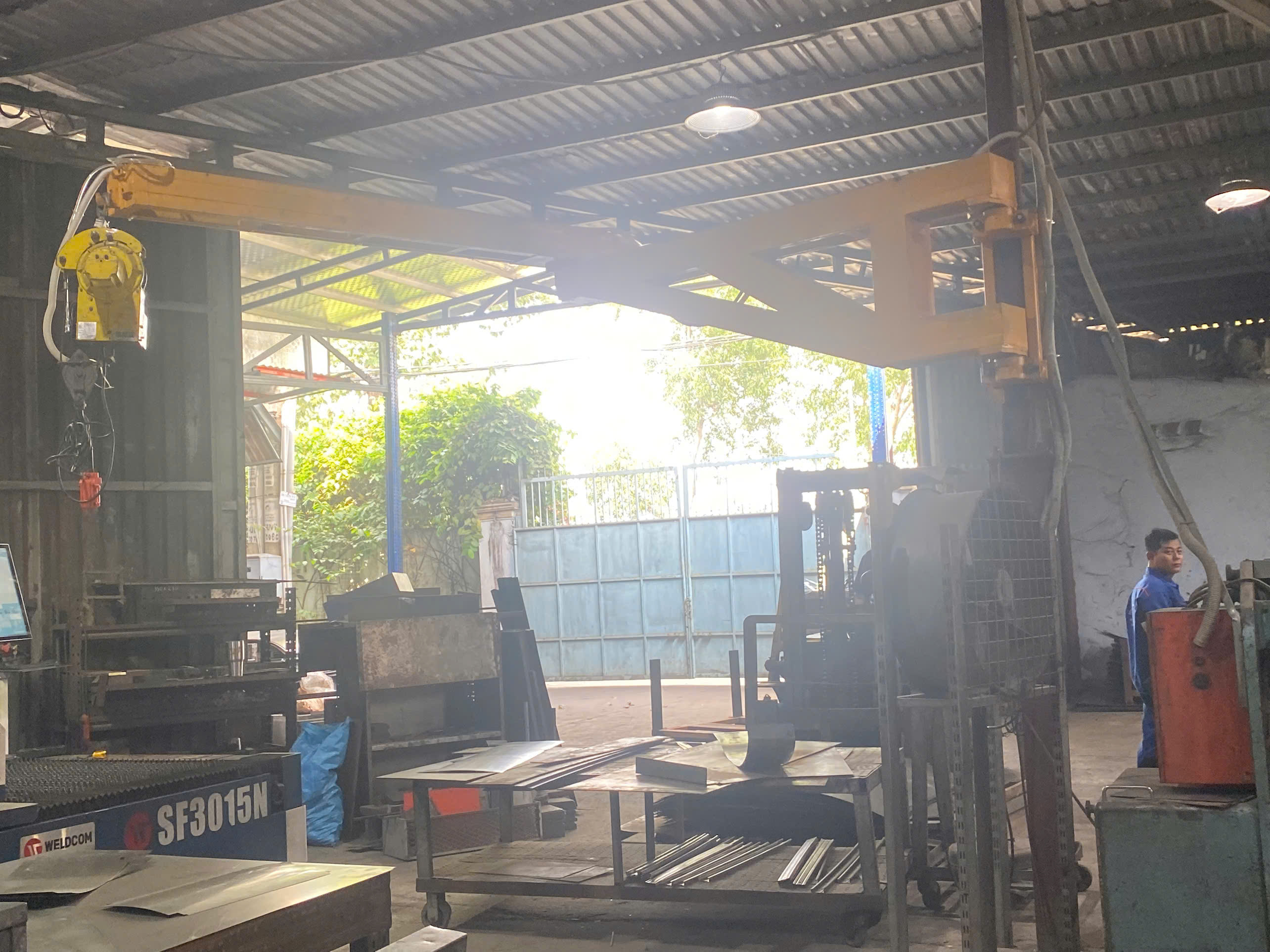
The first step is understanding the gap between what your supplier currently produces and what you need. Many factories in Vietnam operate at 60–75% of their effective capacity 3. That sounds like there is room — but the remaining capacity may already be allocated to other customers. During our supplier audits, we examine three capacity layers:
| Capacity Type | Definition | Why It Matters for Ramp-Up |
|---|---|---|
| Design Capacity | Maximum theoretical output if the factory ran 24/7 with zero downtime | Sets the absolute ceiling; rarely achievable in practice |
| Effective Capacity | Realistic output accounting for maintenance, shift patterns, and changeovers | The true benchmark for what the supplier can deliver |
| Actual Capacity | What the supplier currently ships per month | Reveals how much headroom exists before investment is needed |
If the gap between actual and effective capacity is large, the supplier may be able to absorb your ramp-up. If it is small, they will need new equipment, additional shifts, or more workers. Both scenarios are manageable, but each has a different timeline and risk profile.
Assess Workforce and Skill Readiness
Skilled labor availability is one of the most overlooked factors. Vietnam has a young, trainable workforce, but complex sheet metal parts — like the precision mounting brackets with multiple bends, weld joints, and tight-tolerance hole patterns that we regularly source — demand experienced operators. Ask your supplier how many certified welders and CNC operators they employ. Ask how long it takes to train a new press brake operator to handle parts with ±0.1mm bend tolerances.
Evaluate the Material Supply Chain
Vietnam still imports a significant share of specialized steel grades. If your parts require specific materials — say, SUS304 stainless steel at a particular thickness — confirm that your supplier has reliable sourcing channels and safety stock policies. We always map the material supply chain at least two tiers deep. This supply chain mapping reveals hidden risks from second and third-tier providers that can stall your ramp-up without warning.
Check Infrastructure and Industrial Zone Support
Factories located in well-established industrial zones in Vietnam generally have more stable power, water, and logistics infrastructure. We have seen production delays caused by power outages at smaller facilities outside major zones. Ask whether the factory has backup power systems and what the typical logistics lead time is from the factory gate to the nearest port.
What quality control processes should I implement to maintain consistency as my volume grows?
One lesson we learned early in our Vietnam operations is that quality problems do not appear during pilot runs — they appear at volume. A part that comes out perfectly at 200 pieces can drift at 2,000 pieces if the controls are not in place.
To maintain consistency during production scaling, implement a layered quality control system that includes incoming material inspection, in-process statistical monitoring, first-article and periodic re-qualification, final inspection with documented acceptance criteria, and regular on-site audits by an independent quality team.

Build a Quality Control Framework Before You Scale
Quality control in Vietnam is not fundamentally different from quality control anywhere else. The difference is execution discipline. quality management systems 4 Here is the framework we deploy for every ramp-up project:
| QC Stage | Activity | Frequency |
|---|---|---|
| Incoming Material Inspection | Verify mill certificates, measure thickness, check surface condition | Every incoming lot |
| First Article Inspection (FAI) | Full dimensional inspection of the first pieces from each production batch | Start of every new batch or after any tooling change |
| In-Process Monitoring | Operator self-checks at CNC, press brake, and welding stations; SPC on critical dimensions | Continuous during production |
| Final Inspection | AQL sampling per customer requirements; visual, dimensional, and functional checks | Every shipment lot |
| Periodic Audit | On-site process audit by our Vietnam-based quality engineers | Monthly or as needed |
Why First Article Inspection Is Non-Negotiable
When we source custom parts — especially complex brackets with multiple bends, weld marks, and pre-drilled mounting holes — the first article sets the quality baseline. Our team conducts a full PPAP (Production Part Approval Process 5) that includes dimensional reports, material certifications, and process flow documentation. This is not paperwork for the sake of paperwork. It is the single most effective tool for catching drawing misinterpretations before they cascade into thousands of defective parts.
Statistical Process Control at Volume
At low volumes, you can inspect every piece. At higher volumes, you need statistical methods. We train our suppliers to track critical dimensions using control charts. When a measurement trends toward the specification limit — even if it is still within tolerance — the operator flags it and adjusts the process. This proactive approach prevents defects rather than detecting them after the fact.
The Role of Automation and Digitalization
Some of our partner factories have invested in automated CMM (Coordinate Measuring Machine) stations and digital caliper data capture. These tools reduce measurement error and create a traceable quality record. As Vietnam's manufacturing sector shifts toward higher productivity through selective automation, buyers benefit from faster inspection cycles and more reliable data.
Do Not Overlook Supplier Training
A quality manual is only useful if the people on the floor understand it. We conduct onboarding training sessions for supplier teams whenever we launch a new part number. The training covers drawing interpretation, GD&T basics, and the specific quality expectations of U.S. buyers. This investment in workforce skill development pays for itself many times over by reducing rework and returns.
How can I manage lead times and prevent delivery delays during the capacity scaling phase?
Delivery delays are the number one complaint we hear from U.S. purchasing managers working with Asian suppliers. The frustration is justified — a late shipment can shut down an assembly line or cause a buyer to miss their own customer commitments.
Manage lead times during capacity scaling by locking in raw material supply early, building buffer stock for critical components, establishing clear production milestones with weekly reporting, using a hybrid push-pull scheduling model, and partnering with experienced logistics providers who understand Vietnam's export infrastructure.
Why Lead Time Volatility Increases During Ramp-Up
When a supplier transitions from small batches to larger volumes, every step in the process takes longer — or at least, takes longer the first few times. Material procurement lead times extend because larger orders may exceed the supplier's usual purchasing patterns. Production scheduling becomes more complex because more machine hours and labor shifts must be coordinated. And shipping logistics become more demanding because container booking and customs documentation must handle bigger volumes.
The Hybrid Push-Pull Model
We have found that the most resilient approach blends two supply chain strategies: hybrid push-pull model 7
| Strategy | Best For | How It Works |
|---|---|---|
| Push (Forecast-Driven) | Stable, repeating SKUs with predictable demand | Supplier produces to forecast; raw materials are pre-ordered based on projected volumes |
| Pull (Demand-Driven) | Custom or variable-mix products | Production starts only when a firm order is placed; inventory is minimized |
| Hybrid Push-Pull | Most real-world ramp-up scenarios | Raw materials are pushed (ordered in advance); finished goods are pulled (produced against confirmed orders) |
This hybrid model is how we manage most of our Vietnam sheet metal programs. We lock in steel and aluminum pricing and delivery schedules months ahead. But we only trigger production runs when the customer confirms the order. This approach protects cost positions during demand spikes and avoids excess finished goods inventory.
Practical Steps to Reduce Delays
Here is the process we follow:
- Material Pre-Sourcing: Identify all required materials during the pilot phase. Negotiate pricing and delivery terms with at least two material suppliers to build supply chain resilience.
- Production Milestones: Break each order into weekly milestones. Our project managers track progress against these milestones and flag any deviation within 24 hours.
- Buffer Stock Policy: For high-volume repeat parts, we recommend maintaining a 2–4 week buffer of raw material at the factory. This absorbs short-term supply disruptions without delaying production.
- Logistics Optimization: We work with freight forwarders who specialize in Vietnam exports. They pre-book container space and handle customs clearance proactively. Selecting a factory near a major port or within a well-connected industrial zone further reduces transit risk.
- Digital Visibility: We use shared production tracking dashboards so both our team and the buyer can see real-time status. No surprises.
Multi-Sourcing as a Safety Net
For critical programs, we qualify a second supplier as a backup. This does not mean splitting every order — it means having a validated alternative ready to step in if the primary supplier hits a capacity wall or faces an unexpected disruption. This multi-sourcing strategy is especially important for buyers executing a China + 1 diversification approach, where supply chain continuity is the top priority.
What is the best way to oversee my Vietnam supplier to ensure they get my custom parts right the first time?
A few years ago, a client sent us a drawing for a pair of mirrored mounting brackets — the kind with complex angular bends, multiple fold sequences, and precise hole patterns. The previous supplier had missed a critical callout on the drawing and produced 500 pieces with holes in the wrong position. That single error cost weeks in rework and air freight.
The best way to ensure your Vietnam supplier gets custom parts right the first time is to invest in thorough drawing reviews, conduct pre-production design-for-manufacturability sessions, implement a full PPAP process, station local quality personnel at the factory, and maintain clear documentation with defined checkpoints at every production stage.
Drawing Review: The Most Underrated Step
Most quality failures on custom parts trace back to drawing misinterpretation. The root cause is often not incompetence — it is ambiguity. GD&T symbols can be read differently by different shops. Material callouts may reference standards unfamiliar to the supplier. Surface finish requirements may be stated in Ra values that the factory measures in a different unit.
Our engineering team conducts a line-by-line drawing review with every new supplier before production begins. We highlight critical dimensions, clarify tolerances, and confirm that the supplier's measurement equipment can verify every specification. This step alone eliminates the majority of first-run quality issues.
Design-for-Manufacturability (DFM) Feedback
A good supplier does not just follow a drawing — they challenge it constructively. When we review a new bracket design with our Vietnam partners, we ask them to flag any feature that is difficult or expensive to produce. Design-for-Manufacturability (DFM) 8 Can a bend radius be slightly increased to avoid cracking? Can a hole position be shifted 2mm to avoid interference with a tooling clamp? These DFM discussions improve both quality and cost, and they build trust between buyer and supplier.
The PPAP Process for Custom Parts
PPAP is the gold standard for new part qualification. It documents everything: the process flow, the control plan, the measurement results, and the material certifications. When we run a PPAP for a custom sheet metal part, the supplier cannot ship production parts until we formally approve the submission. This gate prevents non-conforming parts from ever reaching the buyer's warehouse.
Local Oversight Makes the Difference
Having our own team of seven employees in Vietnam is one of our strongest advantages. They visit supplier facilities regularly, witness critical production steps, and conduct independent inspections. For buyers who do not have their own presence in Vietnam, partnering with a sourcing company that maintains local staff is a practical alternative to frequent international travel.
Documentation and Accountability
Every production run generates a documentation package: inspection reports, material certificates, photos of key features, and packing records. We define clear checkpoints — drawing approval, first article approval, in-process audit, final inspection — and assign accountability at each stage. This "real operating layer" of defined responsibilities is what separates a managed supply chain from a hope-based one.
When Vietnam Is Right — and When It Is Not
Vietnam is an excellent fit for medium-volume, high-mix, assembly-heavy sheet metal programs. The combination of competitive labor costs, trade agreements that improve EU and UK market access, and growing manufacturing capability makes it a strong choice for the China + 1 strategy. But it is not the right fit for every product. Hyper-specialized parts that require a deep local supply chain for exotic alloys, or programs with extremely low volumes (under 100 pieces), may be better served elsewhere. Understanding this fit is essential to managing expectations during any ramp-up.
Conclusion
Supplier capacity ramp-up for Vietnam sheet metal fabrication 9 is a 12–18 month investment, not a single purchase order. With phased planning, layered quality controls, proactive logistics management, and local oversight, buyers can scale production confidently and get custom parts right the first time.
Frequently Asked Questions
How do I evaluate if my Vietnam sheet metal supplier is ready for a significant production ramp-up?
A buyer we work with in the Midwest once asked us to double his bracket order within 60 days. Before we committed, our Vietnam team spent a full week on the supplier's floor evaluating their true readiness — not just their promises.
What quality control processes should I implement to maintain consistency as my volume grows?
One lesson we learned early in our Vietnam operations is that quality problems do not appear during pilot runs — they appear at volume. A part that comes out perfectly at 200 pieces can drift at 2,000 pieces if the controls are not in place.
How can I manage lead times and prevent delivery delays during the capacity scaling phase?
Delivery delays are the number one complaint we hear from U.S. purchasing managers working with Asian suppliers. The frustration is justified — a late shipment can shut down an assembly line or cause a buyer to miss their own customer commitments.
Footnotes
1. Authoritative source (World Bank) for country economic data, including GDP. ↩︎
2. Defines the integrated planning and execution of processes for optimizing material flow. ↩︎
3. Clarifies the realistic output accounting for operational factors and constraints. ↩︎
4. Offers an introduction to quality management systems and their importance. ↩︎
5. Authoritative source (AIAG) for Production Part Approval Process, listed as one of their Quality Core Tools. ↩︎
6. Explains the use of statistical techniques to monitor and control a process for quality. ↩︎
7. Explains supply chain strategies that blend forecast-driven and demand-driven approaches. ↩︎
8. Describes the engineering practice of designing products for easier and cheaper manufacture. ↩︎
9. Explains the process of creating metal structures by cutting, bending, and assembling. ↩︎