
Incomplete records trigger tax inspections in Vietnam — even for exports VAT rates 1. I learned this the hard way when our Vietnam office helped a US client untangle months of missing payment proofs tied to a sheet metal order.
Managing tax invoices and financial compliance when sourcing sheet metal from Vietnam requires verifying your supplier’s e-invoice registration with Vietnam’s General Department of Taxation, maintaining complete export documentation including commercial invoices, customs slips, and bank payment proofs, and aligning all records with US customs and tax requirements.
This guide walks through every step: from confirming your Vietnamese supplier’s VAT compliance, to auditing factory financials, negotiating open account terms, and matching export paperwork with US import needs. Let’s start with the invoicing basics.
How do I ensure my Vietnam sheet metal supplier provides VAT-compliant tax invoices for my records?
A lesson we picked up early running our seven-person Vietnam office: not every supplier who hands you a commercial invoice is actually registered for e-invoicing with the tax authority. That gap has caused real headaches for our US clients at customs.
To ensure VAT-compliant tax invoices, verify your Vietnam sheet metal supplier's e-invoice registration with the General Department of Taxation, confirm their digital signature validity, and check that every invoice includes the GDT verification code, correct VAT rates, item descriptions, and buyer details before processing payment.
Understanding Vietnam's E-Invoice System
Since June 1, 2025, Vietnam mandates structured e-invoices reported to tax authorities under Circular 32/2025/TT-BTC 2. Every legitimate sheet metal supplier must register with the GDT using Form 01/ĐKTĐ-HĐĐT and hold a valid digital signature 3. There are two issuance methods: real-time clearance, where the GDT assigns a unique verification code before you receive the invoice, and asynchronous reporting. If your supplier cannot show you their GDT registration proof, that is a red flag.
For exported goods like sheet metal brackets, mounting components, or custom-fabricated parts, Vietnamese suppliers use international commercial invoices rather than domestic e-invoice templates. But here is the critical point many buyers miss: the Vietnamese tax authority still requires full supporting records behind those commercial invoices. Contracts, bank payment proofs, and customs import/export slips must all be retained.
What Must Appear on a Compliant Invoice
When we review invoices on behalf of our clients, we check every line against this list:
| Invoice Element | Required Detail | Why It Matters |
|---|---|---|
| Supplier info | Full legal name, tax code, address | Links invoice to registered entity |
| Buyer info | Company name, tax code (if applicable) | Required for your tax deductions |
| Item description | Sheet metal grade, thickness, quantity | Must match purchase order and customs declaration |
| VAT rate | 8% (temporary under Decree 72/2024) or 10% standard | Determines your landed cost calculation |
| GDT verification code | Unique alphanumeric code | Proves invoice was reported to tax authority |
| Digital signature | Supplier's registered e-signature | Legally validates the invoice |
Red Flags to Watch For
An unregistered supplier, a missing VAT rate, or the absence of a GDT verification code should stop payment immediately. We have seen cases where a supplier provides a perfectly formatted PDF invoice that looks official but was never reported to the GDT. That invoice is worthless for your tax records and could trigger an inspection for the supplier, which in turn disrupts your supply chain.
If your supplier uses reconciliation-period invoicing — common for high-frequency sheet metal orders — confirm this method is compliant with Circular 32. Not all invoicing schedules are automatically accepted.
VAT Rates Vietnam: Current Situation
Vietnam currently applies a temporary VAT reduction from 10% to 8% for specific goods and services under Decree 72/2024/ND-CP 4. Whether your sheet metal falls under the 8% rate depends on its HS code classification. Ask your supplier to confirm the applicable rate and cross-reference it with the decree's eligible categories. Getting the VAT rate wrong throws off your entire cost model.
What financial compliance risks should I look for when auditing a new sheet metal factory in Vietnam?
When our team in Vietnam visits a prospective sheet metal factory, the first thing we ask for is not a product sample — it is their tax registration certificate and most recent CIT finalization return. The financial health of your supplier directly determines the reliability of your supply chain.
Key financial compliance risks when auditing a Vietnamese sheet metal factory include late or missing CIT and VAT filings, incomplete payment documentation, unreconciled inventory records, absent e-invoice registration, and failure to meet quarterly provisional tax payment thresholds — any of which can trigger costly tax inspections and supply disruptions.

Tax Filing Risks
Vietnamese companies must file annual Corporate Income Tax 6 finalization returns by March 31 for calendar-year companies. Quarterly provisional CIT payments must reach at least 80% of the final liability. If a factory falls short, they face late-payment interest at 0.03% per day on the unpaid amount. Late filing fines range from VND 2 million to VND 25 million.
For VAT, monthly returns are due before the 20th of the following month. Factories with annual turnover below VND 50 billion may file quarterly instead. During our supplier due diligence process, we request proof of recent VAT return submissions. A factory that cannot produce these is a factory you should not trust with your sheet metal orders.
Documentation Gaps That Trigger Inspections
Vietnamese tax authorities look for specific documentation gaps. Here is what we check during an audit:
| Documentation Risk | What to Look For | Consequence If Missing |
|---|---|---|
| Missing export invoices | No commercial invoice matching customs declaration | Tax inspection, potential fines |
| Incomplete payment evidence | No SWIFT records or bank transfer confirmations | Transactions deemed unverified |
| Unreconciled inventory | Warehouse cards do not match delivery notes | Suspected unreported income |
| Lost invoice originals | No loss notification filed with tax authority | Invoice treated as non-existent |
| Invoices ≥VND 20 million without deferred payment contract | Payment not made before Dec 31 | Income reclassified, increased CIT liability |
Supply Chain Compliance Beyond Tax
Financial compliance is only part of the picture. We also verify that the factory maintains proper customs clearance procedures for raw material imports. Sheet metal fabrication requires imported steel in many cases, and those imports carry customs duties that must be correctly declared. A factory that under-declares import duties is a factory that might face seizures, which shuts down your production.
Foreign-invested companies in Vietnam face even stricter record management requirements due to interconnected accounting, tax, and audit obligations. If your supplier has foreign investment, the audit scope needs to be wider.
We also look at foreign exchange control compliance. Vietnam regulates how companies handle foreign currency transactions. If your supplier receives USD payments, they must follow the State Bank of Vietnam's rules on foreign currency accounts and conversion. Non-compliance here can freeze their banking, which freezes your orders.
Practical Audit Checklist
During our factory visits, we work through a structured checklist. We verify GDT e-invoice registration 7 status, review the last four quarters of VAT returns, confirm CIT finalization for the previous year, inspect warehouse records against delivery notes, and check that all high-value invoices above VND 20 million have the required deferred payment contracts if applicable. This process typically takes two to three days on-site.
Can I secure 60-day open account payment terms to manage my cash flow when sourcing from Vietnam?
One of the most common requests we hear from US purchasing managers is about payment terms. A client recently told me: "I need 60-day open account terms, or the deal doesn't work for my cash flow." It is a fair ask, but getting there with a Vietnamese supplier requires trust-building and the right intermediary structure.
Yes, 60-day open account payment terms are achievable when sourcing sheet metal from Vietnam, but most Vietnamese factories require upfront deposits or letters of credit. Working through an experienced supply chain partner with established supplier relationships and credit frameworks significantly increases your chance of securing these terms.
Why Most Factories Resist Open Account Terms
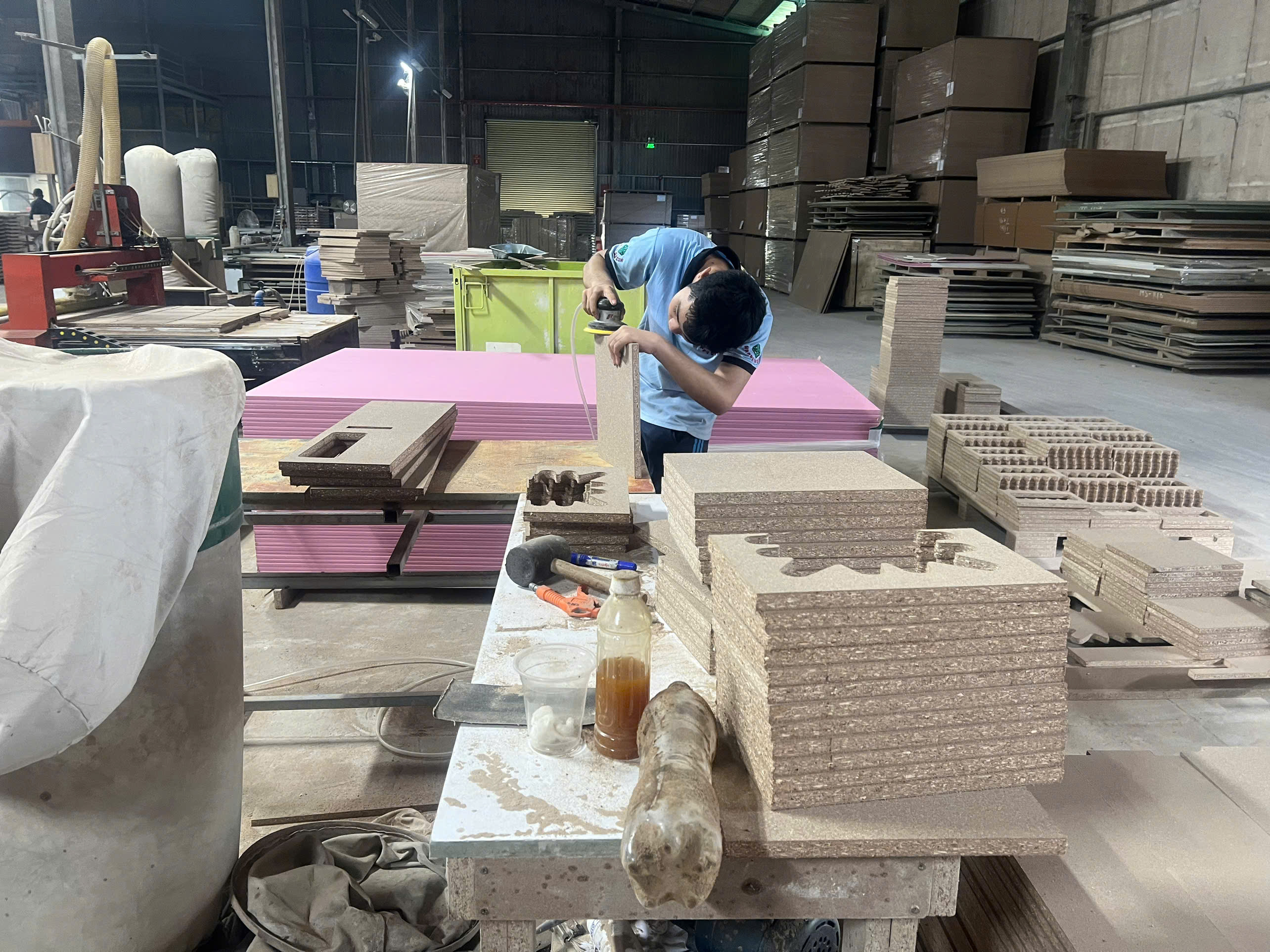
Most Vietnamese sheet metal factories operate on thin margins. The metal fabrication industry in Vietnam is capital-intensive. Raw steel purchases, CNC machine maintenance, powder coating, and labor all require cash upfront. A typical factory prefers 30% deposit with the balance paid by T/T before shipment. Asking them to wait 60 days after delivery stretches their working capital to the breaking point.
This is where our role as a supply chain partner matters. Because we have long-standing relationships with factories and a local team managing production, we can bridge the gap. Our clients get 60-day or even 90-day open account terms through us, while the factory receives payment on their preferred schedule. It is a structure that works for both sides.
How Payment Terms Affect Compliance
Payment terms also have a direct compliance impact. Under Vietnamese tax rules, invoices of VND 20 million or more require a deferred payment contract if payment is not completed before December 31 of the invoice year. Without this contract, the tax authority may reclassify the transaction, increasing the supplier's CIT liability. That creates problems for the supplier and, by extension, for your supply chain. For a deeper dive into structuring payment terms to minimize risk, we have a dedicated guide covering common arrangements and their trade-offs.
Here is a comparison of common payment structures:
| Payment Structure | Cash Flow Impact (Buyer) | Supplier Risk | Compliance Requirement |
|---|---|---|---|
| 100% T/T in advance | High negative impact | None | Standard invoice |
| 30/70 T/T (deposit + pre-shipment) | Moderate impact | Low | Standard invoice |
| Letter of Credit (L/C) | Moderate impact | Low (bank-guaranteed) | L/C documentation |
| 60-day open account (direct) | Positive impact | High (buyer credit risk) | Deferred payment contract if ≥VND 20M |
| 60-day open account (via DEWIN) | Positive impact | Low (DEWIN manages payment) | Deferred payment contract managed by intermediary |
Incoterms 2020 and Payment Timing
Your choice of Incoterms 2020 8 affects when costs and risks transfer, which in turn affects when payment obligations should reasonably begin. For sheet metal imports from Vietnam to the US, FOB Ho Chi Minh City or CIF US port are common. Under FOB, you take ownership at the Vietnamese port, so the 60-day clock might start from the bill of lading date. Under CIF, the supplier bears freight and insurance costs, which makes them even less willing to extend payment terms without a guarantee.
We typically recommend FOB terms combined with open account payment through our credit structure. This gives the buyer maximum cash flow flexibility while keeping the supplier's risk manageable.
How do I verify that my Vietnam supplier's export documentation matches my US customs and tax requirements?
Last quarter, one of our US clients had a container of sheet metal brackets held at the port of Los Angeles for eleven days. The reason was a mismatch between the commercial invoice description and the HS code on the certificate of origin. Eleven days of demurrage charges and a frustrated end customer. That experience reinforced why we now triple-check every document set before shipment.
To verify documentation alignment, cross-reference your Vietnam supplier's commercial invoice, packing list, bill of lading, and certificate of origin against the HS codes filed with US Customs, ensure item descriptions match precisely, confirm the correct Incoterms 2020 notation, and validate that the certificate of origin supports any applicable FTA tariff reductions.
The Document Chain: Vietnam to US
Every sheet metal shipment from Vietnam to the US requires a chain of documents. Each link must be consistent with the others. A single discrepancy — a different unit of measure on the packing list versus the commercial invoice, or a rounded weight on the bill of lading — can trigger a customs hold.
Here is the complete document chain we manage for every shipment:
| Document | Issued By | Key Fields to Verify | US Customs Relevance |
|---|---|---|---|
| Commercial Invoice | Supplier | Item description, quantity, unit price, total value, Incoterms | Basis for duty calculation |
| Packing List | Supplier | Net/gross weight, dimensions, carton count | Must match bill of lading |
| Bill of Lading | Shipping line | Consignee, notify party, port of loading/discharge, weight | Proof of shipment, title document |
| Certificate of Origin | Chamber of Commerce or trade authority | Country of origin, HS codes, product description | Required for FTA tariff benefits |
| Customs Export Declaration | Vietnam Customs | HS codes, FOB value, exporter details | Must align with US import entry |
| Quality Inspection Report | Supplier or third-party inspector | Material grade, dimensions, tolerances | Supports specialized inspection requirements |
HS Code Classification: Where Mistakes Happen
HS codes for sheet metal products are notoriously specific. A flat-rolled steel product has a different code than a fabricated bracket. A powder-coated part may classify differently than an uncoated one. Vietnam and the US both use the Harmonized System 9, but the last digits of the code can differ between countries.
We always confirm the six-digit international HS code with the supplier, then verify the full ten-digit HTS code used for US import entry. If there is any doubt, we recommend requesting an advance ruling from US Customs and Border Protection 10. This costs time upfront but prevents costly reclassification later. You can learn more about US CBP inspection requirements that apply to Vietnam sheet metal fabrication in our dedicated guide.
Import Regulations Vietnam: The Export Side
On the Vietnamese side, export of sheet metal requires a customs export declaration that matches the commercial invoice. Vietnam Customs checks that the declared FOB value aligns with the contract price. Any discrepancy can delay clearance or trigger an investigation. The supplier must also ensure that any imported raw materials used in the sheet metal production were properly declared and duties paid. If the supplier used duty-free imported steel under a manufacturing-in-bond arrangement, the export documentation must reflect this.
Certificate of Origin and FTA Benefits
The certificate of origin is your ticket to reduced customs duties under free trade agreements. Vietnam has FTAs with numerous countries and trade blocs. For US importers, the relevant consideration is whether any bilateral or sectoral tariff benefits apply. Even when standard MFN rates apply, the certificate of origin is still required to prove the goods were manufactured in Vietnam — especially important given current US tariffs on steel and aluminum from certain countries.
We ensure every certificate of origin lists the correct HS codes and product descriptions that match the commercial invoice exactly. A mismatch here is one of the most common reasons for customs delays.
Monthly and Annual Compliance Timeline
For ongoing sourcing relationships, staying compliant is not a one-time effort. Here is the timeline we follow:
- Monthly: Verify supplier's VAT return submission, reconcile invoices against delivery notes, filter invoices above VND 20 million for deferred payment contract requirements.
- Quarterly: Review supplier's provisional CIT payments, confirm e-invoice registration remains active.
- Annually: Obtain supplier's CIT finalization confirmation by March 31, reconcile full-year purchase records against customs import entries, update HS code classifications if product specifications changed.
- By July 2026: Prepare for shortened amended declaration window (5 years instead of 10 years).
This cadence keeps both the supplier and the importer audit-ready at all times.
Conclusion
Managing tax invoices and financial compliance when sourcing sheet metal from Vietnam demands attention to e-invoicing rules, thorough supplier audits, structured payment terms, and precise export documentation. Our Vietnam team handles this daily — reach out to DEWIN at sa***@*******ch.com for guidance.
Frequently Asked Questions
How do I ensure my Vietnam sheet metal supplier provides VAT-compliant tax invoices for my records?
A lesson we picked up early running our seven-person Vietnam office: not every supplier who hands you a commercial invoice is actually registered for e-invoicing with the tax authority. That gap has caused real headaches for our US clients at customs.
What financial compliance risks should I look for when auditing a new sheet metal factory in Vietnam?
When our team in Vietnam visits a prospective sheet metal factory, the first thing we ask for is not a product sample — it is their tax registration certificate and most recent CIT finalization return. The financial health of your supplier directly determines the reliability of your supply chain.
Can I secure 60-day open account payment terms to manage my cash flow when sourcing from Vietnam?
One of the most common requests we hear from US purchasing managers is about payment terms. A client recently told me: "I need 60-day open account terms, or the deal doesn't work for my cash flow." It is a fair ask, but getting there with a Vietnamese supplier requires trust-building and the right intermediary structure.
Footnotes
1. Replaced with a comprehensive and up-to-date article from VATupdate.com explaining Vietnam’s VAT rates, including current rates, temporary reductions, and exemptions. ↩︎
2. Provides key highlights and specific regulations of Circular 32/2025/TT-BTC on e-invoicing. ↩︎
3. Explains the validity and regulatory requirements for digital signatures on tax invoices in Vietnam. ↩︎
4. Details the VAT reduction stipulated by Decree 72/2024/NĐ-CP, effective from July 2024. ↩︎
5. Official portal for Vietnam’s tax authority, providing tax regulations and information. ↩︎
6. Explains Vietnam’s new Corporate Income Tax law and its significant changes for businesses. ↩︎
7. Explains Vietnam’s e-invoice registration process and compliance requirements for businesses. ↩︎
8. Official rules of global trade, defining responsibilities for international transactions. ↩︎
9. Official explanation of the Harmonized System, a multipurpose international product nomenclature. ↩︎
10. Official website for the primary border control organization of the United States. ↩︎