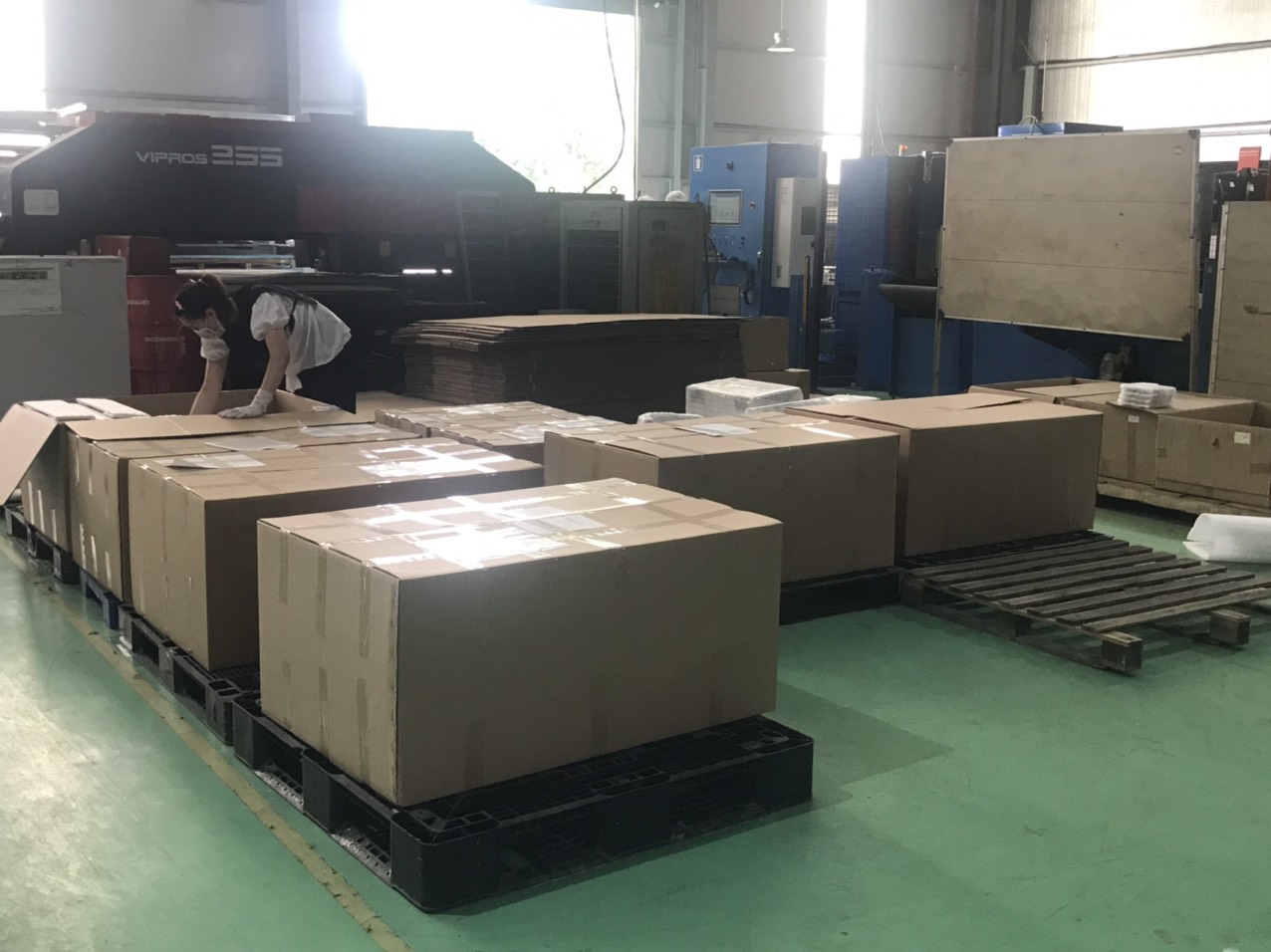

[EU environmental packaging requirements](https://dewintech.com/blog/how-require-eu-compliant-packaging-sourcing-stamping-parts-to/) caught one of our stamping clients off guard last year EPR registrations 1. His brackets were perfect. His crates were not. Customs held the shipment, and his production line waited.
To meet strict EU environmental packaging requirements when sourcing stamping parts, comply with the Packaging and Packaging Waste Regulation (PPWR): use recyclable materials, keep heavy metals under 100 ppm, limit empty space to 50%, register for EPR, and hold a Declaration of Conformity with a technical file.
That sounds like a lot. It is. But you can break it into four clear steps. Let me walk you through each one, based on what we do for our own EU-bound shipments.
How do I identify which EU packaging regulations apply to my stamping parts shipments?
During a supplier audit in Vietnam last spring, our team found a stamping vendor still quoting "export standard" packaging with no idea what the PPWR was. That gap is common, and it is dangerous for anyone shipping to Europe.
The Packaging and Packaging Waste Regulation (PPWR) 2025/40 governs all packaging around your stamping parts, including crates, pallets, VCI wraps, and dividers. It entered force on 11 February 2025 and applies fully from 12 August 2026, replacing the old directive with directly applicable law in all 27 member states.

Here is the key distinction most buyers miss. Your stamped bracket is a product, not packaging. The PPWR does not regulate the metal part itself. It regulates everything wrapped around it: the corrugated box 2, the plastic pallet, the shrink film, the foam dividers, and even the VCI paper protecting against rust. If any of those items fail the rules, your whole shipment can be blocked from the EU market.
The regulatory timeline you need to track
The PPWR rolls out in stages. Each stage adds new obligations. I recommend our clients build these dates into their sourcing contracts now, not later.
| Deadline | Requirement | What it means for stamping parts |
|---|---|---|
| 12 Aug 2026 | General applicability | All transport packaging 3 must comply |
| Aug 2028 | Harmonized EU label | Material composition labels on packaging |
| 1 Jan 2030 | Recycled content mandate | Plastic packaging needs 10–35% post-consumer content |
| 2030 | Recyclability Grade C | Packaging must be at least 70% recyclable |
| 2030 | Reuse targets | 40% reuse target for transport packaging |
| 2038–2040 | Grades B and A | 80%, then 95% recyclability required |
Beyond the PPWR
The PPWR is not alone. Extended Producer Responsibility (EPR) schemes run at the national level, so you must register in each member state where your parts land. REACH and RoHS standards still apply to the parts themselves and to coatings on packaging. And eco-design requirements 4 increasingly shape how the EU expects transport packaging to be built in the first place. Treat these as one connected compliance system, not separate boxes to tick.
What packaging materials and standards should I require from my Asian suppliers to stay compliant?
The trade-off we weigh most often in our Vietnam office is corrosion protection versus recyclability. Stamped steel brackets rust fast in sea containers, but the old plastic-heavy solutions now clash with EU recyclable industrial packaging rules.
Require single-material recyclable packaging: corrugated cardboard with recyclable paper-based VCI corrosion protection, plastic pallets with documented recycled content, and reusable steel crates for closed-loop programs. Ban mixed-material laminates and demand heavy metals stay below 100 ppm in all components, including inks and films.

Material selection is where compliance is won or lost. When we spec packaging for stamped brackets going to Europe, we start from Design for Recycling principles. That means one rule above all: avoid mixed materials. Plastic-coated cardboard, foil laminates, and glued foam-on-fiber composites are recyclability killers. A mono-material box with a mono-material insert recycles cleanly. A hybrid does not.
Corrosion protection without the compliance risk
VCI corrosion protection deserves special attention for stamped steel and zinc-plated parts. Traditional single-use VCI plastic film works well, but it adds plastic waste and can carry restricted substances 5 in its additive package. We have been shifting clients toward paper-based VCI, which protects galvanized and stainless brackets during a 30–40 day sea voyage while staying fully recyclable in the paper stream. Always ask for the chemical composition 6 sheet of any VCI product. Emerging restrictions on substances of concern, including the PFAS trend starting in food packaging, signal where industrial packaging chemistry is heading.
Material comparison for stamping part shipments
| Material option | PPWR fit | Corrosion protection | Cost profile |
|---|---|---|---|
| Corrugated box + VCI paper | Strong; fully recyclable | Good for short-to-medium transit | Low to moderate |
| Recycled-content plastic pallet | Good if content is certified | N/A (load carrier) | Moderate |
| Reusable steel crate (closed loop) | Excellent; supports reuse targets | Excellent with liners | High upfront, low per-cycle |
| Single-use shrink wrap + foam | Weak; phase out | Good but non-compliant trend | Low upfront, high risk |
Also enforce the physical rules. Empty space in transport packaging must not exceed 50%. Weight and volume must be minimized to the functional need. For dense stamped parts, tight nesting layouts help you meet both rules and cut freight cost at the same time. Circular economy principles and cost savings often point in the same direction here.
How can I verify my supplier's packaging processes meet EU requirements before production begins?
A purchasing manager from Ohio once asked me a blunt question: "How do I know the crate photos my supplier sends are what actually ships?" Fair point. Verification has to happen before mass production, not at the port.
Verify compliance through a pre-production packaging audit: review material composition sheets and recycled content certificates, request third-party heavy-metal test reports, inspect a packed sample or golden sample, confirm labeling and pictograms, and include packaging specifications in your PPAP or first-article approval process.

In our sourcing projects across Vietnam, India, and Taiwan, we treat packaging as a controlled process, just like a critical dimension on a drawing. If the packaging spec is not frozen and audited before production, it will drift. Here is the verification sequence we run, and I suggest you demand the same from any Asian supplier.
A five-step verification process
- Document review first. Collect material data sheets for every packaging component: box, pallet, VCI wrap, dividers, tape, and labels. Anything above 5% of total packaging weight needs full identification. Check recycled content claims against certificates, not verbal promises.
- Independent testing. Send samples of plastic components and printed materials to a third-party lab for heavy-metal screening. This closes the gap between what the datasheet says and what the factory actually bought.
- On-site environmental compliance auditing. Our Vietnam team walks the packing line. We check that the specified materials are physically in the warehouse, that packing instructions are posted, and that operators follow them. A spec on paper means nothing if the line uses leftover foam from another order.
- Golden sample approval. The supplier packs one full unit exactly as it will ship. You approve photos, weights, empty-space ratio, and labeling. This packed sample becomes the reference standard.
- Lock it into PPAP. We add the approved packaging spec into the PPAP package alongside dimensional reports. Any change then requires formal approval, which protects you from silent material substitutions.
This process also builds supply chain transparency you will need later. Digital Product Passports are coming for industrial load carriers like pallets and crates, and suppliers who can already trace material composition will adapt fastest. Some of our clients even request a simple Life Cycle Assessment summary from packaging vendors to compare options on real environmental impact rather than gut feel.
What documentation do I need from my supplier to prove packaging compliance during EU customs clearance?
The hard lesson we learned early in our EU export work was this: goods rarely get stopped for bad parts. They get stopped for missing paperwork. One incomplete declaration can idle a container while storage fees climb daily.
You need a Declaration of Conformity for each packaging type, a supporting technical file with material composition and test data, recycled content certificates, heavy-metal test reports, EPR registration numbers for destination countries, and traceability marking with the manufacturer's name, address, and batch identification.

Under the PPWR, the importer carries legal responsibility. If you bring stamped brackets into the EU, market surveillance authorities can ask you, not your Asian supplier, to produce evidence. So your job is to pull the right documents out of the supply chain before shipment and keep them organized. Here is the document set we assemble for our clients' EU-bound stamping shipments.
The core compliance file
| Document | Who provides it | Purpose |
|---|---|---|
| Declaration of Conformity (DoC) | Packaging manufacturer / supplier | Legal statement of PPWR compliance |
| Technical file 7 | Supplier, compiled by you | Material composition, drawings, test evidence |
| Heavy-metal test reports | Third-party lab | Proof of ≤100 ppm regulated metals |
| Recycled content certificates | Resin or packaging producer | Supports 2030 recycled content claims |
| EPR registration numbers | You or your EU representative | Required for waste reporting and fees |
| Packing list with packaging weights | Supplier | Feeds EPR declarations by material type |
Practical tips that save clearance time
Keep the technical file in English and store it electronically so you can respond to a market surveillance request within days. Make sure every crate and pallet carries the required traceability marking: manufacturer name, address, electronic contact, and a batch or serial number. Apply the material pictograms now, even though the harmonized EU label only becomes mandatory in August 2028. Early adoption costs little and signals good faith to inspectors.
One more point on EPR. Registration is national, not EU-wide. If your parts flow to distributors in Germany, France, and Poland, you may need three separate registrations with three different fee structures. Packaging weight data by material type feeds those declarations, so require it on every packing list from day one. Building this discipline into your standard shipment routine keeps eco-design requirements, waste reporting, and customs paperwork aligned instead of scrambling per shipment.
Conclusion
EU packaging rules will not wait for your supply chain to catch up. Audit your packaging, verify your suppliers, and build the document file now. Get this right once, and every future shipment clears smoothly.
Frequently Asked Questions
How do I identify which EU packaging regulations apply to my stamping parts shipments?
During a supplier audit in Vietnam last spring, our team found a stamping vendor still quoting "export standard" packaging with no idea what the PPWR was. That gap is common, and it is dangerous for anyone shipping to Europe.
What packaging materials and standards should I require from my Asian suppliers to stay compliant?
The trade-off we weigh most often in our Vietnam office is corrosion protection versus recyclability. Stamped steel brackets rust fast in sea containers, but the old plastic-heavy solutions now clash with EU recyclable industrial packaging rules .
How can I verify my supplier's packaging processes meet EU requirements before production begins?
A purchasing manager from Ohio once asked me a blunt question: "How do I know the crate photos my supplier sends are what actually ships?" Fair point. Verification has to happen before mass production, not at the port.
Footnotes
1. Authoritative OECD resource explaining the policy framework for Extended Producer Responsibility schemes. ↩︎
2. Technical overview of the corrugated box, a standard recyclable material used in industrial transport packaging. ↩︎
3. Official European Commission page detailing the legislative framework for packaging and packaging waste management. ↩︎
4. Life Cycle Assessment is the primary methodology used to verify eco-design requirements for sustainable packaging. ↩︎
5. Scientific context for heavy metals, which are among the primary restricted substances in EU packaging regulations. ↩︎
6. Official ECHA guide to understanding REACH regulations and chemical safety requirements for products and packaging. ↩︎
7. Official EU business portal detailing requirements for technical documentation and the Declaration of Conformity. ↩︎