
Meeting US fire codes 1 in sheet metal fabrication nearly cost one of our clients a six-figure contract last year — a single missing material certificate triggered a full project hold, delayed installation by weeks, and exposed them to liability they never anticipated.
To meet US fire codes when sourcing sheet metal fabrication for infrastructure projects, you must select non-combustible materials, verify supplier compliance with NFPA codes, ASTM E119 test standards, and International Building Code requirements, and demand full material traceability with PPAP documentation before any parts ship.
This guide breaks down exactly what purchasing managers and engineers need to check — from material selection to supplier vetting — so your custom parts pass fire code inspections the first time NFPA codes 2. Every section draws on real sourcing scenarios we handle daily from our Vietnam and Singapore operations.
How do I ensure my offshore sheet metal supplier uses materials that meet US fire safety standards like UL or ASTM?
A lesson we learned early in our export work: a US buyer once rejected an entire shipment of mounting brackets because the steel mill certificates referenced a local test standard, not ASTM ASTM E119 test standards 3. The parts were fine. The paperwork was not.
Ensure your offshore supplier uses US-compliant materials by requiring UL Listed certification or ASTM-graded raw materials at the purchase order level, verifying mill test reports against your specifications, and auditing the supplier's incoming material inspection process before production begins.
The core challenge is this: most Asian steel mills produce to local or European standards by default UL Listed certification 4. Unless you explicitly specify US fire safety standards in your drawings and purchase orders, your supplier will use whatever material is cheapest and available. That is not negligence — it is simply how the supply chain works outside the US ISO 9001:2015-certified quality systems 5.
Start With the Right Material Specification
Your engineering drawings must call out the exact material grade NADCAP accreditation 6. For fire-rated assemblies, this usually means stainless steel (ASTM A240 7), galvanized steel (ASTM A653), or specific aluminum alloys. Vague callouts like "mild steel" leave too much room for substitution.
When we process orders at DEWIN, our engineering team cross-references every drawing callout against the available ASTM or UL equivalent before we even request quotes from our vetted fabricators in Vietnam. This step alone prevents most compliance failures.
Verify Mill Test Reports (MTRs)
Every batch of raw material should come with a mill test report — also called a material test certificate. This document proves the chemical composition and mechanical properties of the metal. But here is the catch: not all MTRs are equal.
| Document Type | What It Proves | US Fire Code Relevance |
|---|---|---|
| EN 10204 Type 2.2 | Manufacturer's declaration only | Not sufficient for most US inspections |
| EN 10204 Type 3.1 | Independent test results per heat | Accepted for most ASTM equivalents |
| UL Listed Certificate | Material tested and listed by UL | Required when UL listing is specified |
| ASTM Test Report | Full compliance to ASTM standard | Gold standard for US infrastructure |
If your supplier cannot produce a Type 3.1 or better MTR that maps to your ASTM callout, stop the order. We have seen projects where building inspectors rejected installed ductwork simply because the MTR did not name the correct ASTM grade — even though the metal itself was chemically identical.
Audit the Supplier's Incoming Quality Process
Ask your supplier: how do you verify incoming raw material? A reliable fabricator will have a documented incoming inspection procedure. They should check material thickness, surface condition, and — critically — match the heat number on the MTR to the markings on the steel coil or sheet.
In our Vietnam facility, our quality team photographs the heat number markings on every coil and links them to the corresponding MTR in our digital tracking system. This creates a traceability chain that survives any US fire code inspection.
Building material flammability is not something you can test after the fact. The flame spread index and non-combustible classification must be inherent to the raw material. No amount of post-fabrication testing can fix a wrong material choice.
What quality control processes should I look for to guarantee my custom parts pass US infrastructure fire code inspections?
One of our US clients, a sourcing company distributing custom HVAC components, told us bluntly: "I don't care how good your price is. If my parts fail inspection, I lose the contractor and the end-user in one phone call." That conversation reshaped how we build our QC protocols.
Look for suppliers with ISO 9001:2015-certified quality systems, documented in-process inspection plans tied to fire-critical dimensions, final inspection with calibrated instruments, and a first-article inspection (FAI) process that validates every fire-rated tolerance before full production runs.
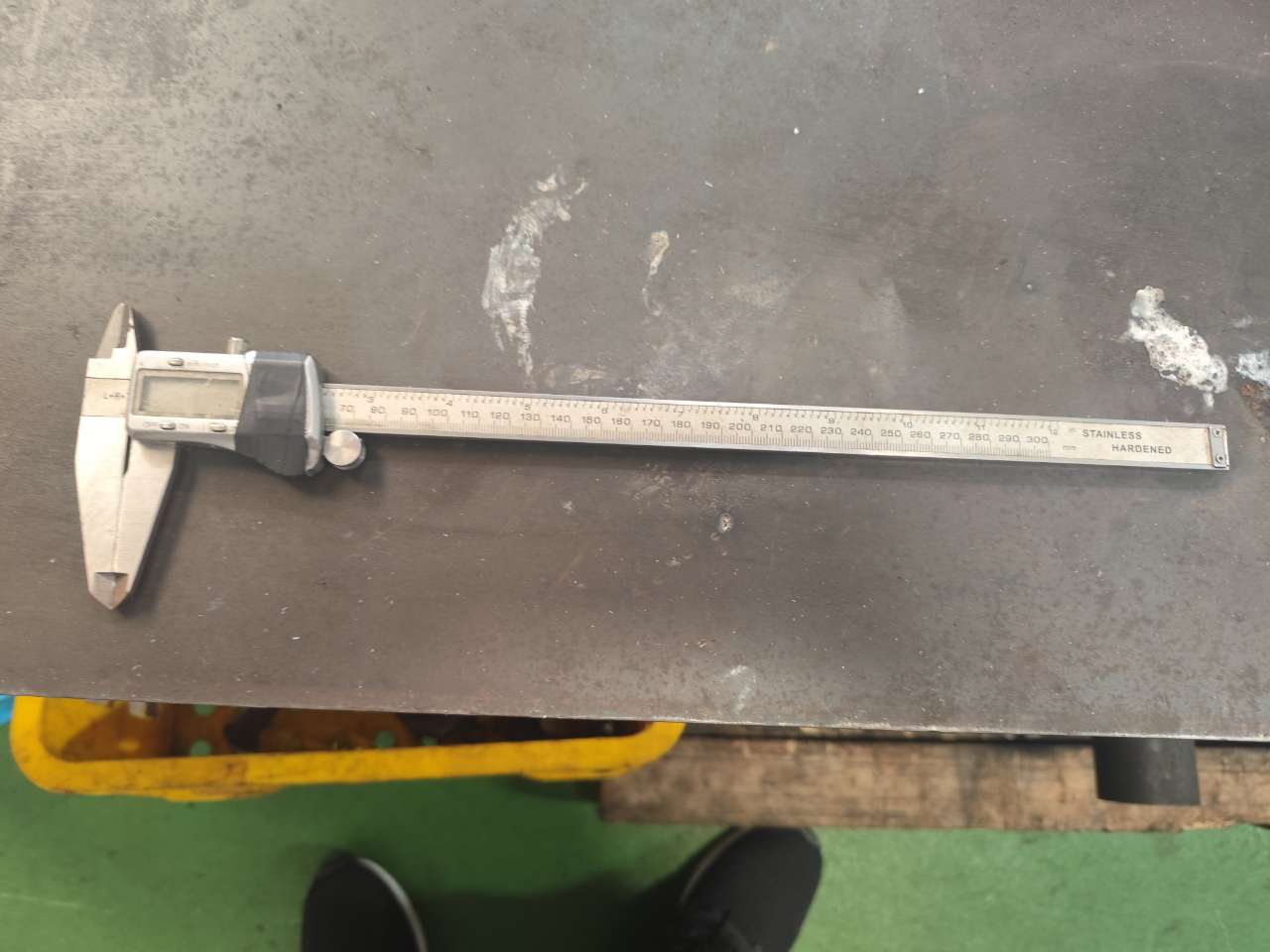
Quality control for fire code compliance is different from general manufacturing QC. You are not just checking whether a bracket fits. You are verifying that the part will perform under fire conditions — meaning gaps, material thickness, weld integrity, and coating adhesion all matter for passive fire protection.
The Inspection Plan Must Map to Fire-Critical Features
Not every dimension on a drawing is equally important for fire code compliance. Your supplier needs to identify which features are fire-critical and apply tighter inspection criteria to those.
For example, on a fire-rated enclosure or firestopping system component, the gap between mating surfaces might be specified at ±0.5 mm. If that gap is too wide, fire and smoke can pass through. A general machining tolerance of ±1.0 mm would fail the fire code even though it might be acceptable for a non-fire-rated part.
In-Process vs. Final Inspection
Both matter, but in-process inspection catches problems before they become expensive.
| Inspection Stage | What to Check | Why It Matters for Fire Codes |
|---|---|---|
| Incoming Material | Heat number, thickness, grade | Wrong material = automatic code failure |
| After Cutting/Punching | Hole positions, edge quality | Misaligned holes compromise assembly fit |
| After Bending/Forming | Bend angles, flange lengths | Incorrect bends create gaps in fire barriers |
| After Welding | Weld penetration, porosity, spatter | Weak welds fail under thermal stress |
| Final Assembly | Overall dimensions, fit check | Ensures the assembly performs as designed |
| Coating/Finish | Thickness, adhesion, coverage | Fire-retardant coatings must meet minimum thickness |
Our team in Vietnam uses a layered inspection approach. At each stage, the operator performs a self-check. Then our QC inspector verifies critical dimensions using calibrated instruments. For fire-rated parts, we add a third check — a senior quality engineer reviews the cumulative inspection data before the part moves to the next station.
Weld Quality Is Non-Negotiable
For sheet metal components in fire-rated assemblies, weld integrity is paramount. A bracket with visible weld marks — like the mounting brackets we produce with precise folds, sharp bends, and strategic mounting holes — must have welds that are fully fused and free of porosity. We follow NFPA 51B protocols 8 during all hot work, which means proper fire watch procedures, spark containment, and post-weld inspection.
If your supplier does not have a documented welding procedure specification (WPS) and welder qualification records, that is a red flag. HVAC duct construction and fire-rated enclosures demand welders who are qualified to specific codes — not just anyone who can run a bead.
First Article Inspection (FAI) Report
Before full production, insist on a complete FAI. This report documents every dimension, material property, and process parameter against the drawing requirements. For fire-rated parts, the FAI should also include the MTR, coating test results, and any fire resistance ratings documentation.
How can I verify that my Vietnam-based fabricator understands the critical fire-rated tolerances in my engineering drawings?
When we first set up our Vietnam office, I spent weeks sitting with fabrication teams reviewing US engineering drawings. The biggest gap was not skill — it was context. Vietnamese technicians could hit tight tolerances all day long. What they lacked was an understanding of why a particular tolerance mattered for fire safety.
Verify your Vietnam-based fabricator's understanding by conducting a detailed drawing review meeting, requiring them to identify fire-critical dimensions independently, testing their knowledge through a first-article sample run, and confirming they have experience with US fire-rated assemblies and International Building Code requirements.
This is where many sourcing relationships break down. Your fabricator might produce beautiful parts that look exactly like your drawing. But if they do not understand that a 0.3 mm gap in a fire barrier panel allows smoke migration, they will not flag a borderline measurement during production. They will ship it. And your inspector will reject it.
The Drawing Review Meeting
Before production starts, hold a formal drawing review. This is not a casual email exchange. It is a structured meeting — in person or via video — where the fabricator walks through the drawing and explains what each critical feature is for.
At DEWIN, we conduct these reviews with our Vietnam team and the US buyer together. We ask the fabricator to answer three questions for every fire-critical dimension:
- What is the tolerance?
- How will you measure it?
- What happens if it is out of spec?
If the fabricator cannot answer question three — specifically, that an out-of-tolerance fire barrier gap allows flame and smoke spread — they need training before production begins.
Testing Understanding Through Samples
Words are cheap. Parts are proof. Require a first-article sample run of three to five pieces. Inspect them yourself or through a third-party inspector. Focus on the fire-critical features:
- Gap dimensions between mating surfaces
- Material thickness at bend zones (bending can thin the material)
- Weld continuity on fire-rated joints
- Hole positions for firestopping hardware
- Coating thickness on surfaces requiring fire-retardant treatment
Experience With US-Specific Requirements
Ask for references. Has this fabricator produced parts for US infrastructure projects before? Do they understand what NFPA 285 compliance means for exterior wall assemblies? Have they worked with fire resistance ratings expressed in hourly durations — like 1-hour or 2-hour ratings per the ASTM E119 test?
| Verification Method | What It Reveals | Effort Level |
|---|---|---|
| Drawing review meeting | Fabricator's comprehension of fire-critical features | Medium |
| First-article inspection | Actual production capability against fire tolerances | High |
| Reference check with past US buyers | Track record with US fire code projects | Low |
| On-site audit of fabrication facility | Equipment capability and process discipline | High |
| Request for procedure documents | Written evidence of fire-code-aware processes | Medium |
Our experience shows that fabricators who have previously produced components for fire-rated assemblies, HVAC duct construction, or firestopping systems pick up new fire-critical drawings much faster. They already understand concepts like non-combustible materials, flame spread index limits, and the importance of tight seams.
If your fabricator is new to fire-rated work, invest time upfront in education. Send them the relevant sections of the International Building Code 9. Walk them through a real inspection report. Show them photos of rejected parts and explain why they failed. This investment pays for itself many times over in avoided rework and re-shipments.
What specific material certifications and PPAP documentation do I need to stay compliant with US fire regulations?
A trade-off we weigh on almost every fire-rated project: how much documentation is enough to satisfy the inspector without burying the supplier in paperwork that slows delivery? The answer depends on the project risk level — but for infrastructure, the answer is almost always "more than you think."
To stay compliant with US fire regulations, you need mill test reports per ASTM standards, UL Listed certifications where specified, a full Production Part Approval Process (PPAP) package including control plans, process flow diagrams, dimensional reports, and material certifications traceable to each production lot.
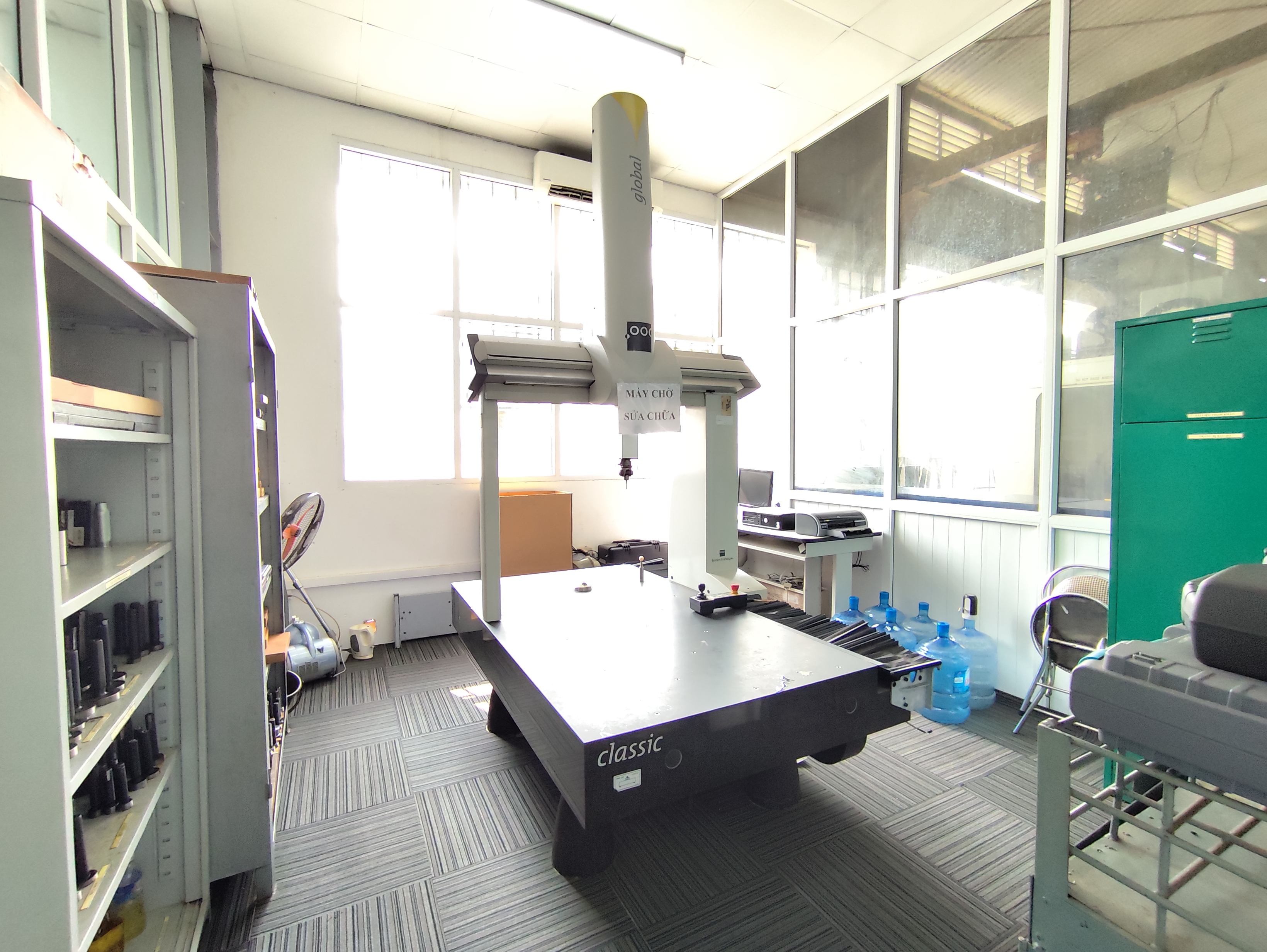
Documentation is where compliance lives or dies. You can have the best material, the tightest tolerances, and the most skilled fabricator — but without the right paperwork, a US building inspector can and will reject your installation. Let me walk through what you actually need.
The PPAP Package for Fire-Rated Parts
PPAP — Production Part Approval Process 10 — originated in the automotive industry. But it has become the gold standard for any safety-critical manufacturing, including fire-rated sheet metal for infrastructure. A typical PPAP submission for fire-code-compliant parts includes:
- Design records — The final engineering drawing with all fire-critical dimensions marked
- Engineering change documents — If any design changes occurred during development
- Customer engineering approval — Written confirmation that the buyer approved the design
- Design FMEA — Failure mode and effects analysis identifying fire-safety risks
- Process flow diagram — Step-by-step fabrication sequence
- Process FMEA — Risk analysis of each fabrication step
- Control plan — What is inspected, how often, and with what instruments
- Measurement system analysis — Proof that gauges and instruments are calibrated
- Dimensional results — Full measurement report on sample parts
- Material test reports — MTRs for every material used, mapped to ASTM or UL standards
- Initial process study — Statistical evidence that the process is capable
- Sample parts — Physical samples for buyer evaluation
- Appearance approval — If cosmetic standards apply (e.g., coating finish)
- Part submission warrant (PSW) — The formal sign-off document
At DEWIN, we manage the entire PPAP process for our US clients. Our team compiles the documentation, reviews it for completeness, and presents it as a single package. This is critical because most Vietnam-based fabricators are not familiar with PPAP. They produce great parts but struggle with the documentation layer. That is exactly where our supply chain management adds value.
Material Certifications Specific to Fire Codes
Beyond the standard MTR, fire-rated infrastructure projects may require additional certifications:
- ASTM E119 test data for assemblies rated by hourly fire resistance
- UL Classification or Listing marks on materials or components
- NFPA 285 test reports for exterior wall assembly components
- Intumescent coating certificates if fire-retardant coatings are applied
- NADCAP accreditation for special processes like heat treatment or welding in safety-critical applications
Traceability Is the Thread That Ties It All Together
Every sheet metal component in a fire-rated assembly must be traceable back to its raw material source. This means lot numbers, heat numbers, and production dates are recorded and linked through the supply chain. If a building inspector asks, "Where did this steel come from?" — you need an answer that traces back to the mill.
Our digital tracking system links every part number to its raw material lot, fabrication date, inspection records, and shipping documents. This level of traceability is not optional for infrastructure projects. It is what separates a professional supply chain partner from a basic fabrication shop.
The Sheet Metal Work industry in the US includes over 2,000 companies. Many of them source components offshore. The ones that succeed long-term are the ones who invest in documentation and traceability — because that is what keeps projects on schedule and inspectors satisfied.
Conclusion
Meeting US fire codes when sourcing sheet metal fabrication demands the right materials, rigorous quality control, fabricator competence, and complete documentation — get any one of these wrong, and your project stalls at inspection.
Frequently Asked Questions
How do I ensure my offshore sheet metal supplier uses materials that meet US fire safety standards like UL or ASTM?
A lesson we learned early in our export work: a US buyer once rejected an entire shipment of mounting brackets because the steel mill certificates referenced a local test standard, not ASTM ASTM E119 test standards 3 . The parts were fine. The paperwork was not.
What quality control processes should I look for to guarantee my custom parts pass US infrastructure fire code inspections?
One of our US clients, a sourcing company distributing custom HVAC components, told us bluntly: "I don't care how good your price is. If my parts fail inspection, I lose the contractor and the end-user in one phone call." That conversation reshaped how we build our QC protocols.
How can I verify that my Vietnam-based fabricator understands the critical fire-rated tolerances in my engineering drawings?
When we first set up our Vietnam office, I spent weeks sitting with fabrication teams reviewing US engineering drawings. The biggest gap was not skill — it was context. Vietnamese technicians could hit tight tolerances all day long. What they lacked was an understanding of why a particular tolerance mattered for fire safety.
Footnotes
1. OSHA provides federal standards and regulations for fire safety in workplaces across the US. ↩︎
2. Official source for NFPA codes and standards, essential for fire safety and prevention. ↩︎
3. Details the standard test methods for fire tests of building construction and materials. ↩︎
4. Replaced HTTP 403 with official UL Solutions certification page. ↩︎
5. Official international standard for quality management systems, providing a framework for consistent products and services. ↩︎
6. Official program for aerospace and defense industries, ensuring compliance with rigorous critical process requirements. ↩︎
7. Official specification for chromium and chromium-nickel stainless steel plates, sheets, and strips. ↩︎
8. Official standard for fire prevention during welding, cutting, and other hot work processes. ↩︎
9. Official source for the International Building Code, a foundational model code for construction safety. ↩︎
10. Explains the Production Part Approval Process (PPAP) as a critical quality assurance framework in manufacturing. ↩︎