
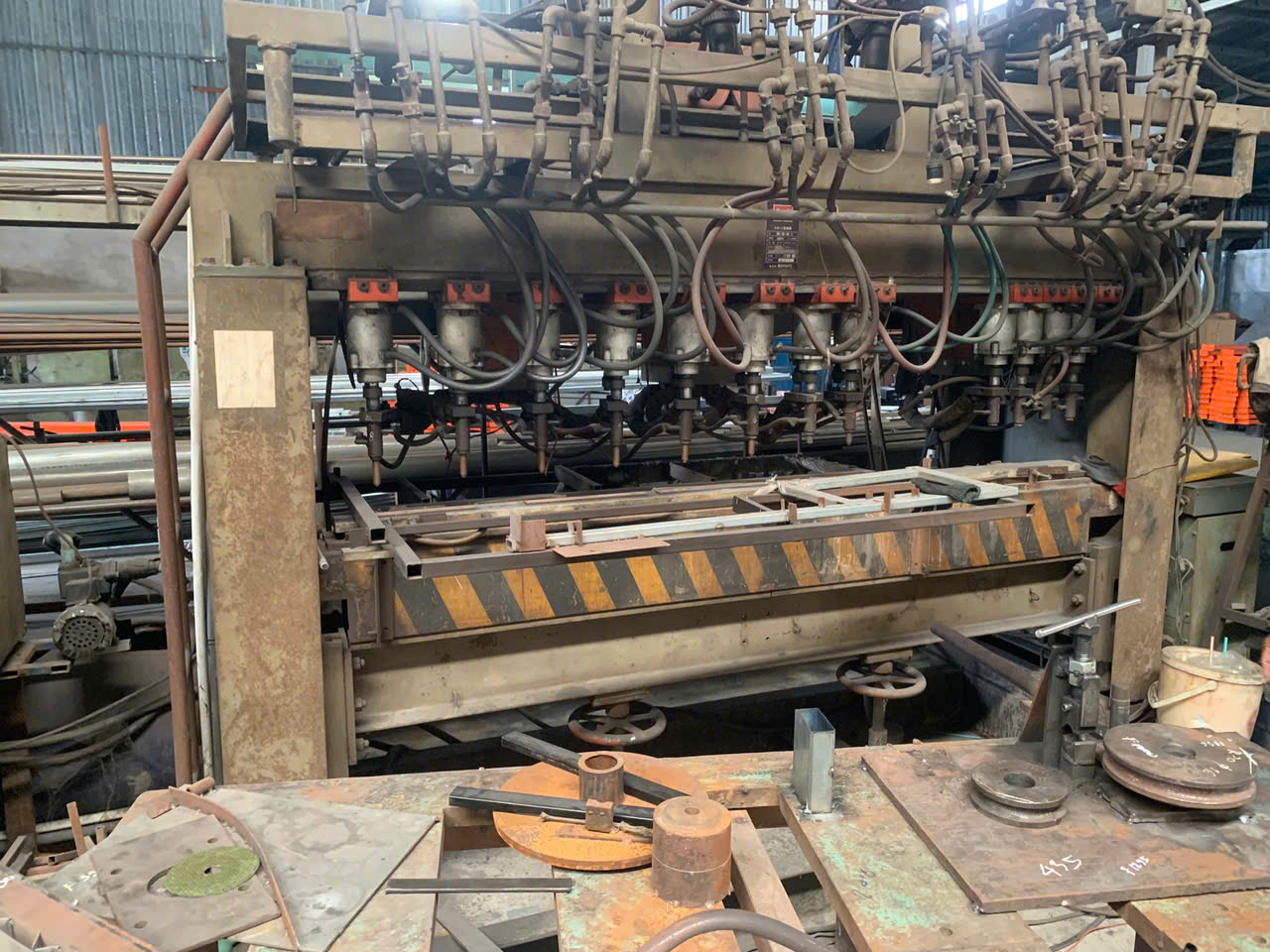
Mitigating exchange rate risks 1 when sourcing welding parts from Vietnam has become a daily concern on our Singapore-to-US supply chain projects 2. Buyers chase the 50% labor savings — then watch currency volatility quietly eat their margins on custom metal frames and brackets.
To mitigate exchange rate risks when sourcing welding parts from Vietnam, buyers should use USD-denominated invoicing, negotiate fixed-rate contract clauses, employ forward contracts for large orders, and partner with a regionally based sourcing firm that absorbs Vietnamese Dong fluctuation exposure on their behalf.
Vietnam’s welding market is projected to reach USD 1.75 billion by 2030. That growth draws buyers in. But the USD/VND exchange rate — and the hidden USD/CNY risk embedded in Chinese raw materials — can turn a competitive quote into a budget overrun. Below, I break down the practical steps our team uses to keep costs predictable for every custom welding project we manage.
How can I choose the right invoicing currency to stabilize my welding part costs in Vietnam?
A lesson we learned early in our Vietnam office: the currency you print on a purchase order shapes who carries the risk. One of our U.S. clients once requested VND invoicing to "feel closer to the real cost." Within two months, a 3% swing wiped out every cent they thought they had saved.
Choose USD as your primary invoicing currency for welding parts from Vietnam. USD-denominated invoices shift direct currency conversion risk to the supplier, keep your landed-cost calculations stable, and align with the dominant Letter of Credit format used across Vietnamese trade finance.
Why USD Dominates Vietnamese Trade Invoicing
Most Letters of Credit 3 issued for Vietnamese exports are denominated in USD. This is not accidental. Vietnamese banks, suppliers, and freight forwarders all operate in an ecosystem built around the dollar. When you invoice in USD, your accounts payable team works with a single, familiar number. The supplier handles the conversion to Vietnamese Dong on their end.
This arrangement does shift currency risk to the supplier. But it also keeps your budget line clean. You know exactly what you owe on the day you approve the invoice.
When a Third Currency Makes Sense
Some buyers explore invoicing in a third currency — the Euro or even the Singapore Dollar — if the cross-rate with VND is more stable during a particular quarter. This is uncommon for SMEs, but it can work when your sourcing partner has multi-currency accounts and can settle in whichever denomination offers the best rate on a given day. Our finance team in Singapore maintains accounts in SGD, USD, and EUR precisely for this flexibility.
The Hidden Cost of VND Invoicing
If you invoice in VND, you take on the conversion yourself. You need to monitor the State Bank of Vietnam's managed float interventions 4, predict central bank policy, and time your wire transfers. For most purchasing managers in the U.S., this is an unnecessary distraction.
| Invoicing Currency | Who Bears FX Risk? | Complexity for U.S. Buyer | Best For |
|---|---|---|---|
| USD | Vietnamese supplier | Low | Most standard orders |
| VND | U.S. buyer | High | Buyers with local Vietnam entity |
| EUR / SGD (third currency) | Shared or negotiated | Medium | Buyers with multi-currency treasury |
What About the Supplier's Margin Padding?
Here is the trade-off. When the supplier bears the currency risk, they may pad their quote by 2–5% as a buffer. This is rational behavior. Our procurement engineers always ask Vietnamese welding fabricators to break out their material costs, labor, and overhead so we can see if the buffer is reasonable. Transparency at the quote stage prevents arguments later.
In short, USD invoicing is the simplest, most common, and most protective choice. But you must pair it with quote transparency so the supplier's hedge does not become your hidden surcharge.
Can open account payment terms help me manage cash flow during periods of exchange rate volatility?
During a recent project involving heavy-duty mounting brackets for a U.S. distributor, we ran the numbers on two scenarios: paying 100% upfront via T/T versus using 60-day open account terms. The difference in effective cost — after accounting for a 2.5% VND depreciation over those 60 days — was striking.
Yes, open account payment terms of 60–90 days help manage cash flow during currency volatility by letting you delay conversion until a more favorable rate window, reduce upfront capital exposure, and spread financial risk across a longer settlement period without disrupting your Vietnam supply chain.
How Open Account Terms Work in Practice
Open account means the supplier ships the goods and invoices you. You pay 60 or 90 days later. There is no Letter of Credit. No escrow. The supplier extends credit directly to you.
This arrangement is uncommon with first-time Vietnamese suppliers. They worry about non-payment. But when a sourcing firm like ours sits in the middle — guaranteeing payment to the supplier on behalf of the U.S. buyer — open account becomes viable. We offer this to qualified clients because it solves a real pain point: cash flow pressure during periods of foreign exchange risk management uncertainty.
The Currency Timing Advantage
With a 60-day payment window, you can watch the USD/VND rate and convert when the rate favors you. This is not speculation. It is timing. If the rate moves against you, you still have a fixed USD invoice amount. If it moves in your favor, you capture the upside.
Compare this to a 100% T/T prepayment. You lock in the rate on Day 1. If the VND weakens against the USD over the next two months (meaning your USD buys more VND), you have already lost that advantage because your money was sent before the shift.
| Payment Method | When You Pay | FX Timing Flexibility | Cash Flow Impact | Typical Availability |
|---|---|---|---|---|
| 100% T/T Prepayment | Before shipment | None | High upfront burden | Any supplier |
| 50/50 T/T | 50% before, 50% after | Limited | Moderate | Most suppliers |
| Letter of Credit | Upon document presentation | Low | Moderate (bank fees) | Established suppliers |
| Open Account (60–90 days) | 60–90 days after shipment | High | Low upfront burden | Via sourcing partner |
Who Qualifies for Open Account?
Not every buyer gets open account terms from a Vietnamese fabricator. The supplier needs trust — or a guarantor. Our role as a Singapore-based intermediary is critical here. We have built relationships with Vietnamese welding shops over years. We pay them on time. In return, we extend credit terms to our U.S. clients.
This is especially useful for purchasing managers at sourcing companies who need to align their payables with their receivables. If your end customer pays you in 45 days, but your Vietnamese supplier demands prepayment, you are funding inventory out of pocket. Open account terms of 60–90 days fix that mismatch. For a deeper look at how to structure payment terms to minimize risk in Vietnam sourcing, we have outlined the key frameworks separately.
The Risk You Accept
Open account is not risk-free. If the supplier ships defective welding parts 6 — brackets with poor weld penetration or frames with dimensional errors — you still owe the invoice. That is why quality control on the ground is non-negotiable. Our Vietnam team of seven employees conducts in-process inspections and final checks before every shipment leaves the factory. Payment terms in international trade only work when quality is secured first.
What specific clauses should I include in my supply contract to protect my budget from currency shifts?
One interaction with a client taught me this lesson permanently. They had signed a one-year blanket order with a Vietnamese welding supplier — no price adjustment clause, no material index reference. When steel prices jumped and the VND moved against the supplier, the factory simply stopped producing. No clause meant no recourse, no leverage, and no parts.
Include a fixed exchange rate clause, a raw material price adjustment mechanism tied to published indices, a force majeure currency provision, and a re-negotiation trigger band (e.g., ±5% rate movement) in your supply contract to protect your welding parts budget from unexpected currency and commodity shifts.
The Five Essential Contract Clauses
Getting the right language into your supply agreement is the single most effective form of currency hedging that does not require a bank or financial instrument. Here are the clauses I recommend based on projects we have managed:
1. Fixed Exchange Rate Clause
This clause locks the USD/VND exchange rate at the rate prevailing on the date the purchase order is signed. Both parties agree that the invoiced amount in USD will not change regardless of rate movement during the production and delivery period. This is simple and effective for orders with a 30–60 day lead time.
2. Raw Material Price Adjustment Mechanism
Vietnamese welding parts — whether fabricated steel frames, aluminum brackets, or custom mounting hardware — are heavily dependent on steel and aluminum prices. Since Vietnam imports much of its raw steel from China, the USD/CNY rate also matters. A good clause references a published index (such as the LME steel billet price) and allows price adjustments if the index moves beyond a defined band. Raw Material Price Adjustment Mechanism 7
3. Re-Negotiation Trigger Band
This clause says: if the USD/VND rate moves more than ±5% from the agreed baseline, either party can request a price re-negotiation. It prevents either side from bearing catastrophic losses. It also keeps the relationship alive. Without it, suppliers facing margin compression may simply abandon orders — a common sourcing challenge in Vietnam.
4. Force Majeure Currency Provision
Standard force majeure clauses cover natural disasters and wars. Extend yours to include extreme currency events — such as a government-imposed capital control or a sudden devaluation exceeding 10%. This protects both parties from black-swan scenarios.
5. Payment Currency and Conversion Date Clause
Specify not just the invoicing currency (USD), but also the exact date on which the exchange rate is determined for any VND-referenced calculations. Ambiguity here causes disputes.
| Clause | What It Protects Against | Who Benefits |
|---|---|---|
| Fixed Exchange Rate | Day-to-day VND fluctuation | Buyer |
| Raw Material Price Adjustment | Steel/aluminum commodity swings | Both parties |
| Re-Negotiation Trigger Band (±5%) | Extreme rate movements | Both parties |
| Force Majeure Currency Provision 8 | Black-swan devaluation events | Both parties |
| Payment Currency & Conversion Date | Ambiguity in rate determination | Both parties |
How These Clauses Interact
These clauses are not standalone. They work as a system. The fixed rate clause handles normal volatility. The trigger band handles moderate stress. The force majeure clause handles extreme events. And the material adjustment mechanism ensures that even if the currency is stable, a spike in global steel prices does not silently bankrupt your supplier — which would disrupt your delivery schedule.
Our contract team drafts these clauses into every blanket order we manage. We have seen firsthand how a well-structured contract prevents the "stop-start" order pattern that plagues buyers who rely on handshake deals. Global supply chain management depends on predictability, and predictability starts with the contract.
How does partnering with a Singapore-based sourcing firm reduce my exposure to Vietnamese Dong fluctuations?
A U.S. purchasing manager once asked me directly: "Why should I pay your margin when I can just wire money to the factory myself?" Fair question. I walked him through the numbers. His direct wire transfer to Vietnam cost him a 1.8% bank spread on the FX conversion, plus a $45 wire fee, plus zero rate timing flexibility. And he had no one on the ground to verify the parts before they shipped. The margin he paid us was smaller than the risk he was carrying alone.
Partnering with a Singapore-based sourcing firm like DEWIN reduces Vietnamese Dong exposure by centralizing payments through a stable SGD/USD hub, absorbing supplier-side FX conversion, providing on-the-ground quality control, and offering open account terms that decouple your payment timing from production schedules.
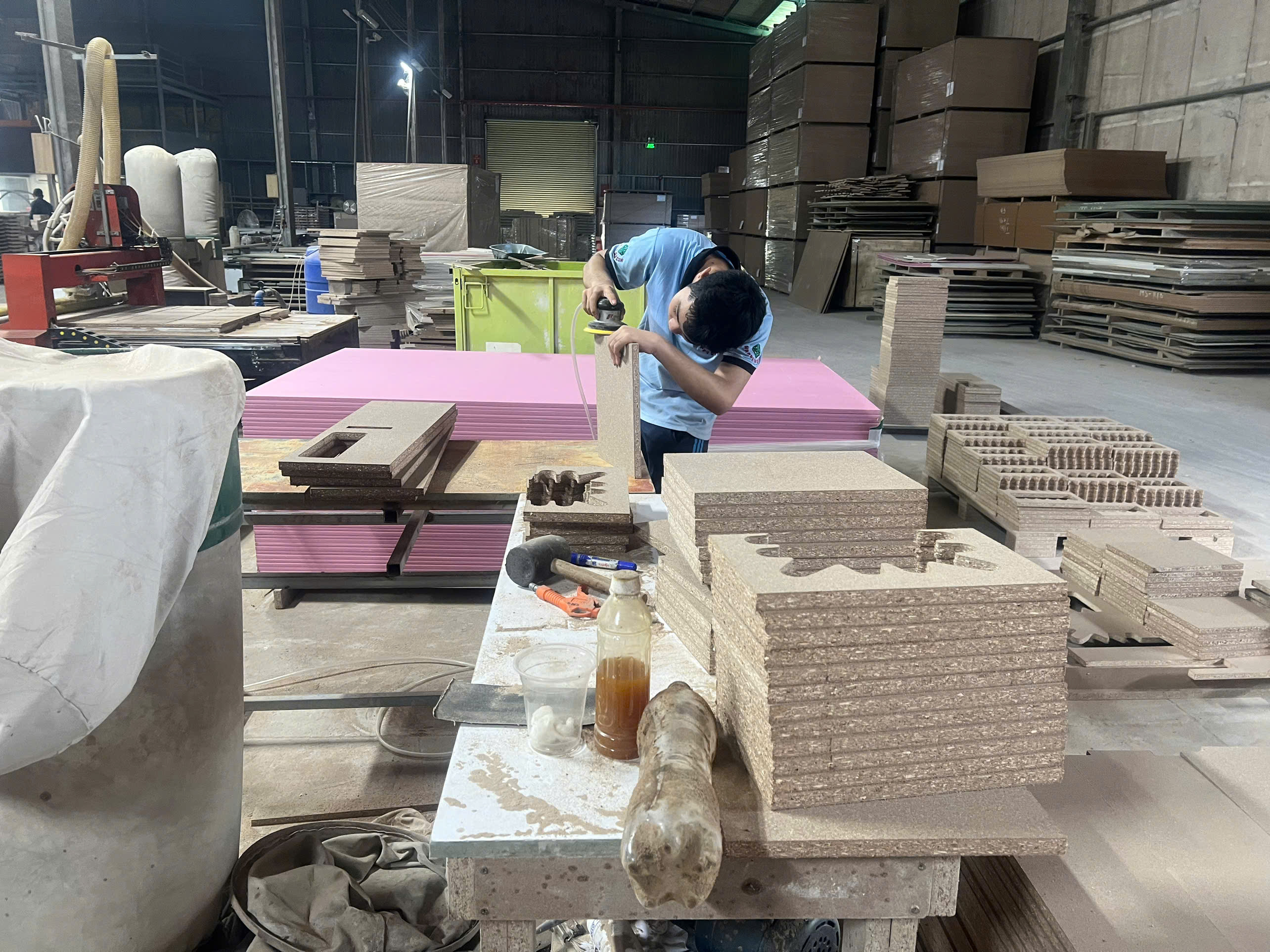
The Singapore Hub Advantage
Singapore is a global financial center with deep, liquid FX markets. When we receive payment from a U.S. client in USD, we hold it in our multi-currency accounts. We pay Vietnamese suppliers in USD — or, when advantageous, in VND through our local banking relationships. This natural hedging structure means the buyer never touches the Vietnamese Dong directly.
Our Vietnam office — seven team members strong — handles supplier communication, production monitoring, PPAP documentation, in-process inspection, and final quality checks. The buyer interacts with our Singapore team in English, receives invoices in USD, and pays on familiar terms. The entire VND layer is invisible to them.
How the Financial Flow Works
Here is the simplified flow:
- U.S. buyer places a purchase order with DEWIN (Singapore) in USD.
- DEWIN pays the Vietnamese welding fabricator from our local accounts.
- We manage the FX conversion timing based on rate monitoring.
- The buyer receives parts, inspected and documented, with a single USD invoice.
This structure eliminates the buyer's need to open Vietnamese bank accounts, navigate State Bank of Vietnam regulations, or monitor the USD/VND rate daily. It also removes the friction of direct international wire transfers to unfamiliar factory accounts. For buyers also sourcing sheet metal parts, we have detailed how to manage exchange rate fluctuations for Vietnam sheet metal fabrication costs using similar strategies.
Beyond Currency: The Operational Risk Buffer
Currency volatility is only one dimension. When you source directly from a Vietnamese welding shop, you also face:
- Communication gaps — critical drawing tolerances missed in translation.
- Quality failures — weld beads that do not meet AWS standards, mounting holes drilled off-spec.
- Delivery delays — no one on the ground to push production when schedules slip.
Our team handles all of this. We run supplier audits before onboarding any fabricator. We manage process control during production. We conduct 100% final inspection on critical dimensions. This end-to-end oversight is what allows us to offer open account payment terms 10 — because we control the quality risk before the goods ever ship.
Comparing Direct Sourcing vs. Sourcing Through a Singapore Hub
| Factor | Direct from Vietnam Factory | Through Singapore-Based Sourcing Firm |
|---|---|---|
| FX Conversion | Buyer handles USD→VND or pays supplier's padded USD rate | Sourcing firm manages conversion timing |
| Payment Terms | Typically 100% T/T or 50/50 | Open account 60–90 days available |
| Quality Control | Buyer arranges third-party inspection | In-house team on the ground |
| Communication | Direct with factory (language barriers) | Professional English-speaking project managers |
| Contract Enforcement | Buyer must enforce across jurisdictions | Sourcing firm manages supplier relationship |
| Currency Risk Exposure | Full exposure to USD/VND and hidden USD/CNY | Buffered through multi-currency accounts |
The Diversification Angle
Working through a sourcing partner also enables diversification of suppliers without multiplying your management burden. If one Vietnamese welding fabricator faces margin compression from currency shocks and cannot deliver, we shift production to an alternate qualified supplier from our network. You do not scramble. You do not re-qualify. We have already done that work.
This is especially important in the welding parts space, where the Vietnamese market's heavy reliance on Chinese raw materials introduces a secondary currency risk through the USD/CNY channel. If the Chinese yuan strengthens, Vietnamese fabricators who import steel billets and welding wire from China see their input costs rise — even if the VND is stable. A diversified supplier base that includes fabricators with locally sourced materials can partially insulate you from this "hidden" risk. Understanding which Incoterms best mitigate risk when sourcing welding parts from Vietnam further strengthens this protection by clarifying where cost responsibility transfers.
Forward contracts through our banking partners in Singapore let us lock in rates for large, scheduled purchases — typically orders above $50,000 with delivery windows of 60–120 days. Currency options are available for clients who want downside protection but want to benefit if the rate moves favorably. These financial instruments complement the contractual and operational strategies described above.
Conclusion
Exchange rate risk is real, but it is manageable. Use USD invoicing, negotiate protective contract clauses, leverage open account terms, and partner with a sourcing firm that has boots on the ground in Vietnam. Predictable costs start with structured decisions.
Frequently Asked Questions
What About the Supplier's Margin Padding?
Here is the trade-off. When the supplier bears the currency risk, they may pad their quote by 2–5% as a buffer. This is rational behavior. Our procurement engineers always ask Vietnamese welding fabricators to break out their material costs, labor, and overhead so we can see if the buffer is reasonable. Transparency at the quote stage prevents arguments later.
Who Qualifies for Open Account?
Not every buyer gets open account terms from a Vietnamese fabricator. The supplier needs trust — or a guarantor. Our role as a Singapore-based intermediary is critical here. We have built relationships with Vietnamese welding shops over years. We pay them on time. In return, we extend credit terms to our U.S. clients.
How can I choose the right invoicing currency to stabilize my welding part costs in Vietnam?
A lesson we learned early in our Vietnam office: the currency you print on a purchase order shapes who carries the risk. One of our U.S. clients once requested VND invoicing to "feel closer to the real cost." Within two months, a 3% swing wiped out every cent they thought they had saved.
Footnotes
1. Explains exchange rate risk and its management in international trade. ↩︎
2. Defines supply chain management, a core concept for sourcing projects. ↩︎
3. Offers a comprehensive and authoritative definition and explanation of Letters of Credit. ↩︎
4. Explains the concept of managed float exchange rate regimes, relevant to Vietnam’s policy. ↩︎
5. Provides recent and detailed statistics on Vietnamese exports and trade partners. ↩︎
6. Provides a comprehensive overview of welding processes and applications. ↩︎
7. Explains clauses that allow for price adjustments based on raw material costs. ↩︎
8. Discusses the application of force majeure clauses to extreme currency events. ↩︎
9. Provides information on model contracts for international commercial transactions. ↩︎
10. Provides a definition and explanation of open account payment terms from an authoritative government source. ↩︎