Last year, a U.S. client nearly faced a patent infringement lawsuit 1 — not because they copied anything, but because their overseas sheet metal supplier used a patented bending process without disclosure. That one oversight threatened months of production and hundreds of thousands in potential damages. When our team at DEWIN helped untangle the situation, it became clear that most buyers never think about IP infringement liability until it’s too late.
To negotiate IP infringement liability with sheet metal fabrication suppliers, structure your contract manufacturing agreement with clear indemnification clauses, define IP ownership upfront, conduct thorough supplier due diligence, and include escape mechanisms that let you exit if infringement risk emerges.
This guide walks through the exact steps, clause structures, and audit practices that protect your business. Each section below tackles a specific negotiation challenge you will face.
How can I structure IP indemnity clauses in my sheet metal fabrication contract to protect my business?
A client once asked us to review a supplier contract before signing. The indemnity section was one sentence long. It said the supplier would "handle any IP issues." That vague language would have left our client exposed to millions in potential liability if a third-party patent claim ever surfaced on their custom brackets.
Structure your IP indemnification clause by requiring the supplier to defend, indemnify, and hold you harmless against all third-party IP claims, while setting clear liability caps, defining covered claims, excluding buyer-specified combinations, and retaining your right to control defense.
Why Vague Indemnity Language Fails
Many contract manufacturing agreement 2s contain boilerplate indemnity language. This is dangerous. A proper IP indemnification clause 3 must be specific. It should name the types of intellectual property rights 4 covered — patents, trade secrets, copyrights, and trademarks. It should state who pays for legal counsel. It should describe what happens if the supplier's process turns out to infringe a patent.
When we draft agreements for clients sourcing custom sheet metal parts from Vietnam or other Asian countries, we insist on separating the indemnity into three layers: defense obligations, settlement authority, and damages coverage.
Key Elements of a Strong Indemnity Clause
| Clause Element | What It Covers | Why It Matters |
|---|---|---|
| Defense obligation | Supplier pays for legal defense costs | Prevents buyer from bearing upfront litigation costs |
| Hold harmless | Supplier absorbs damages and settlements | Protects buyer's balance sheet |
| Scope of covered claims | Patent, trade secret, and copyright claims | Ensures no IP category is left unprotected |
| Exclusions | Claims from buyer-specified designs or third-party combinations | Prevents unfair liability on the supplier |
| Liability cap | Maximum dollar amount the supplier will pay | Balances risk allocation between parties |
| Escape hatch | Right to redesign or terminate if infringement is likely | Allows exit from an infringing supply chain |
Negotiating the Cap
Suppliers almost always push for a liability cap. From our experience working with fabricators across Asia, a reasonable starting point is tying the cap to the total contract value over 12 or 24 months. Some buyers push for uncapped indemnity, but this can backfire — a small supplier may simply refuse to sign, or the clause becomes unenforceable.
The smarter approach is to "right-size" the cap. Exclude non-practicing entities (patent trolls) from cap limitations. This means if a patent troll sues, the supplier's obligation is uncapped. If a legitimate competitor sues, the cap applies. This compromise works well in practice.
Conditional Pass-Through Provisions
If you resell or distribute the fabricated parts to end users, you may need to pass the supplier's indemnity through to your own customers. A conditional pass-through provision lets you do this while keeping control over the defense strategy. Losing control of litigation defense can result in multi-million dollar settlements you never approved. Always retain the right to select legal counsel and approve settlement terms.
What should I look for during a supplier audit to ensure my proprietary designs are kept confidential?
During a factory visit in Vietnam last year, our audit team noticed a competitor's technical drawings pinned to the wall of a shared engineering office — in plain view of every worker and visitor. The supplier didn't even realize this was a problem. That moment reinforced why physical audits matter as much as contractual protections when it comes to safeguarding proprietary designs.
During a supplier audit, verify that the fabricator enforces strict access controls on design files, uses secure digital storage, limits drawing distribution on a need-to-know basis, trains staff on confidentiality, and extends non-disclosure agreement obligations to all sub-tier suppliers involved.
The Audit Checklist Approach
A good audit goes beyond checking machines and measuring tolerances. You need to examine how information flows through the factory. Here is a checklist we use when auditing sheet metal fabricators on behalf of our clients:
| Audit Area | What to Check | Red Flag |
|---|---|---|
| Digital file security | Encrypted storage, access logs, password policies | Files stored on shared USB drives or open folders |
| Physical drawing control | Locked cabinets, controlled print stations | Drawings posted on walls or left on workbenches |
| Employee training | Documented NDA training, confidentiality awareness | No training records, staff unaware of IP policies |
| Sub-supplier controls | NDA extensions to sub-tier vendors | No agreements with subcontractors |
| Visitor policies | Sign-in logs, restricted areas, phone/camera bans | Open access to production areas for all visitors |
| IT infrastructure | Firewalls, VPN for remote access, data backup | No IT security policy, outdated systems |
Need-to-Know Information Sharing
One of the most practical steps is limiting what the supplier actually sees. If a sheet metal bracket requires five operations, but the supplier only handles three, they should only receive drawings for those three steps. We often split technical packages so that no single supplier holds the complete design. This tiered approach to sharing trade secrets minimizes the damage from any single leak.
Extending NDAs to Sub-Tier Suppliers
A non-disclosure agreement with your primary fabricator is not enough. If they outsource laser cutting or surface finishing to a third party, your designs travel with the job. Your NDA must explicitly require the primary supplier to bind all sub-tier suppliers to the same confidentiality obligations. We include this as a standard clause in every contract manufacturing agreement we manage.
Certifications as a Baseline
Look for suppliers with ISO 9001 5 or similar certifications. These standards require documented procedures for handling customer property, including intellectual property. While certification alone does not guarantee protection, it creates a baseline of process discipline that makes enforcement easier. During our audits, we cross-reference the supplier's documented procedures against what we actually observe on the shop floor. Gaps between documentation and practice are the biggest warning signs.
Digital Tracking and Blockchain
Some of our more forward-thinking clients have started exploring blockchain-based tracking 6 for design files. This creates an immutable record of who accessed a file, when, and what changes were made. While not yet mainstream in sheet metal fabrication, it is a tool worth considering for high-value or highly sensitive proprietary designs.
How do I negotiate the division of liability if a third-party patent claim involves my custom sheet metal parts?
A few months ago, a purchasing manager we work with in the U.S. received a cease-and-desist letter. A patent holder claimed that the mounting brackets he imported — custom-designed parts fabricated in Asia — used a patented method of forming. The letter named both the buyer and the supplier. The question was immediate: who pays?
Negotiate liability division by defining in your contract which party bears risk for process-related infringement versus design-related infringement, establishing joint defense protocols, requiring the supplier to carry IP liability insurance, and including design-around clauses that compel corrective action at the supplier's expense.
Understanding Joint Liability Scenarios
Joint liability arises when both buyer and supplier contribute to the allegedly infringing product. For example, you provide the design, but the supplier selects the forming method. If the forming method infringes a patent, both parties may be named in the lawsuit. Under Section 271(g) of U.S. patent law 7, even non-manufacturers — importers, distributors, resellers — can be liable for selling products made using a patented process.
This is why risk allocation in the contract must be precise.
Process vs. Design: Who Owns What Risk?
The clearest way to divide liability is by origin of the infringement:
| Source of Infringement | Who Bears Liability | Rationale |
|---|---|---|
| Supplier-selected process (e.g., patented laser cutting method) | Supplier | Supplier chose the method; buyer had no input |
| Buyer-provided design (e.g., patented geometry) | Buyer | Buyer originated the design; supplier followed instructions |
| Joint contribution (e.g., buyer design + supplier process) | Shared per contract terms | Both parties contributed; contract defines the split |
| Third-party combination (e.g., part combined with another vendor's component) | Excluded from supplier indemnity | Infringement only occurs in the combination, not the part alone |
Design-Around Clauses
A design-around clause requires the supplier to modify the part or process at their own expense if an infringement claim arises. This is more practical than simply terminating the relationship. Tooling has been built. Production schedules are set. A design-around keeps the supply chain intact while eliminating the infringing element. We recommend setting a deadline — typically 60 to 90 days — for the supplier to complete the redesign.
IP Liability Insurance
Many buyers overlook IP infringement liability insurance. This coverage backstops the supplier's contractual indemnity obligations. If the supplier cannot pay a judgment, the insurance policy covers the gap. When negotiating with a sheet metal fabricator, ask whether they carry IP liability insurance 8. If they do not, consider requiring it as a contract condition. The cost is modest compared to the potential exposure.
Good Faith Defense
Federal Circuit rulings have established that a good faith belief of non-infringement can serve as a defense against induced infringement claims. This means both buyer and supplier benefit from obtaining formal legal opinions from legal counsel before production begins. If a process or design appears close to an existing patent, invest in a freedom-to-operate opinion. Document everything. This paper trail becomes your shield if a claim materializes later.
What practical steps can I take to prevent my technical drawings from being leaked by an overseas OEM supplier?
The trade-off between sharing enough information for accurate manufacturing and protecting sensitive designs is something we navigate on every project. One of our clients once discovered that a former supplier in Asia had shared his proprietary bracket design with a local competitor — not maliciously, but because their document control was simply nonexistent. The damage took months to contain.
Prevent drawing leaks by watermarking all files with unique identifiers, splitting designs across multiple suppliers, using encrypted file-sharing platforms, requiring contractual penalties for breaches, and conducting periodic audits to verify compliance with your supply chain risk management protocols.
Practical Prevention Framework
Prevention is cheaper than litigation. Here are the steps we implement for every client engagement:
Step 1: Watermark and Track Every File. Each drawing should carry a unique serial number, the recipient's name, and a timestamp. If a drawing leaks, the watermark identifies the source immediately. Digital watermarking tools can embed invisible identifiers that survive printing and scanning.
Step 2: Use Encrypted Platforms. Never send drawings via regular email. Use encrypted file-sharing platforms that log every download and view. Some platforms allow you to set expiration dates on files, so the supplier cannot access them after production ends.
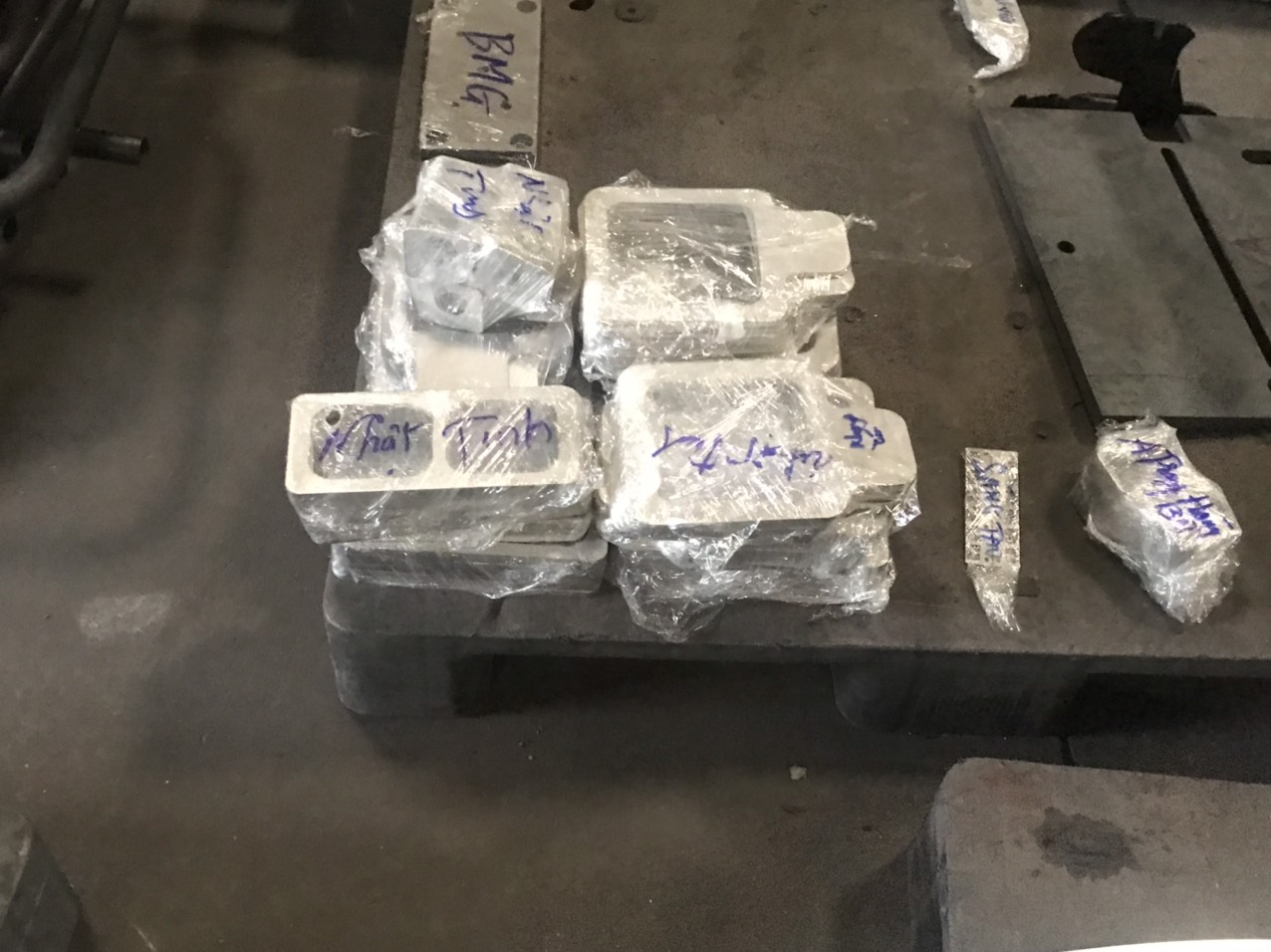
Step 3: Split the Design. If your product has multiple components — for example, a pair of mirrored mounting brackets with complex angular folds and multiple mounting holes — consider splitting the fabrication across two or more suppliers. No single supplier sees the full assembly. This is especially effective for high-value intellectual property rights.
Contractual Penalties and Enforcement
| Prevention Measure | Implementation Cost | Effectiveness |
|---|---|---|
| Watermarking | Low | High — identifies leak source |
| Encrypted file sharing | Medium | High — controls access and logging |
| Design splitting | Medium–High | Very high — no single supplier has full IP |
| Contractual penalties (liquidated damages) | Low (legal drafting cost) | Moderate — depends on enforceability in supplier's jurisdiction |
| Periodic audits | Medium | High — verifies real-world compliance |
| NNN agreements 9 (Non-Circumvention, Non-Use, Non-Disclosure) | Low | High — especially for suppliers in Asian jurisdictions |
NNN Agreements for Overseas Suppliers
Standard NDAs drafted under U.S. law may not be enforceable in many Asian jurisdictions. This is why we recommend NNN agreements — Non-Circumvention, Non-Use, and Non-Disclosure. These agreements are drafted under the supplier's local law and are enforceable in local courts. They specifically prohibit the supplier from using your designs for their own products, selling to your competitors, or disclosing your information to any third party.
Supplier Performance Metrics for IP Compliance
Integrate IP protection into your supplier scorecard. Track metrics like:
- Number of NDA training sessions completed per year
- Audit findings related to document control
- Response time to IP-related corrective actions
- Compliance with file access restrictions
When IP compliance becomes a factor in supplier selection and retention, fabricators take it seriously. This approach transforms IP protection from a one-time contract clause into an ongoing operational standard.
Building a Culture of Confidentiality
Beyond contracts and technology, the most effective protection comes from working with suppliers who genuinely understand the value of your designs. During our supplier development process, we invest time educating fabricators on why confidentiality matters — not just as a legal obligation, but as a business advantage. Suppliers who protect customer IP earn repeat business and premium pricing. Those who do not eventually lose their best clients.
Conclusion
Negotiating IP infringement liability with sheet metal fabrication suppliers demands precise contracts, thorough audits, clear risk allocation, and practical prevention measures. Protect your business by acting before a claim arises, not after. Additionally, it is critical to define IP and tooling ownership clearly in your agreements, and to understand how to handle legal jurisdiction when sourcing from Vietnam or other overseas locations.
Frequently Asked Questions
Process vs. Design: Who Owns What Risk?
The clearest way to divide liability is by origin of the infringement:
How can I structure IP indemnity clauses in my sheet metal fabrication contract to protect my business?
A client once asked us to review a supplier contract before signing. The indemnity section was one sentence long. It said the supplier would "handle any IP issues." That vague language would have left our client exposed to millions in potential liability if a third-party patent claim ever surfaced on their custom brackets.
What should I look for during a supplier audit to ensure my proprietary designs are kept confidential?
During a factory visit in Vietnam last year, our audit team noticed a competitor's technical drawings pinned to the wall of a shared engineering office — in plain view of every worker and visitor. The supplier didn't even realize this was a problem. That moment reinforced why physical audits matter as much as contractual protections when it comes to safeguarding proprietary designs.
Footnotes
1. Explains the legal action and process of a patent infringement lawsuit. ↩︎
2. Provides a comprehensive overview of contract manufacturing agreements. ↩︎
3. Details the purpose, scope, and key elements of an IP indemnification clause. ↩︎
4. Defines intellectual property rights and their types. ↩︎
5. Explains the ISO 9001 standard for quality management systems directly from the source. ↩︎
6. Describes how blockchain technology is used for tracking and transparency in supply chains. ↩︎
7. Provides basics of U.S. patent law. ↩︎
8. Explains the coverage and importance of intellectual property infringement liability insurance. ↩︎
9. Clarifies the nature and importance of NNN agreements, especially in international contexts like China. ↩︎