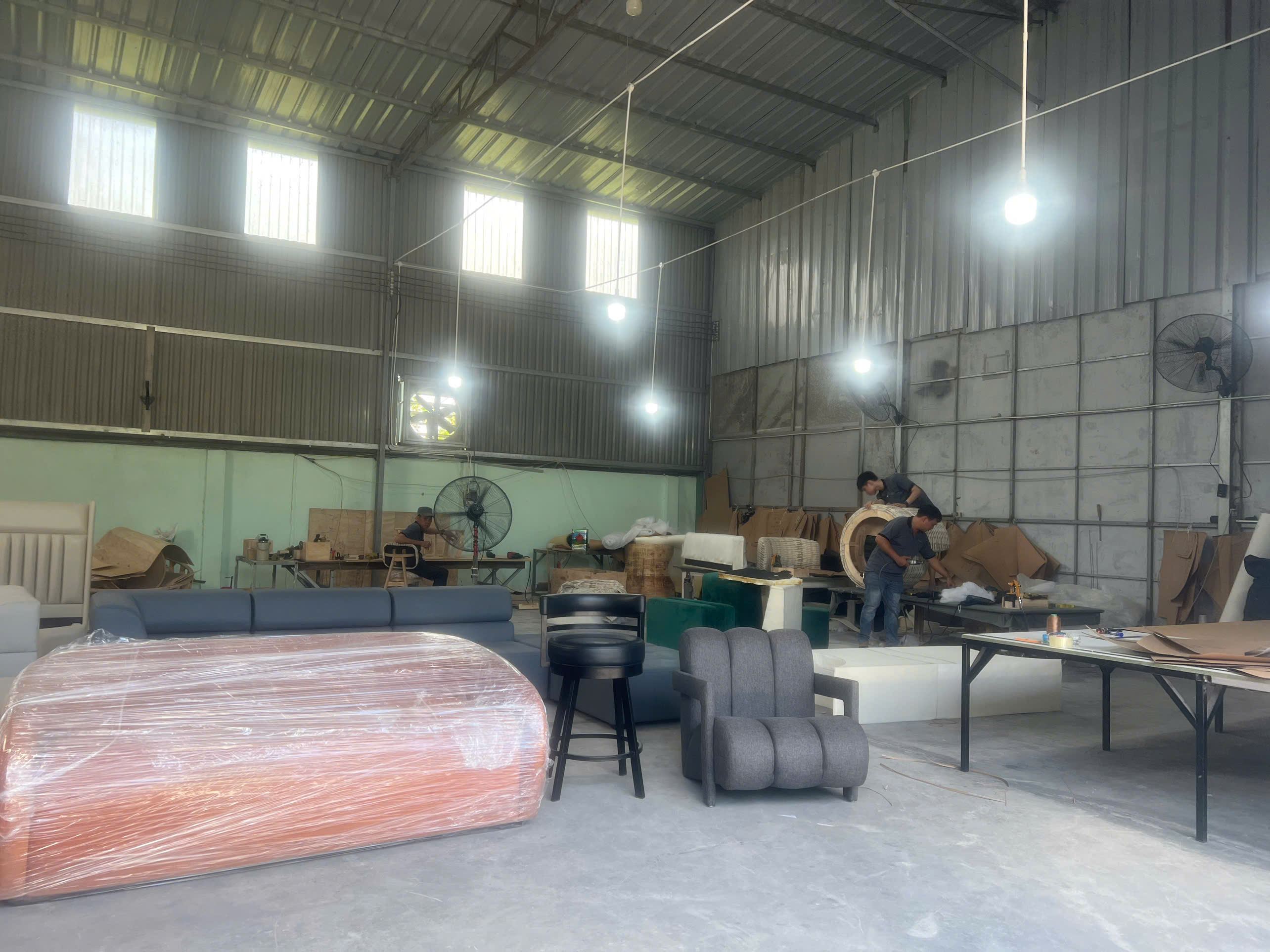

Learning how to negotiate OEM/ODM terms with Vietnam stamping parts suppliers saved one of our bracket projects from disaster. Weak contracts cause tooling disputes, delays, and rework. Our Vietnam team fixes that daily.
To negotiate OEM/ODM terms with Vietnam stamping parts suppliers, verify in-house tool-and-die capability first, then lock tooling ownership, PPAP and quality acceptance criteria, Incoterms, milestone payment terms, and delivery penalties into a formal purchase order before production begins.
That answer covers the framework. Now let me walk you through each stage. I will share the exact checks, clauses, and payment structures we use on real stamped-bracket programs in Vietnam.
How do I evaluate a Vietnam stamping parts supplier's OEM/ODM capabilities before negotiating terms?
Last year, our Vietnam office audited a stamping plant that looked perfect on Alibaba. The toolroom told a different story. Dies were rusting on the floor, and die-making was subcontracted out.
Evaluate a Vietnam stamping supplier by auditing in-house tool-and-die capability, press tonnage range, CMM metrology, ISO 9001 or IATF 16949 certification, subcontractor management, and prototype development speed. Never negotiate terms until a factory audit confirms the supplier is a complete system, not just a logo.

A stamping supplier is a system. The output depends on their toolroom discipline, their raw material procurement channels 1, and how they manage handoffs between processes. It does not depend on their website photos. Before we put any bracket or mounting clip into production, our engineers run structured factory audit procedures on site. I recommend you do the same, or hire someone local who can.
The core capability checklist
Start with the toolroom. For high-volume stamped parts like the zinc-coated brackets and stainless clips we manage, the supplier must build, debug, and maintain progressive dies 2 internally. If they only "run presses" and outsource die-making, you inherit a hidden third party you never vetted. That is where tolerances drift and lead time management collapses.
Then check metrology. Ask to see the CMM, the calibration records 3, and the inspection method for critical dimensions. A ±0.05mm bend tolerance means nothing if the measuring equipment was last calibrated three years ago.
| Audit Area | What to Verify | Red Flag |
|---|---|---|
| Tool & die | In-house die design, build, and maintenance | Die-making subcontracted with no controls |
| Press capacity | Tonnage range matching your part thickness | All presses same tonnage, no servo presses |
| Metrology | Calibrated CMM, gauges, first-article reports | No calibration records |
| Certifications | ISO 9001 baseline; IATF 16949 for automotive | Certificates expired or from unknown bodies |
| Materials | Traceable raw material procurement, mill certs | No material traceability system |
| Subcontracting | Plating/coating partners audited and documented | "We have a friend who does zinc plating" |
Shortlist before you audit
We typically screen fifteen to twenty candidates on paper, run background checks, then audit the top three in person. Also test communication early. Send a technical question about burr direction or grain orientation on a formed flange. A supplier who answers precisely is a supplier who will read your drawings. Supply chain transparency at this stage predicts everything that follows.
What quality control and PPAP requirements should I include when negotiating with Vietnam stamping suppliers?
A U.S. purchasing manager once told me his previous supplier "passed samples, then shipped scrap." That gap between sample and mass production is exactly what PPAP and defined quality control standards exist to close.
Include a full PPAP package with dimensional reports, material certifications, and control plans; define CTQ features and acceptance criteria for burrs, edges, and plating on drawings; and set written protocols for handling nonconformities, including replacement, credit, and containment responsibilities.

Quality terms must live inside the contract, not in email threads. On our stamped bracket programs, we treat the drawing package 4 as the legal reference. Every negotiation should nail down what "conforming" means before price is even final.
Define CTQ features on the drawing
Highlight critical-to-quality features directly in the 2D drawing and 3D STEP file. For stamped parts, that usually means hole positions, bend angles, flatness of mounting feet, and slot dimensions. Then define the things drawings often miss: burr height and direction, edge condition, chamfers, and cosmetic requirements on visible surfaces. We learned this the hard way when a batch of clips arrived dimensionally perfect but with burrs facing the assembly side. The drawing had never specified burr direction. Now every drawing we release does.
Build PPAP into the negotiation
Do not treat PPAP as a bureaucratic add-on. It is your evidence that the process, not just one golden sample, is capable. Negotiate these elements explicitly:
- Full dimensional report on first articles from production tooling.
- Material certs traced to the mill, matching your specified grade.
- Process flow diagram, PFMEA, and control plan.
- Capability studies on CTQ dimensions.
- Signed part submission warrant before mass production release.
Agree on nonconformity handling
Decide in advance what happens when parts fail incoming inspection. Who pays for sorting? Is replacement air-freighted at supplier cost? Is a credit issued? Our contract manufacturing services always include a final inspection gate before container loading, because catching a defect in Haiphong costs a fraction of catching it in Ohio. Getting it right first time is a negotiated system, not a hope.
How can I negotiate favorable payment terms and pricing with Vietnam OEM/ODM stamping partners?
Cash flow pressure is the complaint I hear most from U.S. buyers. Our own model offers open account terms precisely because 60–90 day payment and credit terms are often worth more than a five percent price cut.
Negotiate on total landed cost, not unit price; structure payments as roughly 30% deposit, 40% at sample approval, and 30% after final inspection; secure tooling ownership in writing; and use multi-year volume forecasts to lower Minimum Order Quantity thresholds and unlock better pricing tiers.

Price negotiation in Vietnam works best when it is transparent and structural, not adversarial. Squeezing unit price alone pushes suppliers to cut corners on die steel or plating thickness. You will pay that discount back in rework.
Negotiate total landed cost
Compare offers on total landed cost: unit price plus packaging, inland freight, ocean freight, duties, and quality risk. Clarify Incoterms early in the RFQ. FOB Haiphong and DDP Chicago are very different numbers. Trade agreements 6 can also reduce duty exposure for European buyers, so factor tariff treatment into the comparison, not just the ex-works figure.
Structure the money around milestones
| Term | Typical Structure | Negotiation Lever |
|---|---|---|
| Payment schedule | 30% deposit / 40% sample approval / 30% post-inspection | Shift final tranche to 60–90 days with a trusted partner |
| Tooling and die investment | Paid separately upfront, buyer owns dies | Or amortize into unit price with a volume commitment |
| Minimum Order Quantity | Set per press setup cost | Multi-year forecasts and commitment letters lower MOQ |
| Material cost risk | Fixed price per quarter | Raw material indexing clause tied to LME movements |
| Scrap value | Retained by supplier | Negotiate a scrap value credit on offcuts |
Avoid the tooling trap
The single most expensive mistake in OEM stamping is unclear tooling and die investment terms. Put it in writing: once you pay for the dies, you own them. The supplier is responsible for routine maintenance and storage, and may not run your dies for any other customer. Without this clause, a supplier can hold your production hostage at reprice time. Also request a transparent cost breakdown of material, labor, and overhead. It keeps future price discussions factual instead of emotional, and it makes raw material indexing fair for both sides.
What steps can I take to prevent delivery delays and communication issues during OEM/ODM negotiations in Vietnam?
Weekly production reviews from our Vietnam office have rescued more delivery dates than any penalty clause. Delays rarely announce themselves; they build silently from missed sub-steps nobody reported.
Prevent delays by writing lead times and penalty clauses into the purchase order, protecting intellectual property rights with an NDA before sharing STEP files, assigning an English-speaking project contact, scheduling weekly milestone reports, and building relationships through in-person factory visits.

Communication failures and delivery delays are usually the same problem wearing two masks. If a supplier will not tell you a die trial failed, you will discover it three weeks later as a slipped shipment. So negotiate the communication system with the same seriousness as the price.
Protect the project before it starts
Sign an NDA before transferring any STEP, IGES, or BOM files. For OEM projects, state clearly that you retain full ownership of engineering documentation and intellectual property rights 7. For ODM projects, add two extra clauses: a guarantee the supplier did not copy the design from another client, and an exclusivity term so your rebranded product does not appear under a competitor's logo. During prototype development, keep file versions controlled so both sides always build to the same revision.
Build the delay-prevention system
| Step | Action | Why It Works |
|---|---|---|
| 1 | Issue a formal PO, never accept a proforma receipt alone | The PO carries penalties, Incoterms, and IP clauses |
| 2 | Define lead time per stage: tooling, sampling, mass production | Slippage is visible early, not at shipment |
| 3 | Require weekly photo/video progress reports | Creates accountability without micromanaging |
| 4 | Set late-delivery penalties and air-freight cost sharing | Aligns incentives before peak season |
| 5 | Visit the factory or use a local team on the ground | Relationship-building unlocks production priority in Vietnam |
Test responsiveness during negotiation
Watch how the supplier handles a small change request or an unexpected question during sampling. Their behavior under low pressure predicts their behavior under high pressure. In our experience exporting to the US, suppliers who respond within one working day during negotiation are the same ones who flag material shortages early during production. Personal relationships matter deeply in Vietnamese business culture; one factory visit often does more for your delivery priority than any contract clause.
Conclusion
Weak OEM/ODM terms cost you tooling, quality, and deadlines. Audit the system, lock PPAP and tooling ownership, structure milestone payments, and manage communication proactively. Negotiate total value, not just price.
Frequently Asked Questions
How do I evaluate a Vietnam stamping parts supplier's OEM/ODM capabilities before negotiating terms?
Last year, our Vietnam office audited a stamping plant that looked perfect on Alibaba. The toolroom told a different story. Dies were rusting on the floor, and die-making was subcontracted out.
What quality control and PPAP requirements should I include when negotiating with Vietnam stamping suppliers?
A U.S. purchasing manager once told me his previous supplier "passed samples, then shipped scrap." That gap between sample and mass production is exactly what PPAP and defined quality control standards exist to close.
How can I negotiate favorable payment terms and pricing with Vietnam OEM/ODM stamping partners?
Cash flow pressure is the complaint I hear most from U.S. buyers. Our own model offers open account terms precisely because 60–90 day payment and credit terms are often worth more than a five percent price cut.
Footnotes
1. Explains the fundamental business process of sourcing materials required for stamping production. ↩︎
2. Provides a technical definition of the high-volume manufacturing process mentioned in the article. ↩︎
3. Authoritative source on the importance of metrology and traceability in quality control. ↩︎
4. Defines the engineering documentation used as the legal and technical reference in manufacturing contracts. ↩︎
5. Authoritative definition of total landed cost including shipping, duties, and taxes for international trade. ↩︎
6. Official information on the EU-Vietnam agreement affecting tariffs and duties for international buyers. ↩︎
7. Authoritative definition of IP protections necessary when sharing engineering files with overseas partners. ↩︎