When our team manages custom sheet metal bracket orders 1 for U.S. clients, one problem keeps surfacing: demand swings that catch everyone off guard. A purchasing manager calls in a panic because their production line is starving for parts. The agitation builds—late deliveries ripple downstream, costing thousands per hour. The solution lies in negotiating the right safety stock strategy with your fabrication supplier before the crisis hits.
Sheet metal fabrication safety stock negotiation requires aligning demand forecasting data, service level targets, and carrying costs between buyer and supplier. Use statistical formulas, ABC inventory categorization, and structured contracts to establish buffer inventory that prevents stockouts while sharing financial risk fairly across the supply chain.
This article walks through the exact steps we use when helping clients set up safety stock programs for custom sheet metal parts. From choosing the right formula to embedding quality checks into your contract, each section gives you actionable methods you can apply immediately.
How do I determine the optimal safety stock level for my custom sheet metal parts to prevent stockouts?
A lesson we learned early in our supply chain work 2: guessing safety stock levels wastes money or leaves production lines idle. There is no single magic number. Every custom part has its own demand pattern 3, lead time profile, and risk tolerance. The right approach starts with data, not gut feeling.
To determine optimal safety stock, calculate the standard deviation of your demand and lead time variability, then multiply by a Z-score matching your desired service level. For custom sheet metal parts, use at least 12 months of consumption data and adjust quarterly based on actual performance.
Start With the Right Formula
Not every safety stock formula fits every situation. The choice depends on whether your demand fluctuates, your lead times fluctuate, or both. Here is a breakdown:
| Scenario | Formula | Best For |
|---|---|---|
| Variable demand, stable lead time | Safety Stock = σ_demand × √Lead Time | Reliable suppliers, unpredictable orders |
| Stable demand, variable lead time | Safety Stock = Z × Avg. Sales × σ_lead time | Predictable orders, unreliable delivery |
| Both vary | Safety Stock = Z × √(LT × σ²_demand + D² × σ²_LT) | High variability on both sides |
| Simplified | Safety Stock = (Max Daily Usage × Max Lead Time) − (Avg. Daily Usage × Avg. Lead Time) | Quick estimates for stable items |
The Z-score is your service factor 4. A 95% service level uses a Z-score of about 1.65. A 99% service level jumps to 2.33. That jump sounds small, but it can double your inventory holding for marginal improvement.
Gather Clean Data First
I cannot stress this enough. Garbage data produces garbage safety stock numbers. When we onboard a new custom parts project, our team pulls at least 12 months of consumption history 5. We track actual lead times—not quoted lead times, but real delivery dates versus purchase order dates.
For irregular demand patterns, we request 24-month monthly forecasts from the client's sales team. This forward-looking approach catches trends that historical data misses. If you sell sheet metal brackets to a seasonal industry, past winter data alone will not predict next summer's spike.
Apply ABC Analysis to Your Parts Portfolio
Not every sheet metal part deserves the same safety stock treatment. We categorize parts using ABC analysis 6:
- A items: High-value, critical parts (e.g., precision-machined titanium brackets). These get tight monitoring and carefully calculated safety stock.
- B items: Moderate-value parts with moderate usage. Standard formulas work well here.
- C items: Low-value, high-usage parts (e.g., simple steel mounting plates). These can carry slightly higher buffer stock because carrying costs are low.
New products in development typically need higher safety stock because demand is uncertain. Mature parts with stable order patterns can operate with leaner buffers. The key is reviewing these categories quarterly and adjusting as raw material procurement conditions and demand forecasting accuracy change.
The Service Level Trade-Off
Your service level target drives everything. Here is what different levels mean in practice:
| Service Level | Z-Score | Coverage | Relative Inventory Cost |
|---|---|---|---|
| 84% | 1.00 | Covers 84 out of 100 demand cycles | Baseline |
| 90% | 1.28 | Covers 90 out of 100 | ~28% above baseline |
| 95% | 1.65 | Covers 95 out of 100 | ~65% above baseline |
| 99% | 2.33 | Covers 99 out of 100 | ~133% above baseline |
Going from 95% to 99% service nearly doubles your safety stock investment. For most sheet metal fabrication clients, a 95% service level offers the best balance between stockout prevention and carrying costs. Discuss this with your management team before locking in numbers. The decision shapes your entire inventory management strategy 7.
What negotiation strategies can I use to share inventory holding costs with my fabrication supplier?
Last year, a client came to us frustrated. They were sitting on $200K worth of custom brackets they had pre-ordered to avoid stockouts—but demand dropped. The carrying costs were eating into their margins. The real issue was not the safety stock itself. It was that the entire financial burden sat on one side of the table.
To share inventory holding costs, negotiate vendor-managed inventory programs, consignment stock arrangements, or tiered pricing tied to volume commitments. Use your demand data and order history as leverage to propose cost-sharing models where both buyer and supplier benefit from reduced lead time and stable production scheduling.
Build Your Negotiation Leverage With Data
Before you sit down with your fabrication supplier, arm yourself with numbers. Our team prepares a data package that includes:
- 12-month order history with monthly volumes
- Forecast accuracy metrics showing how close past predictions were
- Lead time records documenting actual versus promised delivery
- Total cost of stockouts including expedited shipping, production downtime, and lost sales
This data transforms the conversation from "we need more stock" into "here is what the numbers say." Suppliers respond better to evidence than to pressure. Your demand forecasting data becomes your strongest bargaining chip.
Cost-Sharing Models That Work
There are several models we have seen succeed in supplier relationship management 8 for custom sheet metal parts:
| Model | How It Works | Risk Split | Best For |
|---|---|---|---|
| Consignment stock | Supplier owns inventory at your facility until you pull it | Supplier bears holding cost; buyer commits to usage | High-value, steady-demand parts |
| Vendor-managed inventory (VMI) | Supplier monitors your stock and replenishes proactively | Shared; supplier manages, buyer commits to minimums | Repeat orders with predictable patterns |
| Blanket order with releases | Buyer commits to annual volume; releases in smaller batches | Buyer commits volume; supplier holds raw material | Custom parts with long lead times |
| Tiered pricing | Price drops at higher volume commitments, incentivizing larger safety stock | Buyer takes volume risk for better unit cost | High-volume, price-sensitive items |
Frequency Matters
One often-overlooked negotiation lever is order frequency. If you currently order once a quarter, switching to monthly orders can reduce the safety stock you need. Smaller, more frequent orders lower your minimum order quantity per shipment and reduce the total buffer required.
We have helped clients cut safety stock levels by 30% simply by increasing order frequency and shortening production scheduling cycles. The trade-off is higher administrative overhead, but modern ERP systems and inventory management software make this manageable.
The Relationship Factor
Suppliers give better terms to buyers they trust. When we audit factories in Vietnam and work alongside production teams, we see this firsthand. A supplier who knows you will honor your forecasts, pay on time (we offer 60–90 day open account terms to ease cash flow), and communicate proactively will absorb more inventory risk.
Track your supplier's performance metrics—on-time delivery rate, quality yield, and communication responsiveness. Share these metrics openly. When a supplier sees that you are measuring and valuing their reliability, they are more likely to invest in holding buffer materials for your account. Understanding what supplier capacity metrics ensure on-time delivery is critical to this evaluation. Supply chain optimization is a two-way street.
How can I incorporate safety stock requirements into my contract to handle sudden demand spikes?
During a recent project, a U.S. client's end customer suddenly doubled their order volume for precision mounting brackets. Our client had no contractual mechanism to pull safety stock from the supplier quickly. The result was a six-week delay and a very unhappy end user. That experience reinforced something we now build into every supply agreement: explicit safety stock provisions.
Incorporate safety stock into contracts by defining buffer quantities, replenishment triggers, maximum response times for demand spikes, cost-sharing clauses, and quality requirements. Include escalation procedures, forecast update schedules, and penalties for non-compliance to ensure both parties maintain agreed inventory levels consistently.

Essential Contract Clauses
A well-structured safety stock contract covers seven key areas. I will walk through each one.
Buffer quantity definition. State the exact number of units or weeks of supply the supplier must maintain at all times. Tie this number to your safety stock calculation, not an arbitrary figure.
Replenishment triggers. Define the reorder point. When stock drops below a certain level, the supplier must begin production immediately. This aligns with your inventory optimization goals.
Response time for spikes. Specify the maximum number of business days the supplier has to ship safety stock after you issue a demand spike notification. We typically negotiate 5–10 business days for standard parts and 15–20 days for complex custom components.
Forecast update schedule. Require both parties to share updated demand forecasts monthly or quarterly. This keeps safety stock levels aligned with actual market conditions and prevents the disconnect between outdated forecasts and current reality.
Cost allocation. Clearly state who pays for holding inventory, who absorbs obsolescence risk, and how costs change if demand drops below the forecast range. Without this clause, disputes are inevitable. Learning how to negotiate tiered pricing with sheet metal fabrication suppliers can strengthen your position in these cost allocation discussions.
Quality standards. Every unit in safety stock must meet the same specifications as regular production. I cover this in detail in the next section.
Penalties and escalation. Define what happens if the supplier fails to maintain agreed stock levels. Graduated penalties—warning, financial penalty, contract review—give structure to enforcement.
Scenario Planning for Extreme Events
Beyond normal demand fluctuations, your contract should address extreme scenarios. Think about events like sudden tariff changes, global supply disruptions, or a key raw material shortage. We recommend adding a force majeure clause 9 that specifically addresses how safety stock obligations change during these events.
A practical approach is to define two tiers of safety stock:
- Standard buffer: Maintained at all times for normal demand variation
- Surge buffer: Pre-agreed additional stock that the supplier commits to producing within a defined timeframe upon notification of a demand spike exceeding a certain percentage above forecast
This multi-tiered approach gives you lead time reduction when you need it most, without forcing the supplier to hold excessive inventory during calm periods. It also supports production scheduling flexibility on both ends.
Review and Adjustment Provisions
Lock in a quarterly review clause. Every 90 days, both parties sit down (or connect via video call) to review actual consumption versus forecast, supplier delivery performance, and any changes in service level targets. This keeps the contract living and responsive rather than static and eventually irrelevant.
How do I verify that my safety stock inventory meets strict quality standards before it ships to my facility?
One trade-off we weigh constantly is speed versus quality. When a client triggers a safety stock pull, the pressure to ship fast is enormous. But shipping nonconforming parts is worse than shipping late. We have seen clients receive safety stock brackets with dimensional errors, incorrect surface finishes, or missing hole patterns—all because quality checks were skipped in the rush to fulfill an urgent order.
Verify safety stock quality by requiring first article inspection reports, in-process checks, and final inspection before shipment. Mandate that safety stock undergoes the same PPAP and quality control processes as regular production runs, including dimensional verification, material certification, and surface finish testing.
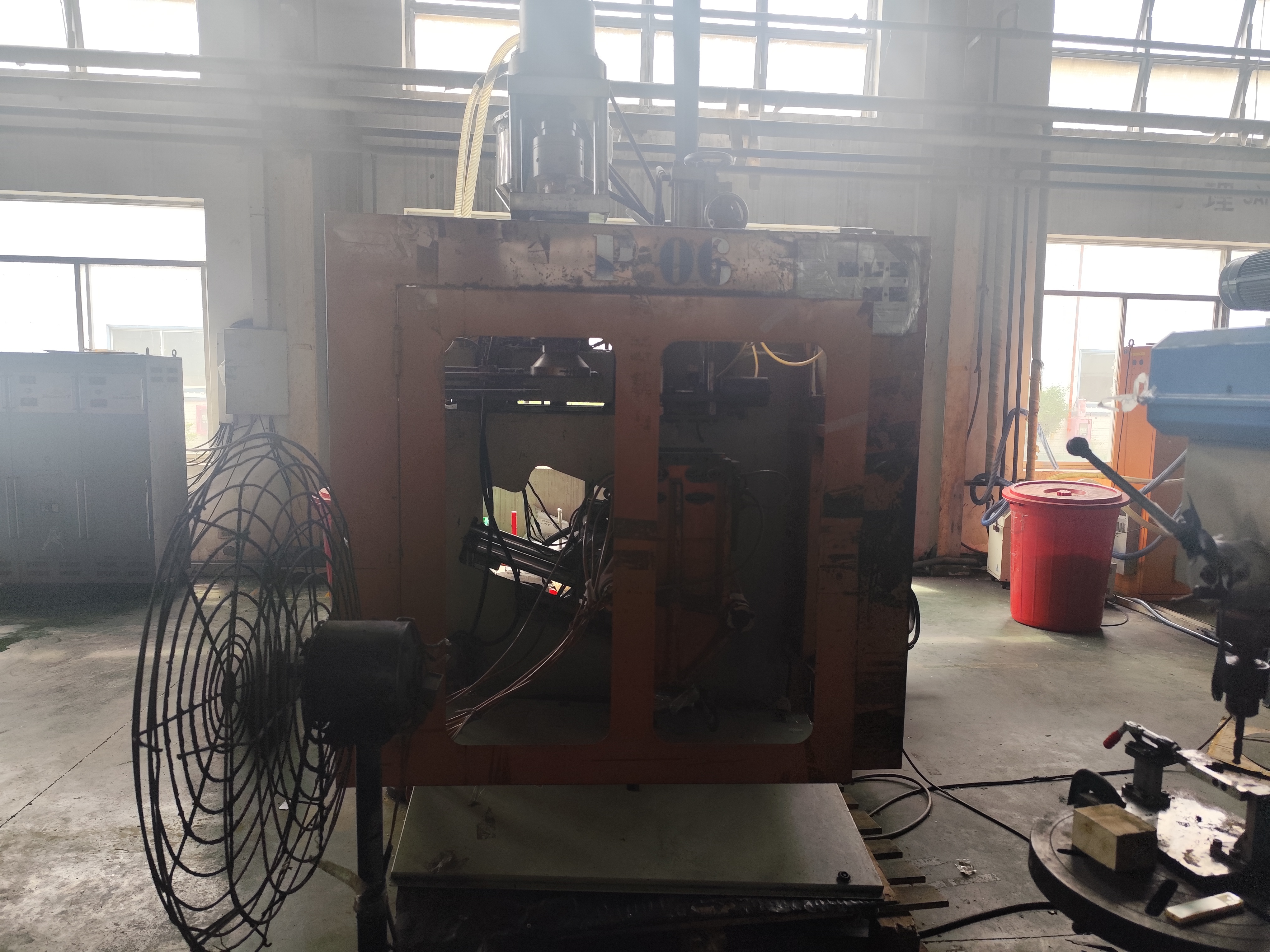
Why Safety Stock Quality Often Slips
Safety stock is typically produced during slower periods and stored for future use. This creates two quality risks:
- Production context differs. The batch may be produced by a different shift, on different equipment, or during a period when the supplier's best operators are assigned elsewhere.
- Storage degradation. Sheet metal parts can develop surface oxidation, minor corrosion, or handling damage during extended storage, especially in humid climates common across Southeast Asian manufacturing regions.
Our teams in Vietnam and China address both risks through structured process controls that mirror our standard production quality approach.
The Quality Verification Framework
Here is the framework we apply to every safety stock lot:
| Stage | Activity | Documentation |
|---|---|---|
| Pre-production | Review drawings, confirm material specs, verify tooling condition | Material certificates, tooling logs |
| First article inspection | Measure first pieces against all critical dimensions | FAI report with actual measurements |
| In-process check | Monitor critical dimensions at defined intervals during the run | In-process inspection records |
| Final inspection | 100% visual check; AQL sampling for dimensions; functional check | Final inspection report with photos |
| Pre-shipment audit | Verify packaging, labeling, quantity, and storage condition | Pre-shipment inspection certificate |
PPAP for Safety Stock
When we run PPAP (Production Part Approval Process) 10 for a new custom part, the approved process parameters become the baseline. Safety stock production must use the same parameters—same material supplier, same machine settings, same tooling. Any deviation requires a new PPAP submission or at minimum a documented deviation approval from the client.
This discipline is what enables "right first time" results. Our clients—especially purchasing managers who have been burned by suppliers cutting corners—value this consistency. It prevents the nightmare scenario of receiving 500 brackets from safety stock that do not fit the assembly because someone changed a bend radius without telling anyone.
Storage and Traceability
For parts sitting in safety stock for weeks or months, storage conditions matter. We require suppliers to store finished parts in climate-controlled areas, with protective packaging that prevents contact between parts. Each lot gets a unique identifier linked to its inspection records, material certificates, and production date. Understanding how to evaluate supplier warehousing and inventory for lead times is essential when assessing whether your supplier can properly maintain safety stock.
This traceability chain means that if a quality issue surfaces after shipping, we can trace it back to the exact production batch, operator, and material lot. Some of our clients are exploring blockchain-based traceability systems for even higher transparency, though most currently rely on traditional lot tracking through ERP platforms.
Regular audits—both scheduled and unannounced—verify that suppliers maintain these standards. We conduct supplier audits as part of our standard process control, checking not just the production floor but also the safety stock storage areas for proper handling and environmental conditions.
Conclusion
Negotiating sheet metal fabrication safety stock is not about hoarding parts. It is about using data, smart formulas, and strong supplier relationships to build a buffer that protects your production line without draining your budget. Define your service level targets, share the costs, lock terms into your contract, and never compromise on quality—even for inventory sitting on a shelf.
Frequently Asked Questions
How do I determine the optimal safety stock level for my custom sheet metal parts to prevent stockouts?
A lesson we learned early in our supply chain work 2 : guessing safety stock levels wastes money or leaves production lines idle. There is no single magic number. Every custom part has its own demand pattern 3 , lead time profile, and risk tolerance. The right approach starts with data, not gut feeling.
What negotiation strategies can I use to share inventory holding costs with my fabrication supplier?
Last year, a client came to us frustrated. They were sitting on $200K worth of custom brackets they had pre-ordered to avoid stockouts—but demand dropped. The carrying costs were eating into their margins. The real issue was not the safety stock itself. It was that the entire financial burden sat on one side of the table.
How can I incorporate safety stock requirements into my contract to handle sudden demand spikes?
During a recent project, a U.S. client's end customer suddenly doubled their order volume for precision mounting brackets. Our client had no contractual mechanism to pull safety stock from the supplier quickly. The result was a six-week delay and a very unhappy end user. That experience reinforced something we now build into every supply agreement: explicit safety stock provisions.
Footnotes
1. Provides information on custom sheet metal bracket manufacturing. ↩︎
2. Explains core concepts and principles of supply chain management. ↩︎
3. Defines demand patterns and their role in inventory planning. ↩︎
4. Explains the service factor’s role in safety stock calculation. ↩︎
5. Highlights the importance of past consumption data for accurate forecasting. ↩︎
6. Provides a comprehensive overview of ABC inventory categorization. ↩︎
7. Explains the definition and objectives of an inventory management strategy. ↩︎
8. Outlines best practices for effective supplier relationship management. ↩︎
9. Explains the legal concept and application of a force majeure clause. ↩︎
10. Defines the Production Part Approval Process (PPAP) in manufacturing. ↩︎