Negotiating tiered pricing with sheet metal fabrication suppliers 1 is one of those challenges I see purchasing managers struggle with every quarter — especially when growth plans are ambitious but current volumes don’t yet justify deep discounts.
To negotiate tiered pricing with sheet metal fabrication suppliers for future growth, structure volume forecasts into clear tiers, optimize designs for manufacturability, build long-term supplier partnerships, and negotiate comprehensive terms that include payment flexibility, quality protocols, and capacity reservation agreements tied to projected scaling.
This article walks through the exact strategies our team uses when helping U.S. clients source custom sheet metal parts from Asia statistical process control capability 2. We will cover volume forecasting, quality control, payment terms, and how to turn growth projections into real pricing leverage.
How can I structure my annual volume forecasts to secure more competitive tiered pricing for my sheet metal parts?
A buyer once told me his previous supplier refused volume discounts because "the numbers were just guesses." That conversation taught me the importance of making forecasts credible and structured before you ever ask for production volume pricing PPAP compliance 3.
Structure your annual volume forecasts by defining three to five specific quantity tiers, backing each tier with realistic demand data, and presenting a phased schedule that lets the supplier plan materials and capacity — this approach unlocks meaningful volume discounts while reducing supplier risk.
Why Credible Forecasts Matter More Than Big Numbers
Suppliers are not impressed by inflated projections. They want to see logic. When our team in Vietnam or China prepares a sourcing plan for a U.S. client, we break down the annual demand into quarterly or monthly call-offs. This gives the fabrication partner a clear picture of when material needs to be purchased and when machine time must be reserved.
A common mistake is presenting a single annual number. Instead, define tiers that map to your actual growth trajectory. Here is an example of how to structure tiers:
| Tier | Annual Volume (units) | Expected Timeline | Price Reduction Target |
|---|---|---|---|
| Tier 1 | 100–500 | Months 1–6 | Baseline price |
| Tier 2 | 500–1,000 | Months 6–12 | 8–12% reduction |
| Tier 3 | 1,000–2,500 | Year 2 | 15–20% reduction |
| Tier 4 | 2,500–5,000 | Year 2–3 | 22–28% reduction |
| Tier 5 | 5,000+ | Year 3+ | 30%+ reduction |
Build the Forecast Package Right
Your RFQ should include more than just drawings. Include a demand forecast document that shows the logic behind each tier. Reference market data, existing purchase orders, or customer commitments. The stronger the evidence, the more willing a supplier is to commit to cost reduction strategies at higher volumes.
I also recommend grouping similar parts by size and complexity. If you have 20 sheet metal bracket variants, categorize them. Quote a representative sample from each category. Then extrapolate. This saves time and gives both parties a realistic baseline for material cost analysis.
Use Data Analytics to Strengthen Your Position
Advanced demand forecasting is no longer optional. We encourage clients to share sell-through data, seasonal patterns, and even their customers' growth plans. When a supplier sees data-driven forecasts, they can optimize their own procurement and production scheduling. This translates directly into more competitive tiered pricing because the supplier's risk drops.
One more point: always include a review mechanism. Build in quarterly reviews where both sides revisit actual volumes versus forecast. If you hit Tier 3 early, you should automatically get Tier 3 pricing. This keeps the relationship fair and motivates both parties to grow together.
What should I look for in a supplier's QC process to ensure quality remains consistent as my order tiers increase?
Last year, we managed a project where the initial 200-piece prototype run was flawless — every dimension within spec, every powder coat finish uniform. But when the client scaled to 2,000 units, reject rates jumped to 8%. The root cause was not the machines. It was the absence of a scalable quality system.
Look for documented inspection plans, in-process checkpoints, statistical process control capability, PPAP compliance, and dedicated QC personnel — these elements ensure quality remains consistent even as order volumes multiply across higher production tiers.
The Quality Gap Between Prototype and Production
At low volumes, a skilled operator can visually inspect every part. At higher volumes, this approach breaks down. You need to verify that your supplier uses structured quality processes — not just final inspection, but in-process controls at each critical step: laser cutting, bending, welding, and finishing.
Here is what to evaluate during a supplier audit:
| QC Element | What to Look For | Red Flag |
|---|---|---|
| Inspection Plan | Written plan for each part number with defined checkpoints | No documented plan; inspection is "by experience" |
| In-Process Control | Measurements taken after each major operation | Inspection only at final stage |
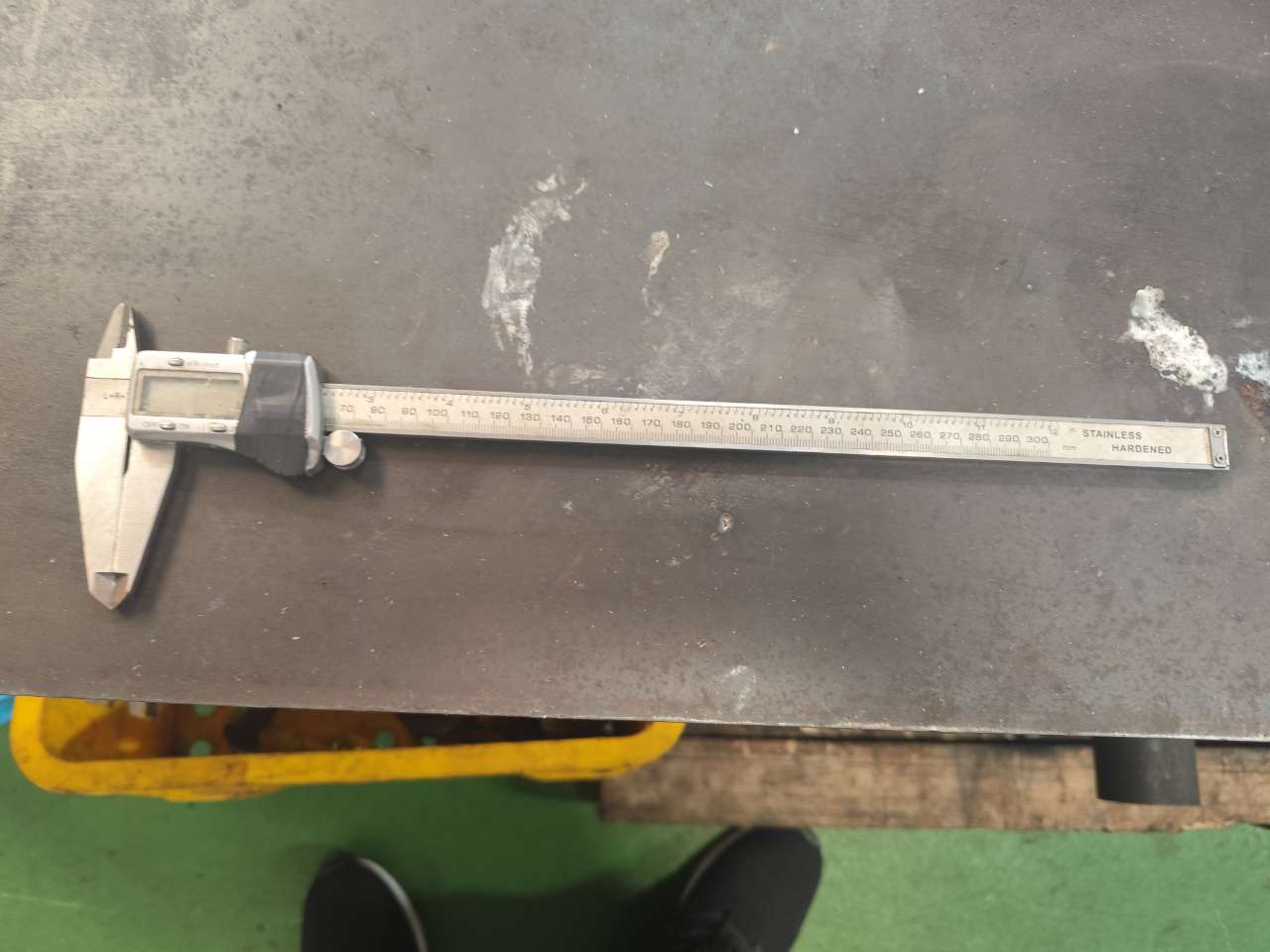
| Equipment Calibration | Calibration certificates for CMMs, calipers, gauges | No calibration records available |
| PPAP Documentation | Supplier can produce PPAP packages upon request | Unfamiliar with PPAP requirements |
| Operator Training | Evidence of training records and skill assessments | High operator turnover with no training program |
| Corrective Action | Formal 8D or CAPA process for non-conformances | No corrective action system in place |
Vendor Performance Metrics That Matter
When scaling, you need to track vendor performance metrics 5 consistently. We track first-pass yield, on-time delivery rate, and customer complaint rate for every supplier in our network. These numbers tell you whether a supplier can maintain quality at volume — or whether they are stretching beyond their capacity.
Ask potential suppliers for their current reject rates and on-time delivery percentages. A strong fabrication partner should be achieving at least 98% first-pass yield on standard sheet metal parts with tolerances of ±0.005 inches or better. If they cannot share these numbers, that is a warning sign.
Design for Manufacturability Reduces Quality Risk
Quality issues at scale often trace back to design. If your sheet metal part has inconsistent bend radii, non-standard thicknesses, or unnecessarily tight tolerances, the defect rate will climb as operators rush to meet higher production demands. Applying design for manufacturability principles 6 — using standard sheet thicknesses like 1.0 mm, 1.5 mm, and 2.0 mm, keeping bend radii equal to or greater than material thickness, and replacing welding with bending where possible — dramatically reduces the chance of quality escapes. Our engineering team reviews every drawing before production begins precisely for this reason.
A good supplier will push back on designs that are difficult to manufacture consistently. That pushback is valuable. It shows they are thinking about total cost of ownership, not just winning the order.
How do I negotiate tiered pricing that also accommodates the extended payment terms I need for my cash flow?
When one of our U.S. clients asked a new Vietnamese supplier for both 20% lower unit pricing at volume and 90-day open account terms, the supplier's first reaction was to walk away. The request felt like too much risk on too little history. But we found a middle path that worked for both sides.
Negotiate tiered pricing with extended payment terms by starting with shorter terms at lower tiers, then graduating to 60–90 day terms as volumes and trust increase — pairing milestone-based payment schedules with volume commitments reduces supplier risk and protects your cash flow simultaneously.
Why Suppliers Resist Extended Terms
Most sheet metal fabrication suppliers — especially factory-direct operations in Asia — operate on thin margins. They purchase raw material upfront, pay their workers weekly or monthly, and carry overhead costs for equipment and facilities. When you ask for 90-day payment terms on top of discounted pricing, you are essentially asking them to finance your inventory. Understanding this reality is critical to productive negotiation.
A Graduated Payment Framework
The most effective approach I have seen is a graduated model. Here is how it works in practice:
| Volume Tier | Payment Terms | Rationale |
|---|---|---|
| Tier 1 (initial orders) | 30% deposit, balance on delivery | Builds trust; supplier has no history with you |
| Tier 2 (6+ months history) | Net 30 days | Proven track record; lower perceived risk |
| Tier 3 (12+ months, consistent orders) | Net 60 days | Established relationship; predictable cash flow for supplier |
| Tier 4 (18+ months, high volume) | Net 90 days or open account | Strategic partnership; supplier has visibility into your demand |
This structure aligns payment flexibility with the volume tiers. As you order more and prove reliability, you earn better terms. Suppliers find this logical and fair.
Linking Payment Terms to Volume Commitments
One technique that works well in strategic sourcing is tying extended terms to minimum order commitments. For example, you might agree to purchase at least 1,000 units per quarter in exchange for Net 60 terms. If your orders fall below the threshold, terms revert to Net 30. This gives the supplier a guaranteed revenue floor and gives you the cash flow flexibility you need.
Our Singapore office often structures these agreements for clients. We provide the credit backing and relationship continuity that makes Asian suppliers comfortable offering open account terms — something that would be extremely difficult for a new buyer to negotiate directly. It is one of the key advantages of working through an established supply chain partner who has long-term contracts and a track record in the region.
Do Not Negotiate Price and Terms Separately
A common negotiation mistake is treating price and payment terms as separate conversations. They are deeply connected. A supplier who gives you a 25% volume discount at Net 90 is effectively giving you a much deeper discount than the unit price suggests because of the time value of money 7. Negotiate both together. Present your total cost of ownership perspective: "Here is what we need on price, here is what we need on terms, and here is the volume we commit to in return." This holistic approach leads to better outcomes than piecemeal haggling.
Lead time reduction also factors in here. If you can accept slightly longer lead times — say, three weeks instead of two — the supplier can batch your orders with other jobs, reduce their per-unit costs, and afford to offer better terms. Everything is connected.
What is the best way to leverage my long-term growth projections to get better upfront pricing from a fabrication partner?
Three years ago, a client came to us with a new product line that needed custom sheet metal brackets — complex angular designs with multiple bends, pre-drilled mounting holes, and powder-coated finishes. Current demand was only 300 units per year. But they had a signed distribution agreement that projected 5,000 units annually within 24 months. The question was: how do we get Year 3 pricing today?
Leverage long-term growth projections by sharing documented business plans, signed contracts, or market data with your supplier, then proposing a price-lock agreement where you receive lower upfront pricing in exchange for binding volume commitments, capacity reservations, and a defined ramp-up timeline.
Making Projections Credible
Suppliers hear growth promises constantly. What separates a persuasive pitch from wishful thinking is evidence. Share your business plan summary. Show signed contracts with your end customers. Provide market research or industry growth data. The more tangible the proof, the more seriously a supplier will take your projections.
When we present growth cases to our supplier partners in Vietnam and China, we include a one-page summary: current volumes, projected volumes by quarter, the end-market application, and any competitive advantages the client holds. This gives the fabrication partner confidence that the growth is real — not speculative.
Capacity Reservation Agreements
One of the most powerful tools in supply chain optimization 8 is the capacity reservation agreement. This is a contractual commitment where the supplier reserves a portion of their production capacity for your orders at specified volumes. In return, you commit to minimum purchase quantities.
This approach directly addresses a supplier's biggest concern: investing in capacity that goes unused. By formalizing the reservation, you remove uncertainty. And because the supplier can plan their equipment utilization and staffing, they pass savings on to you through lower per-unit costs.
Shared Investment Models
For high-growth scenarios, consider co-investing in tooling or automation. If your part requires custom dies or fixtures, offer to fund the tooling upfront. This reduces the supplier's capital risk and gives you ownership of the tooling — which also protects your intellectual property. Many fabrication shops will offer significantly better unit pricing when they do not have to amortize tooling costs across your parts.
We have seen clients achieve up to 30% cost savings by combining design for manufacturability optimization with shared tooling investment and committed volume agreements. The key is presenting a complete package: "Here is our growth plan, here is our design optimized for your equipment, here is our tooling investment, and here is our volume commitment. Now let us talk about pricing."
Strategic Sourcing Across Regions
Do not overlook the geographic dimension of your negotiation. Asian suppliers — particularly in Vietnam and specialized regions of China — can offer 30 to 50 percent lower costs than Western fabrication services. But cost is only one factor. Communication quality, lead time, and quality assurance protocols matter too.
Working with a sourcing partner who has local teams on the ground — like our offices in Vietnam and China — bridges the gap. We conduct supplier audits, manage process control, perform final inspections, and handle logistics. This gives U.S. buyers the cost advantage of Asian manufacturing with the quality assurance and supplier relationship management they expect from domestic suppliers.
The global sheet metal fabrication equipment market 9 is seeing price increases of 3 to 5 percent annually. Locking in pricing now through long-term contracts protects you from these rising costs. A fabrication partner who sees a three-year commitment is far more motivated to hold pricing steady than one who views you as a transactional buyer.
Conclusion
Negotiating tiered pricing with sheet metal fabrication suppliers requires credible forecasts, scalable quality systems, graduated payment terms, and documented growth plans — all woven into a long-term partnership that rewards both sides as volumes increase.
Frequently Asked Questions
How can I structure my annual volume forecasts to secure more competitive tiered pricing for my sheet metal parts?
A buyer once told me his previous supplier refused volume discounts because "the numbers were just guesses." That conversation taught me the importance of making forecasts credible and structured before you ever ask for production volume pricing PPAP compliance 3 .
What should I look for in a supplier's QC process to ensure quality remains consistent as my order tiers increase?
Last year, we managed a project where the initial 200-piece prototype run was flawless — every dimension within spec, every powder coat finish uniform. But when the client scaled to 2,000 units, reject rates jumped to 8%. The root cause was not the machines. It was the absence of a scalable quality system.
How do I negotiate tiered pricing that also accommodates the extended payment terms I need for my cash flow?
When one of our U.S. clients asked a new Vietnamese supplier for both 20% lower unit pricing at volume and 90-day open account terms, the supplier's first reaction was to walk away. The request felt like too much risk on too little history. But we found a middle path that worked for both sides.
Footnotes
1. Provides market insights and statistics for the sheet metal fabrication industry. ↩︎
2. Defines Statistical Process Control (SPC) and its application in quality management. ↩︎
3. Details the requirements and significance of the Production Part Approval Process. ↩︎
4. Explains various methods and importance of accurate demand forecasting. ↩︎
5. Provides key metrics and their importance for evaluating supplier performance. ↩︎
6. Explains the concept and benefits of Design for Manufacturability (DFM) in product design. ↩︎
7. Explains the fundamental financial concept of money’s value over time. ↩︎
8. Discusses strategies and benefits of optimizing supply chain operations. ↩︎
9. Replaced HTTP 404 with a market research report providing statistics and forecasts for the global metal fabrication equipment market. ↩︎