
Welding parts suppliers and JIT production alignment — this is a challenge I see OEM buyers wrestle with every single quarter documented PPAP 1. One late shipment of custom brackets or a batch of non-conforming welded frames can halt an entire assembly line. The frustration compounds when your supplier is thousands of miles away, across time zones, and you discover the problem only after containers land at your dock vendor-managed inventory 2. Through years of managing supply chains across Vietnam and coordinating custom fabrication projects for U.S. buyers, our team has learned that JIT success begins long before the first arc is struck.
OEM buyers can ensure welding parts suppliers align with JIT production by evaluating supplier infrastructure and process capability, demanding in-process quality controls, optimizing logistics with regional sourcing strategies, and building proactive communication frameworks that manage lead times and risks before they become disruptions.
This article walks through the practical steps — from supplier qualification to logistics integration — that protect your production schedule and your margins. Each section addresses a specific piece of the JIT puzzle.
How can I evaluate if a welding parts supplier has the infrastructure to support my JIT delivery schedule?
A buyer we work with once told me he lost three weeks of production because his welding supplier could not scale from prototype to volume. The factory had the right equipment but lacked the process discipline to deliver consistently on a tight schedule.
Evaluate a welding parts supplier's JIT infrastructure by assessing process capability, shift capacity, quality management systems, scalability track record, and whether they offer integrated manufacturing services like Kanban, vendor-managed inventory, and kitting — not just equipment lists.
Why Equipment Lists Are Not Enough
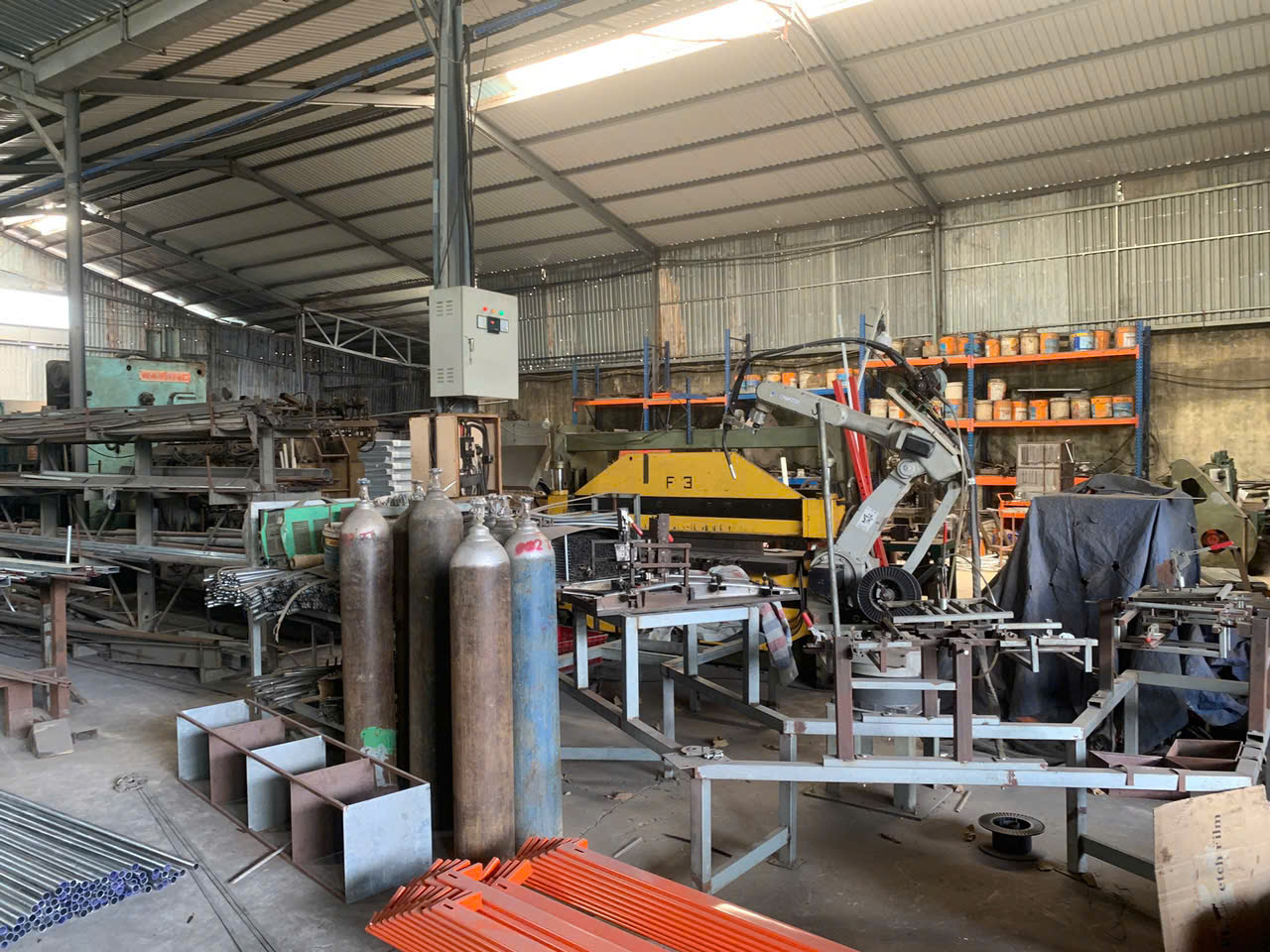
It is tempting to judge a supplier by the number of robotic welding cells or laser cutting machines on the floor. But having a TIG welder does not mean a factory can produce 5,000 welded mounting brackets per month with ±0.5mm tolerance — on time, every time. What matters is whether the supplier can manage the process: scheduling, sequencing, material flow, and quality checkpoints.
When our team audits a potential welding supplier in Vietnam or other Asian markets, we look at shift structure first. A factory running one shift has limited surge capacity. A two- or three-shift operation can absorb demand spikes without pushing your order to the back of the queue.
What to Look For During Qualification
The qualification process should start months before you issue an RFQ. Here is a checklist we use internally:
| Evaluation Area | What to Verify | Red Flag |
|---|---|---|
| Capacity Planning | Current utilization rate, number of shifts, equipment age | Factory running above 85% utilization with no expansion plan |
| Scalability | Past examples of volume ramp-up for similar parts | No multi-year case studies or volume scaling evidence |
| Quality System | ISO 9001 3 or relevant welding certifications (AWS, NADCAP) | No documented quality management system |
| Financial Stability | Business insurance, credit references, years in operation | Unwillingness to share basic financial indicators |
| Inventory Management | Kanban 4 capability, vendor-managed inventory programs | No system for managing buffer stock or delivery sequencing |
| Digital Readiness | Order tracking, cloud documentation, instant quoting | All communication via email attachments with no tracking portal |
The Power of Single-Source Fabrication
Fragmented supply chains increase coordination overhead. If your welded frame goes to one shop, your brackets to another, and your hardware to a third, you are managing three separate planning systems, three quality standards, and three shipping timelines. Each handoff introduces risk.
I have seen OEM buyers cut lead times by two to three weeks simply by consolidating fabrication into a single-source workflow. When planning, sequencing, welding, finishing, and packaging happen under one roof — or at least under one coordinated team — the entire supply chain becomes more predictable. This is especially critical for lean manufacturing environments 5 where inventory costs must stay low.
Our approach is to serve as that single coordination point. We manage supplier audits, process control, and logistics so the buyer deals with one team, not five factories.
What quality control measures should I demand to ensure non-conforming parts don't disrupt my JIT production?
The most expensive quality failure I have witnessed was not a rejected batch sitting in a warehouse. It was a shipment of welded assemblies with out-of-tolerance hole patterns that passed final inspection overseas, arrived in the U.S., and shut down the buyer's assembly line for four days. The root cause was simple: nobody checked hole positions during production. Only finished parts were inspected.
Demand in-process quality controls — not just final inspection — including first article inspection, dimensional checks at critical stages, weld parameter monitoring, and documented PPAP to catch non-conformances before they affect entire batches and disrupt your JIT schedule.

Final Inspection Is Too Late
Final inspection catches defects after they happen. For a domestic job shop producing 50 parts, that may be acceptable — you rework or re-run. But for overseas production of 2,000 welded brackets shipping in a container, finding problems at final inspection means expensive rework, air freight costs, or a production line sitting idle while you wait for replacements.
In-process checks identify and correct problems in real time. This is not optional for JIT environments. It is foundational.
What In-Process Quality Control Looks Like
Here is how we structure quality control on a typical custom welding project:
| Stage | Control Method | Purpose |
|---|---|---|
| Pre-Production | First Article Inspection 6 Report (FAIR), PPAP submission | Confirm tooling, dimensions, and material before volume run |
| Material Receiving | Mill cert verification, incoming material inspection | Ensure raw material meets spec (grade, thickness, chemistry) |
| Cutting / Forming | Dimensional check on first 5 pieces, periodic sampling | Catch cutting or forming drift early |
| Welding | Weld parameter monitoring (current, voltage, travel speed), visual inspection per AWS D1.1 7 | Prevent weld defects (porosity, undercut, incomplete fusion) |
| Post-Weld | Dimensional verification of critical features, weld bead inspection | Confirm assembly tolerances before finishing |
| Finishing | Surface finish measurement, coating thickness check | Ensure appearance and corrosion requirements are met |
| Final / Pre-Ship | 100% visual, AQL sampling for dimensions, packaging audit | Last line of defense before container loading |
Locking in Specifications Before Production
Unclear specs are one of the most common causes of quality failures in metal component manufacturing. I cannot overstate this. When we onboard a new custom welding project, our engineering team reviews every drawing detail with the buyer: materials, dimensions, tolerances, surface finish, weld symbols, compliance requirements, and packaging.
This upfront alignment is one of the best preventive strategies. It eliminates the ambiguity that causes a factory floor worker to guess — and guess wrong. Strong supplier quality management starts here, before any metal is cut.
Welding Certifications Matter
For structural or safety-critical welded parts, require welding certifications. AWS D1.1 (structural steel), AWS D1.2 (aluminum), or ISO 3834 provide frameworks that govern welder qualification, procedure qualification, and inspection standards. Ask for Welding Procedure Specifications (WPS) and Procedure Qualification Records (PQR). If a supplier cannot produce these documents, they are not ready for your JIT program.
How can I optimize my Asian supply chain logistics to maintain a seamless JIT flow for my custom welding projects?
One lesson we learned early when shipping custom welded frames from Vietnam to the U.S. West Coast: a two-day customs delay can cascade into a week-long production stoppage for a buyer running lean. Logistics is not "someone else's problem." It is the final link in your JIT chain, and it breaks more often than most buyers expect.
Optimize Asian supply chain logistics for JIT by building lead time buffers into production scheduling, using regional sourcing where possible, pre-clearing customs documentation, consolidating shipments through a single logistics coordinator, and requiring your supplier to manage packaging, freight, and delivery as part of their service scope.

The Real Logistics Challenge
Ocean freight from Southeast Asia to the U.S. takes 25–35 days depending on the port. Add production time, inland transport, customs clearance, and last-mile delivery, and you are looking at 8–12 weeks from order release to parts on your dock. For JIT to work across that distance, every stage must be planned and tracked.
Our logistics team manages this end-to-end. We coordinate container booking, export documentation, customs pre-clearance, and delivery scheduling. When we handle the full supply chain, the buyer sees one timeline, one tracking number, and one point of contact.
Regional vs. Overseas Sourcing: A Strategic Trade-Off
There is a real debate here. Local or North American sourcing — U.S., Canada, Mexico — shortens logistics dramatically. Under USMCA 8, cross-border trade is streamlined, reducing tariff and geopolitical risk. Lead times drop from weeks to days. For true JIT with daily or weekly deliveries, regional sourcing is often the only viable option.
But overseas sourcing from Asia offers cost advantages on labor-intensive fabrication like complex welded assemblies. The trade-off is longer lead times, higher supply chain risk, and the need for more sophisticated planning.
Here is how I frame this decision for buyers:
| Factor | Asian Sourcing | Regional (North America) Sourcing |
|---|---|---|
| Unit Cost | Lower for labor-intensive fabrication | Higher, but declining gap for automated processes |
| Lead Time | 8–12 weeks (ocean freight) | 1–3 weeks (truck/rail) |
| Minimum Order Qty | Often higher to justify logistics cost | More flexible for small batches |
| Communication | Time zone gaps, potential language barriers | Same/similar time zones, cultural alignment |
| JIT Compatibility | Requires buffer stock or Kanban planning | Naturally supports daily/weekly JIT delivery |
| Tariff / Trade Risk | Subject to changing tariffs and geopolitical shifts | USMCA-protected, lower volatility |
| Quality Oversight | Requires on-site audits or local QC team | Easier to visit and audit |
Making Asian Sourcing Work for JIT
For buyers who choose Asia for cost reasons, here are the strategies that work:
- Build safety stock. Maintain two to four weeks of buffer inventory at a U.S. warehouse. This absorbs shipping delays without stopping your line.
- Use vendor-managed inventory. Have your supplier manage replenishment levels based on your consumption data. This shifts the planning burden to the party closest to production.
- Consolidate with a single logistics partner. Fragmented freight arrangements increase the chance of miscommunication. One coordinator — whether your supplier or a third-party like our team — reduces that risk.
- Pre-clear customs paperwork. HS codes 9, certificates of origin, material test reports, and commercial invoices should be prepared and verified before the container ships. Last-minute document issues cause the most avoidable delays.
- Track in real time. Modern supply chain management 10 demands visibility. Insist on container tracking, milestone updates, and proactive alerts for any deviation from the plan.
These steps do not eliminate the inherent lead time of overseas sourcing. But they make it manageable within a broader JIT framework where production scheduling accounts for transit time and buffer levels are calculated against demand variability.
How do I establish a communication framework with my supplier to proactively manage lead times and JIT risks?
During a project last year, one of our Vietnam-based suppliers discovered a raw material shortage that would delay production by five days. Because we had a structured weekly reporting cadence, the issue surfaced on Monday. By Wednesday, we had sourced alternative material from a secondary vendor. The buyer never felt the impact. Without that communication framework, the delay would have hit the shipping window and cascaded downstream.
Establish a communication framework by defining reporting cadence (weekly status updates, milestone alerts), assigning a single point of contact on each side, requiring proactive risk escalation protocols, and using shared digital tools for order tracking — so lead time issues are identified and resolved before they reach your production floor.

Why Communication Gaps Are So Costly
Communication gaps in overseas sourcing drive cost overruns and delays more than almost any other factor. The problem is not that suppliers are unwilling to communicate. It is that there is no agreed structure for when, how, and what gets communicated.
Without structure, updates come sporadically. Problems get minimized. Bad news arrives late. And the buyer is left reacting instead of managing.
Building the Framework
Here is the communication structure we implement on every custom welding project:
Weekly production status report. This includes current production stage, quantity completed versus target, any quality holds, and projected ship date. We send this every Friday, so the buyer starts the week with full visibility.
Milestone alerts. Key events trigger immediate notification: material received, first article approved, production 50% complete, production complete, container loaded, vessel departed, estimated arrival. These are non-negotiable.
Risk escalation protocol. Any issue that could delay delivery by more than two days or affect part quality must be escalated within 24 hours. The escalation includes the problem description, root cause (or preliminary assessment), proposed corrective action, and revised timeline. How a supplier handles the first problem is a reliable indicator of the broader relationship.
Single point of contact. Each side designates one primary contact. This avoids the confusion of multiple people sending conflicting instructions or receiving fragmented updates.
Digital Tools and Operational Transparency
Modern suppliers should offer some level of digital integration. This does not require a custom ERP connection. At minimum, it means:
- Shared project tracking documents (cloud-based, updated in real time)
- Photo and video documentation of production progress
- Digital inspection reports with measurement data
- Container and shipment tracking links
Operational transparency also means the supplier is explicit about their capacity. State equipment counts. State shift structures. State current utilization. Vague answers like "we have enough capacity" are not acceptable when your JIT line depends on precise delivery. Understanding what supplier capacity metrics ensure on-time delivery is critical to holding suppliers accountable.
Cultural Fit and Time Zone Management
When sourcing from Asia, time zone differences are real. A 12-hour gap means your urgent email sits unanswered during your workday. We address this by having team members in both Asian and Western time zones. Our Singapore headquarters bridges the gap between Vietnam factory hours and U.S. business hours.
Cultural fit matters too. In some manufacturing cultures, saying "no" or reporting a problem is uncomfortable. Continuous improvement only works when issues are surfaced honestly. We train our supplier partners to understand that early, transparent reporting — even of bad news — is valued and expected. This mindset shift takes time but is essential for balancing price and quality when selecting OEM welding parts suppliers and building long-term partnerships.
The goal is to move from a transactional job shop relationship to a true production partnership. That requires mutual accountability, shared metrics, and a commitment to resolving problems together rather than assigning blame.
Conclusion
Aligning welding parts suppliers with your JIT production demands deliberate evaluation, in-process quality control, optimized logistics, and structured communication — not assumptions. Start qualifying suppliers on process capability, not just price, and build partnerships that protect your production line.
Frequently Asked Questions
How can I evaluate if a welding parts supplier has the infrastructure to support my JIT delivery schedule?
A buyer we work with once told me he lost three weeks of production because his welding supplier could not scale from prototype to volume. The factory had the right equipment but lacked the process discipline to deliver consistently on a tight schedule.
What quality control measures should I demand to ensure non-conforming parts don't disrupt my JIT production?
The most expensive quality failure I have witnessed was not a rejected batch sitting in a warehouse. It was a shipment of welded assemblies with out-of-tolerance hole patterns that passed final inspection overseas, arrived in the U.S., and shut down the buyer's assembly line for four days. The root cause was simple: nobody checked hole positions during production. Only finished parts were inspected.
How can I optimize my Asian supply chain logistics to maintain a seamless JIT flow for my custom welding projects?
One lesson we learned early when shipping custom welded frames from Vietnam to the U.S. West Coast: a two-day customs delay can cascade into a week-long production stoppage for a buyer running lean. Logistics is not "someone else's problem." It is the final link in your JIT chain, and it breaks more often than most buyers expect.
Footnotes
1. Authoritative overview of the Production Part Approval Process from AIAG. ↩︎
2. Replaced with a working Wikipedia page, an authoritative source for definitions. ↩︎
3. Official information on the international standard for quality management systems. ↩︎
4. Explains the Kanban system as a means to achieve Just-in-Time production. ↩︎
5. Defines lean manufacturing and its principles for maximizing productivity and minimizing waste. ↩︎
6. Provides a general definition and overview of the First Article Inspection process. ↩︎
7. Official American Welding Society standard for structural steel welding. ↩︎
8. Found the official United States Trade Representative (USTR) page for the USMCA, which is the parent of the original failed URL. ↩︎
9. Official overview of the Harmonized System (HS) for classifying traded products. ↩︎
10. Replaced with a working academic resource from Michigan State University, an authoritative .edu domain. ↩︎