

Sourcing Vietnamese sheet metal fabrication 1 has become a priority for many of our US clients — but the first question they always raise is how to handle the language gap and the 12-hour time difference without losing control of quality or schedule.
To overcome language and time zone barriers when sourcing Vietnamese sheet metal fabrication, use precise technical documentation with 3D models, establish overlapping communication windows, and partner with a local sourcing team that offers bilingual support services, factory audits, and end-to-end supply chain management.
Below, I walk through the exact methods we use at our Vietnam office to help US buyers get sheet metal parts right the first time — without the back-and-forth that kills timelines.
How can I ensure my technical sheet metal requirements are understood by Vietnamese factories?
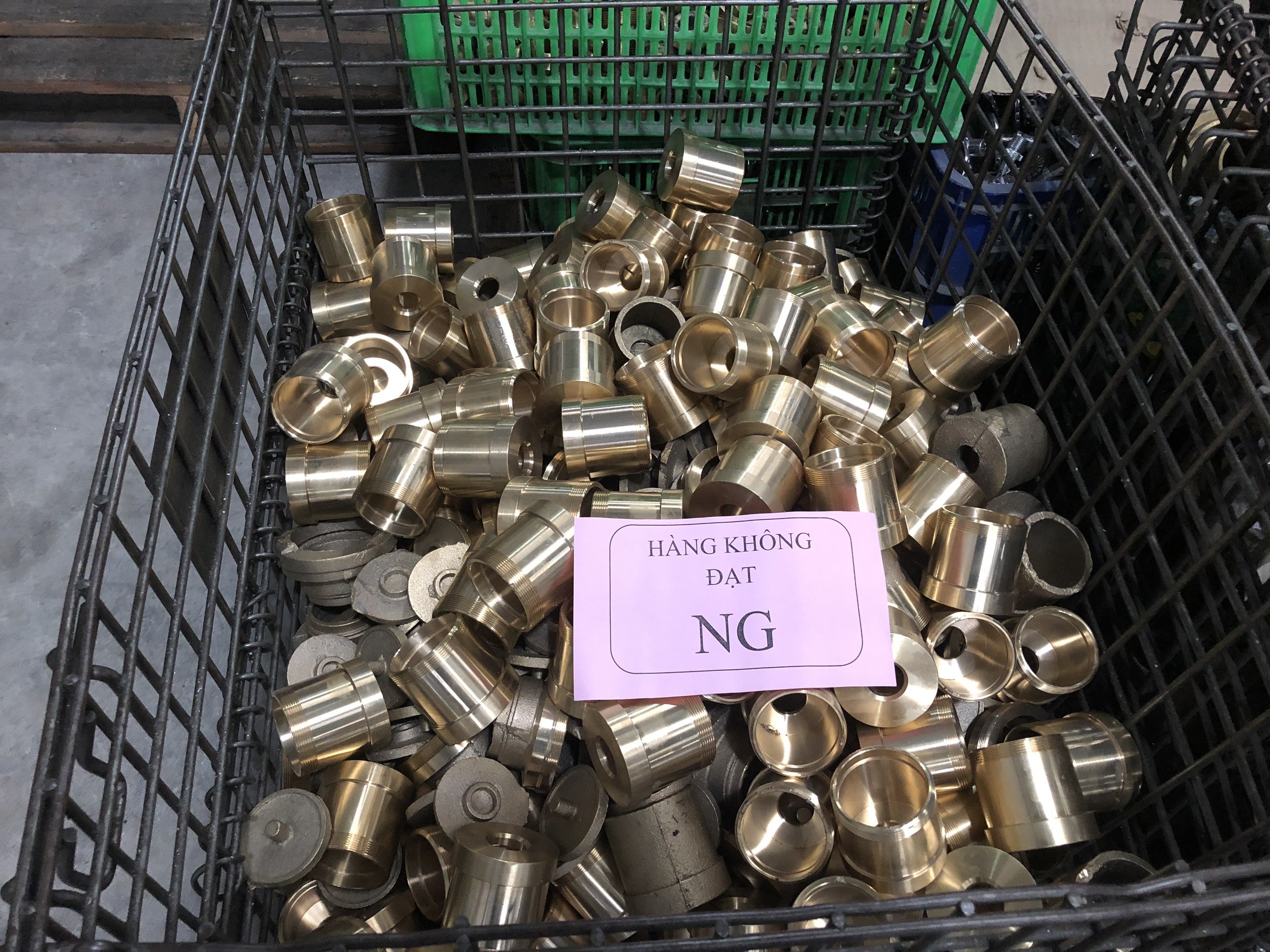
A lesson we learned early on: a US client sent a PDF drawing with the note "smooth finish" on a powder-coated steel bracket 3D CAD files 2. The Vietnamese factory interpreted "smooth" differently, and the first samples came back with visible orange peel. That single word cost three weeks.
To ensure Vietnamese factories understand your technical sheet metal requirements, provide complete RFQ packages with 3D CAD files, 2D drawings specifying Ra surface finish values, material grades, tolerances, and required certifications — eliminating ambiguous language that causes costly misinterpretation.
Why Ambiguity Is the Real Enemy
The problem is rarely that a Vietnamese engineer cannot read a drawing Ra surface finish values 3. The problem is what the drawing leaves unsaid. In our experience exporting custom parts to the US, we see the same gaps repeat:
- "Standard finish" means nothing without an Ra value supply chain management 4.
- "Tight tolerance" without a number invites guesswork.
- Material call-outs like "mild steel" without specifying ASTM A36 or equivalent leave the factory choosing whatever is cheapest PPAP processes 5.
When our team in Vietnam receives a new project, we build a structured RFQ checklist before the file even reaches the factory floor. Here is what that checklist covers:
| RFQ Element | What to Include | Why It Matters |
|---|---|---|
| 3D CAD File | STEP or IGES format | Lets factory verify geometry, unfold flat pattern, and check for manufacturability |
| 2D Drawing | GD&T callouts 6, all dimensions | Removes reliance on verbal descriptions |
| Material Specification | Grade (e.g., SPCC, SUS304, A36), thickness | Prevents substitution with non-equivalent alloys |
| Surface Finish | Ra value (e.g., Ra 1.6 µm) or specific coating (powder coat RAL number) | Eliminates subjective terms like "smooth" or "clean" |
| Tolerances | ±mm on critical vs. non-critical features | Relaxing non-critical tolerances to ±0.1 mm can cut machining costs by 20–30% |
| Certifications | Material certs, PPAP level, inspection reports | Defines quality control Vietnam expectations upfront |
| Volume & Frequency | Annual volume, batch sizes | Helps factory assess MOQ fit and tooling amortization |
The Digital Twin Approach
For complex sheet metal assemblies — like the mirrored mounting brackets with multiple bends, cutouts, and weld joints that we regularly produce — we create a virtual replica of the part and simulate the bending sequence. This "digital twin 7" strategy catches issues like springback miscalculations or collision risks during forming before a single piece of steel is cut. It also gives the factory a visual reference that transcends language.
Confirm Material Availability First
One detail many buyers overlook: not every alloy is locally stocked in Vietnam. If your design calls for a specialty stainless grade, confirm availability and lead time before quoting. Our team checks local steel distributors and flags any imported material dependencies early. This step alone has prevented multiple sourcing delays for our clients.
What is the best way for me to manage project communication across a 12-hour time difference?
When we first opened our Vietnam office, the biggest friction point was not the factories — it was the clock. A US purchasing manager would email a question at 3 PM Eastern. Our Vietnam team would see it at 2 AM their time. By the time they replied, the US side was asleep again. One round-trip took 48 hours.
The best way to manage project communication across a 12-hour time difference is to establish fixed overlapping work hours for critical decisions, use asynchronous tools like shared project dashboards for routine updates, and assign a local coordinator who bridges both time zones daily.
Building a Hybrid Communication Protocol
Not every message needs a live call. The key is sorting communication into two buckets: synchronous (real-time) and asynchronous (can wait). Here is the framework we follow:
| Communication Type | Channel | Timing | Use Case |
|---|---|---|---|
| Synchronous | Zoom / Teams video call | Overlapping window (7–9 AM US Eastern = 7–9 PM Vietnam) | DFM reviews, first article approvals, critical issue escalation |
| Asynchronous | Email + shared project tracker | Anytime | RFQ updates, routine status reports, document sharing |
| Instant messaging | Zalo / WhatsApp / Slack | During respective business hours | Quick clarifications, photo updates from factory floor |
| Weekly cadence call | Zoom with fixed agenda | Same overlap window, same day each week | Tooling progress, production milestones, open action items |
The Overlap Window Is Non-Negotiable
We ask every US client to commit to a two-hour overlap window. For East Coast clients, 7–9 AM works well because it catches our Vietnam team before they leave the office at 9 PM. West Coast clients often do 6–8 AM Pacific. This window is sacred — it is when we review DFM feedback, walk through first article inspection photos, and resolve any drawing ambiguities in real time.
Asynchronous Does Not Mean Passive
Outside the overlap window, our Vietnam team does not sit idle. They push updates into a shared project tracker that the US client sees when they open their laptop in the morning. Every update includes photos, measurement data, and a clear "action needed / no action needed" flag. This approach keeps supply chain optimization on track without requiring anyone to work at midnight.
What About Urgent Issues?
We maintain a single point of contact — a project coordinator — who carries a phone in both time zones. If a factory discovers a material defect at 10 AM Vietnam time, the coordinator sends an immediate WhatsApp message with photos and a proposed solution. The US buyer wakes up to a problem and a fix, not just a problem.
How do I find a local Vietnam sourcing team that speaks my language and understands my quality standards?
A few years ago, one of our US clients tried to manage a Vietnamese sheet metal supplier directly. He found the factory on Alibaba, negotiated pricing over email, and placed the order. The parts arrived with the wrong hole pattern. The factory had misread a critical dimension because no one on their side flagged the discrepancy during review. That project taught him — and us — the value of having boots on the ground.
To find a local Vietnam sourcing team that speaks your language and understands your quality standards, look for agencies or offices with bilingual engineers, proven factory audit capabilities, structured PPAP processes, and direct experience managing contract manufacturing Vietnam projects for US or European buyers.

What to Look for in a Sourcing Partner
Not all sourcing agents Vietnam are equal. Some are brokers who add a margin and disappear. Others — like the model we operate — embed engineers inside the factories and run quality control Vietnam processes as if the parts were their own. Here is a comparison:
| Criteria | Broker-Style Agent | Embedded Sourcing Partner |
|---|---|---|
| On-site presence | Rare — occasional factory visits | Permanent local staff at or near the factory |
| Language capability | Basic English translation | Bilingual engineers who understand GD&T and technical terminology |
| Quality process | Relies on factory self-inspection | Runs independent PPAP, in-process checks, and final inspection |
| Supplier vetting | Forwards Alibaba profiles | Conducts physical factory audits, reviews equipment lists, checks export history |
| Issue resolution | Passes messages between buyer and factory | Identifies root cause, proposes corrective action, verifies fix on-site |
| Payment terms | Typically requires full prepayment to factory | May offer open account or net-60/90 terms to qualified buyers |
How We Vet Factories
Our seven-person Vietnam team follows a structured supplier relationship management process. Before we recommend any factory to a client, we complete:
- Desk research — Check business registration, export records, and main markets.
- On-site factory audit — Walk the production floor, verify equipment (press brake tonnage, laser cutter capacity, welding stations), and review their quality management system.
- Trial order — Run a small batch with full dimensional inspection to validate capability.
- Ongoing monitoring — Periodic audits and in-process checks during production.
The Culture Ambassador Role
Cross-cultural communication matters more than most US buyers expect. Vietnamese business culture values relationships and indirect communication. A factory manager may say "we will try" when they mean "this tolerance is not achievable on our equipment." Our local team acts as a culture ambassador — translating not just words but intent. This prevents small misunderstandings from becoming large manufacturing risks Vietnam buyers often encounter.
Where to Start Your Search
- Industry trade fairs like the Vietnam International Trade Fair connect you with vetted manufacturers face to face.
- Chambers of commerce (AmCham Vietnam 8, EuroCham) maintain supplier directories.
- Online platforms like Alibaba (filter for Gold or Verified Supplier status) and VIETFACTORY offer starting points, but always follow up with an independent factory audit.
- Referrals from existing sourcing partners remain the most reliable channel.
How can I prevent language barriers from causing costly delays in my sheet metal production?
The most expensive delays we have seen did not come from shipping or tooling. They came from a single mistranslated word. In one case, a factory in Vietnam interpreted "deburr" as "chamfer," adding an unquoted machining step to every edge of a 500-piece batch. Production stopped for a week while everyone argued about scope. The fix was simple in hindsight: a visual reference standard.
To prevent language barriers from causing costly delays in sheet metal production, create a bilingual glossary of critical terms, use annotated photos as visual standards, implement AI-powered translation tools trained on fabrication terminology, and require written confirmation of every specification change before production proceeds.
Build a Project-Specific Glossary
General translation tools struggle with manufacturing jargon. "Countersink" and "counterbore" look similar in machine translation but produce very different holes. We maintain a custom glossary for each client project that maps English technical terms to their Vietnamese equivalents, complete with diagrams. This glossary lives in the shared project folder and is referenced by both the factory and our quality team.
Here is a sample of terms that frequently cause confusion:
| English Term | Common Mistranslation Risk | Correct Vietnamese Equivalent | Prevention Method |
|---|---|---|---|
| Deburr | Confused with chamfer or radius | Mài bavia | Include photo of acceptable vs. unacceptable edge |
| Countersink | Confused with counterbore | Khoét chìm côn | Specify angle (e.g., 82° or 90°) and diameter |
| Spot weld | Confused with tack weld | Hàn điểm | Define weld schedule (current, time, force) |
| Bend allowance | Ignored or miscalculated | Lượng dư uốn | Provide K-factor or flat pattern in CAD file |
| Passivation | Confused with pickling | Thụ động hóa | Reference ASTM A967 9 or equivalent standard |
Visual Standards Beat Written Specs
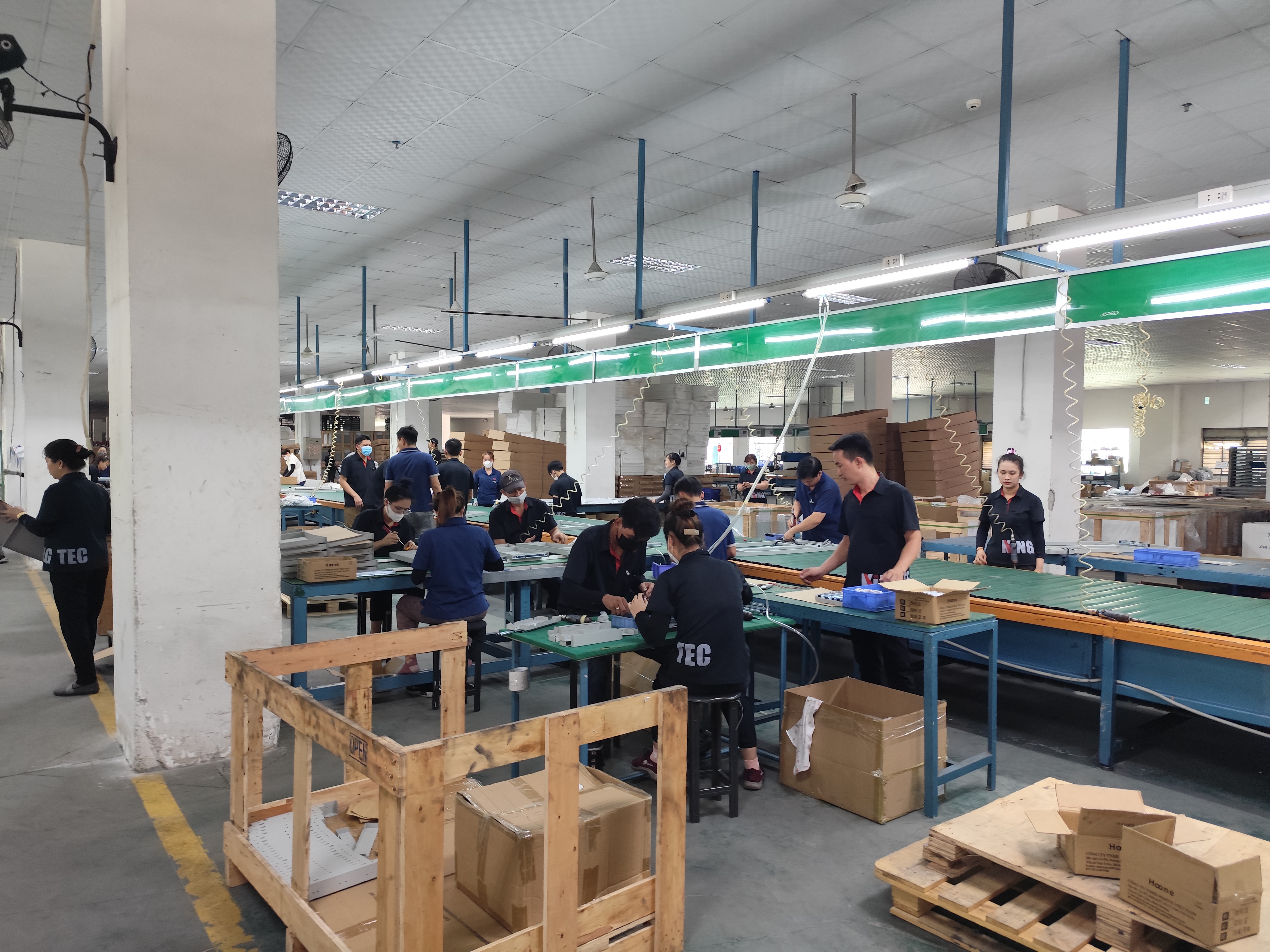
A photograph of a correct part is worth a thousand words in any language. For every new project, we produce a "golden sample" — a first article that passes all inspections — and photograph it from multiple angles with annotations. These images become the visual standard. The factory posts them at the workstation. Our inspectors reference them during in-process checks. This approach has measurably reduced rework rates across our contract manufacturing Vietnam projects.
Leverage AI Translation — But Verify
AI-powered translation tools have improved dramatically. We use them for initial draft translations of inspection reports and engineering change notices. But we never rely on them alone. Every translated document gets reviewed by a bilingual engineer on our team. The combination of speed and human verification gives us the best of both worlds.
Formal Change Control
Language barriers are most dangerous during changes. A verbal request to "move the hole 2mm to the left" can be misheard, misunderstood, or forgotten. We enforce a written change order process: every modification is documented in English, translated, confirmed in writing by the factory, and logged in the project tracker. No verbal-only changes are accepted. This discipline in international logistics and project management has eliminated the most common source of costly delays. Understanding common pitfalls and misconceptions in sheet metal fabrication procurement can further help buyers avoid these expensive mistakes.
Conclusion
Sourcing Vietnamese sheet metal fabrication successfully comes down to precise documentation, structured time zone coordination, a capable local team, and disciplined change control — the same principles we apply every day from our Vietnam office to deliver parts that are right the first time. For buyers just getting started, learning how new OEM buyers evaluate sheet metal fabrication sourcing requirements can provide a helpful framework for the entire process.
Frequently Asked Questions
What About Urgent Issues?
We maintain a single point of contact — a project coordinator — who carries a phone in both time zones. If a factory discovers a material defect at 10 AM Vietnam time, the coordinator sends an immediate WhatsApp message with photos and a proposed solution. The US buyer wakes up to a problem and a fix, not just a problem.
How can I ensure my technical sheet metal requirements are understood by Vietnamese factories?
A lesson we learned early on: a US client sent a PDF drawing with the note "smooth finish" on a powder-coated steel bracket 3D CAD files 2 . The Vietnamese factory interpreted "smooth" differently, and the first samples came back with visible orange peel. That single word cost three weeks.
What is the best way for me to manage project communication across a 12-hour time difference?
When we first opened our Vietnam office, the biggest friction point was not the factories — it was the clock. A US purchasing manager would email a question at 3 PM Eastern. Our Vietnam team would see it at 2 AM their time. By the time they replied, the US side was asleep again. One round-trip took 48 hours.
Footnotes
1. Provides a foundational understanding of the manufacturing process. ↩︎
2. Explains various formats and their importance in engineering design. ↩︎
3. Defines the Ra parameter and its significance in surface quality specification. ↩︎
4. Offers a comprehensive definition and components of supply chain management. ↩︎
5. Provides a detailed overview of the Production Part Approval Process. ↩︎
6. Provides the official standard for geometric dimensioning and tolerancing. ↩︎
7. Explains the concept and applications of digital twins in manufacturing. ↩︎
8. Official website of the American Chamber of Commerce in Vietnam. ↩︎
9. Explains the standard for chemical passivation of stainless steel parts. ↩︎