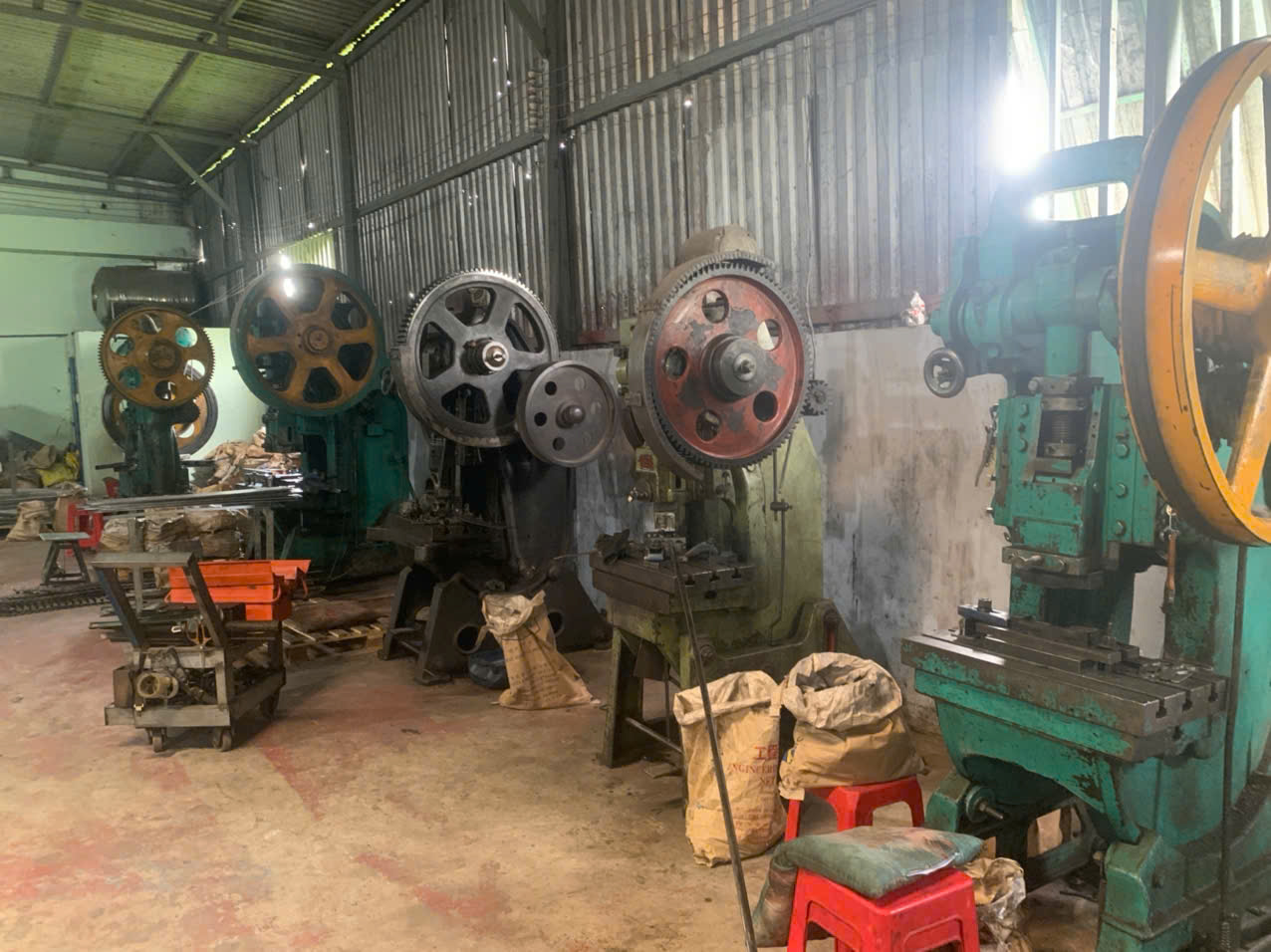

Last year, a U.S. client nearly scrapped a $40,000 batch of stamped brackets because a tolerance note got lost in translation between their team and a factory outside Ho Chi Minh City.
To overcome time zone and language barriers with Vietnamese stamping parts suppliers, buyers should establish overlapping communication windows, use visual-first technical documentation, leverage tools like Zalo and asynchronous video, and consider working with a local team that bridges both cultural and linguistic gaps in real time.
These problems are not unique. Every week, our Vietnam office fields calls from purchasing managers who are frustrated by delayed replies, misread drawings, and parts that arrive out of spec. The good news is that each of these issues has a proven fix. Below, I will walk through the specific strategies we use — and recommend — to keep stamping projects on track across continents.
How can I schedule effective calls with my Vietnamese stamping supplier despite the time difference?
A lesson we learned early after opening our Vietnam office: the hard part is not finding a time to talk — it is finding a time when both sides are alert enough to make good decisions about precision metal stamping 1 tolerances.
Schedule calls during the 1–2 hour overlap between your evening and Vietnam's early morning (e.g., 7–9 PM EST / 6–8 AM ICT), rotate meeting times monthly to share the burden, and batch all non-urgent items into a single daily email to reduce after-hours interruptions.

Understanding the Actual Time Gap
Vietnam runs on Indochina Time 2 (ICT, UTC+7). That put it 12–13 hours ahead of the U.S. East Coast and about 6–7 hours ahead of Central Europe. In practice, this means your afternoon is their midnight. Real-time conversation is limited to a narrow window unless someone stays up late or wakes up early.
| Your Location | Your Local Time | Vietnam Local Time (ICT) | Overlap Quality |
|---|---|---|---|
| U.S. East Coast (EST) | 7:00 PM – 9:00 PM | 6:00 AM – 8:00 AM | Good — both sides alert |
| U.S. West Coast (PST) | 4:00 PM – 6:00 PM | 6:00 AM – 8:00 AM | Good — end of your day |
| Central Europe (CET) | 9:00 AM – 11:00 AM | 3:00 PM – 5:00 PM | Excellent — normal hours |
| U.K. (GMT) | 8:00 AM – 10:00 AM | 3:00 PM – 5:00 PM | Excellent — normal hours |
Rotating Schedules Prevent Burnout
I have seen supplier relationships sour simply because one side always took the inconvenient call slot. Our team in Vietnam rotates early-morning and late-evening meetings on a monthly cycle. The supplier does the same. This small gesture of fairness builds long-term trust — what Vietnamese business culture calls Quan Hệ — and keeps both engineering teams sharp.
Batching and Prioritizing Messages
Not every question needs a live call. We train our clients to "batch" non-urgent items — drawing clarifications, shipping updates, surface finish confirmations — into a single email sent at the end of their workday. The supplier picks it up first thing in the morning. Only true emergencies (a stopped production line, a safety concern) justify a real-time call outside the overlap window.
Holiday Awareness Is Critical
One thing that catches many U.S. buyers off guard is Tet, the Lunar New Year 3 holiday. Vietnamese factories typically shut down for 7–10 days, sometimes longer. If you have manufacturing lead times tied to a Q1 launch, you need to plan orders and approvals well before Tet. We send our clients a calendar of Vietnamese public holidays at the start of every year so there are no surprises.
What communication tools help me avoid misunderstandings with my Vietnamese parts supplier?
During a recent project involving stamped spring clamps for a shelving system, our project manager caught a critical dimensional error — not on the production floor, but in a Zalo voice message where the supplier casually mentioned changing a bend radius. The right tool, used consistently, saved thousands in rework.
Use Zalo or WhatsApp for quick daily updates, email for formal records, video calls with screen-sharing for technical reviews, and a centralized project management platform like Monday or Asana to track milestones — this layered approach ensures nothing falls through the cracks in asynchronous collaboration.

Choosing the Right Tool for the Right Message
Not all messages are equal. A quick photo of a first-article sample belongs on Zalo. A formal approval of a PPAP package belongs in email. A walkthrough of a die design belongs on a video call. Mixing these up creates confusion.
| Message Type | Best Tool | Why |
|---|---|---|
| Quick questions, photos, voice clips | Zalo (Vietnam's preferred app) or WhatsApp | Fast, informal, high adoption in Vietnam |
| Formal approvals, purchase orders, spec changes | Creates a written record with timestamps | |
| Technical drawing reviews, defect analysis | Video call (Zoom, Teams) with screen-sharing | Visual context reduces misinterpretation |
| Project milestones, task tracking, document storage | Asana, Monday, or similar vendor management systems | Centralizes updates; both sides see progress |
| Asynchronous technical briefings | Recorded screen-share videos (Loom, Vidyard) | Engineers in Vietnam watch at start of their day |
The Power of Asynchronous Video Briefings
One method I recommend to every client is the "asynchronous video briefing." Instead of writing a long email describing a problem with a stamped bracket's slot alignment, your engineer records a 3-minute screen-share walking through the 3D model. They highlight the issue, explain the tolerance, and suggest a fix. The Vietnamese engineering team watches it at 8 AM their time and responds with their own video or a marked-up drawing. This approach cuts back-and-forth cycles in half.
Written Recaps After Every Call
Even with video, things get lost. Our standard practice is to send a written recap within one hour of every call. It lists action items, deadlines, and who is responsible. Both sides confirm by replying "Agreed" or noting corrections. This habit alone has eliminated more disputes than any contract clause we have ever written.
A Note on Translation Tools
Google Translate and AI-driven translation plugins are useful for general messages. But I have seen them turn "surface roughness 4 Ra 0.8" into nonsense. For technical documentation translation — anything involving tolerances, material grades, or quality assurance protocols — always have a bilingual technical person review the output. Tools assist; they do not replace expertise.
How do I ensure my technical drawings and specifications are clearly understood despite language differences?
The most expensive mistake I have witnessed in sheet metal fabrication 5 was not a machine failure — it was a single word. A U.S. buyer wrote "deburr edges" on a drawing. The Vietnamese operator interpreted it as "round edges." The result was 5,000 brackets with rounded flanges that no longer fit the assembly jig.
Ensure clarity by using a visual-first approach: annotate drawings with labeled diagrams, color-coded tolerances, and 3D models instead of text-heavy notes. State every requirement with quantifiable metrics (e.g., "2.5 mm ±0.05 mm"), and always run a confirmation loop where the supplier repeats the spec back to you.
Why Text Fails in Cross-Language Manufacturing
English proficiency among Vietnamese factory engineers varies widely. Many can read basic English, but technical jargon — "coin," "form," "draw" in stamping context — carries meanings that do not translate directly. The word "draw" in stamping means something very different from its everyday meaning. If your spec relies on text alone, you are gambling.
The Visual Tech Pack Strategy
We build what we call a "universal tech pack" for every stamping project. It replaces paragraphs of text with:
- Labeled 2D and 3D diagrams showing every critical dimension
- Color-coded zones: red for critical tolerances, yellow for important, green for general
- Photo references of acceptable vs. unacceptable parts (a "golden sample" image library)
- Material callout tables with both ASTM and JIS equivalents
This approach works regardless of the operator's language proficiency. A line supervisor in Binh Duong can look at a red-highlighted dimension and know it demands extra attention — no translation needed.
Quantifiable Metrics Eliminate Ambiguity
| Vague Instruction | Precise Specification |
|---|---|
| "Properly thick" | "Thickness: 1.2 mm ±0.05 mm" |
| "Smooth surface" | "Surface roughness: Ra ≤ 1.6 µm" |
| "Strong enough" | "Tensile strength: ≥ 400 MPa per ASTM A1008 6" |
| "Tight fit" | "Hole diameter: 6.35 mm +0.02/−0.00 mm" |
| "Standard finish" | "Zinc plating: 8–12 µm per ASTM B633 7, SC1" |
Every single requirement on your drawing should be a number, a standard, or a visual reference. If a requirement cannot be measured, it cannot be inspected — and it will eventually cause a dispute.
The Confirmation Loop
Never assume silence means agreement. After sending updated drawings, we ask the supplier to do three things:
- Mark up any dimensions they find unclear and send the markup back.
- State in writing which tooling or process they will use for each critical feature.
- Produce a first-article sample and measure it against the drawing, submitting a dimensional report (FAI) before mass production begins.
This loop catches errors before they multiply across thousands of parts. It is a core part of any ISO 9001 certification 8-aligned process, and it is non-negotiable on our projects.
Dialect Considerations for Shop-Floor Documents
Vietnam has distinct Northern (Hanoi) and Southern (Ho Chi Minh City) dialects. If your factory is in Dong Nai or Binh Duong (Southern industrial zones), translated work instructions should use Southern Vietnamese phrasing. A "standard" Northern translation may confuse line operators. We always test translated SOPs with actual shift supervisors before finalizing them — a step that has prevented several near-misses on our watch.
Should I work with a local team or agent to bridge time zone and language gaps in Vietnam?
When we first started helping U.S. clients source stamped components from Vietnam, one buyer insisted on managing everything directly — emails, calls, factory visits, quality checks. Within three months, he told me he spent more time managing communication than managing his own business.
Yes, working with a local team or sourcing agent in Vietnam is strongly recommended. A local presence handles real-time factory communication, conducts on-site quality inspections, manages cultural nuances like Quan Hệ relationship-building, and responds to urgent production issues within hours instead of waiting for the next overlap window.

What a Local Team Actually Does
A competent local team is not just a translator. They function as an extension of your purchasing department. Here is what our seven-person Vietnam office handles daily:
- Morning factory check-ins via Zalo or in-person visits
- Drawing clarification in Vietnamese, using dialect-appropriate terminology
- In-process inspections aligned with quality assurance protocols
- Supplier relationship management, including the rapport-building (Quan Hệ) that Vietnamese business culture expects
- Logistics coordination for door-to-door shipping
- Escalation handling — if a stamping die cracks at 2 PM Vietnam time, we know about it immediately, not 12 hours later
Agent vs. In-House Team: A Comparison
| Factor | Third-Party QC Agent | Dedicated Local Team (e.g., DEWIN Vietnam) |
|---|---|---|
| Response time | Scheduled visits only | Real-time, daily presence |
| Technical depth | General inspection skills | Engineers trained on your specific parts |
| Relationship with factory | Transactional | Ongoing, trust-based |
| Cost | Per-visit fees | Embedded in project cost |
| Cultural alignment | Varies | Deep local knowledge |
| Document control | Limited | Full version-locking and SOP management |
The Vietnam Manufacturing Shift and Why Local Presence Matters More Than Ever
More U.S. companies are diversifying their supply chain 9s away from China toward Vietnam. This Vietnam manufacturing shift is accelerating demand for precision metal stamping in provinces like Bac Ninh, Binh Duong, and Dong Nai. But the supplier ecosystem is younger and less standardized than China's. Having someone on the ground who can audit a factory's actual capabilities — not just their sales presentation — is the difference between a smooth launch and months of rework.
When Direct Management Can Work
To be fair, direct management is possible if your Vietnamese supplier has a dedicated account project manager who is fluent in English and has international experience. Some larger factories now employ engineers who have studied or lived abroad. In those cases, you may not need a full-time local agent. But even then, I recommend at least periodic third-party inspections — especially for first production runs and whenever tooling changes. You can learn more about how to confirm a Vietnam stamping parts supplier offers full project management before deciding on the level of oversight you need.
Incentivizing Your Supplier
One tactic that works well: ask the factory to appoint a single point of contact who owns your project end-to-end. Offer a small bonus tied to on-time delivery and first-pass yield. This aligns incentives and gives you a named person to hold accountable — far better than routing requests through a generic sales inbox. When evaluating potential partners, understanding how to choose a reliable Vietnamese stamping parts supplier for long-term supply can help you identify factories that already have these structures in place.
Conclusion
Bridging time zone and language barriers with Vietnamese stamping parts suppliers requires deliberate structure — overlapping call windows, visual-first documentation, the right digital tools, and ideally a local team that keeps your project moving around the clock. If you also source other component types, similar strategies for overcoming language and time zone barriers when sourcing welding parts from Vietnam can complement your stamping workflow.
Frequently Asked Questions
How can I schedule effective calls with my Vietnamese stamping supplier despite the time difference?
A lesson we learned early after opening our Vietnam office: the hard part is not finding a time to talk — it is finding a time when both sides are alert enough to make good decisions about precision metal stamping 1 tolerances.
What communication tools help me avoid misunderstandings with my Vietnamese parts supplier?
During a recent project involving stamped spring clamps for a shelving system, our project manager caught a critical dimensional error — not on the production floor, but in a Zalo voice message where the supplier casually mentioned changing a bend radius. The right tool, used consistently, saved thousands in rework.
How do I ensure my technical drawings and specifications are clearly understood despite language differences?
The most expensive mistake I have witnessed in sheet metal fabrication 5 was not a machine failure — it was a single word. A U.S. buyer wrote "deburr edges" on a drawing. The Vietnamese operator interpreted it as "round edges." The result was 5,000 brackets with rounded flanges that no longer fit the assembly jig.
Footnotes
1. ISO standards govern precision manufacturing tolerances referenced throughout the article. ↩︎
2. Provides background on the UTC+7 time zone used across Vietnam. ↩︎
3. Explains the holiday causing Vietnamese factory shutdowns during Tet. ↩︎
4. ISO standard defines surface roughness measurement referenced in technical specifications. ↩︎
5. Wikipedia background on sheet metal fabrication processes discussed in the article. ↩︎
6. Official ASTM standard for the steel tensile strength specification cited in the table. ↩︎
7. Official ASTM standard governing zinc plating specifications mentioned in the article. ↩︎
8. Official ISO page explaining the quality management standard referenced for supplier processes. ↩︎
9. Background concept on supply chain diversification trends discussed regarding Vietnam manufacturing. ↩︎