Last quarter, a critical tolerance note on a stamping bracket got lost in translation between our U.S. client and a factory floor in Dong Nai — the result was 2,000 non-conforming parts and a three-week delay that nobody could afford.
To overcome time zone and language barriers with Vietnamese stamping parts suppliers, combine structured visual documentation like annotated CAD drawings, establish overlapping “Golden Hour” windows for real-time calls, hire bilingual technical liaisons familiar with regional dialects, and invest in relationship-building (Quan Hệ) to earn supplier commitment and transparent communication.
These barriers are real, but they are solvable. Below, I break down the exact communication tools, scheduling tactics, cultural strategies, and on-the-ground support structures that our team uses daily to keep precision metal fabrication projects on track between the U.S. and Vietnam.
How can I ensure clear communication with a Vietnamese stamping parts supplier despite the time difference?
A lesson we learned the hard way: one of our U.S. purchasing managers sent five separate emails over a single afternoon, each with a different question about tooling and die design — the Vietnamese supplier saw them all at 7 AM their time, got overwhelmed, and answered only the last one.
You can ensure clear communication despite the time difference by batching all questions into a single, numbered message, always labeling times with explicit UTC offsets, using shared project management dashboards for asynchronous updates, and reserving a daily one-to-two-hour overlap window for urgent synchronous calls.

Understanding the UTC+7 Gap
Vietnam operates on UTC+7 1, which means if you are in New York (EST, UTC-5), there is a 12-hour gap. A 9 AM start in Ho Chi Minh City is 9 PM the previous evening in New York. For buyers on the U.S. West Coast (PST, UTC-8), the gap stretches to 15 hours. European buyers fare better — a 6-to-7-hour difference allows for meaningful morning overlap.
This gap does not just affect phone calls. It affects every part of supply chain communication protocols 2: approving first-article samples, confirming technical drawing specifications 3, reviewing inspection reports, and resolving quality escapes. Each round of back-and-forth can cost a full business day.
The "Golden Overlap" Strategy
In our Vietnam office, we schedule what we call the "Golden Overlap" — a fixed 1-to-2-hour block where both sides are available for synchronous communication. For our U.S. clients, this is typically 7 PM to 9 PM EST (which is 7 AM to 9 AM Vietnam time the next morning). We use this window exclusively for decisions that cannot wait.
Everything else moves asynchronously. Here is how we split communication by urgency:
| Urgency Level | Communication Method | Response Time Target |
|---|---|---|
| Critical (production stop, defect) | Video call during Golden Overlap | Same overlap window |
| High (drawing revision, material change) | Email with numbered action items | Within 24 hours |
| Routine (progress update, photo log) | Project management dashboard (Asana) | Within 48 hours |
Batch Your Questions
Fragmented messaging is the enemy of cross-time-zone communication. When you send five separate emails, you force the supplier to context-switch five times. Instead, consolidate your questions into a single, numbered list. Number each item so the response maps directly back to your question. This one habit alone cut our average resolution time by nearly a day on several OEM metal stamping services 4 projects.
Never Forget Tet
One planning detail that catches many Western buyers off guard is the Tet (Lunar New Year) 5 holiday. Vietnamese factories close for 5 to 10 days, and productivity often drops in the weeks before and after. We start planning around Tet at least two to three months in advance, adjusting logistics and lead time management schedules to build buffer stock before the shutdown.
What communication tools and processes help bridge language gaps with Vietnamese manufacturers?
During a recent stamping bracket project, our engineer wrote "ensure edge break per drawing callout" in an email to the factory. The shop-floor supervisor understood "break" literally and thought something was damaged. That single word cost us a day of confusion — until our bilingual liaison stepped in and showed the operator the annotated diagram.
The most effective tools for bridging language gaps are annotated 2D/3D CAD models with bilingual callouts, Zalo for quick messaging with built-in translation, Video SOPs recorded on the production floor, and a dedicated bilingual technical liaison who understands both the language and the precision metal fabrication terminology.

Why Generic Translation Fails for Stamping
Stamping parts demand exact tolerances, specific material grades 6 (SS304, AL6061, SPCC), and precise surface finish specifications. Google Translate does not know the difference between a "draw" in metal forming and a "draw" in sketching. It cannot reliably translate "burr side down" or "grain direction parallel to bend line" into Vietnamese with the nuance a press operator needs.
Furthermore, Vietnam has distinct Northern (Hanoi-area) and Southern (Ho Chi Minh City-area) dialects. A factory in Binh Duong province in the south uses different everyday terms than one in Bac Ninh in the north. Our Vietnam team matches documentation dialect to factory location — this is not a minor detail when shop-floor workers are reading work instructions at the stamping press.
The "Visual First, Text Second" Approach
Our internal rule is simple: make every specification document at least 90% visual and no more than 10% text. Here is what that looks like in practice:
| Document Type | Visual Element | Text Element |
|---|---|---|
| Part specification | Annotated 3D model with color-coded tolerances | Short bilingual callout notes |
| Inspection plan | Photo-based acceptance/rejection criteria | Pass/fail thresholds in numbers only |
| Assembly instruction | Step-by-step photo sequence | Numbered steps, 5 words max each |
| Surface finish standard | Physical reference sample + close-up photo | Finish code (e.g., Ra 1.6 µm) |
Replace vague descriptions with quantifiable metrics. "Smooth finish" means nothing on a factory floor. "Ra 1.6 µm maximum" means everything.
Video SOPs: Show, Don't Tell
We increasingly ask our Vietnamese partner factories to record short video clips — we call them Video SOPs — of the stamping setup, first-piece inspection, and packing process. These clips serve as visual proof of compliance, training material for new operators, and a reference that eliminates language barriers entirely. A 30-second video of a quality control inspection is worth more than a page of translated text.
Choosing the Right Messaging Platform
Zalo 7 is Vietnam's dominant messaging app, and most factory contacts prefer it over WhatsApp or WeChat. It includes basic translation features and supports file sharing. We use Zalo for quick, informal exchanges — a photo of a first article, a question about material availability, a shipping update. But formal confirmations always go through email. Every verbal agreement and Zalo discussion gets recapped in a follow-up email to create a single source of truth.
For asynchronous project management, we use dashboards where clients and suppliers can track milestones, upload inspection photos, and flag issues. This removes the need for constant calls and keeps everyone aligned even when working hours do not overlap.
How do I set up overlapping working hours or response protocols with my Vietnam-based supplier?
When we first started building our Vietnam office, I assumed that simply asking the factory to "be available in the evening" would work. It did not. What worked was formalizing a written response protocol — with defined escalation paths — that both sides agreed to before production even started.
Set up overlapping hours by negotiating a fixed daily "Golden Overlap" window (typically 1–2 hours), documenting response-time commitments for each urgency tier in a communication SOP, rotating meeting times monthly to share inconvenience fairly, and building holiday calendars into your project timeline at least two months in advance.

Step-by-Step: Building a Response Protocol
Here is the process we follow when onboarding a new Vietnamese stamping supplier for offshore vendor management:
- Map the time zones. Write out both parties' working hours on a single timeline. Identify the natural overlap, if any.
- Negotiate the overlap window. Agree on a 1-to-2-hour daily block for synchronous communication. Document it.
- Define urgency tiers. Not every issue requires a phone call. Classify communication by urgency and assign response targets.
- Assign point contacts. Each side names a primary and backup contact. Our Vietnam office often serves as the bridge.
- Create a holiday calendar. Include Tet, Vietnamese national holidays, and the buyer's local holidays. Share it at the start of the year.
- Review monthly. Adjust the protocol based on what is and is not working. Rotate meeting times if one side consistently bears the burden.
Rotating Meeting Schedules
A practice we adopted from managing multi-country supply chains: rotate the inconvenience. If the U.S. buyer always takes the 9 PM call, resentment builds. If the Vietnamese supplier always starts at 6 AM, quality of attention drops. We rotate the meeting time every month so neither party is always the one sacrificing personal time.
A Sample Communication Protocol
| Protocol Element | Detail |
|---|---|
| Golden Overlap Window | 7:00–9:00 AM Vietnam (UTC+7) / 7:00–9:00 PM EST (UTC-5) |
| Primary Contact (Supplier Side) | Project manager + QC lead |
| Primary Contact (Buyer Side) | Purchasing manager or DEWIN liaison |
| Critical Issue Escalation | Phone/video call within the overlap window, same day |
| Drawing Revision Response | Email confirmation within 24 hours |
| Weekly Status Update | Shared dashboard update every Friday (Vietnam time) |
| Holiday Buffer | Minimum 3-week production buffer before Tet |
The Role of Asynchronous Project Management
Real-time calls are expensive in attention and scheduling effort. Most day-to-day coordination should happen asynchronously. We use project management software where the supplier uploads daily progress photos, flags material shortages, and logs inspection results. The U.S. client reviews the dashboard during their own working hours and leaves comments. This approach supports ISO 9001 certification–level documentation discipline without requiring anyone to stay up late.
The key is discipline: every action item must have an owner, a deadline, and a status. Vague updates like "production is going well" are not acceptable. We train our suppliers to report in specifics — "500 of 2,000 pieces stamped, first-article approved, plating scheduled for Thursday."
Should I work with a local team or agent in Vietnam to avoid time zone and language issues?
The trade-off we weigh on every new Vietnam sourcing project 8 is this: does the client have the bandwidth to manage the supplier directly, or will the communication friction eat into their margin and sanity? Nine times out of ten, the answer points toward having local support.
Yes, working with a local team or agent in Vietnam is strongly recommended — they provide real-time factory oversight, dialect-matched communication, cultural fluency for navigating Quan Hệ (relationship-based trust), and same-time-zone responsiveness for urgent quality or logistics issues that remote buyers simply cannot match.

What a Local Team Actually Does
Our seven-person Vietnam office handles tasks that would be nearly impossible for a buyer sitting in the U.S.:
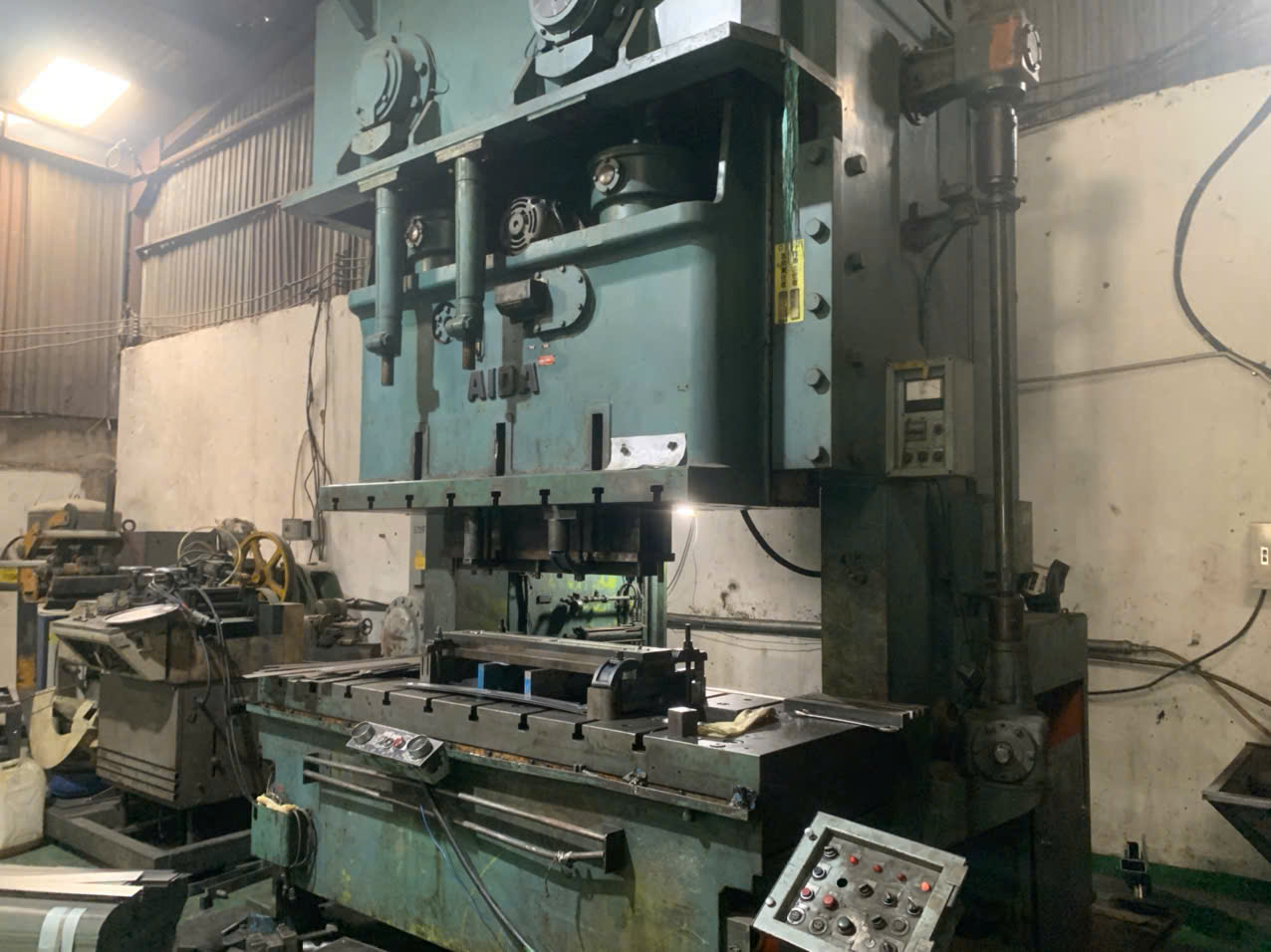
- Supplier audits. Walking the factory floor, checking press tonnage 9, verifying die maintenance records, and confirming that the shop matches what was promised on paper.
- First-article inspections. Measuring the first stamped part against the technical drawing specifications in person, before mass production starts. This is the single biggest lever for "right first time" results.
- Daily follow-up. Checking production status, flagging delays before they become crises, and resolving small issues (wrong packaging, label errors) on the spot.
- Cultural navigation. Understanding that when a Vietnamese supplier says "maybe" or goes silent, it often means "no" or "I have a concern but do not want to cause conflict." Our local team reads these signals and probes deeper.
Agent vs. In-House Team vs. Direct Management
| Approach | Pros | Cons | Best For |
|---|---|---|---|
| Direct management (no local presence) | Lowest cost, full control | Severe time zone lag, language risk, no physical oversight | Simple, low-volume repeat orders |
| Third-party sourcing agent | Moderate cost, local knowledge | Less control, possible conflicts of interest | One-off projects, market exploration |
| Dedicated local team (like DEWIN's Vietnam office) | Real-time oversight, cultural fluency, consistent quality | Higher upfront cost | Ongoing OEM metal stamping services, complex custom parts, high-quality requirements |
Building Quan Hệ (Relational Capital)
In Vietnamese business culture, trust is not built through contracts alone. It is built through Quan Hệ — personal relationships. Our Vietnam team invests time in rapport before jumping into specifications. They ask about the factory owner's family. They visit during holidays. They explain why a particular spec matters — for example, "This bracket mounts inside a U.S.-made trailer hitch assembly, so the bore tolerance must hold ±0.05 mm or the end user's product fails DOT safety review."
This context transforms the supplier's attitude from "just hit the number" to "I understand the stakes." It is the difference between a supplier who calls you when a problem arises and one who ships the problem and hopes you will not notice.
Avoiding the "Silent Non-Compliance" Trap
Without a local presence, you may not discover that the supplier changed material thickness or skipped a deburring step until the container arrives at your U.S. warehouse. Our on-the-ground team catches these issues at the source — during production, not after shipment. This is where quality control inspections with physical presence pay for themselves many times over.
Conclusion
Overcoming time zone and language barriers with Vietnamese stamping parts suppliers requires structured visual documentation, strategic scheduling overlap, cultural intelligence, and ideally a local team bridging the gap — these investments protect your quality, delivery, and bottom line. If you are beginning the process of choosing a reliable Vietnamese stamping parts supplier for long-term supply, building these communication foundations early will pay dividends throughout the partnership. Similarly, screening stamping parts suppliers from Vietnam using online platforms and trade shows can help you identify partners who already have the bilingual capabilities and communication infrastructure discussed above.
Frequently Asked Questions
How can I ensure clear communication with a Vietnamese stamping parts supplier despite the time difference?
A lesson we learned the hard way: one of our U.S. purchasing managers sent five separate emails over a single afternoon, each with a different question about tooling and die design — the Vietnamese supplier saw them all at 7 AM their time, got overwhelmed, and answered only the last one.
What communication tools and processes help bridge language gaps with Vietnamese manufacturers?
During a recent stamping bracket project, our engineer wrote "ensure edge break per drawing callout" in an email to the factory. The shop-floor supervisor understood "break" literally and thought something was damaged. That single word cost us a day of confusion — until our bilingual liaison stepped in and showed the operator the annotated diagram.
How do I set up overlapping working hours or response protocols with my Vietnam-based supplier?
When we first started building our Vietnam office, I assumed that simply asking the factory to "be available in the evening" would work. It did not. What worked was formalizing a written response protocol — with defined escalation paths — that both sides agreed to before production even started.
Footnotes
1. Explains Vietnam’s time zone offset central to the scheduling discussion. ↩︎
2. WTO trade facilitation guidance relates to cross-border supply chain communication practices. ↩︎
3. ASME Y14.5 governs technical drawing tolerancing conventions used in stamping specs. ↩︎
4. Alibaba is a major global sourcing platform for OEM metal stamping suppliers. ↩︎
5. Background on the Vietnamese holiday that closes factories and affects lead times. ↩︎
6. ASTM defines material grade standards like SS304 referenced for stamped parts. ↩︎
7. Official site for Vietnam’s dominant messaging app used for supplier communication. ↩︎
8. International Trade Centre supports buyers navigating Vietnam sourcing and trade logistics. ↩︎
9. Background on stamping press tonnage checked during supplier factory audits. ↩︎