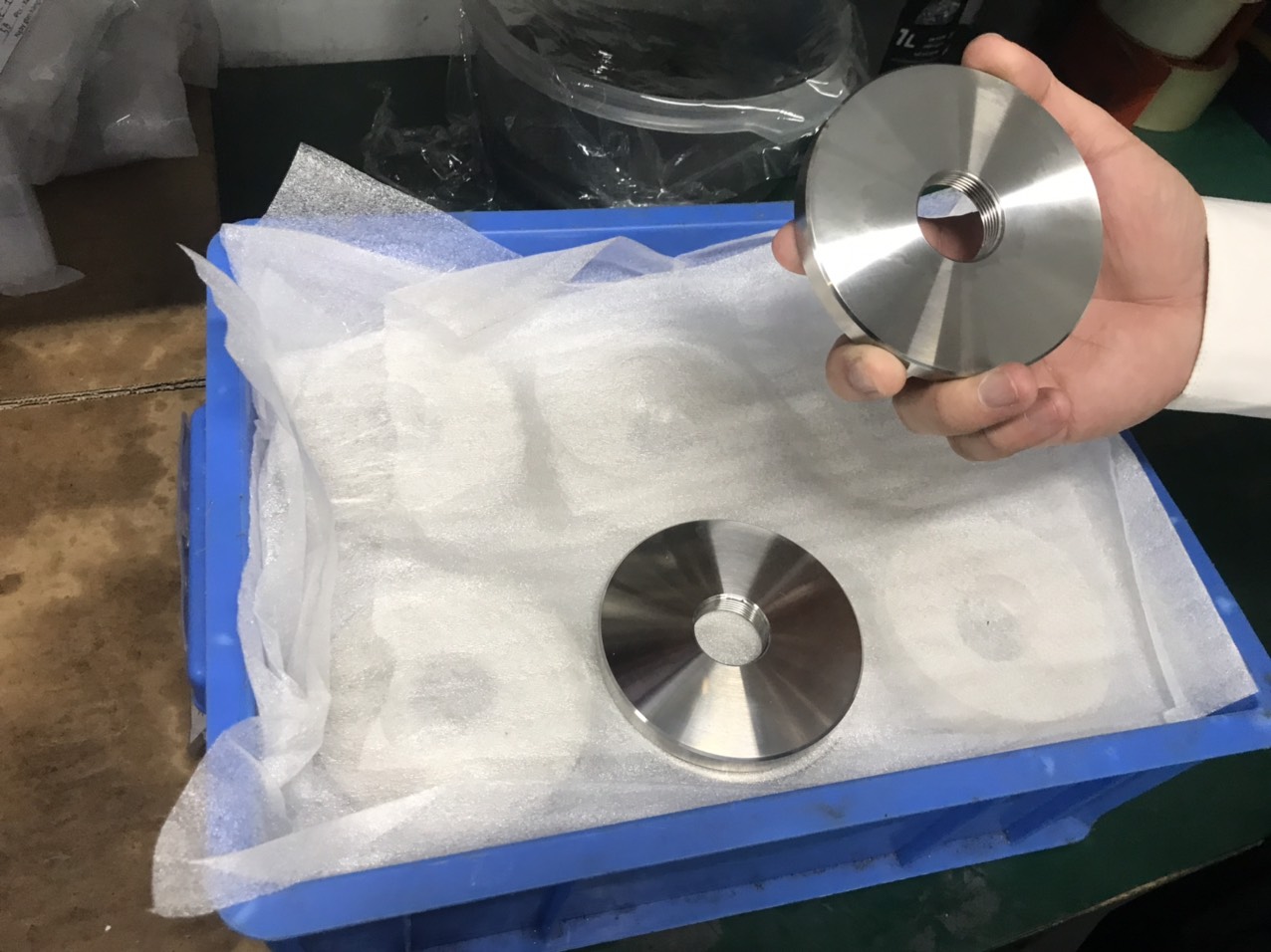

Every time we onboard a new sheet metal supplier 1 in Vietnam for a U.S. client, the same worry surfaces: what if the parts arrive wrong, late, or inconsistent? That fear is valid — one bad production run can stall an entire assembly line stateside and erode months of trust. The solution is a deliberately structured trial order that tests every variable before you commit real volume.
To evaluate Vietnam sheet metal fabrication, plan a trial order of 1–10 pieces with exact material grades (e.g., SUS 304, 2.0 mm), submit 2D DXF flat patterns with bend lines and ±0.15 mm tolerances, and require ISO 9001-certified suppliers with 3–5 day prototype turnaround to verify quality, responsiveness, and technical compliance before scaling.
Below, I walk through the four pillars of a solid trial order plan — quantity, specifications, quality verification, and delivery milestones — drawn directly from our project management work coordinating between Vietnamese fabricators and American buyers.
How many units should I include in my trial order to accurately assess a Vietnam factory's production consistency?
A client in Ohio once asked us to source mounting brackets — similar to the angular, multi-bend designs we regularly handle — and wanted to jump straight to 2,000 pieces. We pushed back. Without a controlled pilot batch, there was no baseline for dimensional accuracy across repeated setups.
Include 1–10 units in your initial trial order to validate process capability at prototype pricing, then follow with a second batch of 50–100 units to confirm production consistency, tooling repeatability, and surface finish uniformity before committing to full-volume runs.
Why 1–10 Pieces First?
Most Vietnamese sheet metal suppliers accept single-piece prototypes with no minimum order quantity. This keeps your financial exposure low while giving you real parts to measure. Prototype pricing applies to these small batches, so expect a 20–40% premium over production pricing — but consider it an insurance cost.
At our Vietnam office, we coordinate these pilot runs directly on the shop floor. We check that the laser cutter reads the DXF correctly, that the press brake operator sets the right tonnage, and that the first article inspection (FAI) report 2 matches the drawing. One piece tells you if the factory can read your file. Five to ten pieces tell you if they can do it repeatedly.
The Two-Phase Approach
I recommend a phased trial order strategy rather than a single batch:
| Phase | Quantity | Purpose | Typical Lead Time |
|---|---|---|---|
| Phase 1 – Prototype | 1–10 pcs | Validate DXF interpretation, material, bends, tolerances | 3–5 business days |
| Phase 2 – Pilot Production | 50–100 pcs | Test setup repeatability, process stability, packaging | 5–10 business days |
| Phase 3 – Production | 250+ pcs | Full-run pricing, logistics, ongoing quality control process | 10–15 business days |
Phase 1 uses prototype pricing. Phase 2 transitions toward production pricing (typically starting at 11+ pieces). Phase 3 is where you lock in volume rates and long-term scheduling.
What About Going Straight to 250–500 Pieces?
Some suppliers in Vietnam prefer a first-order MOQ of 250–500 units. That is still significantly lower than China's typical 1,000+ MOQ. But jumping to 250 pieces without a prototype phase is risky if you have not worked with the supplier before. If tolerances drift or weld quality is inconsistent, you have 250 problems instead of five.
The exception: if the part is extremely simple — a flat plate with holes, no bends, no finish — you can sometimes skip Phase 1 and start at Phase 2. For complex parts with multiple bends, cutouts, and powder-coated finishes like the mirrored bracket pairs we often manage, always start small. Understanding how prototyping and mass production differ in sheet metal fabrication helps clarify why phased scaling matters.
Cost Perspective
| Order Size | Price Per Unit (Relative) | Risk Level |
|---|---|---|
| 1–10 pcs | 1.2×–1.4× production price | Very low |
| 11–100 pcs | 1.0×–1.15× production price | Low |
| 250–500 pcs | 1.0× (baseline production) | Moderate |
| 1,000+ pcs | 0.85×–0.95× production price | Higher upfront |
The small-batch premium is real, but it buys you verified data. That data prevents rework, returns, and airfreight costs that far exceed any per-unit savings.
Which part specifications should I select for my trial run to best test their technical fabrication capabilities?
During a recent project, we learned a hard lesson when a buyer supplied only a 3D STEP file and wrote "stainless steel" on the purchase order — no grade, no thickness tolerance, no finish callout. The factory used SUS 201 instead of SUS 304 3 because it was cheaper and technically still "stainless steel." The parts corroded within weeks in a coastal environment.
Select specifications that stress the factory's precision: choose a part with tight-tolerance features (±0.15 mm default, ±0.01 mm on critical dimensions), multiple bends with inside radii at or near 1× material thickness, and specify exact material grade, temper, thickness tolerance, and surface finish to fully test their technical fabrication capabilities.

Material Specification: Be Ruthlessly Specific
Never write just "aluminum" or "stainless steel." Specify the alloy, temper (if applicable), and thickness with tolerance. Here is a quick reference for common grades we process through our Vietnam partners:
| Material Grade | Common Application | Key Property | Thickness Range |
|---|---|---|---|
| SUS 304 | General enclosures, brackets | Corrosion resistance, weldable | 0.5–6.0 mm |
| SUS 316 | Marine, chemical, food equipment | High chloride/acid resistance | 0.8–4.0 mm |
| SS400 | Structural frames, bases | High strength, low cost | 2.0–12.0 mm |
| A5052-H32 | Lightweight housings, panels | Good formability, anodizable | 0.5–4.0 mm |
| SPCC | Indoor enclosures, covers | Economical, easy to form | 0.5–3.2 mm |
Always request material test reports (MTRs) 4 to confirm material traceability. This is non-negotiable for parts destined for FDA, CE, or NSF-regulated end products.
DXF Flat Pattern: The Foundation of Accurate Fabrication
Our engineering team always recommends submitting a 2D DXF flat pattern 5 rather than only a 3D model. The DXF goes directly to the laser cutter or punch press. When the factory has to unfold your 3D model themselves, they choose their own K-factor 6, and the flat dimensions may differ from yours.
Key elements to include in your DXF:
- Bend lines clearly marked with bend direction (up/down)
- Inside bend radius — start with ≥1× material thickness as a baseline
- K-factor — specify if you have a preference; the standard range is 0.33–0.50, with 0.44 as a common default
- Flange lengths dimensioned from the bend apex or outside surface
- Hole-to-bend distances — keep holes at least 2× material thickness away from bend lines to prevent distortion
Tolerances: Apply Them Strategically
This is where many buyers either over-specify or under-specify. Over-specifying every dimension to ±0.01 mm increases cost by forcing the factory to use slower processes and 100% CMM inspection. Under-specifying leaves quality to chance.
A practical approach: apply default sheet metal tolerances of ±0.15 mm across general dimensions. Reserve tight tolerances (±0.05 mm or ±0.01 mm) only for mating surfaces, datum features, and critical hole patterns. This follows Design for Manufacturability (DFM) principles 7 and keeps cost proportional to function.
Surface Finish: Match to Function
Finish selection directly impacts cost. A brushed stainless bracket for a visible consumer product needs different treatment than a painted structural mount hidden inside a machine.
- Bare / deburred — cheapest; suitable for internal structural parts
- Powder coat (specify RAL color) — durable, cost-effective for painted exteriors
- Brushed (grain direction specified) — aesthetic, moderate cost
- Anodized (for aluminum) — corrosion-resistant, adds 15–30% cost
- Electropolished — for food/pharma; adds 20–40% cost
Over-specifying surface finish on non-critical parts can add 10–40% cost without proportional value. I always advise our clients to match finish to the part's operating environment and visibility.
How do I use a trial order to verify that the supplier's quality control and PPAP processes meet my standards?
One interaction changed how we structure every supplier qualification audit. A fabricator in Ho Chi Minh City sent us a beautiful sample — perfect bends, clean welds, exact dimensions. But when we ordered 200 production pieces, 15% failed dimensional checks. The sample had been hand-finished by their best technician. The production run went through their regular line with no documented process controls. That gap between "showroom sample" and "Tuesday morning production" is exactly what a proper trial order must expose.
Use your trial order to require a first article inspection (FAI) report, full PPAP documentation (control plan, process flow, measurement system analysis), and material test reports; compare measured values against your drawing tolerances, and verify the supplier's quality control process can produce conforming parts consistently — not just once.

First Article Inspection (FAI): Your Baseline
The FAI report is the single most important document from your trial order. It should include:
- Measured values for every dimensioned feature on your drawing
- Pass/fail status against specified tolerances
- Photographs of the finished part from multiple angles
- Material certification (MTR) cross-referenced to the heat/lot number
- Surface finish verification (roughness readings if specified)
We review every FAI at our Vietnam office before parts ship. If any measured dimension falls outside tolerance — even if the part "looks fine" — we flag it and work with the factory to identify root cause before proceeding. For a deeper dive into what this process entails, see our guide on FAI procedures and standards for sheet metal fabrication.
PPAP Levels for Sheet Metal
The production part approval process (PPAP) 8 has five submission levels. For a trial order from a new manufacturing partner evaluation, I typically require Level 3:
| PPAP Level | What's Submitted | When to Use |
|---|---|---|
| Level 1 | Part submission warrant + appearance approval | Very simple parts, trusted suppliers |
| Level 2 | Level 1 + limited supporting data | Repeat orders, minor revisions |
| Level 3 | Level 2 + complete supporting data (control plan, process flow, MSA, capability study) | New suppliers, new parts, trial orders |
| Level 4 | Level 3 + additional items per customer request | Automotive, aerospace |
| Level 5 | Complete PPAP package available for review at supplier site | High-risk, regulated industries |
Level 3 gives you the control plan (what gets checked, how often, by whom), the process flow diagram (every step from raw material to packaging), and measurement system analysis (is their caliper/CMM accurate enough to measure your tolerances?).
ISO 9001 Certification: Necessary but Not Sufficient
ISO 9001 certification confirms the factory has a quality management system. It does not guarantee your specific part will be made correctly. Think of it as a minimum threshold for your shortlist, not a quality guarantee.
During our supplier qualification audits in Vietnam, we verify ISO 9001:2015 certificates are current and issued by an accredited body. ISO 9001-certified suppliers 9 We also check for ISO 14001 (environmental management) and ISO 3834 (welding quality) where relevant.
But beyond certificates, we look at the shop floor. Are work instructions posted at each station? Are gauges calibrated with current stickers? Do operators record measurements or just eyeball parts? These observable habits tell you more about real quality culture than any certificate on the wall.
Third-Party Inspection
For buyers who cannot visit the factory, third-party inspection services offer independent verification. Companies like SGS, Bureau Veritas, or TÜV can perform dimensional inspections using CMM equipment, XRF analysis for material verification, and visual checks for surface quality. We coordinate these inspections through our local team, but the option exists for buyers managing directly.
What to Do When Trial Results Show Issues
Not every trial order comes back perfect. That is actually the point. What matters is how the supplier responds:
- Do they acknowledge the deviation or argue about it?
- Can they identify root cause within 48 hours?
- Do they propose corrective action with a timeline?
- Do they update their control plan to prevent recurrence?
A factory that responds professionally to a quality issue is often a better long-term partner than one that delivers a flawless trial but lacks the systems to sustain it.
What delivery and communication milestones should I monitor during my first order to evaluate their long-term reliability?
The trade-off we constantly weigh with new suppliers is this: a factory might produce excellent parts but miss deadlines by two weeks. Or they ship on time but ignore engineering change requests. Quality, delivery, and communication form a triangle — weakness in any one corner undermines the other two.
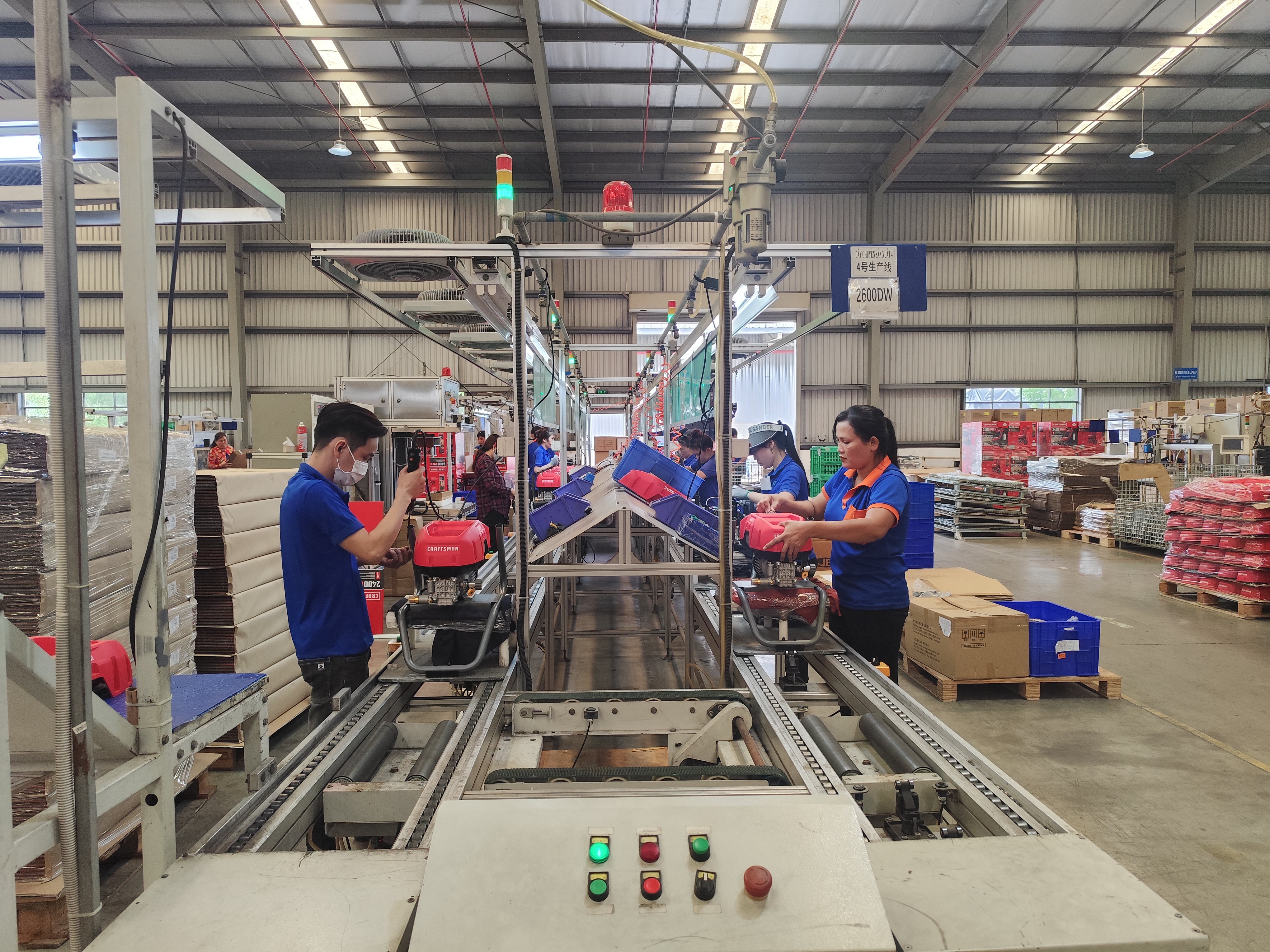
Monitor five milestones during your first order: drawing acknowledgment within 24 hours, DFM feedback within 48 hours, weekly progress reports with photos, on-time shipment per agreed FOB/CIF terms, and responsiveness to mid-production questions — these reveal whether the supplier can sustain reliable performance at scale.
The Five Milestones in Detail
When our team manages a trial order for a U.S. client, we track these milestones against specific time windows. Here is the framework we use:
| Milestone | Expected Timeframe | What to Evaluate |
|---|---|---|
| Drawing acknowledgment | Within 24 hours of submission | Do they confirm receipt and flag missing info? |
| DFM / manufacturability feedback | Within 48 hours | Do they suggest improvements or just accept blindly? |
| Material procurement confirmation | Within 3–5 days | Can they source the specified grade locally? |
| In-process update (with photos) | Weekly or at 50% completion | Are they proactive, or do you have to chase them? |
| Shipment notification with documents | On or before agreed ship date | Packing list, MTR, FAI, commercial invoice — complete? |
Communication Quality Matters as Much as Part Quality
I have seen partnerships fail not because of bad parts, but because of bad communication. A buyer sends a revision, the factory does not acknowledge it, and the old version gets produced. Or the factory encounters a material substitution issue and stays silent for a week, hoping the buyer will not notice.
During the trial order, pay attention to:
- Response time — Do they reply within one business day? Our Vietnam office operates on a response window that overlaps U.S. morning hours precisely because we know delayed replies cause anxiety.
- English proficiency — Can they discuss technical details in English, or does every message go through a non-technical translator who strips context?
- Proactive alerts — If a material is out of stock or a tolerance is at risk, do they tell you before it becomes a problem?
Shipping Terms and Export Readiness
For U.S.-bound shipments, confirm whether the factory can handle FOB (Free on Board) 10 or CIF (Cost, Insurance, Freight) terms. Some smaller fabricators in Vietnam lack export experience and rely on trading companies for logistics, which adds cost and communication layers.
We handle door-to-door logistics management as part of our service, but if you are working directly with a factory, verify that they can produce proper commercial invoices, packing lists, certificates of origin, and customs documentation. Missing paperwork delays customs clearance and can incur storage fees at the port.
Evaluating for Long-Term Fit
Your trial order is not just about this one batch. It is a manufacturing partner evaluation. Ask yourself:
- Can this factory handle multi-SKU orders when I scale?
- Do they have capacity headroom for 2×–5× my current volume?
- Are they willing to discuss open account payment terms (net 60–90 days) once the relationship matures?
- Do they protect intellectual property? Have they signed an NDA, and do they store files securely?
A supplier who excels across all five milestones during a trial order — and responds constructively when things go sideways — is a partner worth investing in for low volume production today and scaled manufacturing tomorrow.
Conclusion
A well-planned trial order — small batch, precise specs, documented quality gates, and tracked milestones — is the most reliable way to evaluate Vietnam sheet metal fabrication before committing volume and budget.
Frequently Asked Questions
Why 1–10 Pieces First?
Most Vietnamese sheet metal suppliers accept single-piece prototypes with no minimum order quantity. This keeps your financial exposure low while giving you real parts to measure. Prototype pricing applies to these small batches, so expect a 20–40% premium over production pricing — but consider it an insurance cost.
What About Going Straight to 250–500 Pieces?
Some suppliers in Vietnam prefer a first-order MOQ of 250–500 units. That is still significantly lower than China's typical 1,000+ MOQ. But jumping to 250 pieces without a prototype phase is risky if you have not worked with the supplier before. If tolerances drift or weld quality is inconsistent, you have 250 problems instead of five.
How many units should I include in my trial order to accurately assess a Vietnam factory's production consistency?
A client in Ohio once asked us to source mounting brackets — similar to the angular, multi-bend designs we regularly handle — and wanted to jump straight to 2,000 pieces. We pushed back. Without a controlled pilot batch, there was no baseline for dimensional accuracy across repeated setups.
Footnotes
1. Provides essential qualities to consider when selecting a reliable sheet metal supplier. ↩︎
2. Replaced with authoritative definition from Wikipedia. ↩︎
3. Explains the composition, properties, and industrial applications of SUS 304 stainless steel. ↩︎
4. Explains what Material Test Reports (MTRs) are and their importance for material traceability. ↩︎
5. Details the importance of 2D DXF flat patterns for accurate sheet metal fabrication. ↩︎
6. Found working page on original domain. ↩︎
7. Introduces the core concepts and benefits of Design for Manufacturability (DFM) in product design. ↩︎
8. Provides an overview of the Production Part Approval Process (PPAP) and its purpose. ↩︎
9. Official information on the ISO 9001 quality management system standard and its benefits. ↩︎
10. Defines the international shipping term FOB (Free on Board) and its responsibilities. ↩︎