
I learned the hard way that a factory’s website can look world-class while its shop floor tells a completely different story — and that gap costs buyers thousands in rejected parts and wasted time.
To plan a Vietnam sheet metal fabrication factory visit, prepare detailed technical specifications and 2D DXF files, secure your e-Visa 5–7 days ahead, hire a local driver for industrial zone travel, build a factory evaluation checklist covering equipment age, QC labs, and certifications, and schedule at least half a day per facility.
This guide walks you through every step — from your pre-trip paperwork to on-site verification and post-visit follow-up — so you land in Ho Chi Minh City 1 ready to make smart sourcing decisions.
What should I include in my pre-trip checklist before visiting sheet metal factories in Vietnam?
A buyer we work with once flew to Vietnam with nothing but a rough sketch and a verbal description SUS 304 stainless steel 2. He wasted three days because no factory could quote him accurately.
Your pre-trip checklist should include finalized 2D DXF drawings with material grade, thickness, tolerances, and finish requirements, plus a shortlist of pre-vetted factories, your e-Visa confirmation, a hired car arrangement, printed technical specifications, and sample request records.
Get Your Technical Specifications Right First
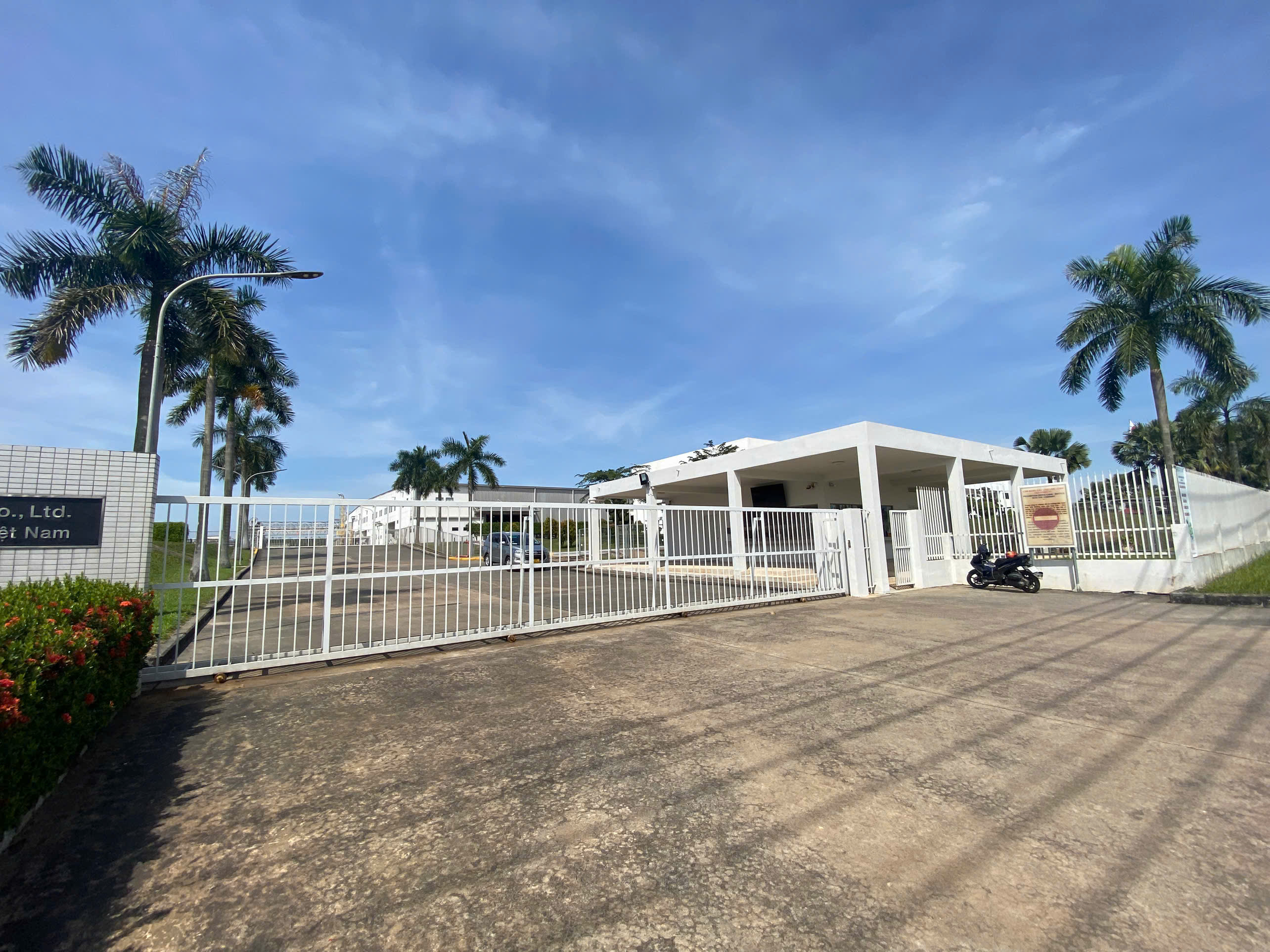
Before you book a single flight, your drawings need to be production-ready. I have seen buyers send a PDF screenshot from a CAD model and wonder why every factory quotes a different price. The reason is simple: vague specs invite guesswork. Start with a proper 2D DXF file 3. Include the material grade — for example, SUS 304 stainless steel or SPCC cold-rolled steel. Specify thickness in millimeters. Call out tolerances explicitly. If you do not specify, most Vietnamese shops default to ±0.15mm, which may or may not suit your application. Note your surface finish requirements: powder-coated, anodized, brushed, or raw. State the quantity, even if it is just one prototype. Vietnamese factories accept single-piece orders, so do not inflate numbers to seem more attractive.
Build Your Factory Shortlist Using Local Channels
Global B2B platforms are tempting, but they often surface trading companies rather than actual manufacturers. Our Vietnam office has found better results through local sourcing channels — the Vietnam Steel Association 4 directory, VCCI business registry, and direct referrals from industrial zone management boards. Southern Vietnam is the sheet metal hub. Focus on Binh Duong, Dong Nai, Long An, and Ba Ria-Vung Tau. These industrial zones sit 30 to 120 minutes from Ho Chi Minh City center. Northern Vietnam is stronger in electronics, not metal fabrication. To understand these geographic differences better, learn how to evaluate regional sheet metal fabrication clusters when sourcing from Vietnam.
Visa and Travel Documents
Apply for a 30- or 90-day e-Visa 5 through evisa.gov.vn. Processing takes 3 to 5 business days. Americans pay a higher fee and must carry USD cash for a stamping fee on arrival. Print your approval letter. Carry a passport-sized photo. Keep a copy of your factory visit itinerary on your phone and in print.
| Checklist Item | Details | Priority |
|---|---|---|
| 2D DXF drawings | Include material grade, thickness, tolerances, finish | Critical |
| Factory shortlist | 3–5 vetted factories in Binh Duong / Dong Nai area | Critical |
| e-Visa application | Apply 5–7 days before departure at evisa.gov.vn | Critical |
| Hired car and driver | Book a Mazda 3 ($40–50/12h) or Kia Sedona ($60–80/12h) | High |
| Sample request records | Document which factories sent samples and quality notes | High |
| Business cards | Bring at least 50; exchange is expected in Vietnamese culture | Medium |
| Small gifts | Token items from your home country for relationship building | Medium |
Hiring Transport
Do not rely on ride-hailing apps for factory visits. Factories in Binh Duong and Dong Nai are outside city limits, often in gated industrial parks 6. A dedicated car and driver costs between $40 and $100 for a 12-hour day, depending on vehicle size. This gives you flexibility to visit two or three factories in a single day without scrambling for rides. Our team in Vietnam arranges transport for visiting clients regularly, and it saves hours of confusion navigating unfamiliar roads.
How can I evaluate a factory's technical capabilities and QC processes during my on-site visit?
One trade-off we constantly weigh with our clients: a factory can have shiny new equipment but no documented quality control, or it can have older machines operated by skilled technicians with rigorous inspection processes. Neither extreme is ideal.
Evaluate a factory’s capabilities by physically inspecting its CNC equipment age and condition, reviewing calibrated measuring instruments in a dedicated QC lab, checking for ISO 9001 certification documentation, asking to see recent production samples with inspection reports, and verifying that operators follow documented work instructions on the floor.
Equipment Inspection: Look Beyond the Brochure
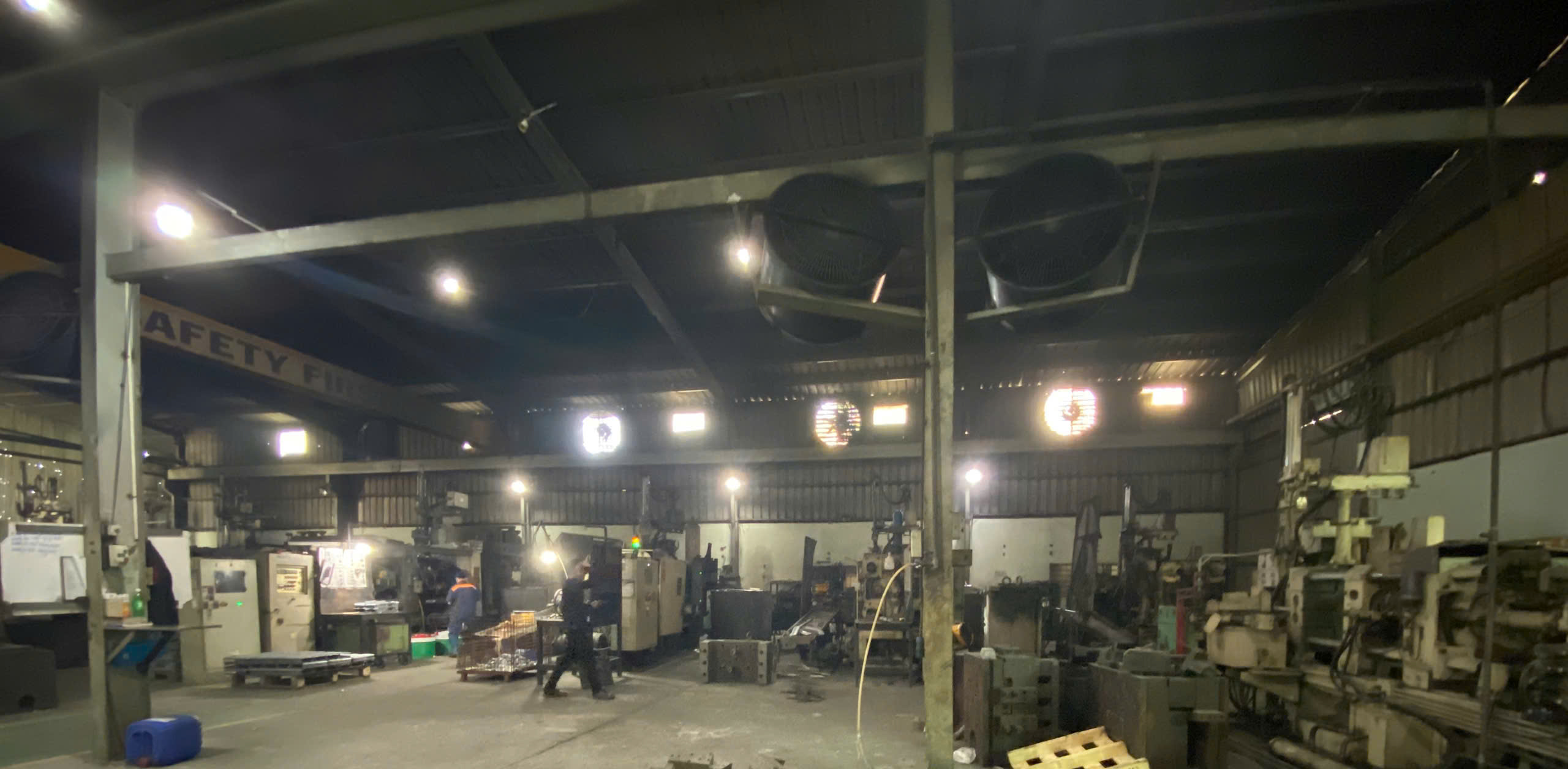
Walk the shop floor. Count the machines. Note the brands. A factory claiming "advanced CNC capabilities" on its website may operate 20-year-old turret punches in a tin-roofed building. That is not automatically disqualifying — experienced operators on older machines can produce good parts — but you need to know the truth. Look for fiber laser cutters (modern shops run up to 6kW units), CNC press brakes with backgauges, and robotic or semi-automatic welding stations. Check the condition of tooling and fixtures. Worn tooling produces inconsistent bends and hole positions.
QC Lab and Inspection Process
A real quality control process requires more than a single caliper on a workbench. Look for a climate-controlled or at least clean inspection area with calibrated instruments: micrometers, height gauges, CMM (coordinate measuring machines) 7, surface roughness testers, and coating thickness gauges. Ask when instruments were last calibrated. Request calibration certificates. If the factory cannot produce them, that is a red flag.
| What to Inspect | What to Look For | Red Flag |
|---|---|---|
| Laser cutter | Fiber laser, 3kW–6kW, clean cut edges | Only CO2 laser or plasma on thin gauge work |
| Press brake | CNC backgauge, tonnage suited to your material | Manual brake with no digital readout |
| Welding stations | TIG/MIG with proper shielding gas, jigs/fixtures | No fixtures, inconsistent weld bead appearance |
| QC lab | Dedicated room, calibrated instruments, CMM | Instruments stored on shop floor, no calibration records |
| Work instructions | Printed at each station, referenced by operators | No documentation visible on the floor |
| Raw material storage | Organized, labeled by grade and heat number | Mixed materials, no traceability |
Talk to the Floor Manager, Not Just Sales
Sales staff can recite capabilities all day. The floor manager or production supervisor reveals the real picture. Ask about production lead times for a typical order. Ask how they handle a non-conforming part mid-run. Ask how many shifts they operate. If the floor manager cannot answer clearly, the factory may lack structured process control.
Certifications Worth Verifying
ISO 9001 certification 8 is the baseline for quality management. Ask to see the certificate. Check the issuing body — some certification bodies are not accredited. ISO 14001 for environmental management matters if your end customer requires it. If the factory serves automotive or aerospace clients, ask about IATF 16949 9 or AS9100. For sheet metal brackets, enclosures, and mounting components like the ones we help clients source, ISO 9001 plus a demonstrated first-article inspection process is usually sufficient. For a structured approach to assessing these factors, see how to develop qualification criteria for Vietnam sheet metal fabrication suppliers.
Observing Workplace Culture
Clean floors, organized material flow, and workers wearing PPE tell you a lot. If the factory looks chaotic, quality will be inconsistent. Check for 5S implementation — sort, set in order, shine, standardize, sustain. You do not need a formal audit to spot the difference between a well-run shop and a disorganized one. Trust your eyes.
What is the most efficient way to plan my travel logistics for a multi-factory sourcing trip in Vietnam?
When our team in Vietnam schedules factory tours for visiting US clients, we learned that cramming four factory visits into one day sounds efficient on paper but produces decision fatigue by visit three.
The most efficient logistics plan groups factories by geographic cluster within southern Vietnam’s industrial zones, limits visits to two or three per day with a hired driver, schedules half-day blocks per factory, and reserves buffer time for relationship-building meals and unexpected delays in traffic or factory access.
Cluster Your Visits by Industrial Zone
Southern Vietnam's factories spread across several provinces, but they cluster within specific industrial parks. Group your visits geographically to minimize driving time. Visit all Binh Duong factories on one day, then Dong Nai factories the next. Do not zigzag between provinces. Traffic between Ho Chi Minh City and these zones can be unpredictable, especially on National Highway 1 and Highway 13.
How Many Factories Per Day?
Two is comfortable. Three is the maximum. Each visit needs at least two to three hours if you want to walk the floor, inspect QC, review samples, and have a meaningful conversation with management. Rushing through a factory in 45 minutes defeats the purpose of flying to Vietnam in the first place.
| Day | Morning Visit | Afternoon Visit | Evening |
|---|---|---|---|
| Day 1 | Arrive HCMC, check in, prep materials | Optional: nearby factory in District 7 / Thu Duc | Dinner with sourcing agent or factory contact |
| Day 2 | Factory A — Binh Duong Industrial Zone | Factory B — Binh Duong Industrial Zone | Review notes, compare observations |
| Day 3 | Factory C — Dong Nai Industrial Zone | Factory D — Dong Nai Industrial Zone | Relationship dinner with top candidate |
| Day 4 | Follow-up visit to best factory | Sample collection / specification clarification | Prepare departure |
| Day 5 | Buffer day for re-visits or Long An factories | Depart HCMC | — |
Transportation Costs and Options
A sedan like a Mazda 3 costs about $40 to $50 for a 12-hour rental with driver. A minivan like a Kia Sedona runs $60 to $80. If you travel with colleagues or carry equipment, the minivan is worth the extra cost. Large vans for groups cost around $100 per day. All prices include fuel and the driver's expenses. Book through your hotel, a local sourcing agent, or a reputable transport service.
Relationship Building Takes Time
Vietnamese suppliers value personal rapport. A shared meal builds more trust than ten emails. Budget time for a lunch or dinner with each serious factory candidate. Bring a small gift from your home country — it does not need to be expensive. Show genuine interest in their business. This is not wasted time; it is part of your supply chain strategy. Factories that trust you will prioritize your orders and communicate problems early rather than hiding them.
Hiring a Sourcing Agent
If this is your first trip to Vietnam and you do not have a local team, consider a sourcing agent Vietnam professionals recommend. A good agent arranges factory introductions, provides translation, and helps you read cultural cues you might miss. Our Vietnam office plays this role for our US clients. We pre-screen factories, arrange visits, and sit in on technical discussions to ensure nothing gets lost in translation. The cost of an agent is small compared to the cost of choosing the wrong supplier.
How do I verify if a Vietnam sheet metal shop can handle my custom project requirements and PPAP standards?
A lesson we learned early on: asking a factory "Can you do PPAP?" and getting a "yes" means almost nothing. The real test is whether they understand what goes into each element and can produce the documentation unprompted.
Verify custom project capability by submitting your actual production drawing for a trial quote, requesting a first-article sample with dimensional report, reviewing their PPAP documentation history, confirming they can produce control plans and process flow diagrams, and checking that their measurement instruments match your drawing’s tolerance requirements.

Start with a Real Drawing, Not a Hypothetical
Do not ask vague capability questions. Send your actual drawing — the precision mounting bracket, the custom enclosure, the multi-bend housing base — and ask for a quote with lead time. A competent factory will come back with clarifying questions about bend radii, grain direction, weld specifications, or hardware insertion. A factory that quotes instantly without questions is either not reading your drawing or is planning to figure it out later. When we manage sourcing projects for clients, the quality of a factory's questions tells us more than the quote itself. You can further validate suppliers by learning how to plan trial order quantity and specifications to evaluate Vietnam sheet metal fabrication.
Understanding PPAP in a Vietnamese Context
PPAP — Production Part Approval Process 10 — originated in the automotive industry but applies to any custom part requiring documented quality evidence. Most Vietnamese-owned sheet metal shops are not natively familiar with PPAP. Foreign-owned factories (Japanese, Korean, Taiwanese, Danish) in Vietnam tend to understand it better. This does not mean Vietnamese-owned shops cannot do it. It means you may need to guide them through the requirements. Our team often bridges this gap by walking a factory through each PPAP element: design records, engineering change documents, process flow diagrams, PFMEA, control plans, measurement system analysis, dimensional results, material test reports, and the part submission warrant.
Key PPAP Elements for Sheet Metal Parts
Not every sheet metal project needs all 18 PPAP elements. For a typical custom bracket or enclosure, focus on the elements that directly impact part quality.
| PPAP Element | Relevance to Sheet Metal | What to Ask the Factory |
|---|---|---|
| Design records | Confirms the factory works from your approved drawing | "Show me the drawing revision you are quoting from." |
| Process flow diagram | Maps each step from laser cutting to final inspection | "Walk me through your production sequence for this part." |
| Control plan | Defines inspection points, methods, and frequency | "Where do you inspect, and how often during a run?" |
| Dimensional results | First-article measurement report against drawing specs | "Can you produce a balloon drawing with measured values?" |
| Material test reports (MTRs) | Proves raw material grade and properties | "Provide the mill cert for the steel you will use." |
| Part submission warrant (PSW) | Formal sign-off that the part meets all requirements | "Have you submitted a PSW to any customer before?" |
Evaluating Minimum Order Quantity and Scalability
One advantage of Vietnam's sheet metal sector is flexible minimum order quantity policies. Many shops accept single-piece prototypes. This is valuable for custom projects where you need to validate fit and function before committing to production volumes. Ask the factory about their prototype-to-production transition process. Can they hold your tooling and fixtures for repeat orders? Do they maintain your DXF files on their system? A factory that manages this transition smoothly reduces your risk of dimensional drift between prototype and production.
Tolerance and Bend Accuracy
Default tolerances of ±0.15mm work for many applications, but complex brackets with multiple bends and tight positional requirements need tighter control. Ask about the factory's K-factor for bend development — typical shops use approximately 0.44, with a range of 0.33 to 0.50 depending on material and tooling. If your part has critical dimensions post-bending, ensure the factory has CNC press brakes with angle measurement and correction systems. Review sample parts for bend consistency. Look at the weld marks on multi-piece assemblies — clean, consistent welds indicate trained operators and proper gas shielding. The precision mounting brackets and angular components we help source for US clients demand exactly this level of attention.
Foreign-Owned vs. Vietnamese-Owned Factories
This is a practical consideration, not a quality judgment. Foreign-owned factories in Vietnam generally communicate faster and more clearly in English. They often have established PPAP and quality management systems. Vietnamese-owned factories may respond slower and with less precise English, but many produce excellent work at lower cost. If you choose a Vietnamese-owned shop, plan for extra time in specification clarification and consider having a bilingual intermediary — whether a sourcing agent or a partner like our Vietnam team — to prevent miscommunication on critical drawing requirements.
Conclusion
Planning a Vietnam sheet metal fabrication factory visit comes down to preparation, physical verification, and relationship building. Bring clear specs, verify equipment and QC in person, and invest time in trust — your supply chain will thank you.
Frequently Asked Questions
How Many Factories Per Day?
Two is comfortable. Three is the maximum. Each visit needs at least two to three hours if you want to walk the floor, inspect QC, review samples, and have a meaningful conversation with management. Rushing through a factory in 45 minutes defeats the purpose of flying to Vietnam in the first place.
What should I include in my pre-trip checklist before visiting sheet metal factories in Vietnam?
A buyer we work with once flew to Vietnam with nothing but a rough sketch and a verbal description SUS 304 stainless steel 2 . He wasted three days because no factory could quote him accurately.
How can I evaluate a factory's technical capabilities and QC processes during my on-site visit?
One trade-off we constantly weigh with our clients: a factory can have shiny new equipment but no documented quality control, or it can have older machines operated by skilled technicians with rigorous inspection processes. Neither extreme is ideal.
Footnotes
1. Official tourism site for Ho Chi Minh City, Vietnam. ↩︎
2. Replaced HTTP 404 link with Wikipedia page for SAE 304 stainless steel. ↩︎
3. Replaced HTTP unknown link with Wikipedia page for DXF file format. ↩︎
4. Official website of the Vietnam Steel Association, an industry body. ↩︎
5. Official government portal for applying for a Vietnam e-Visa. ↩︎
6. General definition and overview of industrial parks. ↩︎
7. Replaced HTTP 404 link with Wikipedia page for Coordinate-measuring machine (CMM). ↩︎
8. Official international standard for quality management systems. ↩︎
9. Replaced HTTP 400 link with Wikipedia page for IATF 16949. ↩︎
10. Detailed explanation of the Production Part Approval Process (PPAP). ↩︎