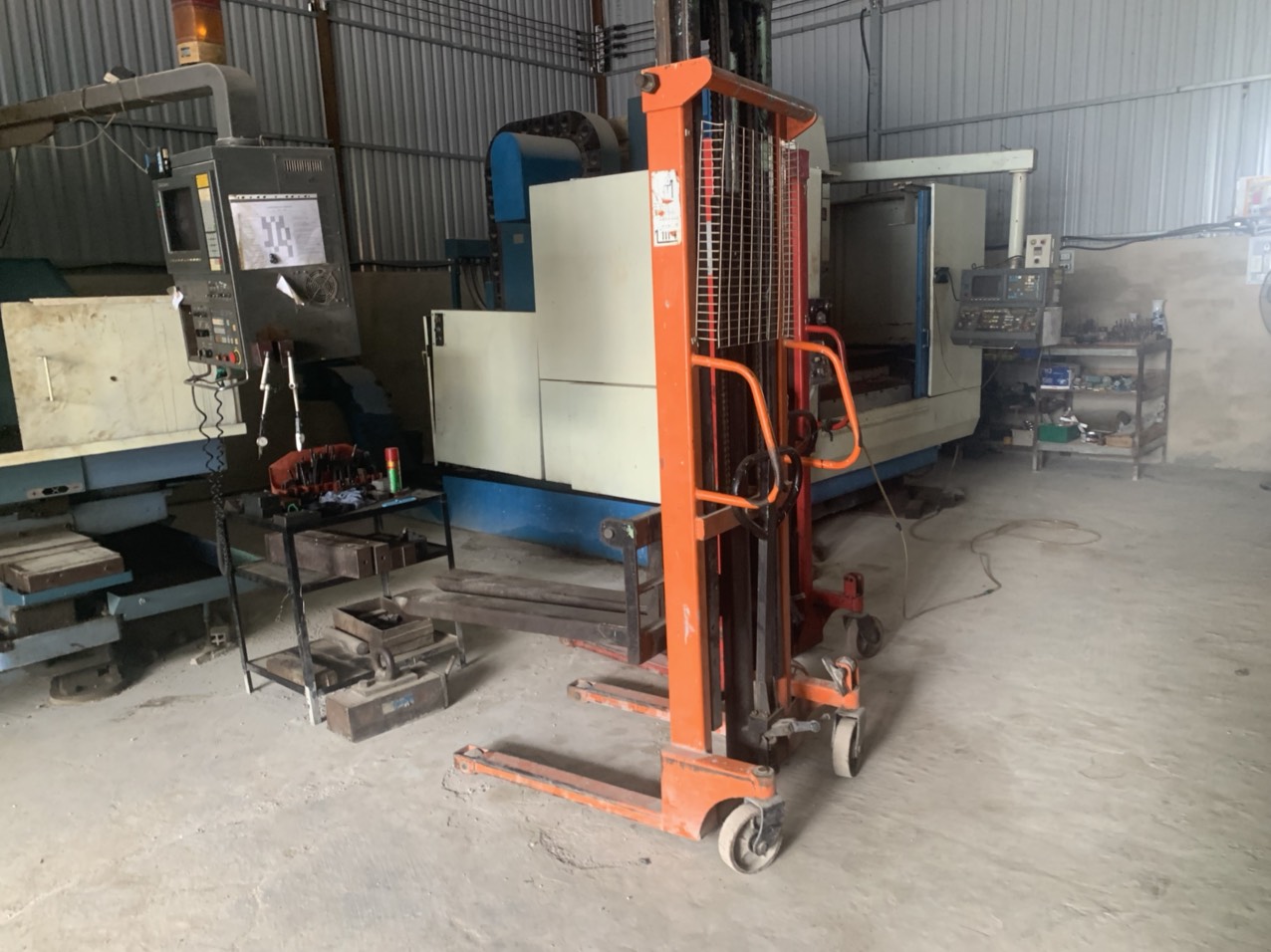

Last quarter, a voltage dip at a partner facility in Binh Duong halted a CNC press 1 mid-cycle and scrapped an entire batch of custom mounting brackets our team had spent weeks co-developing with a U.S. client. That single incident cost days of rework and strained a delivery promise we take seriously. Power stability 2 in Vietnam sheet metal fabrication is not an abstract infrastructure topic—it is the difference between on-time shipments and painful delays that erode trust and margin.
Power stability directly determines Vietnam sheet metal fabrication production continuity because voltage fluctuations, frequency deviations, and sudden outages disrupt laser cutters, CNC presses, and bending machines, causing material waste, dimensional errors, equipment damage, and costly production downtime that undermines the country’s cost-efficiency advantage.
Below, I break down exactly how grid problems translate into real risks for your orders, what backup power systems separate reliable suppliers from risky ones, and how to shield your supply chain from hidden energy-related costs.
How will Vietnam's power grid fluctuations affect my order delivery schedule?
A purchasing manager we work with in Texas once asked why his bracket order slipped by ten days. The root cause was not material shortage or labor. It was three unscheduled power outages in a single week at the fabrication shop, each one forcing a full machine restart and re-calibration cycle that ate hours of productive time.
Vietnam's grid fluctuations delay your delivery schedule by forcing unplanned machine shutdowns, extending setup times, increasing scrap rates, and creating unpredictable bottlenecks—especially during peak electricity demand growth periods in southern industrial parks Vietnam relies on for manufacturing output.
Why Do Outages Hit Sheet Metal Lines So Hard?
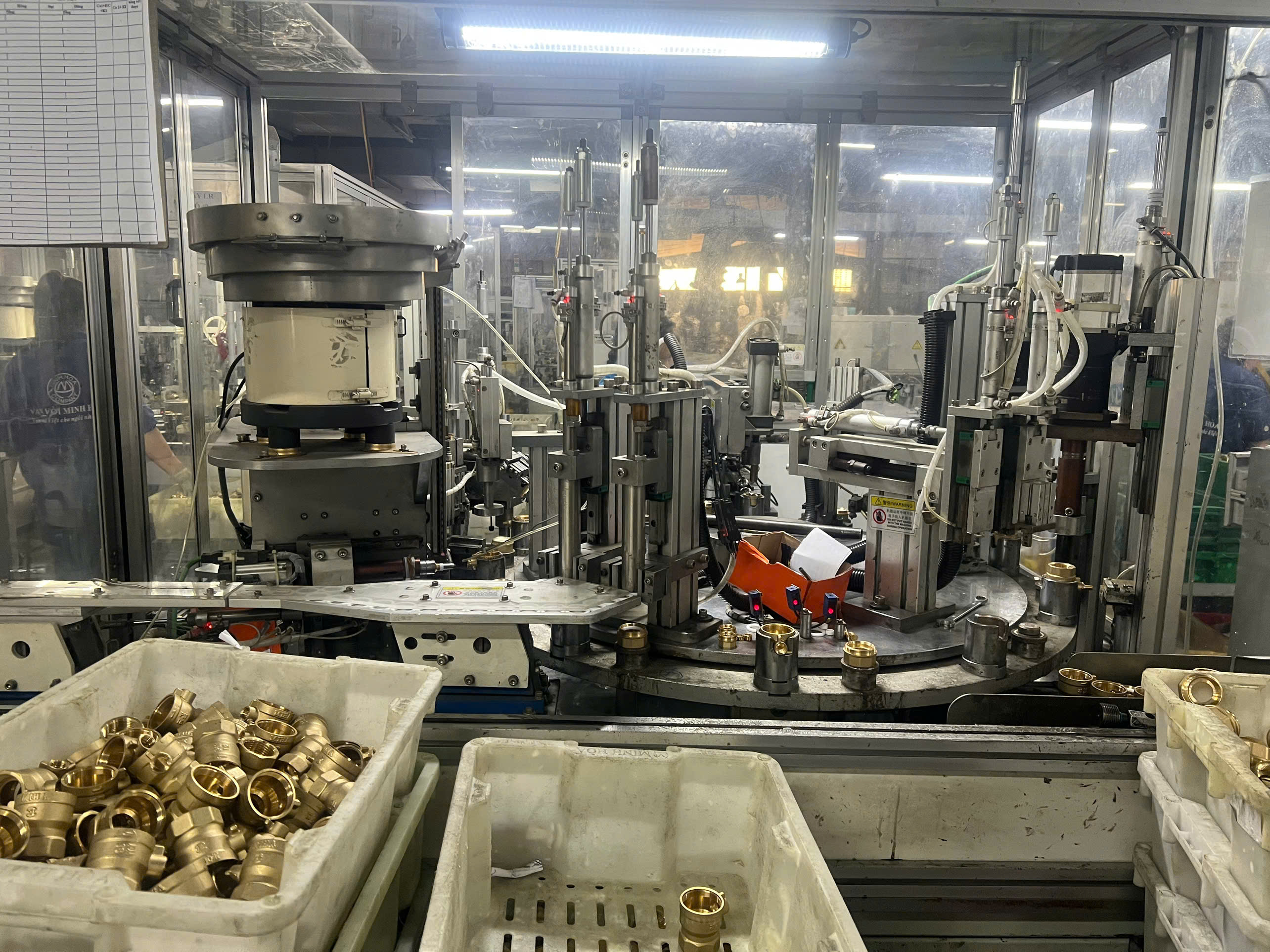
Sheet metal fabrication is a sequential process. A laser cutter 3 feeds a bending station, which feeds welding, then finishing. When power outages interrupt any single station, the entire downstream flow stops. Modern CNC equipment is designed to shut down automatically during voltage fluctuations 4 to protect its servo motors 5 and controllers. That safety feature prevents equipment damage but guarantees immediate production downtime.
Here is what typically happens during a single unscheduled power interruption:
| Event | Duration | Impact on Your Order |
|---|---|---|
| Power dip or outage occurs | 0–5 minutes | CNC machines auto-shutdown; operator alerts triggered |
| Grid power restored | 5–60 minutes | Machines require full restart and homing sequence |
| Re-calibration and first-article check | 30–90 minutes | Operator must verify dimensional accuracy before resuming |
| Scrap assessment | 15–30 minutes | Parts in-process during the dip are inspected; many are rejected |
| Full production resumes | 1–3 hours after event | Cumulative lost time per incident |
Multiply that by three or four events per week during Vietnam's peak demand season—typically May through August—and you can see how a 30-day production schedule can slip to 40 days or more.
The Geography Factor
Not all industrial parks Vietnam hosts are equal. Facilities in Ho Chi Minh City and Binh Duong tend to face more manufacturing disruptions during summer peaks because residential and commercial electricity demand growth in those dense urban corridors competes with industrial loads. Factories in newer zones further from city centers sometimes have more modern grid connections but fewer redundancy options if the main feeder fails.
Our Vietnam office tracks grid reliability data for the zones where our partner factories operate. We share that data with clients during supplier selection so they can make informed decisions before committing tooling dollars.
Real Schedule Impact
For a typical custom bracket order of 5,000 pieces requiring laser cutting, multi-step bending, and spot welding, our project timelines assume two to three working shifts per day over roughly 20 production days. If power-related stoppages consume even 10% of available machine hours, the order needs 22 days minimum—and that assumes no parts are scrapped. When scrap rates climb, raw material reorders add another three to five days of lead time, especially for imported hot-rolled coil where logistics alone can take a week.
Can unstable electricity compromise the precision and quality of my custom sheet metal parts?
During a recent pre-production trial for a pair of mirrored mounting brackets with tight bend tolerances—parts very similar to the multi-fold, multi-hole designs we regularly produce—our quality engineer in Vietnam flagged a recurring dimensional drift. The bend angles were wandering by nearly half a degree between the first and last piece in a batch. The culprit was not the tooling or the operator. It was voltage fluctuations feeding inconsistent force to the hydraulic press brake 6.
Unstable electricity absolutely compromises precision and quality of custom sheet metal parts by causing thermal drift in laser cutters, inconsistent hydraulic pressure in press brakes, and arc instability in welding—all of which produce dimensional errors, poor edge quality, and weld defects that fail inspection.
How Power Instability Creates Dimensional Errors
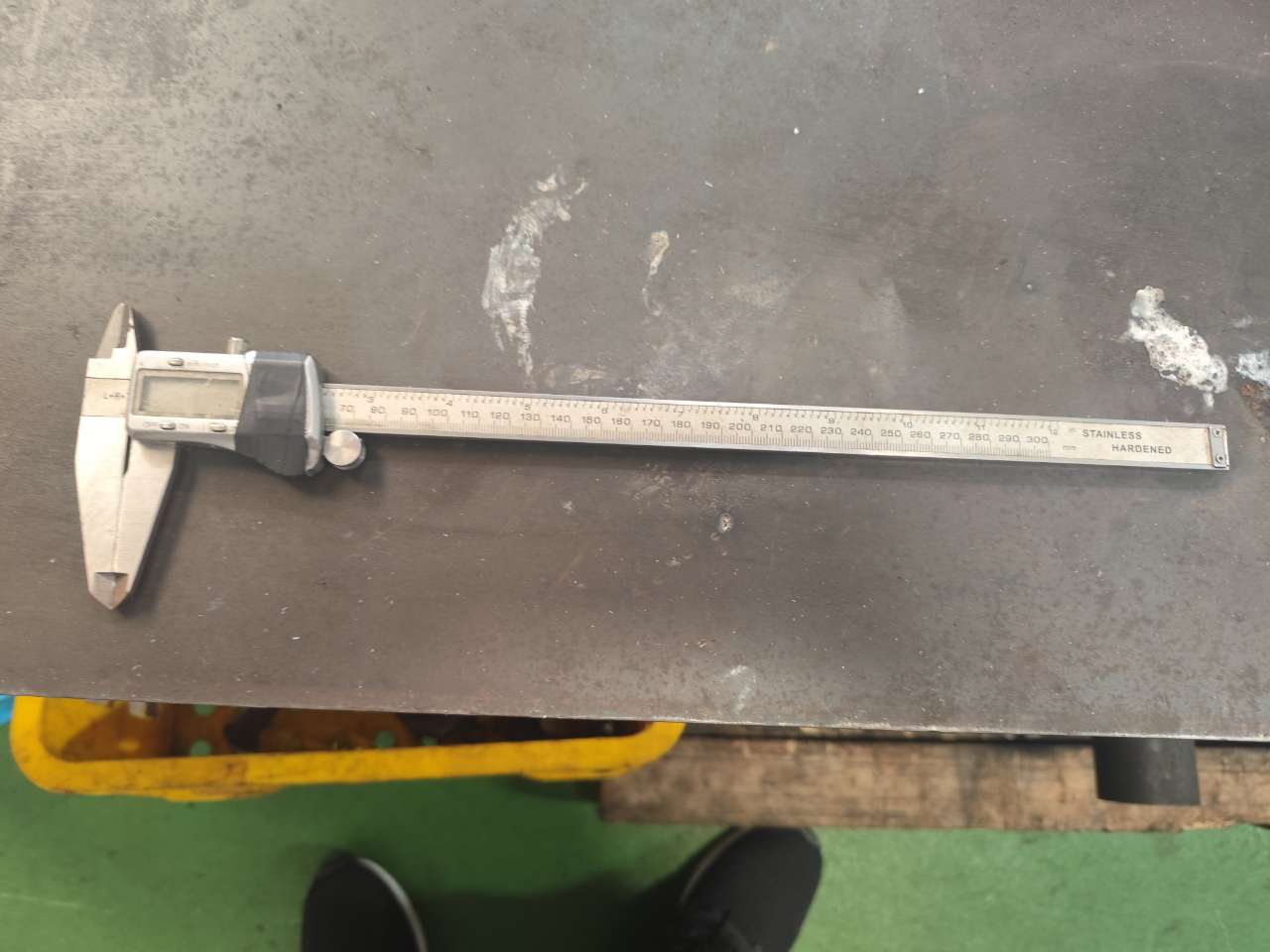
Precision sheet metal fabrication depends on repeatable energy input. A fiber laser cutter running at 2 kW needs exactly 2 kW—not 1.85 kW for a split second and then 2.1 kW the next. When voltage fluctuations cause the laser power to waver, the kerf width changes, heat-affected zones shift, and the cut edge quality degrades. This is what engineers call "thermal drift 7," and it shows up as parts that measure correctly on one end and out-of-tolerance on the other.
The same principle applies to bending. A hydraulic press brake converts electrical energy into hydraulic pressure. If the motor driving the hydraulic pump receives inconsistent voltage, the ram force varies. On a 2-mm steel bracket with a ±0.5° bend tolerance, even a small pressure inconsistency can push the part out of spec.
Process-by-Process Quality Risks
| Fabrication Process | Power Stability Requirement | Quality Defect from Instability |
|---|---|---|
| Laser cutting | Constant wattage to maintain consistent kerf | Irregular cut edges, taper, burrs, dimensional variance |
| Plasma cutting | Stable arc voltage and current | Dross buildup, rough edges, wider-than-spec kerf |
| CNC press brake bending | Consistent hydraulic pump motor voltage | Angle drift, springback variation, dimensional errors |
| Spot / MIG welding | Steady current and wire feed | Cold welds, porosity, spatter, weak joint strength |
| Powder coating oven | Uniform heating element power | Inconsistent cure, orange peel, adhesion failures |
The Scrap Rate Multiplier
When steel and aluminum prices are volatile—and with hot-rolled coil imports hitting 1.2 million tons in a single month recently—every scrapped part hurts more. A bracket that would have cost $2.50 in material now costs $3.00 or more, and if your scrap rate climbs from 2% to 5% because of power-induced quality issues, the hidden material waste adds up fast.
On our projects, we run first-article inspections after every machine restart following a power event. This adds time but catches problems before they propagate through a full batch. It is one of the process-control steps that separates a supplier who delivers conforming parts from one who ships boxes of question marks.
Impact on Emission Control and Compliance
There is another quality angle buyers rarely consider. Vietnam's Circular 45/2024/TT-BTNMT requires plasma cutting shops to operate fume extractors and baghouse filtration systems. These systems run on electric motors. When power instability disrupts them, the shop may continue cutting without proper extraction, risking non-compliance penalties and exposing workers to hazardous fumes. For buyers who require supplier compliance with environmental and workplace safety standards, this is a real audit risk.
What backup power solutions should my Vietnam supplier have to ensure my production stays on track?
One lesson we learned early in our Vietnam operations is that asking a supplier "Do you have a generator?" is not enough. The real question is whether that generator can keep a laser cutter running at full precision within seconds of a grid failure—and whether the facility has an uninterruptible power supply bridging the gap between outage and generator startup.
Your Vietnam supplier should have industrial-grade diesel generators with automatic transfer switches, an uninterruptible power supply (UPS) for CNC and laser equipment, and ideally energy storage systems or microgrids to eliminate the critical seconds of power gap that cause production stoppages and quality defects.
The Three-Layer Power Protection Model
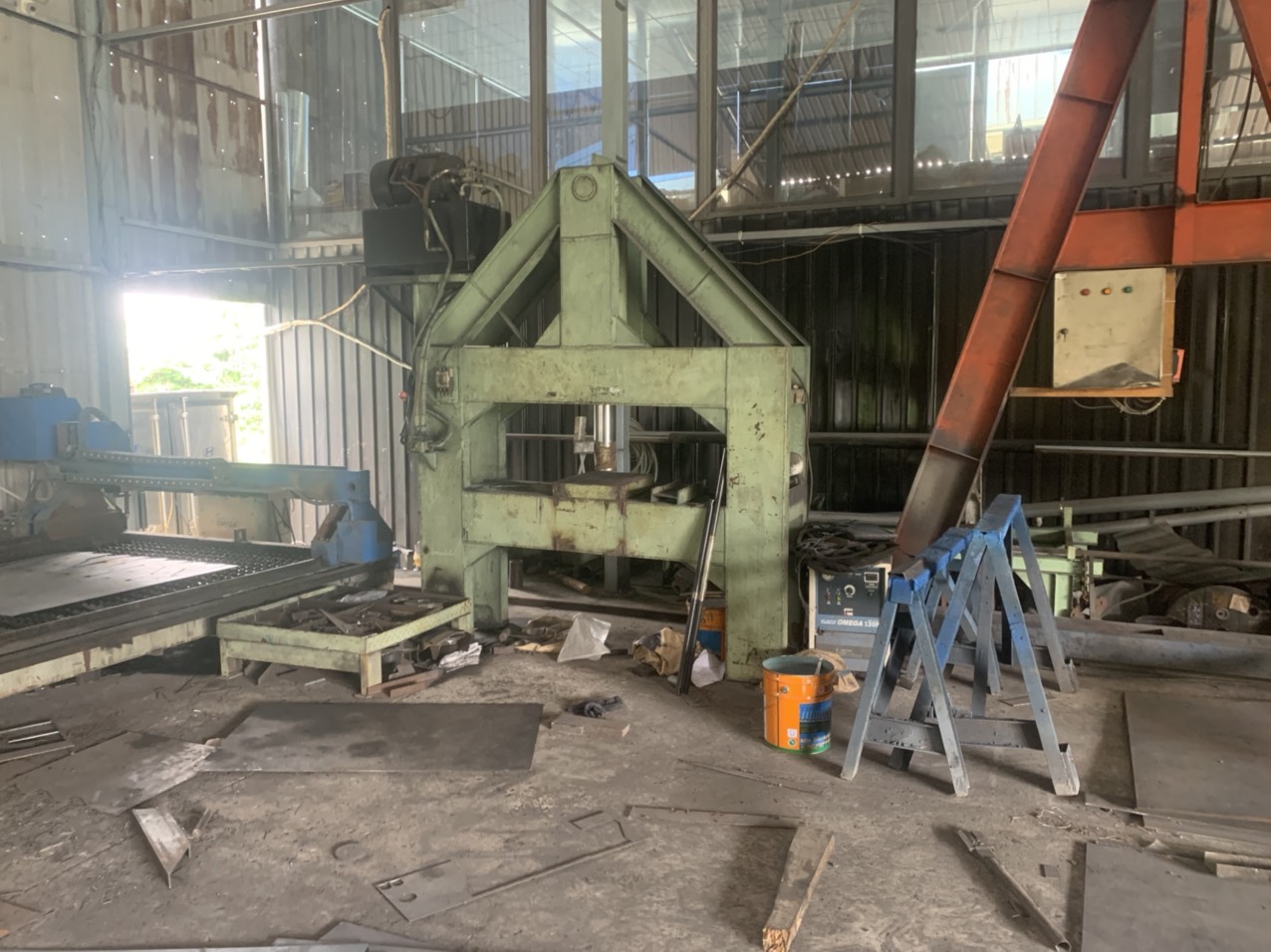
Not every backup solution is equal. Here is how we evaluate the power resilience of partner factories:
Layer 1: Uninterruptible Power Supply (UPS)
A UPS provides instant battery-backed power the moment grid voltage drops. Uninterruptible Power Supply (UPS) 8 For sheet metal fabrication, the UPS does not need to run the entire factory—it needs to keep CNC controllers, laser sources, and servo drives alive for the 10–30 seconds it takes a generator to start and stabilize. Without this bridge, machines crash-stop and require the full restart cycle described earlier.
Layer 2: Industrial Diesel Generator with Automatic Transfer Switch (ATS)
The generator is the workhorse. A properly sized unit—typically 500 kVA to 2,000 kVA depending on the shop—picks up the full electrical load within 10–30 seconds of an outage. The automatic transfer switch handles the handoff from grid to generator without manual intervention. Automatic Transfer Switch (ATS) 9 Factories that rely on manual switchover lose additional minutes and risk partial-load damage.
Layer 3: Energy Storage Systems and Microgrids
The most resilient facilities are investing in battery energy storage systems 10 and rooftop solar microgrids. These provide a buffer that smooths out voltage fluctuations even when the grid is nominally "on." They also reduce dependence on diesel fuel, which matters when outages are frequent and generator runtime costs add up.
What to Ask During a Supplier Audit
| Question | Good Answer | Red Flag |
|---|---|---|
| What is your UPS capacity and coverage? | "We have 200 kVA online UPS covering all CNC and laser lines" | "We don't have UPS; the generator starts fast enough" |
| Generator size and fuel autonomy? | "1,000 kVA diesel with 48-hour fuel reserve and ATS" | "We have a small portable generator for the office" |
| How often do you test backup systems? | "Monthly load-bank testing with documented logs" | "We test it when there's an outage" |
| Do you have power quality monitoring? | "Yes, we log voltage, frequency, and harmonics 24/7" | "Our electrician checks it sometimes" |
| Any energy storage or solar? | "We have 500 kWh BESS and 200 kW rooftop solar" | Not a red flag if absent, but a strong differentiator |
Cost Reality for Suppliers
Backup power systems are not cheap. A robust setup for a mid-sized sheet metal shop can cost $150,000 to $500,000 depending on capacity. This is one reason smaller fabricators in Vietnam often lack adequate backup—they cannot justify the capital expenditure. Larger integrated players like Hoa Phat and well-funded contract manufacturers absorb this cost as part of their infrastructure investment.
This cost divide is driving market consolidation. Vietnam's structural steel fabrication market reached USD 2.26 billion in 2026 and is projected to climb to USD 3.13 billion by 2033. The shops that invest in power resilience and energy-efficient equipment are winning larger, higher-margin contracts. The shops that do not are being pushed toward low-spec commodity work—or being acquired.
When we audit potential partner factories for our U.S. clients, backup power infrastructure is a non-negotiable checklist item. A facility without at least Layer 1 and Layer 2 protection does not make our approved supplier list, regardless of quoted price.
How do I protect my supply chain from the hidden costs of energy-related production downtime in Vietnam?
The most expensive problems are the ones you do not see on a quote. A client once told me his previous Vietnam supplier's unit price was 12% lower than ours. Six months later, after two late shipments, a batch rejection due to weld quality issues traced to power instability, and $15,000 in air freight to recover a missed deadline, the "savings" had evaporated. Protecting your supply chain means looking beyond price to supply chain resilience.
Protect your supply chain by selecting suppliers with verified backup power systems, demanding production redundancy across multiple facilities, building buffer inventory for critical parts, and including power-stability audit criteria in your supplier qualification process to avoid hidden costs of manufacturing disruptions.
Mapping the Hidden Costs
Production downtime from power instability creates costs that never appear on a purchase order but hit your P&L hard:
| Hidden Cost Category | How It Materializes | Typical Impact |
|---|---|---|
| Expedited shipping | Air freight to recover late delivery | 5x–10x normal freight cost |
| Scrap and rework | Parts damaged during power events | 2%–8% additional material cost |
| Line-down penalties | Your customer's assembly line waits | $5,000–$50,000+ per incident |
| Quality failures | Defective parts reach your warehouse | Sorting, return shipping, replacement orders |
| Supplier management overhead | Extra calls, visits, expediting effort | Internal labor and travel costs |
| Inventory buffers | Safety stock to hedge unreliable delivery | Carrying cost of 15%–25% of inventory value annually |
A Practical Protection Framework
Here is the approach we use for our own clients' projects:
Step 1: Pre-qualify on power infrastructure.
Before placing any order, we verify the supplier's backup power systems, power quality monitoring, and outage history. We request generator test logs and UPS maintenance records. This is part of our standard supplier audit alongside capability, quality system, and capacity checks.
Step 2: Build production redundancy.
For critical parts, we qualify at least two factories—ideally in different industrial parks or provinces—so that a localized grid problem does not shut down your entire supply. Geographic redundancy is especially important given that electricity demand growth patterns vary across Vietnam's regions.
Step 3: Contractual protections.
We include delivery milestone clauses and define the consequences of delays, including who bears expedited shipping costs. Fixed-price contracts are common in sheet metal fabrication, and they can trap a supplier who absorbs power-related waste without passing it through. Clear terms prevent disputes and incentivize the supplier to invest in reliability.
Step 4: Strategic buffer inventory.
For parts with long lead times or high criticality, we recommend clients hold two to four weeks of safety stock. This buffer absorbs minor delivery slips without triggering line-down emergencies at your end.
Step 5: Continuous monitoring.
Our Vietnam team maintains regular contact with partner factories, including real-time updates during known grid stress periods. We do not wait for a missed shipment to discover a problem. Proactive communication is one of the capabilities our U.S. clients value most.
The Bigger Picture: Vietnam's Energy Trajectory
Vietnam's government is working on grid improvements, expanding transmission lines, promoting Direct Power Purchase Agreements for renewable energy, and encouraging industrial energy conservation. These are positive steps. But grid upgrades take years, and the country's electricity demand growth—driven by rapid industrialization and construction—continues to outpace infrastructure expansion.
The metal fabrication equipment market in Vietnam is valued at USD 900 million and growing. As more shops add CNC lasers, robotic welders, and automated bending cells, the demand for stable, high-quality power will only increase. Suppliers who invest now in backup power, energy storage systems, and energy-efficient equipment will be the reliable partners of the next decade. Those who do not will struggle to serve buyers with mid-to-high quality requirements.
The shortage of certified welders and NDT technicians in Hanoi and Ho Chi Minh City adds another layer. When power instability forces rework, you need skilled hands to fix it. If those hands are scarce, rework takes longer and costs more. This compounding effect is why we view power stability not as one risk among many, but as a multiplier that amplifies every other operational challenge.
Conclusion
Power stability is the silent variable that determines whether Vietnam's sheet metal fabrication cost advantage actually reaches your bottom line. Vet suppliers on backup power, build redundancy, and treat energy resilience as a core qualification criterion—not an afterthought. To understand additional factors that affect delivery reliability, explore how Vietnam export policies impact sheet metal fabrication delivery stability and learn how to evaluate financial health of Vietnamese sheet metal fabrication suppliers as part of a comprehensive risk assessment.
Frequently Asked Questions
Why Do Outages Hit Sheet Metal Lines So Hard?
Sheet metal fabrication is a sequential process. A laser cutter 3 feeds a bending station, which feeds welding, then finishing. When power outages interrupt any single station, the entire downstream flow stops. Modern CNC equipment is designed to shut down automatically during voltage fluctuations 4 to protect its servo motors 5 and controllers. That safety feature prevents equipment damage but guarantees immediate production downtime.
How will Vietnam's power grid fluctuations affect my order delivery schedule?
A purchasing manager we work with in Texas once asked why his bracket order slipped by ten days. The root cause was not material shortage or labor. It was three unscheduled power outages in a single week at the fabrication shop, each one forcing a full machine restart and re-calibration cycle that ate hours of productive time.
Can unstable electricity compromise the precision and quality of my custom sheet metal parts?
During a recent pre-production trial for a pair of mirrored mounting brackets with tight bend tolerances—parts very similar to the multi-fold, multi-hole designs we regularly produce—our quality engineer in Vietnam flagged a recurring dimensional drift. The bend angles were wandering by nearly half a degree between the first and last piece in a batch. The culprit was not the tooling or the operator. It was voltage fluctuations feeding inconsistent force to the hydraulic press brake 6 .
Footnotes
1. Explains what a CNC press brake machine is and its importance in manufacturing. ↩︎
2. Defines power system stability and its importance in maintaining equilibrium after disturbances. ↩︎
3. Provides a comprehensive explanation of how laser cutting works and its process. ↩︎
4. Details the impact of voltage fluctuations on industrial equipment and production processes. ↩︎
5. Explains how servo motors work as part of a closed-loop system for precise control. ↩︎
6. Explains how hydraulic press brakes use hydraulic pressure to bend metal with precision. ↩︎
7. Defines thermal drift in machining and its causes, leading to dimensional shifts. ↩︎
8. Found a real, working replacement URL for Uninterruptible Power Supply (UPS) from Wikipedia, an authoritative source. ↩︎
9. Explains how an ATS automatically transfers power from the primary source to a backup generator. ↩︎
10. Defines energy storage as capturing and holding energy for later use, including various solutions. ↩︎