
Pre-screening stamping parts suppliers from Vietnam online is now unavoidable EVFTA 1. I learned this after our Vietnam team walked into a “modern factory” that existed only on a website. That mistake costs buyers tooling money and months.
To pre-screen stamping parts suppliers from Vietnam online, verify business registration and certifications, analyze the press list and toolroom equipment, request SPC and Cpk data, review Alibaba and Google profiles for red flags, and test communication through a detailed RFQ before committing to samples or audits.
A structured remote process filters out most weak candidates before you spend a dollar on flights or tooling. Below, I break the process into four practical checks you can run from your desk.
What Should I Check on a Vietnamese Stamping Supplier's Website Before Reaching Out?
A supplier's website is your first evidence file. When our Vietnam office screens stamping candidates for U.S. clients, we treat the equipment page as more important than the "About Us" story.
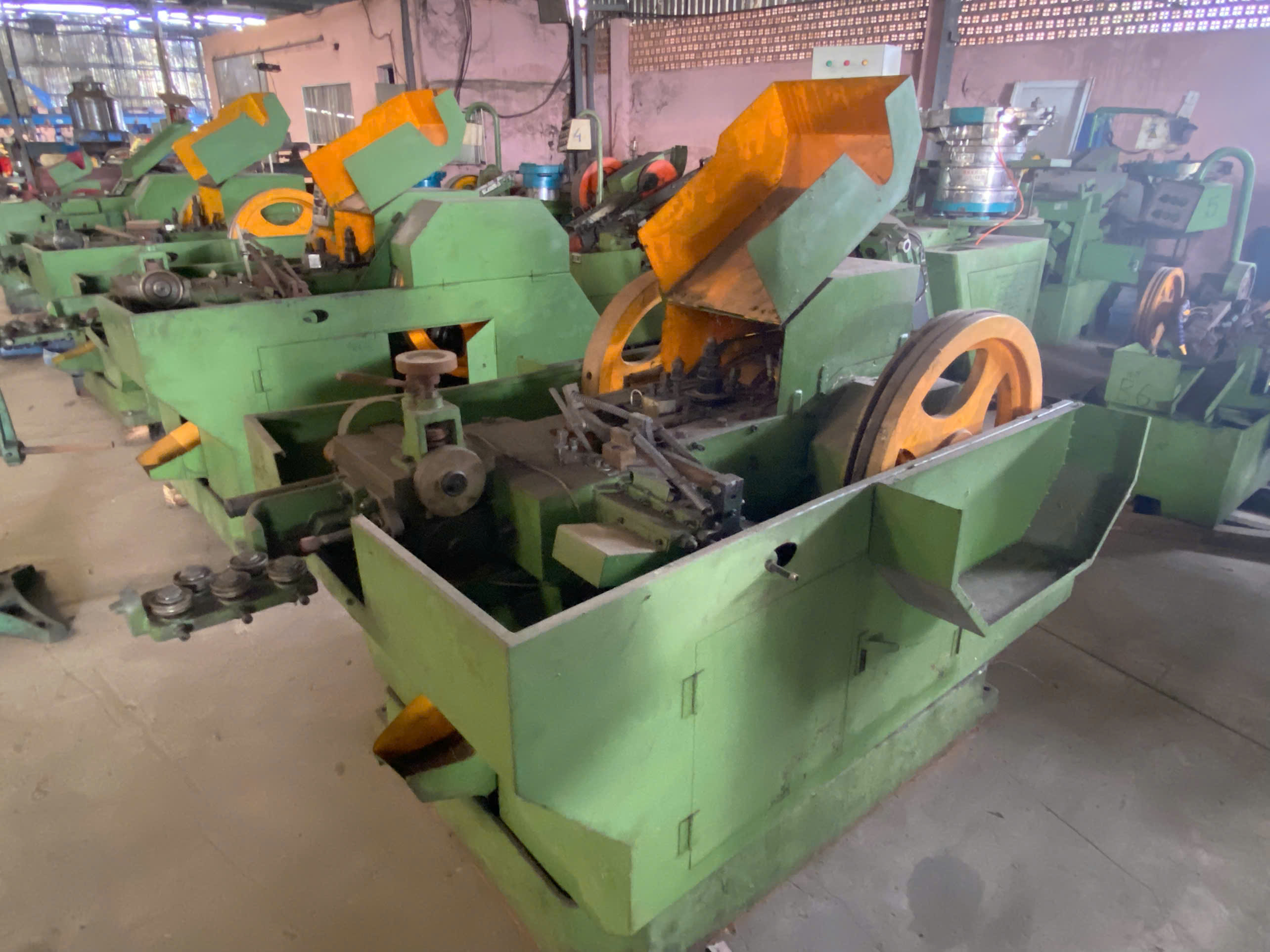
Check the press inventory with tonnage details, in-house toolroom equipment such as Wire EDM and surface grinders, automated coil feeding lines, downstream services like plating or welding, listed certifications, export markets served, and real factory photos rather than stock imagery.

Most buyers skim a supplier site in two minutes. I suggest spending twenty. The website tells you what the supplier thinks matters, and what they leave out usually matters more.
Read the Press List Like an Engineer
Start with the equipment page. A serious stamping supplier lists press types, tonnage, and quantity. You want tonnage headroom. If your bracket needs 110 tons and their biggest press is 110 tons, that is a problem. Material lot variation will push them over capacity. We look for at least 20–30% headroom above the calculated requirement.
Press type also tells a story. Mechanical presses dominate high-volume blanking. Servo presses signal flexibility and newer investment. Hydraulic presses point to deep-draw capability. A mixed fleet suggests real production breadth.
Confirm the Toolroom Exists
In our experience sourcing stamped brackets and clips across Vietnam, the in-house toolroom is the single best predictor of program success. A supplier without Wire EDM, surface grinders, and CNC milling on-site must outsource die repairs. That turns a two-day fix into a three-week delay. Many Vietnamese stamping shops outsource tooling entirely, and their websites quietly omit the toolroom section. Treat that omission as a warning.
| Website Element | What Good Looks Like | Red Flag |
|---|---|---|
| Press list | Tonnage, brand, quantity stated | Vague "many presses" claims |
| Toolroom | Wire EDM, grinders, CNC shown | No toolroom mentioned |
| Coil lines | Decoiler, straightener, servo feeder | Only hand-fed sheet photos |
| Finishing | In-house plating, powder coat, welding | Everything outsourced |
| Photos | Actual shop floor, dated images | Stock photos, renders only |
Check Location and Downstream Services
Note the factory address. Clusters like Bac Ninh, Dong Nai, and Binh Duong offer better logistics, skilled labor, and export-zone access. Also check whether bending, tapping, welding, and plating are done in-house. For parts like zinc-plated brackets, in-house finishing removes an entire layer of supply-chain risk.
How Can I Verify a Stamping Parts Supplier's Certifications and Quality Records Online?
Early in one project, a supplier emailed us a crisp ISO 9001 certificate 2. The registry check showed it had expired eighteen months earlier. Paper is cheap; verification is free.
Verify ISO 9001 and IATF 16949 certificates on the issuing body's global registry, confirm the scope covers stamping processes, then request SPC charts with Cpk of 1.33 or higher, full First Article Inspection reports, and Level 3 PPAP examples from prior programs.

Quality verification online has two layers: certificates and actual process data. Both can be checked remotely, and both catch different kinds of weak suppliers.
Verify the Certificate, Not the PDF
Anyone can attach a certificate to an email. Instead, take the certificate number and check it on the certification body's online registry. Confirm three things: the certificate is current, it belongs to the legal entity you are talking to, and the scope statement covers metal stamping — not just "trading" or "assembly." We have seen trading companies present a partner factory's certificate as their own. The scope line exposes this instantly.
For automotive or high-reliability parts, IATF 16949 3 matters. For general industrial brackets, ISO 9001 is the baseline. ISO 14001 is a bonus signal for environmental compliance, which many U.S. and European end customers now require.
Demand Real Process Data
Certificates prove a system exists. Data proves it works. Here is what we request from every stamping candidate before shortlisting:
| Document | What It Proves | Minimum Standard |
|---|---|---|
| SPC charts | Dimensional stability over time | Live charts, not summaries |
| Cpk values | Process capability on critical dims | Cpk ≥ 1.33 |
| FAI report | Ability to measure to the drawing | Full dimensional layout |
| PPAP package | Automotive-grade discipline | Level 3 from a prior program |
| Material certs | Traceability of steel or aluminum | Mill certs per lot |
A supplier who sends only a summary report saying "all dimensions OK" is telling you they do not run real SPC. When we run PPAP submissions 4 for our clients, the difference between a factory that lives with control charts and one that fakes them shows up within one email exchange. Ask a specific question — "show me the Cpk trend 5 for hole position on a similar bracket" — and watch how they respond. Confident suppliers answer with data in a day. Weak suppliers stall or send marketing brochures.
What Red Flags Should I Watch for When Reviewing a Vietnam Stamping Supplier's Alibaba or Google Profile?
There is a trade-off I weigh constantly: a slow-responding domestic Vietnamese factory can still deliver excellent parts, while a fast-talking profile with perfect English can hide an empty workshop. Speed alone proves nothing.
Watch for stock photos instead of real factory images, vague product ranges spanning unrelated industries, missing business license details, mismatched company names, no verifiable export history, complaints found by searching the name with "scam" or "review," and unclear material sourcing that raises transshipment risk.

Alibaba and Google profiles reward marketing skill, not manufacturing skill. Your job is to separate the two. Here is the red-flag checklist we run before any supplier reaches our shortlist of three to five candidates.
The Red Flag Gallery
- Everything-for-everyone listings. A profile selling stamped brackets, LED lights, and garden furniture is a trader, not a stamping factory.
- Stock or rendered photos. Real factories photograph real presses, with real operators and real clutter.
- Name mismatches. The Alibaba storefront name, the license name, and the bank account name should match. Cross-check the tax code on Vietnam's National Business Registration Portal.
- No export track record. Look for transaction history, buyer reviews, and named export markets. A factory that has never shipped to the U.S. or Europe will struggle with your documentation expectations.
- Silence on material sourcing. If coil steel comes from China but the profile hides it, you face Rules of Origin 6 problems under agreements like the EVFTA, plus potential anti-dumping exposure 7. Honest suppliers explain their material chain openly.
- Refusing video calls. Any supplier who resists a live factory tour is hiding something. Photos can be borrowed; a walk past the press line cannot.
Weighing Domestic vs. Foreign-Owned Factories
Our Vietnam team screens both types. Foreign-owned plants — Japanese, Korean, Taiwanese — usually reply faster and communicate in cleaner English. Domestic factories often quote lower and can produce excellent work, but responses come slower. A slow reply is not automatically a red flag. A vague reply is. Judge the content of answers, not just the speed. We have placed successful programs with domestic shops precisely because we could bridge the language gap locally, and the cost advantage was real.
How Do I Confirm a Vietnamese Stamping Supplier's Communication and Project Management Skills Before Placing an Order?
A purchasing manager I work with once told me his worst suppliers all shared one trait: they said "yes" to everything and asked zero questions. That observation reshaped how we test candidates.
Send a detailed RFQ with material grade, tolerances, finish, and volumes, then score the response for speed, completeness, and technical questions asked. Follow with a live video factory tour and require production-intent samples with a clear timeline to test real project management.

Communication failures cause more sourcing disasters than machine failures. A supplier who misses a plating callout on your drawing will ship you a container of scrap with full confidence. So test communication deliberately, before money moves.
The RFQ Stress Test
Build a complete spec package: material grade, thickness, dimensions with tolerances, surface finish, annual volume, and certification requirements. Vague inquiries attract the wrong factories. Detailed ones attract engineers. Then score what comes back.
| Signal | Strong Supplier | Weak Supplier |
|---|---|---|
| Response time | 24–48 hours with substance | A week, or instant but empty |
| Questions asked | Challenges tolerances, asks about finish | No questions, quick lowball quote |
| Quote detail | Tooling and part price separated, lead times stated | One lump-sum number |
| Drawing review | Flags a tight tolerance or missing datum | Accepts everything silently |
| Tooling timeline | Realistic 4–8 weeks with milestones | "Very fast, no problem" |
A supplier who questions your drawing is a gift. When we co-develop stamped parts with clients, the factories that catch a conflicting tolerance at the RFQ stage are the same ones that hit first-pass PPAP approval later.
Video Tours and the Sample Protocol
Next, schedule a live video call on the shop floor. Ask them to walk to the press that would run your part, show the coil line, and open the toolroom door. Ask who built the dies currently in the presses. Hesitation there tells you tooling is outsourced.
Finally, require production-intent samples. Handmade samples prove nothing about progressive-die capability. Set clear expectations for sample timing, quality criteria, and cost responsibility, and note whether the supplier hits its own committed dates. A factory that misses its sample deadline will miss your production deadline. Any factory that resists providing samples at all should exit your shortlist immediately.
Conclusion
Online pre-screening cannot replace an on-site audit, but it makes the audit targeted and cheap. Weak suppliers cost you tooling money, schedule slips, and rework. A disciplined remote workflow — website equipment analysis, registry-verified certifications, Cpk data, profile red-flag checks, and an RFQ stress test — eliminates most bad candidates before you book a flight. I have watched this process save clients entire tooling budgets. Run it every time, shortlist three to five factories, pilot a batch, and walk into your factory visit already knowing exactly what to verify.
Frequently Asked Questions
What Should I Check on a Vietnamese Stamping Supplier's Website Before Reaching Out?
A supplier's website is your first evidence file. When our Vietnam office screens stamping candidates for U.S. clients, we treat the equipment page as more important than the "About Us" story.
How Can I Verify a Stamping Parts Supplier's Certifications and Quality Records Online?
Early in one project, a supplier emailed us a crisp ISO 9001 certificate 2 . The registry check showed it had expired eighteen months earlier. Paper is cheap; verification is free.
What Red Flags Should I Watch for When Reviewing a Vietnam Stamping Supplier's Alibaba or Google Profile?
There is a trade-off I weigh constantly: a slow-responding domestic Vietnamese factory can still deliver excellent parts, while a fast-talking profile with perfect English can hide an empty workshop. Speed alone proves nothing.
Footnotes
1. Official EU source clarifies Rules of Origin requirements under the EU-Vietnam Free Trade Agreement. ↩︎
2. Official ISO page defines the quality management standard buyers must verify. ↩︎
3. Background on the automotive quality standard mentioned as a certification benchmark. ↩︎
4. Defines the automotive-grade approval process referenced for verifying supplier discipline. ↩︎
5. Explains the statistical measure buyers request to verify supplier process capability. ↩︎
6. WTO explanation of trade rules relevant to sourcing steel and avoiding customs issues. ↩︎
7. Official WTO resource clarifying anti-dumping measures relevant to material sourcing risk. ↩︎