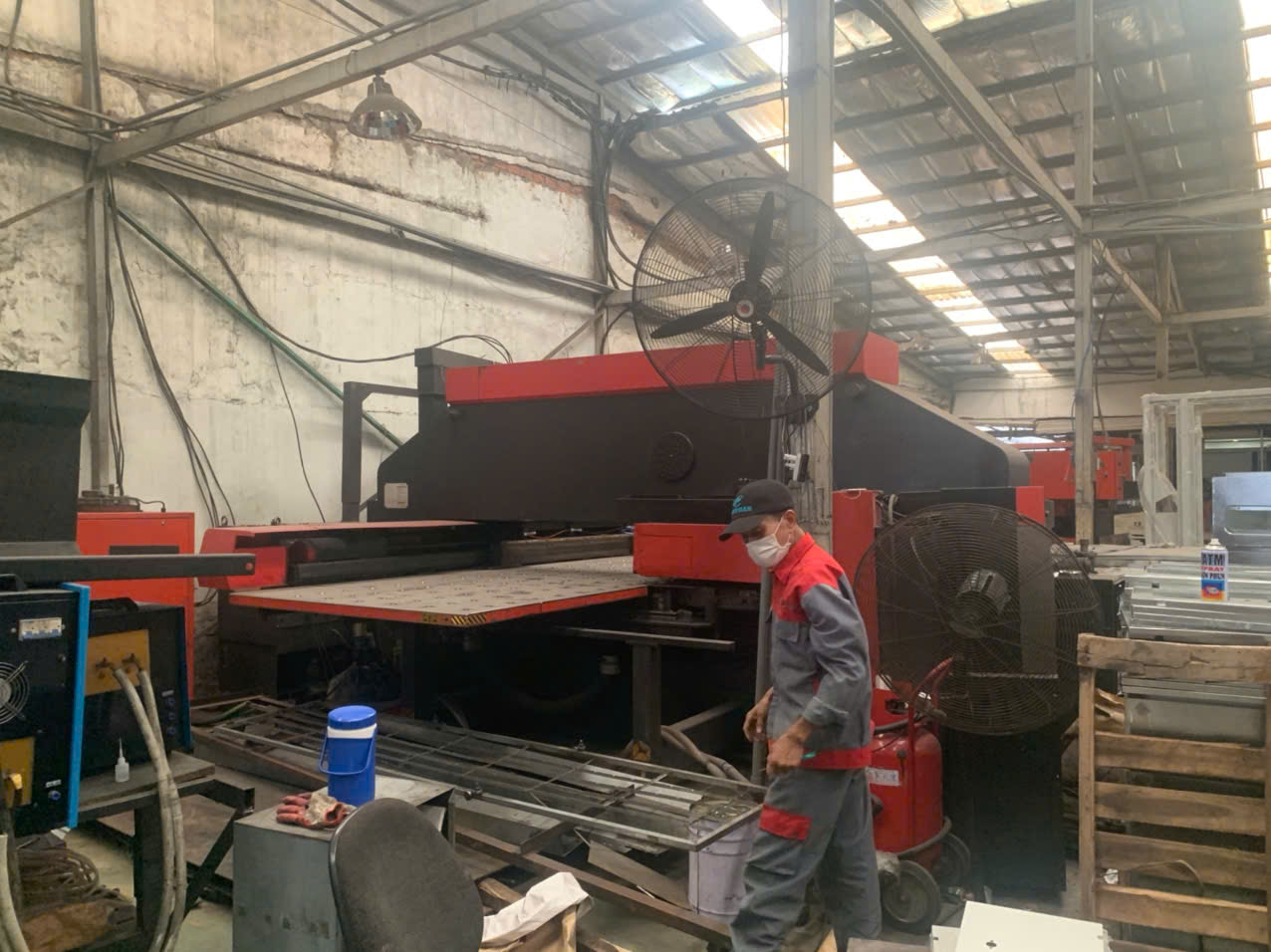

Last year, one of our U.S. clients discovered a near-identical copy of their proprietary mounting bracket selling on a competitor’s catalog—traced back to a previous Vietnamese supplier who had kept the CAD files after the contract ended.
To protect IP and prevent drawing leaks when sourcing stamping parts from Vietnam, you must layer local IP registration, enforceable NNN agreements, digital file controls, factory security audits, and compartmentalized production across multiple suppliers—because no single safeguard is enough on its own.
This article walks through the exact steps our team in Vietnam uses to keep client designs safe local IP registration 1. Each section below covers a specific risk area and gives you practical actions you can take before your next RFQ.
How do I ensure my Non-Disclosure Agreements are legally enforceable when sourcing stamping parts from Vietnam?
A common mistake we see from new clients is assuming their U.S.-drafted NDA will hold up in a Vietnamese court. It won't—at least not without significant modifications Digital Rights Management (DRM) 2. Our Vietnam office has helped restructure dozens of supplier agreements to close this gap.
To make your non-disclosure agreement enforceable in Vietnam, draft it under Vietnamese law, include non-use and non-compete clauses alongside confidentiality, specify Vietnamese jurisdiction for disputes, and execute the document in both English and Vietnamese with liquidated damages for breach.

Why a Standard NDA Falls Short
A basic NDA only covers confidentiality. It does not stop a supplier from using your design to make parts for someone else Vietnamese legal system 3. It does not stop them from passing your files to a subcontractor. In Vietnam's legal system, trade secrets protection requires the owner to prove they took "appropriate measures" to maintain secrecy. A vague, one-page NDA rarely meets that standard.
What you need is an NNN agreement 4—non-disclosure, non-use, and non-compete. This is the contractual architecture that experienced sourcing teams rely on.
Key Elements of an Enforceable NNN Agreement
| Element | What It Does | Why It Matters in Vietnam |
|---|---|---|
| Non-Disclosure | Prevents sharing your data with third parties | Courts require proof of "appropriate measures" |
| Non-Use | Prohibits using your designs for any purpose other than your order | Stops suppliers from making copies for other buyers |
| Non-Compete | Bars the supplier from producing competing products | Prevents structural IP risk from factories with overlapping product lines |
| Liquidated Damages | Sets a fixed penalty per breach, no need to prove actual loss | Vietnamese courts may not calculate damages the way U.S. courts do |
| Vietnamese Language Version | Ensures the contract is understood and enforceable locally | Vietnamese courts require documents in the local language |
| Vietnamese Jurisdiction | Specifies People's Courts of Vietnam for disputes | A U.S. jurisdiction clause is nearly impossible to enforce in Vietnam |
Register Before You Share
Vietnam operates on a "first-to-file" system. first-to-file system 5 This means the first person to register a trademark, patent, or industrial design owns it—regardless of who created it. If your supplier files your stamping die geometry as their own industrial design before you register, you face an uphill legal battle.
Our standard recommendation to clients: file your industrial design registrations 6 and record your copyrights at the Copyright Office of Vietnam before you send your first tech pack. Trademark registration in Vietnam takes 12 to 18 months, so start early. Patent registration Vietnam processes also require lead time, so plan accordingly. Working with qualified Vietnamese legal counsel from the start saves time and money.
Tooling Ownership Must Be Explicit
Your contract manufacturing agreement must state clearly that all tooling, dies, samples, and outputs belong to you. This includes anything developed collaboratively. If the contract is silent on tooling ownership, the supplier may claim it under Vietnamese law. For a deeper dive into this topic, see our guide on how to define IP and tooling ownership when sourcing sheet metal fabrication.
What specific security protocols should I look for during a factory audit to prevent my technical drawings from being leaked?
During a recent supplier audit in Ho Chi Minh City, our quality team noticed an open shared drive on the factory floor containing unprotected DXF files from multiple international clients—no passwords, no access logs, no file tracking. That single observation eliminated the factory from consideration.
During a factory audit, look for restricted access to design files, password-protected workstations, logged entry to engineering areas, prohibition of personal USB devices, documented subcontractor disclosure policies, and clear data destruction procedures for completed projects.

What a Secure Factory Looks Like
Supplier due diligence goes beyond checking machine capability and on-time delivery rates. You need to evaluate Vietnamese supplier capabilities at a physical and digital level, including how the factory handles confidential information. Here is what our audit team checks:
Physical Security Checklist
- Engineering and design rooms are separated from the production floor with controlled access (badge or key).
- Visitors cannot bring cameras or personal devices into design areas.
- Printed drawings on the shop floor have version control stamps and are collected and shredded after use.
- The factory has a documented policy for handling client IP.
Digital Security Checklist
| Security Protocol | What to Verify | Red Flag |
|---|---|---|
| File access control | Role-based permissions on CAD workstations | All staff can access all client files |
| USB/external media policy | USB ports disabled or monitored | No policy; staff use personal drives freely |
| Network segmentation | Engineering network separated from general office | Single flat network with no separation |
| Access logging | Logs showing who opened which file and when | No logging system in place |
| Data retention/destruction | Policy to delete or return files after project ends | Files kept indefinitely with no client consent |
| Email restrictions | Outbound email filters on design file types | Design files can be emailed to personal accounts |
Unannounced Audits and Shadow Programs
Scheduled audits are useful, but factories prepare for them. We recommend establishing a "shadow factory" audit program—unannounced, independent third-party inspections that verify real-world practices. This is especially important for design infringement prevention, because the gap between documented policy and daily behavior can be wide.
During one unannounced visit, our team discovered a Vietnamese supplier had subcontracted a secondary bending operation to a smaller shop without disclosure. The subcontractor had full access to the client's bracket drawings. This is exactly the kind of supply chain security breakdown that contracts alone cannot prevent.
Vetting Beyond the Factory Floor
Factories sourced from online directories without references carry fundamentally higher risk. A supplier with decades of experience serving international brands has had to develop IP controls to keep those accounts. Look for ISO 27001 7 or similar information security certifications. Ask for references from other U.S. or European clients. If the factory gives vague answers about file access, version control, or subcontracting, walk away.
How can I control the distribution of my proprietary CAD files within a Vietnamese supplier's internal production team?
One trade-off we weigh on every project is how much design information to share. Give too little, and the factory cannot produce the part correctly. Give too much, and you expose your full product architecture to dozens of people you have never met.
Control CAD file distribution by sharing only production-critical data, watermarking every file with your company name and date, using DRM-protected formats, requiring access logs from the supplier, and contractually prohibiting redistribution to unauthorized personnel or subcontractors.

The Principle of Minimum Necessary Disclosure
Our engineering team in Vietnam follows a strict rule: share only what the supplier needs to make the part, nothing more. If a stamping supplier only handles the blanking and forming operations, they do not need the full assembly drawing. They do not need to know what product the bracket goes into or who the end customer is.
This is the digital equivalent of compartmentalized military intelligence. No single supplier sees the full picture.
Practical File Control Steps
-
Convert files to step or PDF format rather than sharing native SolidWorks or AutoCAD files. Native files contain design trees, revision history, and parametric data that makes copying and modification trivially easy.
-
Watermark every file. Every drawing that leaves our system carries the client's brand name, the date, and a unique project code. If a drawing surfaces where it should not, the watermark traces it back to the source.
-
Use Digital Rights Management (DRM). DRM solutions let you control whether a file can be printed, copied, forwarded, or viewed after a certain date. This is not foolproof—someone can always photograph a screen—but it raises the barrier significantly.
-
Require access logs. Your contract manufacturing agreement should require the supplier to maintain logs showing which employees accessed your files, when, and for what purpose. Review these logs during audits.
-
Confirm subcontractor access in writing. Before any subcontractor touches your data, you must approve it in writing. The subcontractor must sign the same confidentiality clauses as the primary supplier.
Multi-Source Manufacturing as a Design Firewall
A strategy we use for clients with high-value IP is splitting production across two or three suppliers. One supplier stamps the blanks. Another handles secondary operations like bending or tapping. A third does surface finishing. No single factory holds enough information to replicate the complete part.
| Strategy | IP Risk Level | Operational Complexity | Best For |
|---|---|---|---|
| Single-source (one factory does everything) | High | Low | Low-value, non-proprietary parts |
| Dual-source (two factories, split operations) | Medium | Medium | Mid-complexity stamping with some proprietary geometry |
| Multi-source (three+ factories, compartmentalized) | Low | High | High-value IP, custom die designs, competitive parts |
Be aware: some suppliers will push back on multi-source arrangements or try to consolidate work. If a supplier pressures you to give them more of the process after you have explained your multi-source strategy, that is a warning sign of misaligned incentives.
What steps should I take to protect my intellectual property during the co-development and prototyping phase in Vietnam?
The prototyping phase is where IP risk is highest and most overlooked. A client once shared an early-stage concept drawing with a potential stamping supplier for quoting purposes—no contract signed, no NDA in place. Three months later, a similar part appeared in the supplier's own product catalog. That experience reshaped how we manage co-development projects.
During co-development, sign an NNN agreement before sharing any design data, register industrial designs in Vietnam before prototyping begins, document all contributions by each party, retain ownership of all iterations and tooling in writing, and limit prototype samples to controlled quantities.

The Co-Development Trap
Co-development is common in custom stamping. Your engineering team designs the part geometry, and the Vietnamese supplier's tool shop develops the progressive die 8 or transfer die to produce it. The problem: who owns the die design? Who owns the process innovations the supplier developed to make your part feasible?
Under intellectual property law Vietnam, if the contract does not specify, the party that created the work may claim ownership. If the supplier's engineer redesigned your bracket flange to improve formability, they could argue that modification is their IP.
Step-by-Step Protection During Prototyping
Step 1: Sign the NNN before sharing anything. Not after the first meeting. Not after the factory tour. Before a single drawing file changes hands.
Step 2: Register your industrial designs. File with the Intellectual Property Office of Vietnam. This covers the visual appearance and geometry of your stamping parts. Do this before prototyping starts.
Step 3: Document every contribution. Keep records of what your team designed and what the supplier contributed. Use email trails, meeting notes, and version-controlled drawings. This documentation is critical evidence if a dispute arises.
Step 4: Define ownership in the contract. State explicitly that all designs, modifications, tooling, dies, prototypes, and production outputs are your property. This includes any design changes the supplier suggests during co-development. The contract must cover "collaboratively developed materials" by name. Learn more about how to negotiate IP infringement liability with sheet metal fabrication suppliers to strengthen these clauses.
Step 5: Control sample quantities. During prototyping, limit the number of samples produced. Account for every piece. Require the supplier to return or destroy any samples not shipped to you.
Step 6: Record IP with Vietnamese Customs. Once you have registrations in hand, submit them to Vietnam Customs so officials can monitor and intercept any infringing exports. This is an enforcement tool many buyers overlook.
Blockchain and Emerging Tools
Some companies are exploring blockchain technology 9 to create an immutable record of design creation and ownership. While still emerging in this industry, a timestamped blockchain record of your original design file can serve as strong evidence in IP disputes. We are tracking this development and recommend clients consider it for high-value, long-lifecycle parts.
Integrate IP as a Supplier KPI
Finally, treat IP compliance as a key performance indicator in your supplier scorecard. Link it to financial consequences—future order volumes, payment terms, or contract renewal. When a supplier knows that IP violations directly affect their revenue, the culture of respect for confidential data strengthens.
Conclusion
Protecting IP when sourcing stamping parts from Vietnam demands layered action—registration, enforceable contracts, digital controls, audits, and compartmentalized production. Start these steps before your first RFQ, not after a leak occurs.
Frequently Asked Questions
How do I ensure my Non-Disclosure Agreements are legally enforceable when sourcing stamping parts from Vietnam?
A common mistake we see from new clients is assuming their U.S.-drafted NDA will hold up in a Vietnamese court. It won't—at least not without significant modifications Digital Rights Management (DRM) 2 . Our Vietnam office has helped restructure dozens of supplier agreements to close this gap.
What specific security protocols should I look for during a factory audit to prevent my technical drawings from being leaked?
During a recent supplier audit in Ho Chi Minh City, our quality team noticed an open shared drive on the factory floor containing unprotected DXF files from multiple international clients—no passwords, no access logs, no file tracking. That single observation eliminated the factory from consideration.
How can I control the distribution of my proprietary CAD files within a Vietnamese supplier's internal production team?
One trade-off we weigh on every project is how much design information to share. Give too little, and the factory cannot produce the part correctly. Give too much, and you expose your full product architecture to dozens of people you have never met.
Footnotes
1. Overview of intellectual property protection and registration in Vietnam. ↩︎
2. Replaced with the Wikipedia page for Digital Rights Management (DRM), an authoritative and comprehensive source for the definition. ↩︎
3. Provides an overview of the structure and characteristics of Vietnam’s judicial system. ↩︎
4. Explains the components and importance of an NNN agreement for IP protection. ↩︎
5. The original Wikipedia page for ‘first-to-file and first-to-invent’ is now accessible with a slightly corrected URL (underscore instead of hyphen). ↩︎
6. Details the process and importance of industrial design registration in Vietnam. ↩︎
7. Official standard for information security management systems. ↩︎
8. Provides a comprehensive guide to the progressive die stamping process. ↩︎
9. Discusses how blockchain technology can transform IP registration and protection. ↩︎