I’ve watched proprietary CAD files 1 leak to competitors because a buyer relied on a single-page NDA — protecting OEM design IP when sourcing sheet metal fabrication demands far more.
Protect OEM design IP when sourcing sheet metal fabrication by executing a bilingual NNN agreement before any disclosure, followed by a Product Development Agreement assigning foreground IP and tooling ownership to you, and a Manufacturing Agreement locking exclusivity, audit rights, quality control, and enforceable remedies before any purchase order ships.
Below, I break down the exact legal sequence, critical clauses, supplier vetting steps, and data security tactics we use at DEWIN when helping U.S. clients source custom sheet metal parts from Southeast Asia bilingual NNN agreement 2. Each section is built from real sourcing scenarios our teams in Vietnam and China handle every week.
How can I ensure my sheet metal design IP is legally enforceable when sourcing from Southeast Asia?
A lesson we learned early in our Vietnam office: a U.S. client once shared bend-line data with a local fabricator under a simple English-only NDA, only to discover near-identical brackets listed on a competitor's catalog six months later.
Make your sheet metal design IP enforceable in Southeast Asia by signing a bilingual NNN — non-disclosure, non-use, non-circumvention — governed by the supplier's local jurisdiction, then layering a Product Development Agreement and a Manufacturing Agreement that assign all intellectual property ownership and tooling ownership to you before any file is shared.
Why a Standard NDA Falls Short
A traditional NDA only prevents disclosure. It does not stop the supplier from using your design to make parts for others. It does not block them from selling look-alike products through a different channel. These two gaps — non-use and non-circumvention — are exactly where most IP leaks happen in contract manufacturing.
An NNN agreement closes both gaps. It adds a non-use clause that forbids the supplier from using your proprietary information for any purpose other than quoting and manufacturing your parts. It also adds a non-circumvention agreement 3 that prevents the supplier from bypassing you to sell directly to your customers.
Bilingual, Jurisdiction-Aligned Contracts
For foreign suppliers, an English-only NDA is weak. Courts in Vietnam, Taiwan, or India may not enforce it. A bilingual NNN — written in both English and the supplier's language — governed by the supplier's jurisdiction is far more enforceable. When we draft contracts for our clients, we align governing law, venue, and language across all three documents to avoid loopholes.
The Three-Document IP Protection Sequence
Think of IP protection as a three-step gate. Each document covers a different phase of the sourcing relationship.
| Step | Document | When to Sign | What It Protects |
|---|---|---|---|
| 1 | NNN Agreement | Before any technical discussion | Concepts, contacts, channels — prevents disclosure, use, and circumvention |
| 2 | Product Development Agreement 4 (PDA) | Before prototype or co-development | Foreground IP, tooling ownership, editable CAD access, change control |
| 3 | Manufacturing Agreement 5 | Before first purchase order | Exclusivity, quality control, confidentiality clauses, audit rights, remedies |
All three documents must share aligned legal terms. If your NNN is governed by Vietnamese law but your Manufacturing Agreement defaults to English common law, you create a gap a savvy supplier can exploit. Our project management team reviews this alignment on every new custom parts program we handle.
A Meeting-Ready Decision Checklist
Before you sit down with any sheet metal fabricator, confirm these items:
- Is the NNN bilingual and governed by the supplier's jurisdiction?
- Does the PDA assign all foreground IP and tooling to you?
- Does the Manufacturing Agreement include exclusivity, audit rights, and post-production file destruction?
- Are all three documents aligned on governing law and dispute venue?
If the answer to any question is "no," do not share your CAD files yet.
What critical clauses must I include in my NDA to protect my proprietary CAD files?
One trade-off we weigh on every new project is speed versus security. Buyers want quotes fast, but sharing unprotected CAD files to accelerate timelines is a risk that can cost far more than a few days of delay.
Your NDA must include a precise definition of confidential information covering CAD files and bend-line data, strict receiving-party obligations limiting internal access, permitted-use restrictions, indefinite duration for trade secrets, mandatory return or destruction of files, governing law aligned to the supplier's jurisdiction, and clear remedies for breach.
Core NDA/NNN Clauses Explained
Each clause in your agreement serves a specific purpose. Here is how they map to sheet metal fabrication:
| Clause | Purpose | Sheet Metal–Specific Example |
|---|---|---|
| Definition of Confidential Information 6 | Scope what is protected | CAD files, bend lines, material specs, tolerances, pricing, tooling drawings |
| Receiving Party Obligations | Limit who can access data | Only authorized engineers on the project; no USB drives, no personal email |
| Permitted Use | Restrict how data is used | Quoting and manufacturing your parts only — not for other clients |
| Duration | Set how long protection lasts | Indefinite for trade secrets; 3–5 years minimum for other proprietary information |
| Return/Destruction | Mandate file handling post-project | Certified destruction of all CAD files and print copies after production ends |
| Governing Law & Jurisdiction | Define where disputes are resolved | Supplier's local court, in the supplier's language |
| Remedies for Breach | Spell out consequences | Liquidated damages 7, injunctive relief, IP assignment clause reversal |
Why "Confidential Information" Must Be Explicitly Defined
Many generic NDAs use vague language like "all information shared." That is not enough. You need to explicitly list CAD files, 3D models, 2D drawings, process parameters, material specifications, tolerance stacks, bend sequences, and any custom tooling designs. If it is not listed, a court may decide it is not covered.
Receiving Party Obligations — The Internal Security Gate
The clause should require the manufacturer to limit internal access to only those employees who need the data to perform their work. It should prohibit copying files to personal devices. It should mandate that the supplier track who accessed what and when. In our experience coordinating between U.S. clients and Asian fabricators, we have seen cases where a single engineer's USB drive carried an entire product design out the door. A strong confidentiality clause backed by internal access controls prevents this.
Remedies That Actually Deter
A remedy clause is only useful if it creates real consequences. Liquidated damages — a pre-agreed monetary penalty — are faster to enforce than proving actual losses in court. For high-value sheet metal designs, we recommend a liquidated damages figure significant enough to deter breach but reasonable enough that a court will uphold it.
How do I vet a fabrication partner's internal security protocols before sharing my custom designs?
During a recent supplier audit at a facility outside Ho Chi Minh City, our Vietnam team discovered that client CAD files were stored on an unencrypted shared drive accessible to every employee — including the front desk. That single finding changed how we evaluate every new fabrication partner.
Vet a fabrication partner's security by auditing their digital file storage, confirming ISO 9001 certification and an internal patent portfolio, reviewing sub-supplier transparency policies, verifying role-based access controls, and demanding documented IP protection procedures before sharing any custom designs.
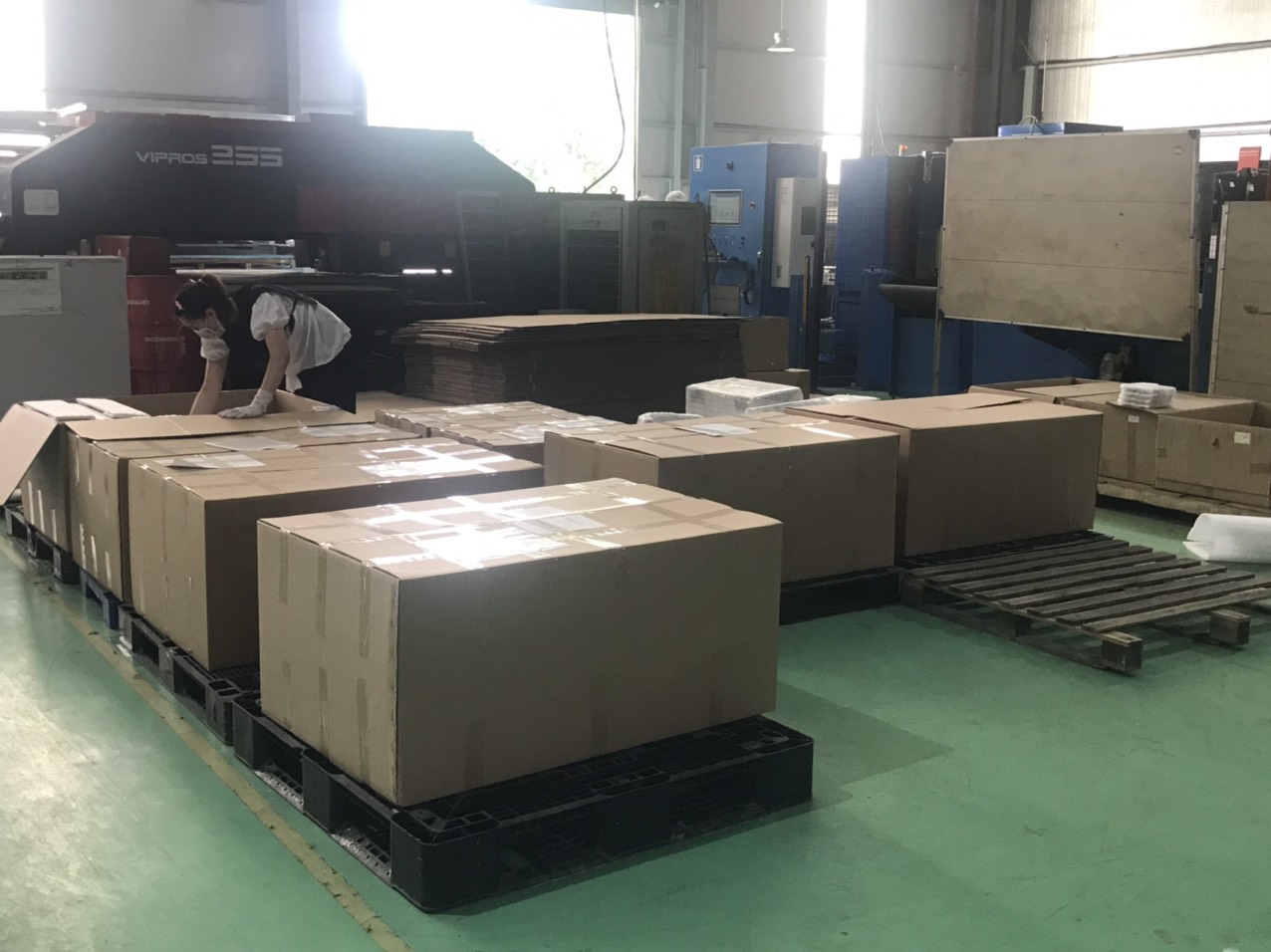
A Supplier Evaluation Scorecard
We developed an internal scorecard to rate potential sheet metal fabricators on IP protection readiness. Here is a simplified version you can adapt:
| Evaluation Criteria | Low Risk (3 pts) | Medium Risk (2 pts) | High Risk (1 pt) |
|---|---|---|---|
| File Storage | Encrypted cloud with access logs | Password-protected server, no logs | Email/USB drives, no controls |
| Certifications | ISO 9001 + own patent portfolio | ISO 9001, no patents | No certifications |
| Access Controls | Role-based, need-to-know only | Department-level access | Open access to all staff |
| Sub-Supplier Policy | Written NDA with all sub-suppliers | Verbal agreement only | No sub-supplier policy |
| Audit Rights | Unannounced audits permitted | Scheduled audits only | No audit clause |
| Post-Production File Handling | Certified destruction within 30 days | Deletion upon request | Files retained indefinitely |
A score of 15–18 indicates a low-risk partner. A score below 10 is a red flag.
Certifications and IP Portfolio
ISO 9001-certified manufacturers with their own patent portfolio are less likely to treat your design rights carelessly. ISO 9001 certification 8 Why? Because they understand the value of intellectual property ownership from their own experience. They have systems in place to control documents, manage revisions, and restrict access. These are the same systems that protect your files.
Secure Data Practices — Questions to Ask
Before sharing anything, ask the supplier:
- How do you store client CAD files? Secure cloud systems or email and USB drives?
- Who has access to my design files? Is access restricted to authorized engineers only?
- Do you use encrypted transfer protocols for receiving and sending design data?
- What is your file retention policy after project completion?
- Which sub-suppliers will be involved, and what data will they receive?
These questions reveal whether the supplier treats supply chain risk management seriously or just pays lip service to it.
Sub-Supplier Transparency
If the fabricator subcontracts any process — laser cutting, powder coating, welding — you need to know. Require the manufacturer to outline which sub-suppliers will be involved and what data they will receive. Ensure the NDA or supplier agreements cover those partners. If they do not, request an addendum. Subcontracting without equivalent IP protections is one of the fastest ways design secrets leak.
Will a signed NDA be enough to protect my product development secrets from being leaked to competitors?
A buyer we work with in the Midwest once asked us this exact question after discovering that a competitor had begun selling a nearly identical mounting bracket — one that used the same bend radii, the same hole pattern, and even the same material thickness. The only protection in place had been a one-page English NDA.
A signed NDA alone is not enough to protect product development secrets. You need a complete three-document sequence — NNN, Product Development Agreement, and Manufacturing Agreement — combined with data security controls, supplier due diligence, territorial IP registration, and ongoing audit rights to create a defensible, multi-layered protection system.

What an NDA Misses
An NDA addresses only one dimension: disclosure. It does not cover non-use. It does not cover non-circumvention. It does not address tooling ownership, manufacturing process patents, or post-production file retention. Without a signed NDA and clear manufacturing agreement, you may have limited legal recourse if your design appears in another brand's product range.
Manufacturing Agreement Clauses That Close the Gaps
The Manufacturing Agreement is where you lock in the operational protections that an NDA cannot provide. Here are the clauses that matter most:
IP Ownership: Clearly state that all IP in the designs remains solely with you. This includes any improvements or modifications made during production.
Tooling and Mold Ownership: Without an explicit clause, tooling and molds may be owned by the manufacturer, not the buyer. State who owns every custom die, fixture, and jig developed for your product. At DEWIN, we help clients negotiate tooling ownership clauses that ensure they can transfer tools to a new supplier if needed.
Subcontracting Clauses: Require the manufacturer to impose similar IP protection obligations on all subcontractors. If subcontractors are not bound by similar protections, leakage risk increases significantly.
Exclusivity and Non-Replicability: Prevent the manufacturer from producing the same design for other clients or creating look-alike listings. This is especially critical for custom brackets, housings, and precision-engineered components where geometry is the differentiator.
Audit Rights and Production Monitoring: Include rights to conduct unannounced, third-party audits. Our teams in Vietnam and China perform these regularly for our U.S. clients as part of our quality control and IP compliance services.
Post-Production Obligations: Require the OEM partner not to retain or share design files after production ends. Periodically check how long files are retained after project completion.
Data Security and Need-to-Know Sharing Strategies
Legal protection is one layer. Operational security is another. Here is how to limit exposure:
- Need-to-know basis: Only share what is necessary. If the fabricator only needs flat-pattern DXF files for laser cutting, do not send the full 3D assembly model.
- Segmented design sharing: For complex projects, share designs in parts rather than as a whole. No single supplier sees the complete picture.
- Encrypted transfer: Use encrypted, secure platforms for transferring design files. Never send proprietary information via unencrypted email.
- Access controls: Restrict access to only essential personnel involved in production. Require the supplier to document who accessed your files.
Legal Registration and Territorial IP Protection
Contracts are essential, but registration adds another layer. Register your trademark in the country of manufacture — Taiwan, Vietnam, India — before production begins. Trademark rights are territorial. This gives you legal standing to act if unauthorized production occurs. For unique product geometries, obtain design patents 9 to secure legal grounds if infringement happens. Without these registrations, even a perfect NNN may not give you the offensive tools you need.
Current Trends in OEM Sheet Metal IP Protection
The landscape is shifting. More buyers are using NNNs instead of simple NDAs, especially with foreign suppliers, to block non-use and non-circumvention. Bilingual, jurisdiction-aligned contracts are becoming the norm rather than the exception. Digital manufacturing platforms now offer multiple protective layers — NDAs, audits, and encrypted storage — as standard features. And there is growing interest in blockchain-based timestamping to create an undeniable audit trail and proof of design rights ownership.
Common Misconceptions
Many buyers assume tooling ownership is automatic. It is not. Without an explicit clause, the tooling stays with the factory. Others believe subcontracting is harmless. But if subcontractors are not bound by confidentiality clauses, your trade secrets travel further than you intended. And the most dangerous misconception of all: "We have an NDA, so we're covered." An NDA is a starting point, not a finish line.
Conclusion
Protecting OEM design IP when sourcing sheet metal fabrication requires more than a signed NDA. Use the three-document NNN/PDA/Manufacturing Agreement sequence, vet suppliers rigorously, control data sharing, and register IP territorially — before any CAD file leaves your server.
Frequently Asked Questions
How can I ensure my sheet metal design IP is legally enforceable when sourcing from Southeast Asia?
A lesson we learned early in our Vietnam office: a U.S. client once shared bend-line data with a local fabricator under a simple English-only NDA, only to discover near-identical brackets listed on a competitor's catalog six months later.
What critical clauses must I include in my NDA to protect my proprietary CAD files?
One trade-off we weigh on every new project is speed versus security. Buyers want quotes fast, but sharing unprotected CAD files to accelerate timelines is a risk that can cost far more than a few days of delay.
How do I vet a fabrication partner's internal security protocols before sharing my custom designs?
During a recent supplier audit at a facility outside Ho Chi Minh City, our Vietnam team discovered that client CAD files were stored on an unencrypted shared drive accessible to every employee — including the front desk. That single finding changed how we evaluate every new fabrication partner.
Footnotes
1. Explains the importance of protecting proprietary CAD files in global collaboration. ↩︎
2. Provides a comprehensive guide to NNN agreements, emphasizing bilingual aspects for China. ↩︎
3. Explains the purpose and key features of a non-circumvention agreement in business dealings. ↩︎
4. Defines Product Development Agreements and their role in intellectual property ownership. ↩︎
5. Outlines key contractual terms for outsourced manufacturing, including IP protection. ↩︎
6. Replaced with an authoritative legal definition of confidential business information from Cornell Law School (Law.Cornell.Edu). ↩︎
7. Provides a legal definition and explanation of liquidated damages in contracts. ↩︎
8. Explains what ISO 9001 certification is and its importance for quality management systems. ↩︎
9. Replaced with an official definition of design patents from the United States Patent and Trademark Office (USPTO). ↩︎