
Last year, a shipment of custom welding brackets arrived at our client’s warehouse in Texas — and every single part failed incoming inspection Certified Mill Test Reports 1. The Mill Test Report showed one grade. The actual material was something else entirely. That single mix-up cost weeks of rework, delayed a product launch, and nearly destroyed a supplier relationship we had spent months building. On our production oversight team, we see this problem more often than you might think. Buyers order welded assemblies, trust the paperwork, and skip verification — until a weld cracks in the field or a quality audit uncovers a mismatch. The agitation is real: without proper material composition reports 2 and certificates, you are gambling with structural integrity, regulatory compliance, and your reputation. The solution starts before you even place an order.
To request material composition reports and certificates for welding parts, specify your documentation requirements — such as EN 10204 Type 3.1 or Certified Mill Test Reports — directly in your RFQ or purchase order, including heat number traceability, chemical analysis, mechanical properties, and compliance with ASTM or ASME standards.
This guide walks you through every step: what to ask for, how to verify it, and when to bring in independent testing. Whether you source welded frames, brackets, or fabricated assemblies from Asian suppliers, these practices will protect your projects.
How do I request a detailed material composition report for my custom welding project?
A purchasing manager we work with in the Midwest once told me he had been ordering custom welded parts for three years before he realized his supplier had never once provided a proper Mill Test Report. He assumed the Certificate of Conformance 3 covered material composition. It did not. That gap left him exposed during a customer audit and forced a scramble to retroactively gather documentation.
To request a detailed material composition report, include specific language in your RFQ or purchase order requiring a Certified Mill Test Report (MTR) with heat number, chemical composition, mechanical properties, and compliance to your referenced ASTM or ASME standards for every material lot used.
Know the Document Types Before You Ask
Before you write your RFQ, understand the different types of material documentation. Not all certificates are equal. A Certificate of Conformance simply states that material meets a spec — but it may not include actual test data. A Mill Test Report (MTR), also called a Mill Test Certificate (MTC) or Certified Material Test Report, contains the real numbers: chemical analysis 4 results, mechanical properties like tensile strength and yield strength, and the heat number linking the report to a specific batch of material.
For welding parts, the most relevant certification framework is EN 10204. Here is a quick comparison:
| EN 10204 Type | Issued By | What It Includes | When to Use |
|---|---|---|---|
| Type 2.1 | Manufacturer (declaration) | Statement of compliance only | Low-risk, non-critical parts |
| Type 2.2 | Manufacturer | Compliance statement with test data | General commercial use |
| Type 3.1 | Manufacturer (authorized rep) | Actual test results from specific heat/lot | Structural and code-compliant welding |
| Type 3.2 | Manufacturer + independent body | Test results verified by third party | Safety-critical, pressure vessels, pipelines |
For most custom welding projects that need to meet US standards, Type 3.1 is the minimum you should accept. Type 3.2 is necessary for pressure vessels, nuclear, and oil and gas applications.
Embed Requirements in Your RFQ
The most common mistake I see buyers make is waiting until after the order is placed to request documentation. By then, the supplier may have already sourced material without tracking heat numbers or retaining MTRs. You lose traceability from day one.
Here is sample RFQ language you can adapt:
"All base metals and filler metals used in this order shall be accompanied by EN 10204 Type 3.1 5 Certified Mill Test Reports. Each MTR must include heat number, chemical composition, mechanical properties 6 (tensile, yield, elongation, hardness), and reference to the applicable ASTM or ASME standard 7. Heat numbers must match physical markings on the material. Digital and physical copies of all MTRs shall be provided prior to shipment."
When our team in Vietnam manages a welding fabrication project, we include this kind of language in every purchase order we issue to sub-suppliers. We also confirm the requirement verbally during kick-off meetings. Redundancy is intentional. It eliminates excuses later.
Specify the Standards
Your request should name the exact material standard. Saying "provide an MTR" is vague. Saying "provide an MTR per ASTM A500 Grade B for structural tubing" is specific. This precision forces the supplier to match the right grade, the right test methods, and the right acceptance criteria. If your welding parts involve pressure-bearing service, reference ASME SA-series standards. For piping, API 5L is common.
What specific material certificates should I ask for to ensure my welding parts meet US standards?
One trade-off we weigh on nearly every project is cost versus documentation depth. A buyer once pushed back when we recommended EN 10204 Type 3.1 for a batch of mild steel mounting brackets. "It's just a bracket," he said. But those brackets were going into a seismic-rated building frame. The applicable code — AISC 360, referencing ASTM A36 — required full material traceability. Cutting corners on documentation would have disqualified the entire assembly during the building inspector's review.
For welding parts meeting US standards, request Certified Mill Test Reports per EN 10204 Type 3.1 at minimum, along with Welding Procedure Specifications, Procedure Qualification Records, welder certifications, and compliance documentation referencing ASTM, ASME, or AWS D1.1 as applicable to your project.

The Full Documentation Package
Material certificates are only one piece of the puzzle. For welding parts, quality control demands a broader set of documents. Here is what a complete documentation package looks like for a US-bound custom welding project:
| Document | Purpose | Standard Reference |
|---|---|---|
| Mill Test Report (MTR) | Certifies base metal chemical and mechanical properties | ASTM, ASME SA |
| Filler Metal Certificate | Certifies welding consumable composition and properties | AWS A5.x series |
| Welding Procedure Specification 8 (WPS) | Defines how the weld is to be made | ASME Section IX, AWS D1.1 |
| Procedure Qualification Record (PQR) | Proves the WPS produces acceptable welds via testing | ASME Section IX, AWS D1.1 |
| Welder Performance Qualification (WPQ) | Proves the welder is qualified for the WPS | ASME Section IX |
| Dimensional Inspection Report | Confirms finished parts meet drawing tolerances | Customer drawing, ISO 2768 |
| Non-Destructive Testing (NDT) Report | Verifies weld integrity (e.g., radiography, UT) | ASME Section V, AWS D1.1 |
When we manage a welding fabrication project through our supply chain, we treat this table as a checklist. Every item gets tracked in our project management system. If a supplier cannot produce even one of these documents, we flag it before production begins.
Matching Standards to Application
Not every welded part needs the same level of documentation. A decorative railing bracket has different requirements than a pressure vessel nozzle. The key is matching your certificate requirements to the applicable code.
For structural steel in construction, AWS D1.1 governs. For pressure equipment, ASME Section IX and the applicable construction code (e.g., ASME Section VIII for vessels) apply. For piping, ASME B31.1 or B31.3 reference the material standards. In every case, the Welding Procedure Specification and Procedure Qualification Record form the backbone of weld quality documentation.
A Certified Welding Inspector (CWI) on the buyer's side or at the fabrication site can review these documents and verify they are consistent with the actual work performed. If your supplier cannot name the WPS used for your parts, that is a red flag. For more guidance on evaluating welding documentation against industry standards, see how to evaluate welding part samples for AWS standards during procurement.
Filler Metal Matters Too
Many buyers focus exclusively on base metal MTRs and forget about filler metal. The welding consumable — wire, rod, or electrode — has its own chemical composition and mechanical properties. If the filler metal does not match the base metal requirements, the weld itself becomes the weakest link. Ask your supplier for filler metal certificates referencing the appropriate AWS A5 classification. Confirm the filler metal is compatible with the base metal grade and the intended service environment (corrosion, temperature, fatigue).
How can I verify that the material reports from my Asian supplier are actually accurate?
I learned this lesson the hard way during one of our early projects. A supplier in Southeast Asia provided MTRs for a batch of stainless steel welded frames. The paperwork looked perfect — proper format, heat numbers, chemical composition within spec. But when our quality team cross-checked the heat numbers stamped on the raw material against the MTR, they did not match. The supplier had reused an old MTR from a previous batch. The actual material was a lower grade. We caught it because we physically verified. Many buyers never do.
To verify material reports from an Asian supplier, cross-check heat numbers on the MTR against physical markings on the material, review chemical composition and mechanical properties for internal consistency, and use Positive Material Identification (PMI) testing with XRF or OES to independently confirm alloy composition.

A Step-by-Step Verification Process
Material verification is not complicated, but it requires discipline. Here is a practical sequence you can follow:
Step 1: Check the material grade. Does the MTR state the grade you ordered? Compare it directly to your purchase order and drawing callouts. A common issue is receiving a "close enough" grade — for example, 304 stainless instead of 304L. The difference in carbon content matters for weldability and corrosion resistance.
Step 2: Match heat numbers. Every MTR should list a heat number. That same number should be stamped, painted, or etched on the raw material. If the physical marking is missing or does not match, stop and investigate. Heat number matching is the foundation of material traceability.
Step 3: Review chemical composition. Look at the reported percentages for key elements. For carbon steel, check carbon (C), manganese (Mn), sulfur (S), and phosphorus (P). For stainless steel, chromium (Cr) and nickel (Ni) are critical. Compare these values against the allowable ranges in the applicable ASTM or ASME standard.
Step 4: Review mechanical properties. Confirm that tensile strength 9, yield strength, elongation, and hardness values fall within the standard's requirements. If the numbers are suspiciously close to the minimum or maximum limits, consider independent testing.
Step 5: Look for red flags. Contradictions are a warning sign. For example, if the carbon content is reported as very low but the tensile strength is unusually high, something may be wrong. Also check for missing signatures, stamps, or accreditation marks on the certificate.
When to Use PMI and Third-Party Labs
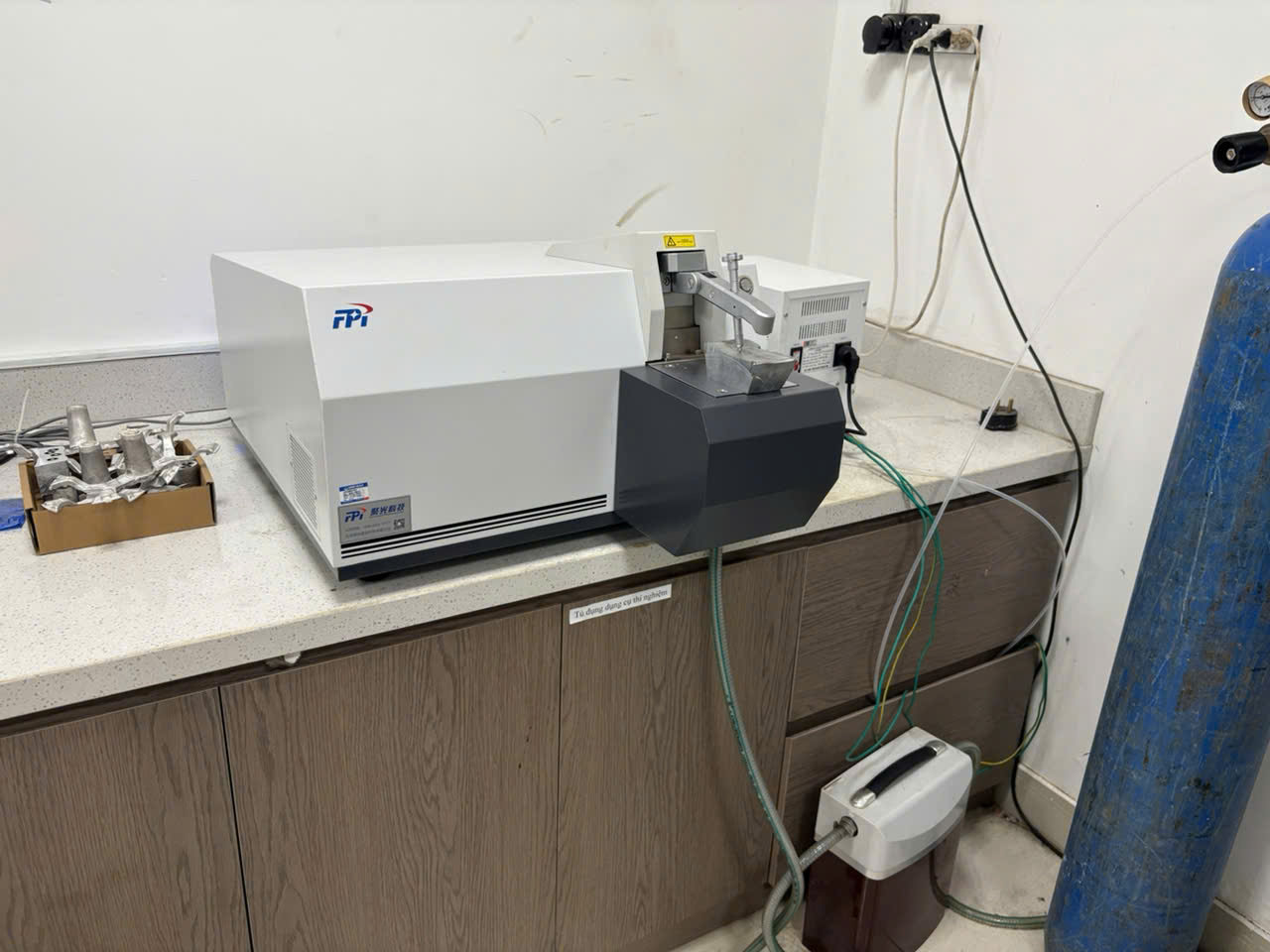
Positive Material Identification 10 (PMI) uses portable X-ray fluorescence (XRF) or optical emission spectroscopy (OES) to determine the elemental composition of a material on the spot. It takes seconds and gives you a direct reading you can compare against the MTR.
| Verification Method | What It Confirms | When to Use | Approximate Cost |
|---|---|---|---|
| Heat number visual check | Material traceability | Every incoming batch | No additional cost |
| PMI via XRF | Alloy composition (most elements) | When MTR authenticity is uncertain | $50–$200 per test |
| PMI via OES | Alloy composition including carbon | When carbon content is critical | $100–$300 per test |
| Third-party lab full analysis | Chemistry + mechanical properties | For safety-critical or high-value parts | $300–$1,000+ per sample |
On projects we oversee, we routinely conduct PMI on the first batch from any new supplier. If results match the MTR, we reduce testing frequency for subsequent batches. If there is any discrepancy, we escalate to full third-party lab testing. This approach balances cost and risk.
Spotting Counterfeit or Recycled MTRs
Counterfeit MTRs are a real problem in global sourcing. Some signs include: generic formatting with no mill logo, heat numbers that do not correspond to any recognized mill's numbering system, identical test results across multiple MTRs (copy-paste errors), and certificates issued by entities that cannot be independently verified. When in doubt, contact the issuing mill directly and ask them to confirm the heat number and test results. Legitimate mills maintain records and will verify upon request.
Can I require my supplier to provide material traceability for every batch of welded parts?
During a recent project for a client building industrial mounting hardware — thick-gauge steel L-brackets and U-channels with precision-drilled holes and reinforced gussets — the buyer's end customer demanded full traceability from raw material to finished part. Every bracket needed to be linked back to a specific heat of steel, a specific WPS, and a specific welder. The supplier initially resisted, calling it excessive. But after we explained that one rejected batch without traceability could mean scrapping the entire shipment, they agreed. Traceability protects everyone in the supply chain.
Yes, you can and should require full material traceability for every batch of welded parts. Specify in your purchase order that each finished part must be traceable to its raw material heat number, welding consumable lot, WPS used, welder ID, and inspection records.

What Full Traceability Looks Like
Material traceability for welded parts is more than just keeping the MTR on file. It means you can pick up any finished part — say, a welded aluminum frame with hollow tubing and V-shaped mounting brackets — and trace it all the way back to the raw material source, through every manufacturing step, to the final inspection.
Here is what a complete traceability chain includes:
- Raw material MTR with heat number
- Incoming material inspection record (including PMI if applicable)
- Cutting and preparation records linked to heat number
- Welding Procedure Specification used
- Welder identification and qualification record
- In-process inspection records
- NDT reports (if applicable)
- Final dimensional inspection
- Surface treatment or coating batch records
- Packing list and shipping documentation
Each of these links in the chain should reference the same batch or lot identifier so that, at any point, you can trace forward (from raw material to finished part) or backward (from finished part to raw material). For a deeper dive into structuring these requirements, see our guide on how to request material traceability reports when sourcing sheet metal fabrication.
Making It Practical
Some buyers worry that requiring full traceability will increase costs or slow production. In our experience managing fabrication across Vietnam and other Asian countries, the cost impact is minimal if the requirement is set from the beginning. The supplier simply needs a system — even a spreadsheet — that logs heat numbers against work orders, welder IDs, and inspection results.
The problems arise when traceability is requested after the fact. Retroactive traceability is nearly impossible and always expensive. This is why our team embeds the requirement in the initial purchase order and confirms the supplier's traceability system during the supplier audit phase, well before production starts.
Digital Traceability Is the Future
More suppliers now offer digital MTR access through online portals. Some advanced fabricators use barcode or QR code systems that link a physical part to its full documentation package in a cloud database. While blockchain-based material traceability is still emerging, the trend is clear: buyers expect instant, verifiable access to material records. If your supplier still relies on paper-only documentation, ask them about their digital migration plans. For PPAP submissions — which we routinely prepare for our clients — digital traceability records streamline the approval process significantly.
Conclusion
Requesting and verifying material composition reports for welding parts is not optional — it is the foundation of quality, compliance, and trust in your supply chain. Start early, be specific, and verify independently when the stakes are high. Understanding what material certifications to request for US sheet metal fabrication compliance can further strengthen your documentation strategy across all fabricated components.
Frequently Asked Questions
How do I request a detailed material composition report for my custom welding project?
A purchasing manager we work with in the Midwest once told me he had been ordering custom welded parts for three years before he realized his supplier had never once provided a proper Mill Test Report. He assumed the Certificate of Conformance 3 covered material composition. It did not. That gap left him exposed during a customer audit and forced a scramble to retroactively gather documentation.
What specific material certificates should I ask for to ensure my welding parts meet US standards?
One trade-off we weigh on nearly every project is cost versus documentation depth. A buyer once pushed back when we recommended EN 10204 Type 3.1 for a batch of mild steel mounting brackets. "It's just a bracket," he said. But those brackets were going into a seismic-rated building frame. The applicable code — AISC 360, referencing ASTM A36 — required full material traceability. Cutting corners on documentation would have disqualified the entire assembly during the building inspector's review.
How can I verify that the material reports from my Asian supplier are actually accurate?
I learned this lesson the hard way during one of our early projects. A supplier in Southeast Asia provided MTRs for a batch of stainless steel welded frames. The paperwork looked perfect — proper format, heat numbers, chemical composition within spec. But when our quality team cross-checked the heat numbers stamped on the raw material against the MTR, they did not match. The supplier had reused an old MTR from a previous batch. The actual material was a lower grade. We caught it because we physically verified. Many buyers never do.
Footnotes
1. Defines Certified Mill Test Reports as documents detailing material’s physical and chemical properties for compliance. ↩︎
2. Wikipedia provides a clear and authoritative definition of a mill test report, which includes material composition. ↩︎
3. Defines Certificate of Conformance as a document stating a product meets required standards or specifications. ↩︎
4. Explains chemical analysis of metals for quality control, material identification, and verification against standards. ↩︎
5. Explains EN 10204 Type 3.1 as an inspection certificate with specific batch test results and traceability. ↩︎
6. Defines mechanical properties as inherent characteristics determining how materials deform under mechanical loads. ↩︎
7. Official site for ASTM International, a leading organization developing voluntary consensus technical standards for materials. ↩︎
8. The American Welding Society (AWS) is a highly authoritative source for Welding Procedure Specifications and provides a clear explanation. ↩︎
9. Explains tensile strength as the maximum stress a material can withstand before fracturing under tension. ↩︎
10. Explains Positive Material Identification (PMI) as verifying chemical composition using XRF or OES methods. ↩︎