
Last quarter, a client lost three months of production time because their sheet metal supplier shipped brackets that drifted out of tolerance — and no one had ever requested a PPAP package 1 upfront.
To request a PPAP package when sourcing sheet metal fabrication, explicitly specify the required PPAP submission level (1–5) and list the needed elements — such as the Part Submission Warrant, dimensional results, material certifications, and process flow diagram — in your purchase order or RFQ during the quoting phase.
This guide walks through the exact steps, documents, and timing you need to get PPAP right the first time. Whether you source mounting brackets, enclosures, or custom stampings, this process protects your quality and your schedule.
What PPAP level should I require for my custom sheet metal fabrication project?
One trade-off I weigh on nearly every new project is how much documentation to demand versus how much cost and lead time that adds. Choosing the wrong PPAP submission level either leaves you blind to process risks or buries your supplier in paperwork they cannot sustain.
For most custom sheet metal fabrication projects, Level 3 is the recommended default — it includes the Part Submission Warrant (PSW), production samples, and complete supporting data such as dimensional results, material certifications, and process capability studies, giving you full visibility into the supplier's process.

The Five PPAP Levels at a Glance
The AIAG standard 2 defines five PPAP submission levels. Each level builds on the previous one. Here is how they compare:
| Level | What You Receive | Best For |
|---|---|---|
| Level 1 | PSW only | Low-risk commodity parts with a proven supplier |
| Level 2 | PSW + samples + limited supporting data | Moderate-risk parts where you trust the supplier's Quality Management System |
| Level 3 | PSW + samples + complete supporting data | New parts, design changes, or any mid-to-high criticality sheet metal component |
| Level 4 | PSW + customer-defined requirements | When you have unique Customer Specific Requirements beyond the standard 18 elements |
| Level 5 | PSW + samples + complete data, available for on-site review at supplier's facility | High-risk or regulated industries (aerospace, medical) where you need to audit in person |
How to Decide
Start with the part's criticality. If a bent bracket is purely structural and non-safety-related, Level 2 may be enough. If the bracket is a mirrored mounting pair with tight bend tolerances, multiple cutouts, and weld joints — like the gunmetal grey brackets our team recently inspected for a U.S. customer — Level 3 is the minimum I would recommend. Level 5 makes sense when you plan to conduct an on-site supplier audit, which our team in Vietnam and China does routinely for clients who cannot travel to the factory themselves.
Another factor is process maturity. A supplier running the same part for years may only need a Level 1 annual re-qualification. But a first-run qualification or a change in material grade (say, from mild steel to 304 stainless) demands Level 3 or higher.
The cost impact is real but manageable. Level 3 typically adds two to five days to the first-article timeline and a modest documentation fee. Compare that to the cost of a failed production run, and the math is simple.
Connecting PPAP Levels to Advanced Product Quality Planning
PPAP does not exist in isolation. It sits within the broader Advanced Product Quality Planning 3 (APQP) framework. Think of APQP as the project plan and PPAP as the final gate check before you release production. If your supplier follows APQP phases — planning, product design, process design, validation — then the PPAP level you choose determines how much evidence you see at that final gate.
When is the right time to ask my supplier for a PPAP submission?
A buyer I work with in the Midwest once told me he only mentioned PPAP after the first shipment arrived out of spec. By then, the supplier had no measurement data, no process flow diagram 4, and no idea which forming step caused the deviation. That conversation cost both sides eight weeks.
You should request a PPAP submission during the quoting phase — before the purchase order is finalized — so the supplier can factor in sample runs, inspection time, and documentation costs, and so both sides agree on the PPAP level and required elements upfront.

Trigger Events That Require PPAP
PPAP is not a one-time exercise. Several events should trigger a new or updated submission:
| Trigger Event | Why PPAP Is Needed | Typical Level |
|---|---|---|
| New part introduction | First-time process validation | Level 3 |
| Engineering Change Notice 5 (ECN) affecting design or material | Changed specs need re-validation | Level 2 or 3 |
| New supplier or new manufacturing location | Different equipment, different process risk | Level 3 or 5 |
| Change in forming method (e.g., laser cut to waterjet, press brake to CNC panel bender) | Process flow changes | Level 3 |
| Annual re-qualification for long-running parts | Confirm process has not drifted | Level 1 or 2 |
| Customer request at any time | Regulatory, audit, or quality concern | As specified |
Step-by-Step Timing
-
RFQ / Quoting Phase. State your PPAP requirement in the RFQ document. Many suppliers — including online platforms — let you check a PPAP option during quoting. For custom needs, write: "PPAP Level 3 required prior to first production shipment."
-
Purchase Order. Reinforce the requirement. Include language such as: "Supplier shall provide PPAP Level 3 package, including PSW, production samples, full dimensional layout, material certifications, Control Plan 6, and Process Flow Diagram, at least 10 business days before first production shipment."
-
Pre-Production Meeting. Our team holds a kickoff call with the supplier to confirm which of the 18 PPAP elements apply, who provides the forms, and what file format is expected. This is also where we reference any Supplier Quality Assurance Manual (SQAM) the customer maintains.
-
First Article Run. The supplier produces a small batch under normal production conditions. This is the basis for the First Article Inspection (FAI) and the PPAP data package.
-
PPAP Review and Approval. You review the package, approve the PSW (or reject with comments), and release production only after approval.
Why Early Beats Late
Specifying PPAP early reduces rework. When the supplier knows from day one that a CpK study and a PFMEA 8 are expected, they design their process to meet those requirements — rather than retrofitting documentation after problems appear. In our experience managing supply chains across Vietnam and Southeast Asia, early PPAP planning cuts first-article rejection rates dramatically.
What specific documents must I include in my sheet metal PPAP request?
During a recent project involving mirrored mounting brackets with precise folds, weld joints, and powder-coated finish, I realized how many PPAP elements are uniquely critical for sheet metal versus, say, injection-molded plastic. Material certifications, bend-radius verification, and surface finish tests carry far more weight here.
A sheet metal PPAP request should include the Part Submission Warrant, design records, process flow diagram, PFMEA, Control Plan, dimensional results, material certifications, capability studies (CpK ≥ 1.33), measurement system analysis, production samples, and any compliance records such as RoHS or DFARS documentation.
The 18 PPAP Elements — Sheet Metal Focus
Not every element applies to every project, but you should consciously decide which to include rather than leaving it to the supplier. Below is the full list with notes on sheet metal relevance.
| Element | Description | Sheet Metal Relevance |
|---|---|---|
| 1. Design Records | Engineering drawings, CAD files, ballooned prints | Critical — must include GD&T, bend radii, hole locations |
| 2. Engineering Change Documents | ECNs affecting specs | Required if any revision occurred |
| 3. Customer Engineering Approval | Evidence customer approved design | If customer signs off on design changes |
| 4. Design FMEA (DFMEA) | Failure mode analysis of the part design | Important for safety-critical brackets or enclosures |
| 5. Process Flow Diagram | Full sequence: blank → cut → bend → weld → finish → inspect | Essential — sheet metal has many sequential operations |
| 6. PFMEA (Process FMEA) | Failure mode analysis of the manufacturing process | High value — identifies risks at each forming step |
| 7. Control Plan | In-process inspections, frequencies, reaction plans | Core document — ties to the process flow diagram |
| 8. Measurement System Analysis 9 (MSA) | Gauge R&R, calibration records | Confirms inspection tools are accurate for tight tolerances |
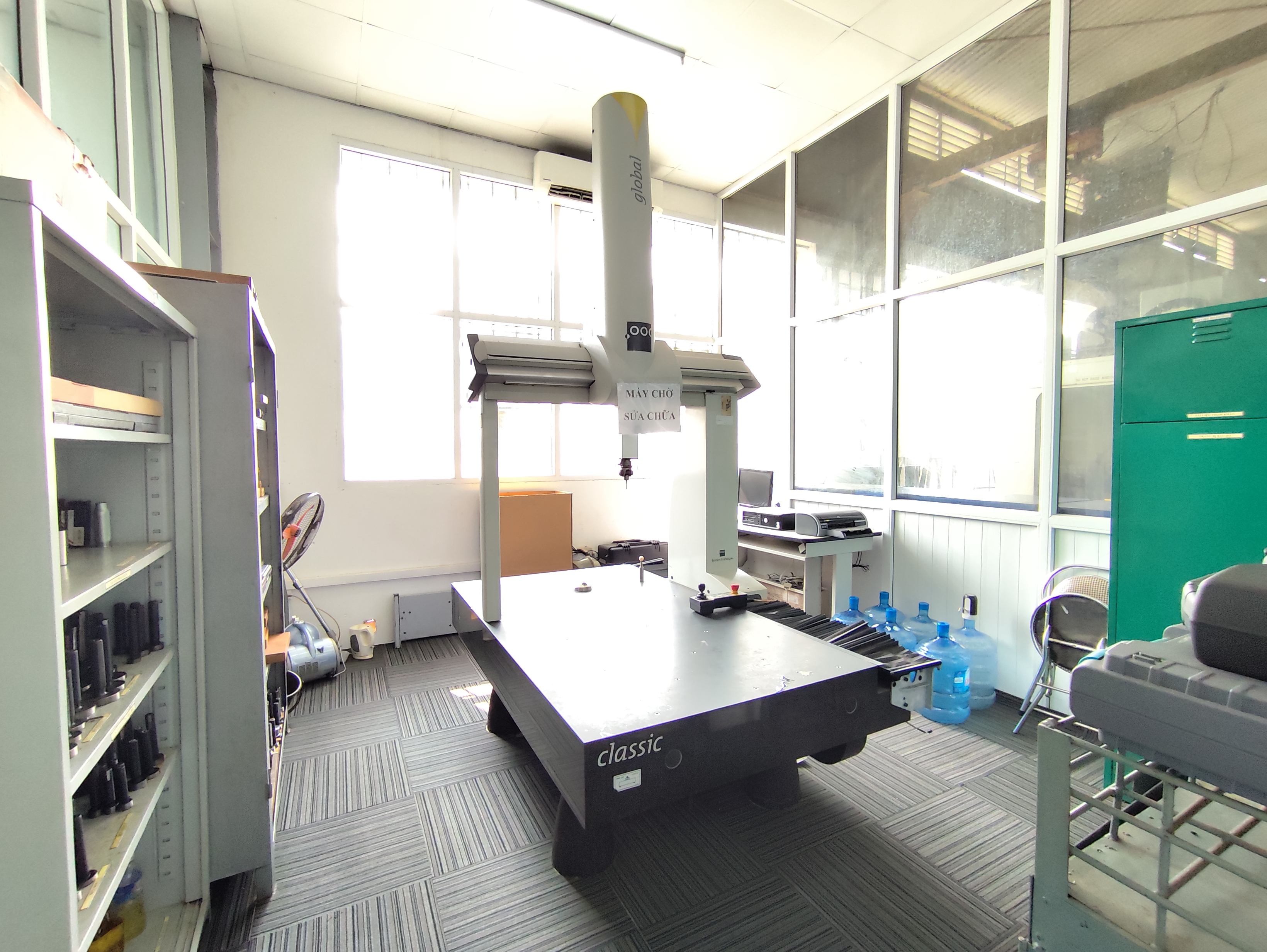
| 9. Dimensional Results | Full layout of one or more parts, all critical dimensions measured | Non-negotiable for sheet metal with multiple bends and cutouts |
| 10. Material / Performance Test Results | Tensile, hardness, corrosion, thickness verification | Critical — must match material grade (e.g., ASTM A240 for stainless) |
| 11. Initial Process Studies (CpK) | Capability indices for key characteristics | CpK ≥ 1.33 is standard; corresponds to fewer than 64 PPM defects |
| 12. Qualified Laboratory Documentation | Lab accreditation for testing | Required if third-party testing is used |
| 13. Appearance Approval Report (AAR) | Surface finish, color, texture approval | Important for powder-coated or anodized sheet metal |
| 14. Production Samples | Parts from the actual production run | Must be produced under normal conditions, not prototype tooling |
| 15. Master Sample | Retained reference part | Stored at supplier or customer site |
| 16. Checking Aids | Fixtures, gauges, templates | If custom fixtures are used for inspection |
| 17. Customer Specific Requirements | RoHS, REACH, DFARS, conflict minerals, industry-specific needs | Increasingly important for U.S. defense and electronics buyers |
| 18. Part Submission Warrant 10 (PSW) | Summary form confirming all requirements are met | Required at every PPAP level — the final sign-off document |
Which Elements Matter Most for Sheet Metal?
If you are sourcing brackets, enclosures, or chassis parts, focus your PPAP request on these high-impact elements:
-
Process Flow Diagram — Sheet metal fabrication involves cutting, punching, bending, welding, deburring, and finishing. Each step introduces dimensional risk. The flow diagram maps every operation so you can trace any deviation back to its source.
-
PFMEA — A Process FMEA forces the supplier to think about what can go wrong at each step. For example: springback on a 90-degree bend, laser-cut edge burr exceeding spec, or weld distortion on thin-gauge steel. Each risk gets a severity, occurrence, and detection rating.
-
Control Plan — This document tells the supplier's operators what to check, how often, and what to do if a measurement falls outside tolerance. It is the daily enforcement mechanism for the quality system.
-
Dimensional Results — For a part with 20 critical dimensions, this is a full measurement report on at least one part. Use ballooned prints so every dimension has a number that maps to the measurement data.
-
Material Certifications — Always request mill test reports. Verify the grade, thickness, and mechanical properties match your drawing. Our team cross-checks every cert against the purchase order before approving shipment.
Negotiating Forms and Formats
Some suppliers have their own PPAP templates. Others expect you to provide yours. Clarify this early. Our standard approach is to share the customer's preferred forms during the kickoff meeting. If the supplier uses an alternate format, we require written agreement before accepting it. For electronic submissions, a single PDF per part number or a compressed folder organized by PPAP element is the most practical format.
How do I ensure my overseas supplier can meet my strict PPAP and quality standards?
A lesson we learned the hard way: a technically capable factory does not always mean a PPAP-capable factory. One supplier in Southeast Asia could bend complex geometries to within ±0.1 mm but had never produced a formal Control Plan or run a gauge repeatability study. The gap was not skill — it was quality system maturity.
To ensure your overseas supplier meets strict PPAP and quality standards, conduct a pre-qualification audit of their Quality Management System, verify their experience with PPAP documentation, provide clear templates and training if needed, and use an on-the-ground quality team to monitor the first-article process and ongoing production.
Pre-Qualification: What to Look For
Before placing an order, evaluate the supplier on these criteria:
- ISO 9001 or IATF 16949 certification. This confirms a baseline Quality Management System. IATF 16949 is the automotive standard and includes PPAP by default.
- Prior PPAP experience. Ask for sample PSW forms, dimensional reports, or capability studies from previous projects (with customer data redacted). If they have never done a PPAP, you will need to invest in training.
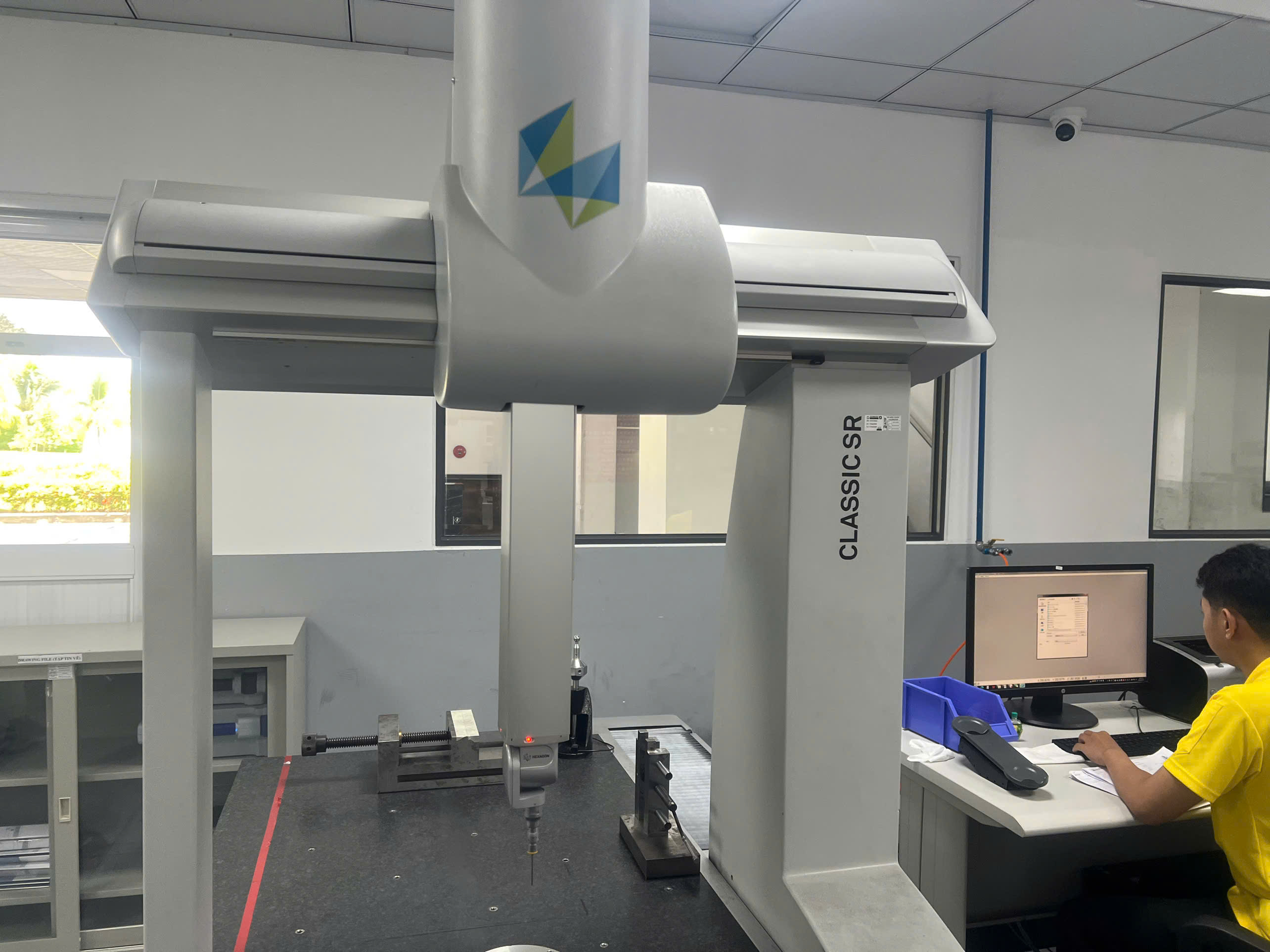
- Measurement equipment. Do they own CMMs, calipers, height gauges, and surface roughness testers appropriate for your tolerances? A proper Measurement System Analysis (MSA) cannot happen without calibrated tools.
- Process documentation. Even before PPAP, a capable supplier should have work instructions, inspection checklists, and some form of process flow documentation.
Bridging the Gap with On-the-Ground Support
This is where our model adds real value. With local teams in Vietnam and China, we bridge the gap between U.S. buyers and Asian suppliers. Here is what that looks like in practice:
-
Supplier Audit. We visit the factory, walk the shop floor, review their quality records, and assess their readiness for PPAP. We check everything from raw material storage to final packaging.
-
PPAP Coaching. If the supplier is new to PPAP, we walk their quality team through each required element. We provide templates for the Control Plan, PFMEA, and process flow diagram. We explain what CpK means and how to calculate it.
-
First Article Oversight. During the first production run, our inspector is on-site. We witness the measurement process, verify the dimensional results against ballooned prints, and review material certifications in real time.
-
Ongoing Process Control. After PPAP approval, we continue with in-process inspections and final inspections. We review SPC data, monitor trends, and flag any drift before it reaches the shipping dock.
Addressing Common Pitfalls with Overseas Suppliers
Many quality failures trace back to avoidable mistakes:
- Assuming PPAP is automatic. It is not. You must request it explicitly in the purchase order.
- Vague PPAP requests. Writing "PPAP required" without specifying the level or elements leads to a Level 1 submission when you needed Level 3.
- Ignoring compliance requirements. If your end customer requires RoHS, REACH, or DFARS documentation, include these as Customer Specific Requirements in the PPAP request. Overseas suppliers may not know these apply unless you tell them.
- Not confirming forms. Some suppliers will submit data in their own format, which may not map to your internal tracking system. Agree on forms and file naming conventions before the first article run begins.
Supply Chain Resilience and PPAP
Proactive PPAP planning should also consider your supplier's supply chain resilience. Ask about alternative material sources, multi-site production capabilities, and contingency plans. If your sheet metal supplier relies on a single steel mill for 304 stainless and that mill faces a disruption, your PPAP-approved process could become invalid overnight. We help clients map these risks as part of the overall quality planning process.
Emerging Trends: Digital PPAP and Automation
The industry is moving toward digital PPAP submissions. Automated inspection systems — including AI-powered visual inspection — can generate dimensional results and appearance approval reports with less human subjectivity. Some factories now integrate PPAP elements directly into quality dashboards, giving buyers near-real-time visibility into process capability. Digital twin technology is also emerging as a way to validate PPAP data continuously by comparing live production data against the digital model's specifications.
Sustainability documentation is another growing requirement. Buyers are asking for evidence of recycled content, sustainable sourcing, and carbon footprint data as part of PPAP packages. While not yet standard across all industries, this trend is accelerating — especially for U.S. and European buyers with ESG objectives.
Conclusion
Requesting a PPAP package for sheet metal fabrication is not optional — it is your primary defense against dimensional drift, material non-conformance, and costly rework. Specify the level, list the elements, and confirm everything before production begins.
Frequently Asked Questions
Which Elements Matter Most for Sheet Metal?
If you are sourcing brackets, enclosures, or chassis parts, focus your PPAP request on these high-impact elements:
What PPAP level should I require for my custom sheet metal fabrication project?
One trade-off I weigh on nearly every new project is how much documentation to demand versus how much cost and lead time that adds. Choosing the wrong PPAP submission level either leaves you blind to process risks or buries your supplier in paperwork they cannot sustain.
When is the right time to ask my supplier for a PPAP submission?
A buyer I work with in the Midwest once told me he only mentioned PPAP after the first shipment arrived out of spec. By then, the supplier had no measurement data, no process flow diagram 4 , and no idea which forming step caused the deviation. That conversation cost both sides eight weeks.
Footnotes
1. Provides a comprehensive overview of the Production Part Approval Process (PPAP) and its package elements. ↩︎
2. The AIAG is the primary developer of the PPAP standard. ↩︎
3. Official AIAG resource explaining the APQP framework. ↩︎
4. Explains process flow diagrams as a visual tool for understanding and improving processes. ↩︎
5. Defines ECN as a document authorizing and recording design changes. ↩︎
6. Offers a comprehensive guide to Control Plans in manufacturing. ↩︎
7. Defines FAI as a manufacturing and quality assurance process for initial production. ↩︎
8. Provides a detailed explanation of Process Failure Mode and Effects Analysis (PFMEA). ↩︎
9. Explains MSA as a statistical method to evaluate measurement system variation. ↩︎
10. Offers a detailed explanation of the Part Submission Warrant (PSW) within the PPAP process. ↩︎