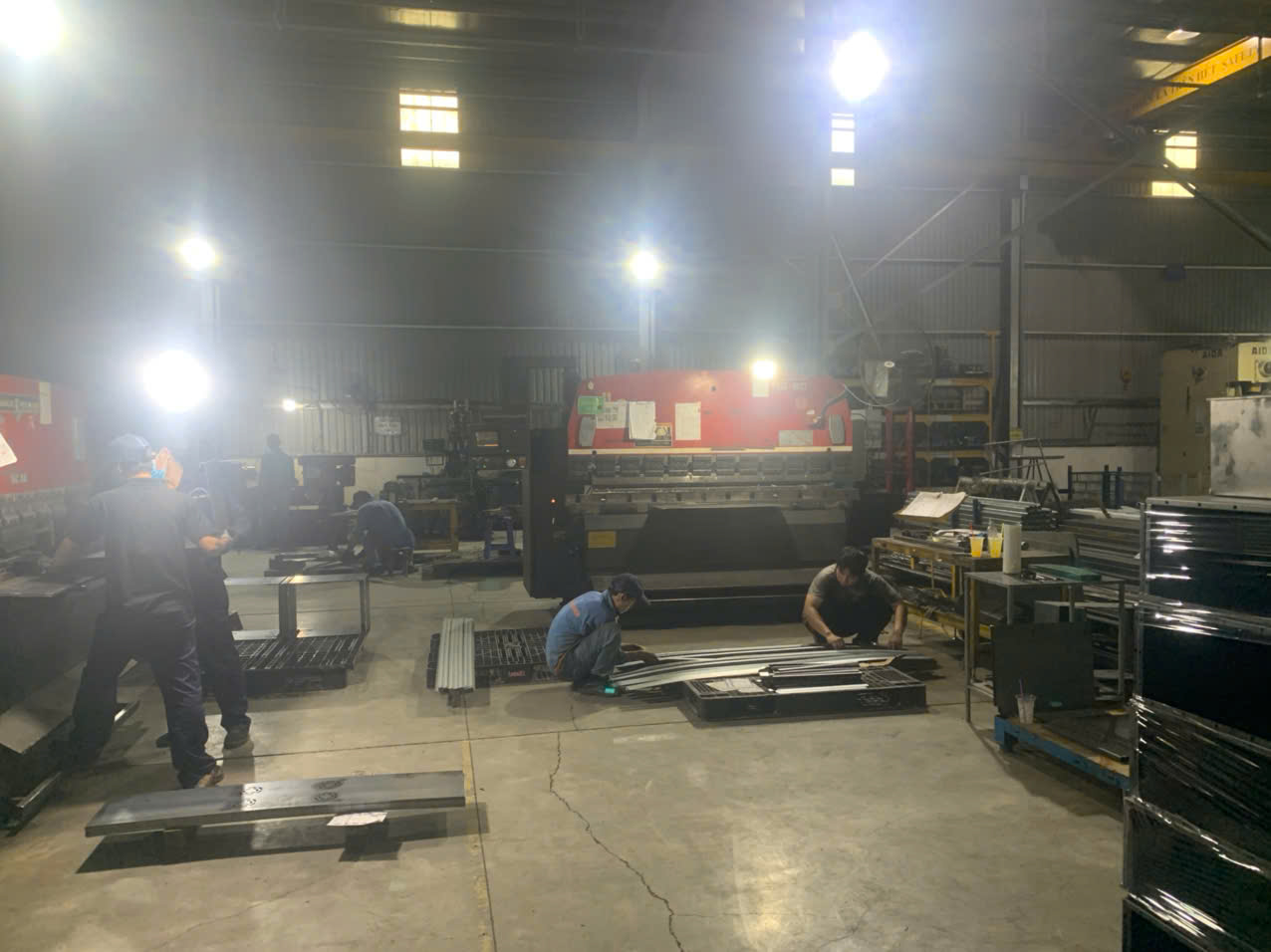

Requesting technical training from suppliers when sourcing stamping parts prevents costly quality gaps and production delays that drain budgets and erode trust.
To request technical training from stamping suppliers, embed mandatory training clauses in your RFQ, define scope covering die maintenance, SPC methods, and defect containment, then verify competency through audits, pilot pass rates, and post-training acceptance criteria tied to first-article inspection data.
This guide walks through each step of that process. I will share what our team at DEWIN has learned from managing supplier relationships across Vietnam, Taiwan, and India — and how we help U.S. buyers get stamping training right from the very first quote.
What Technical Training Should I Request Before Placing My First Stamping Order?
A lesson we learned early in our sourcing work: skipping upfront training discussions with a new stamping supplier almost always leads to a rejected first shipment and weeks of corrective back-and-forth.
Before placing your first stamping order, request training on progressive die maintenance, press-to-die synchronization, first-article inspection procedures, SPC methods, defect identification and containment protocols, and measurement system operation including CMM and optical systems aligned to your drawing tolerances.

Why Training Is Not Optional Anymore
Servo presses, advanced high-strength steels, and complex geometries have raised the bar. Operators who ran simple blanking dies five years ago now need to understand material springback, thinning predictions, and sensor-driven quality checks. When our Vietnam office audits a new stamping supplier, we check whether the shop floor team can explain the critical-to-quality dimensions on the drawing — not just the engineer in the front office. If operators cannot, we flag a training gap before any tooling is cut.
Core Training Modules to Include
Break your training request into modules. Each module should have a clear deliverable and acceptance criterion. Here is a framework we use:
| Training Module | Target Audience | Key Deliverable |
|---|---|---|
| Die setup and changeover | Press operators, setup technicians | Documented setup checklist with torque specs and alignment verification |
| Progressive die maintenance | Maintenance technicians | Preventive maintenance schedule with wear-part replacement intervals |
| First-article inspection 1 (FAI) | QC inspectors | Completed FAI report matching your drawing and tolerance callouts |
| SPC and process monitoring | QC staff, production supervisors | Control charts for critical dimensions with Cpk targets defined |
| Defect identification and containment | Operators, QC inspectors | Photo-based defect catalog with containment and escalation procedure |
| Measurement system operation | QC inspectors | Gage R&R 2 study for each measurement tool used on your part |
Timing Matters
Schedule training to align with critical project phases. The best window is between tool tryout and the first production part approval process 3 (PPAP). During this phase, the die is real, the material is real, and any training gap shows up immediately. We also recommend a "Design-for-Stamping" workshop before tooling design is finalized. In these sessions, the supplier's tooling engineers walk your design team through tooling design specifications and limitations. This reduces engineering change requests later and supports design for manufacturability from the start.
The Supplier Training Quotation Worksheet
Industry practice now requires suppliers to submit a Supplier Training Quotation Worksheet alongside their equipment or tooling quotation — even if training is offered at no charge. This worksheet should itemize the training scope, format, duration, trainer qualifications, and materials provided. If a supplier resists completing this worksheet, treat it as a risk signal. We include this worksheet as a mandatory attachment in every RFQ we issue on behalf of our U.S. clients.
How Do I Communicate My Drawing and Tolerance Requirements to Avoid Miscommunication?
One trade-off we weigh on every new project is whether to invest time in a detailed drawing review meeting or trust that the supplier will read the print correctly. Experience has taught us: always invest the time.
To avoid miscommunication, conduct a live drawing review with the supplier's engineering and QC teams, highlight critical-to-quality dimensions with GD&T callouts, provide material property analysis data, define measurement methods for each tolerance, and confirm understanding through a signed-off tolerance agreement before tooling starts.

The Root Cause of Most First-Shipment Failures
Most rejected first shipments trace back to a single problem: the supplier's team interpreted a tolerance or surface finish requirement 4 differently than the buyer intended. This is especially common in cross-border sourcing. Units of measure, datum references, and surface finish symbols can mean different things depending on regional standards. Our China office has seen cases where a supplier read a unilateral tolerance as bilateral — a small misread that produced 100% scrap.
A Step-by-Step Drawing Communication Process
- Send the drawing package early. Include 2D prints, 3D models, and a separate critical-dimension list.
- Hold a drawing review meeting. Use video with screen sharing. Walk through every dimension flagged as critical. Ask the supplier to repeat back the requirement in their own words.
- Define measurement methods. For each critical tolerance, specify whether measurement should use a CMM, optical comparator 5, pin gauge, or go/no-go fixture. This eliminates measurement system disagreements later.
- Provide material specs and property data. If you require a specific grade of steel or aluminum, share the material certificate and expected mechanical properties. This supports material property analysis and helps the supplier set correct press parameters.
- Get a signed tolerance agreement. This is a simple document where the supplier acknowledges each critical dimension, the measurement method, and the acceptance criteria. We call this a knowledge transfer agreement — it ensures that everyone from the tooling engineer to the floor inspector understands what matters.
Common Tolerance Communication Pitfalls
| Pitfall | What Goes Wrong | How to Prevent It |
|---|---|---|
| Missing datum references | Supplier measures from the wrong surface | Always define datums explicitly on the print |
| Ambiguous surface finish callout | Supplier applies a different finishing standard | Specify Ra value and measurement instrument |
| Tolerance stack-up not analyzed | Assembled parts do not fit | Share assembly drawings and stack-up analysis |
| No measurement method specified | Supplier uses a less accurate tool | Define the instrument for each critical dimension |
| Drawings not revision-controlled | Supplier works from an old revision | Use a formal revision control system with sign-off |
Training the Supplier's Team on Your Specific Requirements
After the drawing review, request that the supplier conduct internal training for their operators and inspectors on your specific part. This is not a generic training session. It should cover the exact features, tolerances, and defect modes of your part. Ask for evidence that this training occurred — attendance records, a quiz or checklist, and photos of the training session. This step transforms RFQ technical requirements from a paper exercise into real shop-floor knowledge. For a deeper dive into how to determine technical requirements for stamping parts, aligning your specs before the drawing review makes these training sessions far more effective.
Which Questions Should I Ask to Verify a Supplier's Quality Control Training Process?
During a recent supplier audit in Vietnam, I asked the QC manager to show me the training records for the inspector who ran the last first-article inspection. He could not find them. That single missing document told me more about the supplier's quality control training process than any certification on the wall.
Ask suppliers to show certified trainer credentials, documented training records for each inspector and operator, pilot module pass rates above 90%, corrective action case studies with verification data, and evidence of ongoing refresher training tied to IATF 16949 or ISO 9001 standards.

Questions That Separate Strong Suppliers from Weak Ones
Not all quality control training is equal. Some suppliers run a one-time orientation and call it training. Others build a structured program with competency verification, refresher cycles, and corrective action integration. Here are the questions that expose the difference:
- Who conducts the training? Is the trainer certified, and do they have at least five years of stamping industry experience?
- What is the pass rate for pilot training modules? A threshold above 90% indicates the training content is effective and the workforce retains it.
- How do you link training to corrective actions? If a defect occurs, does the corrective action include retraining only, or does it also include die, feeder, sensor, fixture, or inspection method changes?
- Can you show me training records for the team assigned to my part?
- Do you conduct measurement system analysis (Gage R&R) as part of QC training?
Weak vs. Strong Corrective Actions
This is a critical area. When a quality escape happens, some suppliers respond with "training repeated" as the corrective action. This is almost always a weak response unless the root cause was genuinely a training gap and the escape risk is verified as controlled. Strong corrective actions include tangible process or tooling changes plus verification.
| Corrective Action Element | Weak Response | Strong Response |
|---|---|---|
| Root cause analysis | "Operator error" | "Die wear on station 4 caused burr exceeding 0.1 mm; operator not trained to detect" |
| Action taken | "Retrained operator" | "Replaced worn punch, added go/no-go gauge at station 4, retrained operator on new check" |
| Verification evidence | None | Defect photos, post-fix inspection data, first-off data, sorted quantity report |
| Release control | Not defined | Named release owner, inspection frequency for first 3 lots, sorted label on shipment |
When we manage corrective actions through our SCAR process, we require the supplier to provide defect photos, lot traceability, sorted quantity, tool or process change evidence, post-fix inspection data, and a named release owner. The first shipment after corrective action must include first-off data, inspection frequency records, a sorted label, and a photo record.
Supplier Qualification Checklist for Training Capability
Use this checklist during your audit or supplier qualification process. It covers both supplier quality assurance fundamentals and training-specific criteria. For a broader framework on evaluating a stamping parts supplier’s technical support quality, consider assessing responsiveness, engineering depth, and problem-solving capability alongside training:
- ISO 9001 6 certification (baseline)
- IATF 16949 7 certification (required for automotive)
- Certified trainers on staff with documented experience
- Documented training curriculum for stamping operations
- Pilot training module pass rate records
- Training lead time within 10 business days
- Training cost within 15% of market average
- Evidence of corrective action case studies with training components
- Workforce training records accessible and current
- Third-party inspection history (SGS, Intertek, BV)
Beyond certifications, second-party audits — where you or your representative visit the supplier's facility — provide deeper assurance. Our team conducts these audits regularly for clients who source stamping parts from Asia. We check production lines, QC checkpoints, material traceability systems, and workforce training records in person.
How Can I Ensure My Stamping Supplier's Team Understands Critical Specifications for On-Time Delivery?
A buyer we work with in the Midwest once told me: "Late delivery is bad, but late delivery of wrong parts is worse." That comment stuck with me because it captures the connection between specification understanding and on-time delivery. If the supplier's team misunderstands a critical spec, rework and sorting delays cascade through the schedule.
Ensure your supplier's team understands critical specs by requiring pre-production training aligned with PPAP, mandating on-site technical support during initial runs, setting KPIs for defect rate and delivery performance, and conducting periodic quality reviews with documented evidence of continuous workforce competency.

Linking Specification Knowledge to Delivery Performance
On-time delivery depends on getting it right the first time. When operators understand the critical specs, they catch problems early. When inspectors know the measurement methods, they do not hold shipments for re-measurement. When maintenance technicians follow a progressive die maintenance schedule, unplanned downtime drops. Training is the thread that connects all of these.
Training Format and Logistics
The format of training matters. On-site, hands-on instruction provides the deepest assurance. Virtual training reduces cost and travel time but limits hands-on verification. The best approach uses both: virtual sessions for theory (SPC methods 8, drawing interpretation, defect catalogs) and on-site sessions for practical skills (press setup, die alignment, measurement tool operation).
When planning training logistics, define:
- Group size: Keep it small enough for hands-on practice. Eight to twelve people per session is a good target.
- Facility location: Training should happen on the production floor where your parts will be made, not in a conference room.
- Products to include: Use your actual parts, tooling, and materials — not generic samples.
- Schedule: Align with your production timeline. Train before the first production run, not after.
- Lead time targets: Training modules should be ready within 10 business days of request.
Emerging Training Topics
Stamping technology is advancing. Buyers should request training on topics that go beyond traditional press operation:
- Servo press operation and die integration — critical for advanced high-strength steels and complex geometries
- Digital twin data and FEA results — helps engineers predict springback and thinning before production
- Smart die sensors and IoT data interpretation — enables predictive maintenance instead of reactive repairs
- Sustainable alloy handling — new materials require unique lubrication and handling protocols
- Value-added services integration — if your supplier provides secondary operations like welding, assembly, or surface treatment, training should cover the interfaces between stamping and downstream processes
Monitoring and Continuous Improvement
Training is not a one-time event. Set up a monitoring framework with KPIs:
- Defect rate (target: continuous reduction quarter over quarter)
- On-time delivery rate (target: above 95%)
- Customer complaints (target: zero repeat issues)
- Corrective action closure time
- Training completion rate for new hires
Conduct periodic quality reviews — quarterly for critical parts, semi-annually for standard parts. These reviews should include a training update: what new training was delivered, who was trained, and what the pass rates were.
For cross-border sourcing, verify compliance with EU REACH 9, export documentation requirements, and local labor and safety laws. Long-term partnership clauses should include provisions for periodic audits, continuous improvement targets, and training refresh cycles. For guidance on ensuring suppliers meet custom needs when sourcing stamping parts, building these clauses into your supplier agreements early prevents misalignment down the road.
Our approach at DEWIN is to act as the buyer's on-the-ground partner. We conduct supplier audits, manage PPAP, oversee process control, and verify that training programs are real — not just binder-thick documents sitting on a shelf. This on-site technical support model gives U.S. buyers confidence that the supplier's team truly understands the critical specifications that drive on-time delivery.
Conclusion
Requesting technical training from stamping suppliers is a risk-reduction strategy, not an optional extra. Embed training in your RFQ, verify it through audits, and monitor it with KPIs for lasting results.
Frequently Asked Questions
What Technical Training Should I Request Before Placing My First Stamping Order?
A lesson we learned early in our sourcing work: skipping upfront training discussions with a new stamping supplier almost always leads to a rejected first shipment and weeks of corrective back-and-forth.
How Do I Communicate My Drawing and Tolerance Requirements to Avoid Miscommunication?
One trade-off we weigh on every new project is whether to invest time in a detailed drawing review meeting or trust that the supplier will read the print correctly. Experience has taught us: always invest the time.
Which Questions Should I Ask to Verify a Supplier's Quality Control Training Process?
During a recent supplier audit in Vietnam, I asked the QC manager to show me the training records for the inspector who ran the last first-article inspection. He could not find them. That single missing document told me more about the supplier's quality control training process than any certification on the wall.
Footnotes
1. Explains the FAI process central to verifying supplier training and part conformance. ↩︎
2. Detailed Wikipedia entry providing a technical explanation of the ANOVA method for Gage R&R studies. ↩︎
3. Comprehensive Wikipedia guide explaining the standardized PPAP framework and its 18 essential elements. ↩︎
4. Background on surface finish standards relevant to tolerance miscommunication issue described. ↩︎
5. Background on optical comparators, a measurement tool specified for critical tolerance verification. ↩︎
6. Official ISO page for the quality management standard discussed in supplier certification context. ↩︎
7. Reliable Wikipedia overview of the international quality management standard for the automotive industry. ↩︎
8. Authoritative NIST Engineering Statistics Handbook chapter on process monitoring and statistical control methods. ↩︎
9. ECHA’s official explanation of the REACH regulation for cross-border compliance verification. ↩︎