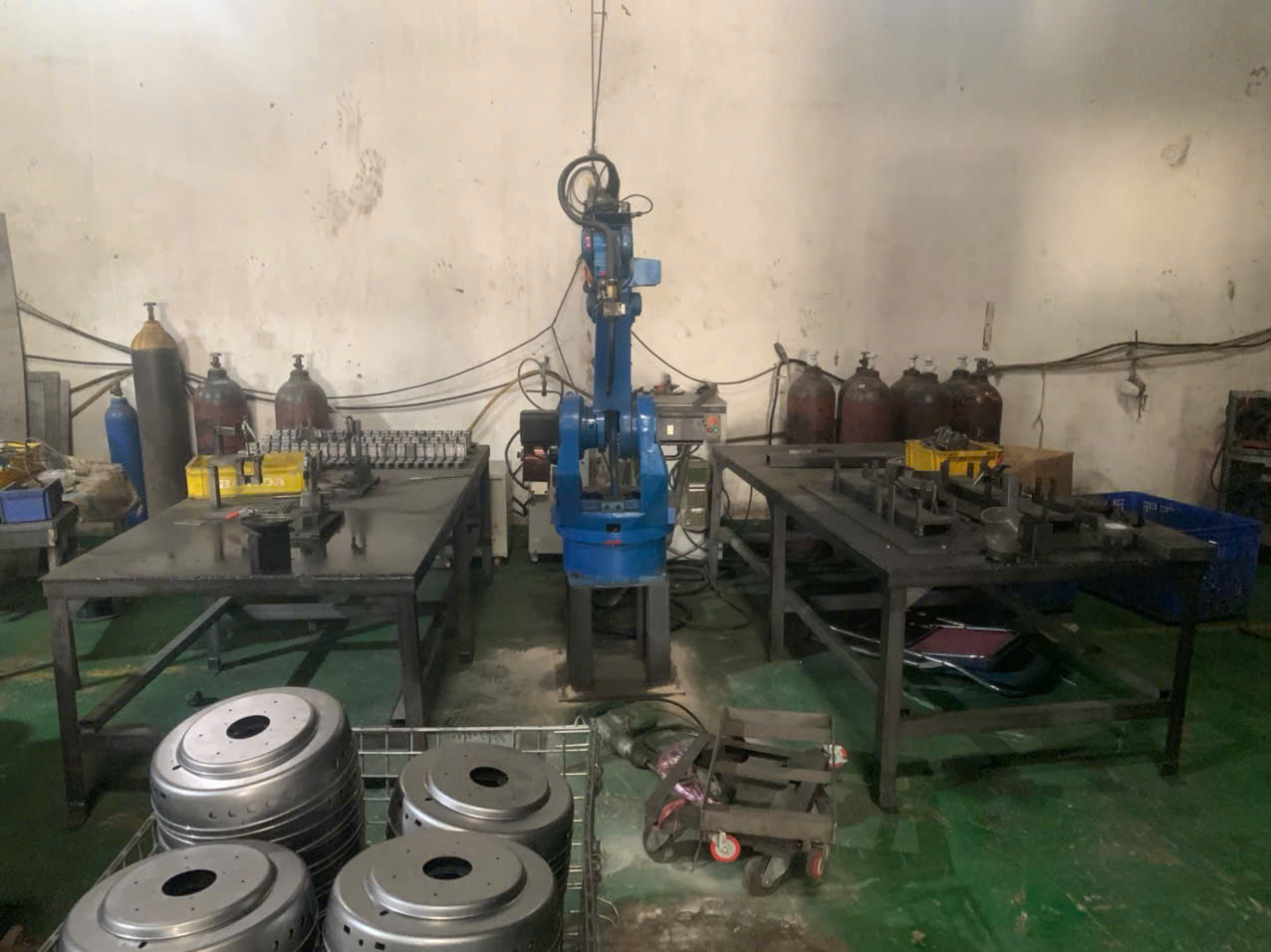
Last month, our quality team rejected an entire shipment of welded steel frames from a supplier in Southeast Asia — every single weld joint failed visual inspection because the supplier never followed a documented WPS.
To request WPS and welder qualifications from suppliers, specify the applicable welding code in your purchase order, then require the complete Welding Procedure Specification, its supporting Procedure Qualification Record, and each welder’s Performance Qualification record before production begins.
This guide walks you through the exact documents to request, what to check inside them, and how to avoid costly rework when purchasing welded parts from overseas suppliers.
How do I verify that a supplier's WPS matches my specific project requirements?
A few years ago, one of our U.S. clients sent us a set of drawings for heavy-duty mounting brackets — the kind with thick-gauge steel, reinforced gussets, and precision-drilled mounting holes base metal P-number 1. The drawings called out ASME Section IX compliance 2, but the supplier's WPS was written for a completely different material thickness range. That single mismatch nearly derailed the entire project schedule ISO 3834 certification 3.
To verify a supplier's WPS matches your project, compare every essential variable — base metal P-number, filler metal classification, welding process, thickness range, joint design, preheat temperature, and post-weld heat treatment — against your drawing requirements and the applicable code.

What Is a WPS and Why Does It Matter?
A Welding Procedure Specification 4 is a written document. It tells the welder exactly how to make a weld. It covers the welding process (GTAW, GMAW, SMAW, etc.), the base metal type, the filler metal classification 5, the joint design, electrical parameters, preheat and interpass temperatures, and post-weld heat treatment requirements. Think of it as the recipe. Without a recipe, you cannot guarantee the dish comes out the same way twice.
When we manage sourcing projects for welded parts — whether it is a complex geometric frame assembly or a set of L-shaped mounts — we always start by reviewing the WPS before anything else. The WPS is the foundation of welding quality assurance.
Essential Variables to Cross-Check
Here is a practical checklist. Go through each variable in the supplier's WPS and compare it directly to your engineering drawings and code requirements.
| WPS Variable | What to Check | Why It Matters |
|---|---|---|
| Welding Process | GTAW, GMAW, SMAW, FCAW, SAW | Different processes produce different mechanical properties |
| Base Metal (P-Number) | Must match the material specified on your drawing | Wrong P-number means the WPS does not cover your material |
| Filler Metal (SFA / F-Number / A-Number) | Must be compatible with base metal and design loads | Incorrect filler metal can cause cracking or insufficient strength |
| Thickness Range | Qualified range must cover your part thickness | A WPS qualified at 6 mm may not cover a 25 mm plate |
| Joint Design | Groove type, root opening, backing | Must match the joint geometry on your drawing |
| Preheat / Interpass Temperature | Minimum preheat, maximum interpass | Prevents hydrogen cracking in carbon and alloy steels |
| PWHT (Post-Weld Heat Treatment) | Temperature, hold time, cooling rate | Required for many pressure-rated or cryogenic applications |
| Position | Flat, horizontal, vertical, overhead | Welder must be qualified in the position used in production |
Prequalified vs. Newly Qualified WPS
Not all WPSs require testing. Under AWS D1.1, certain combinations of process, material, and joint design are "prequalified." This means the code has already validated them through years of industry data. A prequalified WPS 6 saves time and money because no procedure qualification record testing is needed.
However, if your project involves non-standard materials, unusual thicknesses, or critical applications like pressure vessels, the WPS will likely need full qualification with a supporting PQR. During our supplier audits, we always ask: "Is this WPS prequalified or was it qualified through destructive testing?" The answer changes the entire validation path.
If your supplier claims a prequalified WPS, verify that every essential variable 7 falls within the prequalified limits defined by the code. Even one variable outside the limits means full PQR testing is required.
What welder qualification records should I request to ensure "right first time" quality?
During a recent project involving multi-level steel frame assemblies — the type with square and rectangular hollow tubing and heavy-duty welded joints at every intersection — we discovered that two of the supplier's welders had never been qualified for the GTAW process the WPS required. Production had to stop while we arranged requalification testing. That delay cost the client three weeks.
Request each welder's Performance Qualification (WPQ) record, confirming their name, qualified welding process, base metal group, thickness range, position, and test results. Every welder performing production welds must hold a current WPQ that covers the specific WPS variables for your job.

Understanding the Welder Performance Qualification (WPQ)
A WPQ — sometimes called a Welder Qualification Test (WQT) — proves that a specific welder can produce sound welds using a specific process, on a specific material, in a specific position. It is personal to the welder. It does not transfer.
Under ASME Section IX, a welder qualifies by welding a test coupon under controlled conditions. The coupon then undergoes destructive testing (bend tests, sometimes radiographic examination) to confirm the weld is sound. If the welder passes, they receive a WPQ record documenting exactly what they are qualified to do.
What Should a WPQ Record Include?
| WPQ Element | Details to Verify |
|---|---|
| Welder Name / ID | Must match the person who will perform your work |
| Welding Process | GTAW, GMAW, SMAW, etc. — must match the WPS |
| Base Metal Group | P-number or material group — must cover your material |
| Filler Metal | F-number — must match the WPS requirement |
| Thickness Qualified | Range of deposit thickness the welder can perform |
| Position Qualified | 1G, 2G, 3G, 4G, 5G, 6G, etc. |
| Test Results | Bend test, visual inspection, radiographic (if required) |
| Date of Qualification | Confirms currency of the qualification |
| Signed by Examiner | Must be signed by a qualified examiner or organization |
When Do Welders Need Requalification?
Our experience managing suppliers across Vietnam and other Asian countries has taught us that welder requalification is a common sticking point. Many suppliers assume that once a welder is qualified, the qualification lasts forever. That is partially true — under ASME Section IX, a welder's qualification does not expire as long as they continue welding with that process. But there are important exceptions.
A welder must requalify if:
- They have not welded with the specific process for more than six months.
- The WPS calls for essential variables outside their current WPQ range.
- The client or code requires periodic requalification (some industries mandate this).
Some buyers we work with advocate periodic requalification regardless of whether process or material changes have occurred. Others accept that if the welder has been continuously working with the same process, no retesting is needed. Both positions have merit. For high-risk components — pressure vessels, structural members in seismic zones — we recommend erring on the side of more frequent verification.
To qualify for a full cryogenic stainless steel WPS using GTAW, a welder may need to perform as many as nine separate qualification tests. That gives you an idea of the rigor involved for specialized applications.
Linking WPQ to Your Specific Job
Before production starts, request a matrix that maps each welder to the WPS they will execute. Confirm that their WPQ covers the process, material, thickness, and position required. If there is a gap, the supplier must arrange qualification testing before any production welding begins. This is a non-negotiable step in achieving "right first time" quality.
How can I confirm my overseas supplier's welding certifications meet international standards?
One trade-off we constantly weigh at DEWIN is code equivalency. A client in the U.S. specifies ASME Section IX. Their supplier in Vietnam holds qualifications under ISO 15614. Can you accept one in place of the other? The answer is not always straightforward, and getting it wrong can trigger regulatory rejection at the port of entry.
To confirm overseas welding certifications meet international standards, identify the exact code your project requires, then verify the supplier holds current certifications to that code — or obtain written client approval for an accepted equivalent — and cross-check WPS, PQR, and WPQ documents against the code's specific requirements.
Major Welding Codes You Need to Know
When specifying supplier quality requirements for welded parts, you must name the exact code in your purchase order. Here are the most common ones our clients reference:
| Code / Standard | Scope | Common Application |
|---|---|---|
| ASME Section IX | Welding and brazing qualifications | Pressure vessels, boilers, piping |
| AWS D1.1 | Structural welding — steel | Buildings, bridges, structural steel |
| AWS B2.1 | Welding procedure and performance qualification | General welding qualification framework |
| ISO 15614 | Specification and qualification of welding procedures | European and international projects |
| ISO 3834 | Quality requirements for fusion welding | Welding quality management systems |
| W47.1 | Certification of companies for fusion welding of steel | Canadian code, sometimes accepted as ASME IX equivalent |
| API 1104 | Welding of pipelines and related facilities | Oil and gas pipelines |
Navigating Code Equivalency
In our work sourcing custom parts from Asian suppliers for U.S. buyers, we see code flexibility discussions regularly. Some clients accept W47.1 as a substitute for ASME Section IX. Others will not. The key is that any alternative code acceptance must be agreed upon in writing before production begins.
Here is a practical approach we follow:
- State the required code clearly in the purchase order and supplier agreement.
- Ask the supplier which codes they hold current certifications for.
- If there is a mismatch, evaluate whether the supplier's code covers the same essential variables as the required code.
- Get written approval from your engineering team or end customer before accepting an alternative.
- Document the decision in the quality plan so there is a clear audit trail.
Verifying the Supplier's Quality Management System
Beyond individual WPS and WPQ documents, assess the supplier's overall quality management system. Do they hold ISO 9001:2015 8? Do they maintain ISO 3834 certification for welding quality? These certifications indicate that the supplier has systematic processes for welding quality assurance, material traceability, non-destructive testing, and document control. For a deeper dive into which certifications to prioritize, see our guide on quality certifications you should request when sourcing welding parts.
During our supplier audits, we look for evidence that the supplier controls their welding processes — not just that they own a WPS on paper. We check whether welders follow the WPS on the shop floor, whether welding parameters are monitored, and whether weld inspection criteria are applied consistently.
Global Code Harmonization — Where Things Are Heading
There is a growing trend toward aligning ASME, AWS, and ISO welding standards. This makes cross-border procurement smoother. However, local codes like Canada's W47.1 still carry weight in certain markets. For now, the safest approach is to specify the exact code and not assume equivalency.
We also see more suppliers adopting digital WPS, PQR, and WPQ records. Digital documentation improves accessibility, version control, and audit efficiency — especially when you are managing suppliers across multiple countries.
What steps should I take to validate PQR documentation during my supplier audit?
The first time I walked into a welding shop in Southeast Asia to audit their procedure qualification record 9s, I found binders full of PQRs — but half of them referenced materials the shop no longer used, and several lacked mechanical test results entirely. That experience fundamentally shaped how our team approaches PQR validation today.
During a supplier audit, validate PQR documentation by confirming the test coupon material matches the WPS base metal, reviewing mechanical test results (tensile and bend tests), checking non-destructive testing reports, verifying the PQR was witnessed or certified by a qualified examiner, and ensuring the PQR supports every essential variable in the active WPS.

What Is a PQR and How Does It Support the WPS?
A Procedure Qualification Record is the evidence that a WPS actually works. To create a PQR, the supplier welds a test coupon using the exact parameters defined in the WPS. That coupon is then subjected to destructive testing — typically tensile tests, guided bend tests, and sometimes impact tests. If the coupon passes, the PQR is documented and becomes the permanent backup record for the WPS.
Without a valid PQR, a WPS is just theory on paper. The PQR proves the weld can meet mechanical and metallurgical requirements in practice.
Step-by-Step PQR Validation Process
Here is the process our audit teams follow:
- Request the PQR before the audit. Review it at your desk first. Flag any missing data or inconsistencies.
- Match the PQR to the WPS. Every essential variable on the WPS must be supported by the PQR. If the WPS calls for P-number 8 material (stainless steel) at 12 mm thickness, the PQR must have been tested with that material and within the qualified thickness range.
- Review mechanical test results. Look for tensile test values, bend test results, and any supplemental tests (impact, hardness). Confirm the results meet the minimum requirements of the applicable code.
- Check for non-destructive testing records. Depending on the code, the PQR coupon may require radiographic testing or ultrasonic testing before destructive testing. Request these NDT reports. For guidance on how to formally request weld inspection and X-ray reports from your supplier, we have a dedicated walkthrough.
- Verify the examiner or witness. The PQR should be signed by a qualified welding engineer, inspector, or third-party examiner. Ask for their credentials.
- Confirm material traceability. The PQR should reference the material heat number of the test coupon and the filler metal lot number. This ensures the test was performed with documented materials.
- Check the date. While PQRs do not expire, confirm the PQR was created under the current edition of the applicable code.
Red Flags During PQR Review
Watch for these common issues:
- Missing mechanical test data. If tensile or bend test results are absent, the PQR is incomplete.
- Generic PQRs. Some suppliers use a single PQR to cover multiple WPSs. This only works if the essential variables of every linked WPS fall within the PQR's qualified range.
- Unsigned or undated records. A PQR without a signature or date has no traceability and may not be accepted during a third-party audit.
- Test results that barely pass. If tensile values are right at the minimum threshold, investigate further. It may indicate inconsistent welding quality.
Cost and Timeline Implications
If your supplier lacks a qualified WPS for your project, they will need to conduct new PQR testing. This involves purchasing test material, welding coupons, performing destructive testing, and possibly non-destructive testing. Depending on the complexity, this can take two to six weeks and add significant cost.
We always advise our clients to ask about WPS and PQR availability during the quoting stage — not after the purchase order is issued. Discovering a gap late in the process can push delivery timelines out by a month or more.
Extending Requirements to Sub-Tier Suppliers
One often-overlooked area is the welding supply chain below your primary supplier. If your supplier subcontracts any welding work, the sub-tier supplier must also have qualified WPSs, PQRs, and WPQs. During audits, we ask the primary supplier to provide documentation for any sub-tier welders performing work on our clients' parts. Without this, material traceability breaks down and weld inspection criteria become impossible to enforce.
Conclusion
Requesting WPS, PQR, and welder performance qualification 10 records from your supplier is not optional — it is the foundation of welding quality assurance and "right first time" results for every welded part you purchase.
Frequently Asked Questions
What Is a WPS and Why Does It Matter?
A Welding Procedure Specification 4 is a written document. It tells the welder exactly how to make a weld. It covers the welding process (GTAW, GMAW, SMAW, etc.), the base metal type, the filler metal classification 5 , the joint design, electrical parameters, preheat and interpass temperatures, and post-weld heat treatment requirements. Think of it as the recipe. Without a recipe, you cannot guarantee the dish comes out the same way twice.
What Should a WPQ Record Include? WPQ Element Details to Verify Welder Name / ID Must match the person who will perform your work Welding Process GTAW, GMAW, SMAW, etc. — must match the WPS Base Metal Group P-number or material group — must cover your material Filler Metal F-number — must match the WPS requirement Thickness Qualified Range of deposit thickness the welder can perform Position Qualified 1G, 2G, 3G, 4G, 5G, 6G, etc. Test Results Bend test, visual inspection, radiographic (if required) Date of Qualification Confirms currency of the qualification Signed by Examiner Must be signed by a qualified examiner or organization When Do Welders Need Requalification?
Our experience managing suppliers across Vietnam and other Asian countries has taught us that welder requalification is a common sticking point. Many suppliers assume that once a welder is qualified, the qualification lasts forever. That is partially true — under ASME Section IX, a welder's qualification does not expire as long as they continue welding with that process. But there are important exceptions.
What Is a PQR and How Does It Support the WPS?
A Procedure Qualification Record is the evidence that a WPS actually works. To create a PQR, the supplier welds a test coupon using the exact parameters defined in the WPS. That coupon is then subjected to destructive testing — typically tensile tests, guided bend tests, and sometimes impact tests. If the coupon passes, the PQR is documented and becomes the permanent backup record for the WPS.
Footnotes
1. Explains P-numbers for base metal classification in welding procedures. ↩︎
2. Details ASME Section IX requirements for welding procedure and personnel qualification. ↩︎
3. Information on ISO 3834 certification for welding fabrication processes. ↩︎
4. Explains what a Welding Procedure Specification is and its importance. ↩︎
5. Provides basics of AWS filler metal and stick electrode classification. ↩︎
6. Discusses prequalified Welding Procedure Specifications and their role in compliance. ↩︎
7. Defines essential variables and their impact on welding procedure specifications. ↩︎
8. Replaced HTTP unknown link with the official ISO page for the ISO 9001:2015 standard. ↩︎
9. Replaced HTTP unknown link with a detailed explanation of Procedure Qualification Records from a welder testing and certification company. ↩︎
10. Official guide to welder performance qualification and certification. ↩︎