
Getting EU-compliant labeling for stamping parts wrong can freeze an entire shipment at customs General Product Safety Regulation 1. I have watched buyers lose weeks over one missing batch code, and our sourcing team now treats labeling as a contract issue, not an afterthought.
To require EU-compliant labeling for stamping parts, write the exact label content, placement, language, and durability rules into your drawings and purchase orders, demand CE and material certifications where applicable, audit the supplier’s marking process before production, and verify samples against your spec before shipment.
That sounds simple. In practice, it means turning broad EU law into precise supplier instructions. Let me walk you through how we do it, step by step.
How do I specify EU labeling requirements in my stamping parts drawings and POs?
A few years back, our Vietnam office received a bracket order where the PO said only "must meet EU rules." The factory guessed. The customer rejected the lot. We never leave labeling to guesswork anymore.
Specify EU labeling in drawings and POs by adding a dedicated marking note that defines exact content, stamp or label location, character size, method, language versions, and the applicable regulation. Attach approved artwork files and make label conformance an explicit acceptance criterion in the purchase order.

The first rule I teach every purchasing manager is this: identify the regulation before you design the label. A stamped shelf bracket, a machinery mounting clip, and an automotive bracket fall under different EU regimes. The label obligations differ for each. So step one is classification. Is your part a finished consumer product, a component in a larger assembly, or a regulated machine part? Under the General Product Safety Regulation 2, consumer-facing products need traceability data such as manufacturer identity, product type, and batch or serial numbers. Components sold to OEMs often need less on the part itself but more in the documentation.
What the drawing note must contain
Once the regime is clear, we write a marking callout directly on the drawing. It should never say "label per EU requirements." It should say exactly what to stamp, where, and how.
| Drawing Element | What to Specify | Example |
|---|---|---|
| Content | Manufacturer ID, part number, batch/lot code | "DEWIN-BRK-1042 / LOT YYWW" |
| Location | Zone on the part, referenced to datums | Flat flange, 10 mm from hole A |
| Method | Stamp, laser etch, or label | Laser etch, 0.1 mm depth min |
| Size | Minimum character height | 2 mm characters; CE mark 5 mm min |
| Durability | Permanence requirement | Legible after salt spray test |
| Language | Required languages for warnings | On packaging, per destination market |
What the PO must lock down
The purchase order should reference the drawing revision, attach the approved artwork file, and state that non-conforming marking is grounds for rejection. In our contracts, we also add a clause assigning liability for customs delays caused by labeling errors. When we source stamped parts from Vietnam for European buyers, this clause has saved both sides from finger-pointing. Finally, require the supplier to confirm the marking spec in writing at order acceptance. Silence is not agreement.
What CE marking and material certifications should I require from my stamping supplier?
There is a trade-off I weigh on nearly every stamping project: how much certification is genuinely required versus what simply adds cost. Over-specifying slows quotes. Under-specifying invites customs trouble. The balance depends on the part's role.
Require CE marking only if the stamped part is a finished product under an EU directive; components usually do not carry CE. Always require EN 10204 material certificates (typically 3.1), RoHS certificates of compliance, and REACH SVHC declarations covering base metal, coatings, and platings.

Many buyers assume every metal part shipped to Europe needs a CE mark. That is not true, and demanding it wrongly can actually create a compliance problem, because affixing CE to a product outside directive scope is prohibited. A simple mounting clip sold as a component to an OEM typically does not carry CE. A stamped part that functions as a standalone product under the Machinery Directive or another CE regime does. When CE applies, the mark must be visible, legible, and indelible, with a minimum height of 5 mm, and it must be backed by a Declaration of Conformity that authorities can request at any time.
The certification package we request
Our project team in Singapore builds a standard document set for European-bound stamped parts. Here is what it looks like:
| Document | Purpose | When Required |
|---|---|---|
| EN 10204 3.1 certificate | Traces raw material batch with test results | Structural or safety-relevant parts |
| EN 10204 2.1 / 2.2 | Basic conformity statement | Low-risk commodity parts |
| RoHS Certificate of Compliance | Confirms restricted substances limits | Parts entering electrical/electronic assemblies |
| REACH SVHC declaration | Discloses substances above 0.1% w/w | Any coated, plated, or treated part |
| CE Declaration of Conformity | Supports CE marking | Only when part is in directive scope |
| ISO 9001 / IATF 16949 certificate | Verifies quality system | Supplier qualification stage |
Watch the surface treatments
REACH risk hides in the finish, not the steel. Zinc plating 4, passivation chemistries, and lubricant residues are where SVHC issues 5 appear. On one galvanized bracket project, we asked the plater for a separate declaration covering the passivation layer. That extra request took two days and eliminated a real risk. Ask for coating-level declarations, not just a blanket statement about the base metal.
How can I verify my supplier's labeling process meets EU traceability standards before production?
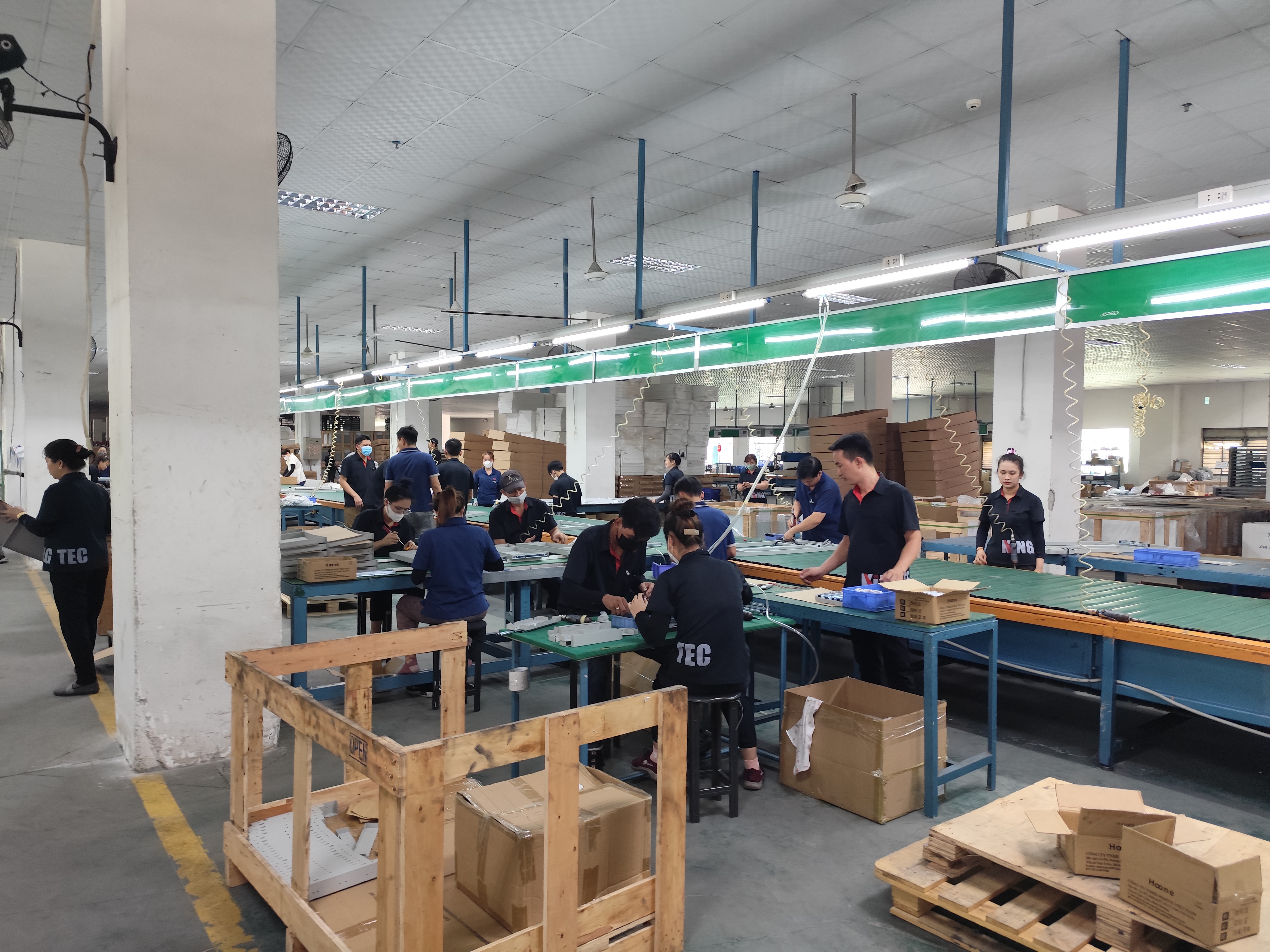
During a supplier audit in northern Vietnam, our engineer asked a simple question: "Show me how a finished bracket traces back to its steel coil." The factory manager hesitated. That hesitation told us everything we needed to know before production started.
Verify traceability before production by auditing the supplier's lot control system, reviewing how batch codes flow from raw material to finished part, approving marked first-article samples against your drawing, and confirming label records link material certificates, production dates, and shipment lots.

Pre-production verification is where most labeling failures get prevented cheaply. After shipment, they get fixed expensively. We run this verification as a structured process, and I recommend buyers do the same, whether on-site or through a virtual audit.
A six-step verification process
- Audit the quality system. Confirm ISO 9001 certification 6, or IATF 16949 for automotive stamping. Check that the certificate is current and covers the actual production site.
- Trace one lot backward. Pick a finished part on the floor. Ask the factory to show its batch code, the material certificate for that batch, and the press records. If they cannot do this in thirty minutes, their system is paper-thin.
- Review the marking method. Watch how batch codes are applied. Is the laser etcher or stamping die controlled? Who changes the lot code, and when? A wrong code applied to ten thousand parts is a full re-mark job.
- Approve first articles. Require marked samples 7 before mass production. Check content, location, character height, depth, and legibility against the drawing note. Sign off in writing.
- Test durability. For parts facing plating, painting, or outdoor use, confirm the mark survives the finishing process. We have seen etched codes vanish under thick zinc coats.
- Check documentation flow. The packing list, label, and material certificate must all show the same lot number. Mismatched records break traceability even when the part marking is perfect.
Direct part marking versus packaging labels
European OEMs increasingly want component-level traceability 8 for recall management, so direct marking on the part is becoming the norm. But small stamped clips may lack flat surface area for legible marks. In those cases, the accepted approach is a batch code on the part where feasible, plus full traceability data on the smallest packaging unit. Agree on this split with your supplier before the first tool strike, and looking ahead, ask how they plan to handle Digital Product Passport data as the EU phases in ESPR requirements.
What steps should I take if my stamping parts arrive with non-compliant EU labeling?
One lesson our team learned early: a labeling failure discovered at the destination port is really three problems at once — a compliance problem, a schedule problem, and a relationship problem. How you respond in the first 48 hours shapes all three.
Quarantine the affected lot immediately, document the non-conformance with photos and records, notify the supplier with a formal claim, then choose the fastest compliant remedy — local re-labeling, rework, or return — and update your PO, drawings, and inspection plan to prevent recurrence.

The right response depends on what exactly is wrong. Not all labeling failures carry equal risk, so we triage first. A missing batch code on a component is a nuisance. A missing CE mark on an in-scope product, or safety warnings in the wrong language, can block market access entirely.
Triage by failure type
| Failure Type | Risk Level | Typical Remedy |
|---|---|---|
| Wrong or missing batch/lot code | Medium | Local re-labeling with traceable records |
| Missing EU operator or manufacturer details | High | Add compliant labels before release to market |
| CE mark missing on in-scope product | High | Hold goods; verify conformity, then re-mark |
| Warnings not in destination language | High | Print and apply corrected packaging inserts |
| Illegible or non-durable marking | Medium | Rework or supplier re-mark; assess root cause |
| Documentation mismatch with labels | Medium | Correct records; reconcile before customs entry |
Contain, claim, correct
First, contain. Quarantine the lot and stop any onward distribution. Placing non-compliant goods on the EU market creates liability that is far worse than a delayed delivery. Second, claim. Send the supplier a formal non-conformance report with photos, the drawing revision, and the PO clause they violated. If your contract includes indemnification terms for labeling failures, invoke them now, not later. Third, correct. Decide between re-labeling at destination, rework at a local partner, or return to origin. For our clients, we usually arrange corrective labeling through our regional team, because returning a container of brackets across an ocean rarely makes financial sense.
Finally, close the loop. Every labeling escape should trigger a corrective action: update the drawing note if it was ambiguous, add a label check to the final inspection plan, and re-verify the supplier's marking process on the next order. Also apply change control going forward — any change in your address, the regulation, or the destination market must trigger a label revision. The goal is not just to fix one shipment. It is to make the failure impossible to repeat.
Conclusion
EU-compliant labeling for stamping parts fails when it is vague and succeeds when it is contractual. Specify, certify, verify, and enforce — and your shipments clear Europe without surprises.
Frequently Asked Questions
How do I specify EU labeling requirements in my stamping parts drawings and POs?
A few years back, our Vietnam office received a bracket order where the PO said only "must meet EU rules." The factory guessed. The customer rejected the lot. We never leave labeling to guesswork anymore.
What CE marking and material certifications should I require from my stamping supplier?
There is a trade-off I weigh on nearly every stamping project: how much certification is genuinely required versus what simply adds cost. Over-specifying slows quotes. Under-specifying invites customs trouble. The balance depends on the part's role.
How can I verify my supplier's labeling process meets EU traceability standards before production?
During a supplier audit in northern Vietnam, our engineer asked a simple question: "Show me how a finished bracket traces back to its steel coil." The factory manager hesitated. That hesitation told us everything we needed to know before production started.
Footnotes
1. Official EU regulation text defines traceability and labeling duties for consumer products. ↩︎
2. Defines core EU consumer product traceability obligations referenced for classifying stamped parts. ↩︎
3. Primary EU legal source clarifying which stamped parts require CE marking under this directive. ↩︎
4. Background on electroplating processes explains why coatings introduce REACH compliance risk on stamped parts. ↩︎
5. ECHA’s official SVHC candidate list clarifies the substances REACH declarations must disclose. ↩︎
6. ISO’s official standard page verifies what this quality management certification requires suppliers to demonstrate. ↩︎
7. Background on first-article inspection practice supports the pre-production sample approval step described. ↩︎
8. GS1 traceability standards explain the supply-chain data practices OEMs expect at the component level. ↩︎