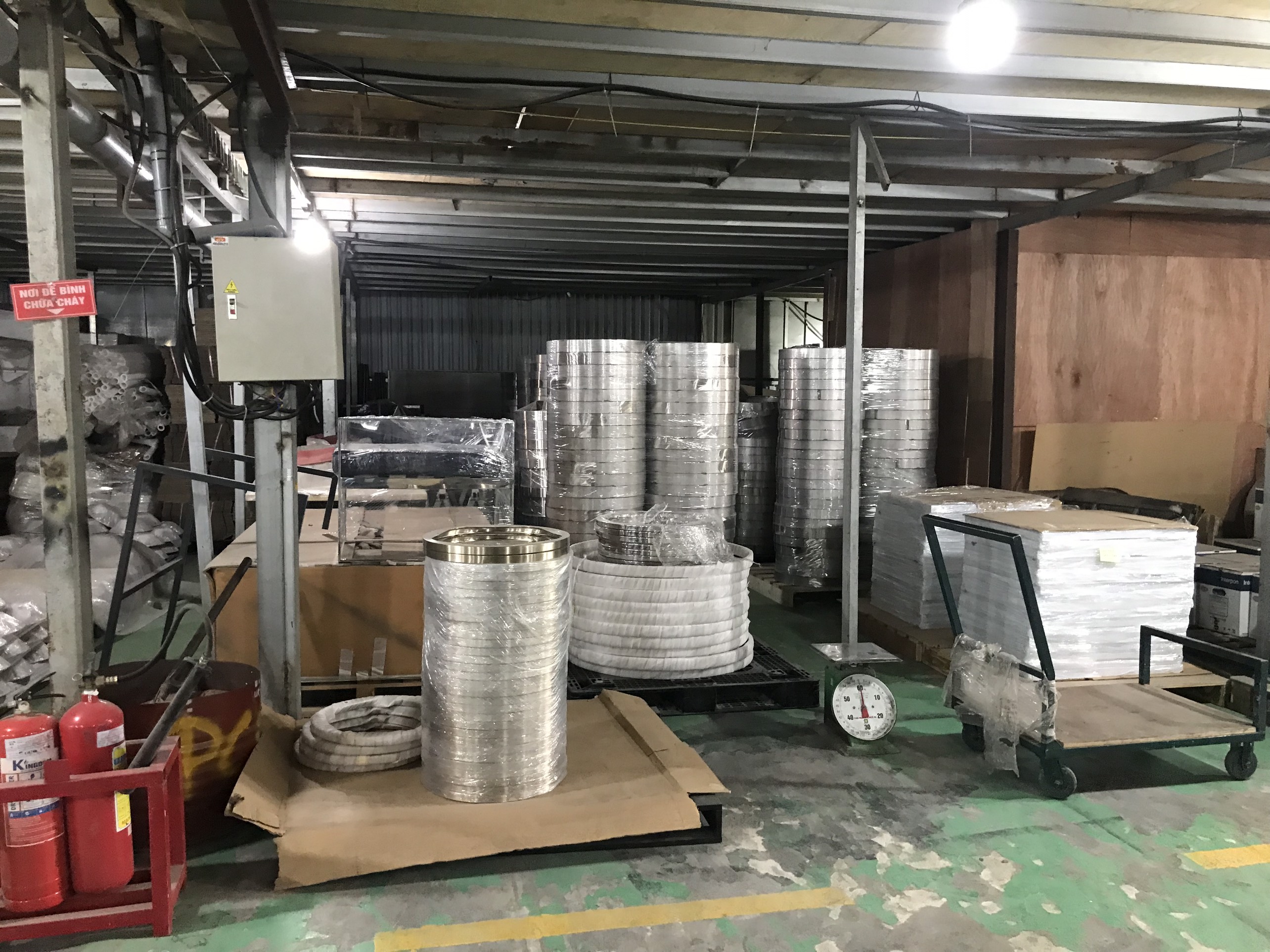

A missing batch code once held our client’s stamped brackets at Rotterdam customs for eleven days General Product Safety Regulation 1. [EU-compliant labeling on stamping parts packaging](https://dewintech.com/blog/how-require-eu-compliant-labeling-stamping-parts-sourcing-to/) is not optional—it protects your shipments and your reputation.
To require EU-compliant labeling and traceability codes on stamping parts packaging, write a binding label specification into your purchase order covering part number, batch/lot code, manufacturer and importer details, country of origin, material certification references, and machine-readable codes, then verify compliance through pre-shipment inspection and documented evidence.
That is the short answer. Now let me walk you through how to actually make it happen with an Asian supplier, step by step.
How do I specify EU labeling and traceability requirements in my purchase order?
During a co-development project for a European buyer last year, our Vietnam team caught a label spec that existed only in an email thread—never on the PO. We fixed that fast.
Specify EU labeling requirements in your purchase order by attaching a written label specification as a contractual annex. It must define mandatory fields, code formats, label placement, language versions, and durability standards, and state that non-conforming labeling constitutes grounds for rejection at final inspection.

If the labeling requirement is not in the purchase order, it does not exist. That is the hard lesson many importers learn only after a customs hold or a customer complaint. Verbal agreements and email notes get lost. Suppliers change staff. Production planners print whatever their system defaults to. In our sourcing work across Vietnam and other Asian countries, we treat the label specification as a controlled document, exactly like a technical drawing.
What a complete label specification annex should include
Your PO annex should leave zero room for interpretation. Here is the minimum structure we use for stamped brackets, clips, and chassis components going to Europe:
| Specification element | What to define | Why it matters |
|---|---|---|
| Mandatory data fields | Part number, description, lot/batch code, quantity, PO number, origin | Core traceability and customs clearance |
| Manufacturer block | Legal name and postal address of the actual producer | EU product identification guidance |
| Importer/EU operator block | Name and address of your EU importer or responsible person | Required for goods placed on the EU market |
| Code format | Barcode type (GS1-128 or Data Matrix 2), data structure, print quality grade | Automated scanning at EU warehouses |
| Label hierarchy | Part marking first, then inner pack, then carton, then documents | EU placement expectations |
| Language | English plus destination-country language where required | Member-state language rules |
| Durability | Label material, adhesive, smudge and abrasion resistance | Information must survive transport and storage |
Make it enforceable, not just descriptive
Add one clause that changes everything: labeling conformity is an inspection criterion. State that the final inspection checklist includes label verification against the approved artwork, and that mislabeled goods are treated as non-conforming product. We also require suppliers to submit a label proof for written approval before the first production run. That single approval step has prevented more shipping errors for our clients than any other control we use.
Finally, version-control the annex. When your EU importer changes address, or a member state adds a language requirement, issue a revised annex with a new revision number and get supplier sign-off. Outdated artwork is one of the most common—and most avoidable—label failures we see.
What traceability codes do I need on stamping parts packaging for EU compliance?
There is a trade-off we weigh on every European stamping project: how much data goes on the label versus how much lives in the traceability record behind a code.
EU-oriented stamping parts packaging needs a human-readable lot or batch code linked to raw material heat numbers, plus part number, quantity, and manufacturer identity. A machine-readable GS1-128 barcode or Data Matrix code should supplement—never replace—these mandatory printed fields.

The core distinction to understand is between a regulatory label and a traceability code. The label carries the human-readable information EU guidance expects: who made the part, who imported it, what the part is, and which batch it belongs to. The code—a barcode, Data Matrix, or QR—is a pointer into your records: production dates, inspection results, material certificates, and shipment history. The code is powerful, but it does not satisfy the requirement for physical, legible label information on its own.
The traceability chain behind the code
For stamped metal parts, real traceability means the lot code on the carton can be traced backward to the steel coil. In our process control work, we require suppliers to maintain this chain:
- Raw material heat number from the mill certificate (EN 10204 3 type 2.1, 2.2, or 3.1).
- Internal production batch code assigned at the press.
- Inspection lot linked to final QC records.
- Customer-facing lot number printed on the packaging.
- Cross-reference table in the supplier's ERP or MES linking all of the above.
If any link breaks, a recall or quality investigation becomes guesswork. Since the General Product Safety Regulation 4 became fully applicable in December 2024, traceability expectations for consumer-facing products have tightened, and industrial buyers increasingly mirror those expectations by contract.
Choosing the right code format
| Code type | Best use case | Data capacity | EU adoption trend |
|---|---|---|---|
| GS1-128 barcode | Carton and pallet labels for logistics | Moderate (linear) | Standard in EU logistics networks |
| Data Matrix (2D) | Small labels, inner packs, direct part marking | High, compact | Increasingly mandated by OEMs |
| QR code | Linking to digital records or documentation | High | Growing, especially for Digital Product Passport 5 readiness |
| Internal lot code (printed text) | Human verification at receiving | Low | Always required alongside codes |
One forward-looking note: the EU's Ecodesign for Sustainable Products Regulation is bringing Digital Product Passport requirements that will eventually extend QR-linked digital records to metal components. Building a clean code-to-record architecture now means you will not have to rebuild it later.
How can I verify my Asian supplier applies correct CE marking and batch codes?
A purchasing manager in the US once asked me why his stamped clips arrived with a CE mark 6 he never requested. That conversation taught me how much confusion surrounds this topic.
Verify CE marking and batch codes by first confirming whether CE even applies—most plain stampings fall outside CE scope—then use approved label artwork, first-article label samples, in-process audits, and a pre-shipment inspection that scans codes and cross-checks them against production and material records.

Start with a question most buyers skip: does your stamped part actually need CE marking? CE applies only to products within the scope of specific EU harmonization legislation—machinery components under the Machinery Regulation 7, for example, or parts of pressure equipment. An ordinary steel bracket or spring clip sold as an industrial component usually does not qualify for CE marking. Applying CE where it does not belong is itself a compliance problem. When CE does apply, the mark must be visible, legible, and backed by a Declaration of Conformity 8. Note also that CE-marked products have required an identified EU point of contact since July 2021.
A practical verification workflow
Our teams in Vietnam and China run label verification as a defined stage gate, not an afterthought. Here is the sequence we recommend:
- Scope determination. Confirm in writing with your supplier and your EU importer whether the part falls under any CE directive or regulation. Document the conclusion.
- Artwork approval. The supplier submits label artwork including all fields, code placement, and CE mark proportions if applicable. You approve in writing.
- First-article label check. During PPAP or first-article inspection, the physical label is checked against approved artwork—fonts, dimensions, data accuracy, scan quality.
- In-process audit. During production audits, verify the supplier's system actually generates batch codes from real production data, not typed in manually at packing.
- Pre-shipment inspection. The inspector scans a sample of codes, decodes the data, and cross-checks it against the production traveler, mill certificates, and the packing list.
- Record retention. Photographs of labels on cartons and pallets go into the shipment file.
The manual-entry risk in step four deserves emphasis. We have audited factories where operators typed lot numbers at the packing station from memory. That is how a wrong batch code ends up on a thousand cartons. Insist that codes print automatically from the ERP or MES batch record, and that the supplier maintains a cross-reference between their internal codes and your customer-facing lot numbers. Bidirectional traceability—forward from coil to customer, backward from customer to coil—is what makes a recall fast instead of catastrophic.
What documentation should I request to prove labeling and traceability compliance?
Reviewing a compliance file before a shipment left Haiphong, I once found a mill certificate whose heat number matched nothing on the cartons. The paperwork looked complete—until we cross-checked it.
Request a documentation package containing mill test certificates (EN 10204 type 2.1, 2.2, or 3.1), batch traceability records linking heat numbers to lot codes, RoHS and REACH/SVHC declarations, label artwork approvals with photos, packing lists with lot references, and a Declaration of Conformity where CE applies.

Documents prove what labels claim. A batch code on a carton is only as trustworthy as the records standing behind it. When we manage final inspection and shipment release for clients, we assemble a document file for every lot, and we cross-check every reference before goods move. The cross-check is the point—a stack of unconnected PDFs proves nothing.
The core documentation set
| Document | What it proves | Key detail to verify |
|---|---|---|
| Mill test certificate (EN 10204) | Raw material identity and properties | Heat number matches the batch traceability record; correct type (2.1, 2.2, or 3.1) per your PO |
| Batch traceability record | Link from coil to finished lot | Lot code on record matches lot code on carton labels |
| RoHS declaration | Restricted substance compliance | Covers the actual material and any plating or coating |
| REACH / SVHC statement | Substance disclosure obligations | Current SVHC candidate list version referenced |
| Label artwork approval + photos | Labels match the approved spec | Photos show real production cartons, not samples |
| Packing list | Shipment contents by lot | Quantities and lot codes reconcile with labels |
| Declaration of Conformity | CE compliance where applicable | Correct legislation cited, signed by the responsible entity |
| Final inspection report | QC release of the lot | Includes label verification as a checked item |
Match everything to one thread
Ask your supplier one simple test question: "For carton number X in this shipment, show me the heat number of the steel." If the answer takes more than a few minutes, the traceability system is decorative, not functional. We also advise clients to keep the label artwork file, the ERP item master, the packing spec, and the QC checklist synchronized to the same data. Treat label artwork as part of the supply chain record, not a marketing asset. When those four sources agree, audits become easy and customs queries get answered the same day.
For coated or chemically treated parts, ask one extra question: does any coating trigger CLP hazard labeling? Most bare stampings do not, but oils, surface treatments, or bundled chemicals can add pictogram and hazard-statement requirements you do not want to discover at the border.
Conclusion
Weak labeling turns small stamping orders into customs holds and recall nightmares. Specify it contractually, code it traceably, verify it physically, and document it completely—compliance then becomes routine.
Frequently Asked Questions
How do I specify EU labeling and traceability requirements in my purchase order?
During a co-development project for a European buyer last year, our Vietnam team caught a label spec that existed only in an email thread—never on the PO. We fixed that fast.
What traceability codes do I need on stamping parts packaging for EU compliance?
There is a trade-off we weigh on every European stamping project: how much data goes on the label versus how much lives in the traceability record behind a code.
How can I verify my Asian supplier applies correct CE marking and batch codes?
A purchasing manager in the US once asked me why his stamped clips arrived with a CE mark 6 he never requested. That conversation taught me how much confusion surrounds this topic.
Footnotes
1. Background reference explaining the regulation’s scope and December 2024 applicability date. ↩︎
2. Explains the 2D barcode format referenced for traceability coding on packaging. ↩︎
3. Reference for the European standard governing mill test certificate types cited. ↩︎
4. Official EU source explaining the regulation tightening traceability expectations mentioned. ↩︎
5. EU page detailing the digital passport initiative extending to metal components. ↩︎
6. Official EU guidance on CE marking scope and requirements discussed in the workflow. ↩︎
7. Official EU legislation