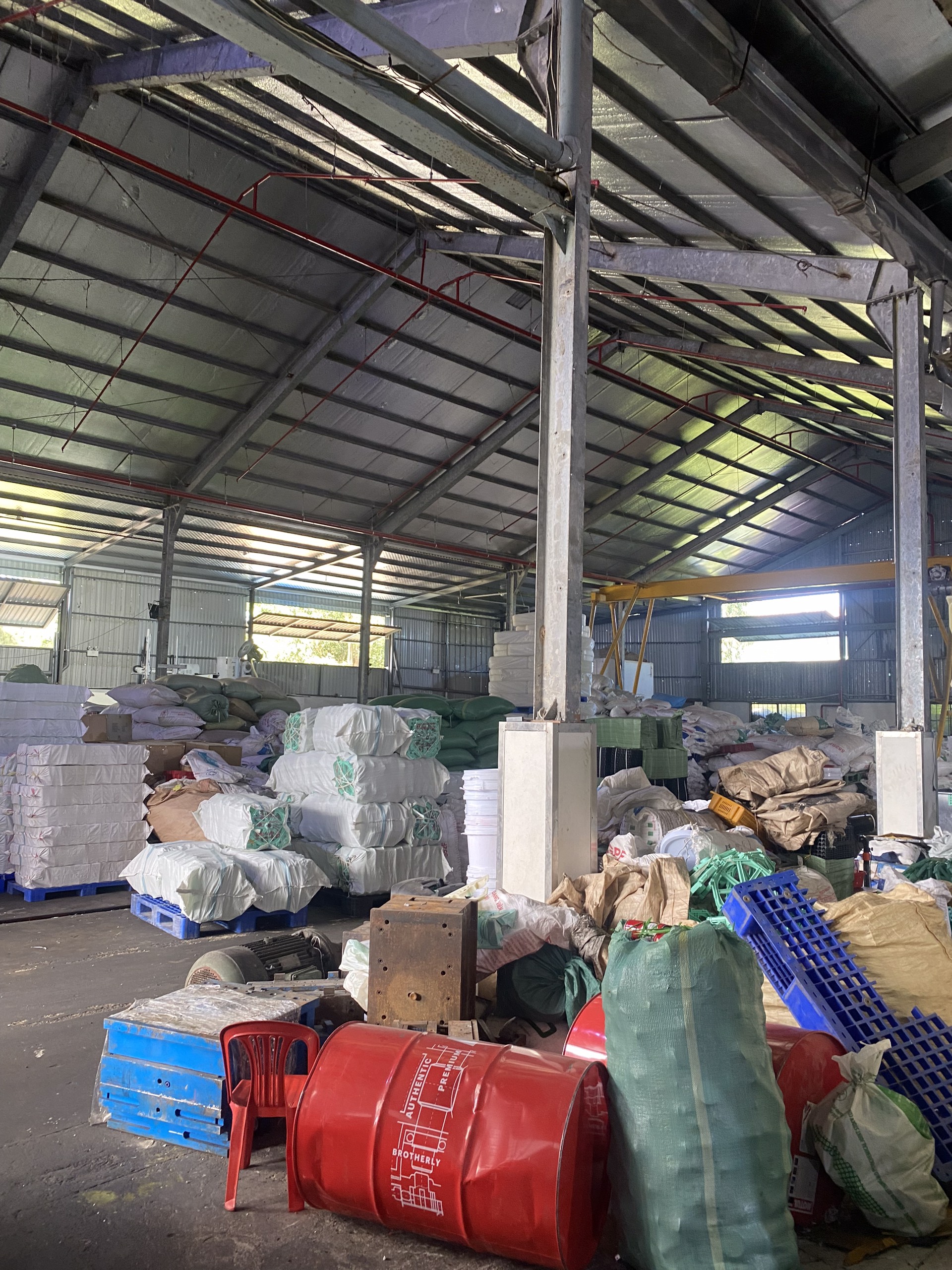

Last quarter, a European buyer flagged one of our shipments — not for defective brackets, but for non-compliant packaging materials containing restricted substances.
To require EU-compliant packaging from stamping parts suppliers, you must embed PPWR requirements into supplier contracts, mandate Declarations of Conformity, audit packaging materials for restricted substances like PFAS and heavy metals, and verify recyclability documentation before every shipment enters the EU market.
The new Packaging and Packaging Waste Regulation 1 changes everything for anyone shipping stamping parts into Europe. This article walks through the exact steps our team follows to keep suppliers aligned with these rules.
How do I know which EU packaging compliance standards apply to my stamping parts?
When we first started exporting custom brackets and mounting hardware to EU distributors, the assumption was simple: get the parts right, and the packaging is an afterthought. That assumption nearly cost us a major account.
The EU Packaging and Packaging Waste Regulation (PPWR) applies to all packaging entering the EU market — including cardboard boxes, plastic wraps, wooden crates, and VCI films used to ship stamping parts. Compliance with substance limits, recyclability rules, and labeling requirements is mandatory starting August 12, 2026.

Understanding the PPWR Scope
The PPWR replaces the older Packaging and Packaging Waste Directive 2 (94/62/EC). The key difference is that a regulation applies uniformly across all EU member states. There is no room for national interpretation. If your packaging touches the EU, these rules apply.
For stamping parts — brackets, mounting plates, post bases, flanges — the parts themselves are not packaging. But everything that wraps, holds, or protects them during transit is. That includes:
- Cardboard boxes and dividers
- Stretch wrap and shrink film
- VCI anti-corrosion materials (bags, paper, emitters)
- Wooden crates and pallets
- Foam inserts and plastic trays
- Banding straps and edge protectors
Each of these falls under PPWR. And each must meet substance restrictions, recyclability criteria, and labeling mandates.
Which Specific Rules Matter Most for Stamping Parts Packaging?
I find it helpful to break the rules into three buckets: what is in the packaging, how the packaging is designed, and how the packaging is labeled.
| Compliance Area | Key Requirement | Deadline |
|---|---|---|
| Substance restrictions | Heavy metals 3 (Pb, Cd, Hg, Cr VI) combined ≤ 100 mg/kg; no PFAS | August 12, 2026 |
| Recyclability | All packaging must be recyclable (Grade C minimum) | January 1, 2030 |
| Minimization | No excess volume, no false bottoms, no double walls | January 1, 2030 |
| Material labeling | Harmonized material identification codes on all packaging | August 12, 2028 |
| Digital labeling | QR codes for disposal/recycling instructions | August 12, 2028 |
| Recycled content | Plastic packaging must contain 10–35% recycled content | January 1, 2030 |
| Reusability labeling | Reusable packaging must carry specific labels | February 12, 2029 |
Don't Forget Adjacent Standards
PPWR is the headline regulation, but it does not operate alone. If your supplier uses wooden crates or pallets, ISPM 15 wood standards 4 still apply for phytosanitary treatment. REACH and RoHS compliance remain relevant for screening Substances of Very High Concern 5 (SVHC) above the 0.1% weight-by-weight threshold. And if your VCI anti-corrosion materials contain restricted nitrites 6 or secondary amines, they must comply with REACH Annex XVII.
Our team in Vietnam learned this the hard way when a supplier switched to a cheaper VCI film that contained a restricted amine compound. The parts were fine. The packaging was not.
What packaging requirements should I include in my supplier contracts to ensure EU compliance?
A lesson I keep relearning in this business: if it is not in the contract, it does not exist. When we began updating our Quality Assurance Agreements with stamping parts suppliers across Asia, the biggest gap was packaging — it was barely mentioned.
Your supplier contracts must include explicit PPWR compliance clauses, require delivery of a Declaration of Conformity and technical documentation for all packaging materials, mandate substance testing certificates, specify recyclability targets, and define penalties for non-compliance — all referencing the August 12, 2026 deadline.

The Core Contractual Clauses
When we draft or update a Quality Assurance Agreement for a stamping parts supplier, we now include a dedicated packaging compliance section. Here is the framework we use:
| Contract Clause | What It Covers | Why It Matters |
|---|---|---|
| PPWR Compliance Declaration | Supplier confirms all packaging meets current PPWR requirements | Establishes legal baseline |
| Declaration of Conformity (DoC) | Supplier must provide a DoC for every packaging type used | Required for EU market surveillance |
| Technical Documentation 7 | Supplier must deliver full material composition data, test reports | Needed for the conformity assessment |
| Substance Restrictions | Heavy metals ≤ 100 mg/kg; PFAS-free certification; SVHC screening | Prevents shipment rejection at EU border |
| Recyclability Proof | Evidence that packaging meets Design for Recycling criteria | Grade C by 2030, Grade B by 2038 |
| Minimization Certification | Confirmation that packaging volume and weight are minimized | Prohibits excess packaging |
| Labeling Compliance | Material identification codes, recycling symbols, QR codes | Mandatory by 2028 |
| EPR Registration | Supplier or importer is registered with Extended Producer Responsibility authorities | Required in each EU member state of delivery |
| Remediation & Penalties | Defines consequences for non-compliance (rework, cost recovery, termination) | Creates accountability |
Getting Specific on Technical Packaging Specifications
Generic clauses are not enough. Our procurement team now attaches a technical packaging specifications annex to every supplier contract. This annex spells out:
- Exact material types permitted (e.g., corrugated cardboard, HDPE trays)
- Prohibited substances with test method references
- Required certifications (e.g., PFAS-free certification for stretch wraps)
- Labeling format and placement requirements
- Documentation delivery timelines (e.g., DoC submitted 30 days before first shipment)
For B2B transport packaging, we also specify the use of standardized European pooling systems like VDA-KLT crates 8 where the buyer requires them. This helps satisfy the PPWR's mandatory reuse targets for industrial transport packaging.
The Extended Producer Responsibility Angle
One area many suppliers overlook is Extended Producer Responsibility. Under EPR schemes 9, someone in the supply chain must register and pay fees in each EU member state where the packaged product is delivered. If your supplier is the importer of record, this responsibility may fall on them. If you are the importer, it falls on you. Either way, the contract must clarify who handles EPR registration and the associated plastic packaging tax obligations.
We always define this upfront. Ambiguity here leads to fines and shipment holds.
Data Requirements for Circular Economy Regulations
The EU is moving toward full transparency in packaging data. We now require suppliers to provide structured packaging data in a standardized format — composition percentages, recycled content levels, and recyclability grades. This data feeds into our own conformity assessment process and prepares us for the digital labeling requirements coming in 2028.
How can I verify that my stamping parts supplier is actually following EU-compliant packaging rules?
Trust but verify — that is the principle we apply to every supplier relationship. When our China office manages quality control for stamping parts shipments, we do not just check the parts. We now audit the packaging too.
To verify your stamping parts supplier's EU-compliant packaging, conduct on-site packaging audits, request third-party lab test reports for heavy metals and PFAS, cross-check Declarations of Conformity against actual materials used, and implement incoming inspection protocols that include packaging material sampling at your receiving warehouse.

Building a Verification Process
Verification is not a one-time event. It is a system. Here is the process we have built:
Step 1: Pre-Qualification Audit. Before approving a supplier, our team visits the facility and inspects the packaging materials they use. We check storage conditions, material certificates, and labeling practices. We confirm whether the supplier understands the PPWR, not just whether they claim to comply.
Step 2: Documentation Review. We require the supplier to submit a complete technical file before the first shipment. This includes material safety data sheets, substance test reports, recyclability assessments, and a draft Declaration of Conformity. Our team reviews this against PPWR requirements.
Step 3: Third-Party Testing. For high-risk materials — especially VCI films, stretch wraps, and treated cardboard — we send samples to an accredited lab. We test for heavy metals, PFAS compounds, and SVHC content. We also verify that dry-film or low-migration stamping lubricants are used to prevent chemical leaching into packaging liners, which can disqualify the packaging from high-grade recycling streams.
Step 4: Incoming Inspection. At our receiving warehouse (or at the buyer's), we spot-check packaging materials against the approved specifications. We look for correct recycling symbols and labeling, proper material identification codes, and any signs of substitution.
Step 5: Annual Re-Audit. Suppliers must submit updated documentation annually. We re-audit packaging materials at least once a year, or whenever the supplier changes a packaging component.
What to Test For
| Test Parameter | Method / Standard | Acceptable Limit |
|---|---|---|
| Heavy metals (Pb + Cd + Hg + Cr VI) | EN 13432 or equivalent | ≤ 100 mg/kg total |
| PFAS (fluorinated compounds) | EPA 533 / LC-MS screening | Not detected / PFAS-free |
| SVHC (REACH Candidate List) | REACH Art. 33 / SCIP | < 0.1% w/w per substance |
| Nitrites in VCI materials | REACH Annex XVII | Below restricted limit |
| Recycled content in plastic | ISO 22095 or equivalent | ≥ 10–35% (by 2030) |
Handling Supplier Pushback
Some suppliers resist verification. They say testing is expensive or unnecessary. In our experience, this resistance usually signals a gap. We explain that the cost of a single rejected shipment at an EU port far exceeds the cost of a lab test. And we remind them that our contract includes remediation clauses.
When a supplier genuinely cannot provide the data, we help them. Our team has connected suppliers with testing labs and walked them through the documentation requirements. This approach builds long-term partnerships rather than adversarial relationships. But we never ship without the data. If you are sourcing from Vietnam specifically, we have also documented how to ensure suppliers meet packaging and labeling needs for stamping parts in that region.
What should I do if my supplier fails to meet EU packaging compliance requirements?
Early last year, one of our suppliers shipped a batch of custom post bases wrapped in stretch film that tested positive for fluorinated slip agents — a clear PFAS issue. That single incident triggered a full review of our non-compliance response protocol.
If your supplier fails EU packaging compliance, immediately quarantine the affected shipment, issue a formal non-conformance report, require corrective action with a defined timeline, source compliant replacement packaging, and escalate to contract termination if the failure is repeated or poses a legal risk to your EU market access.

Immediate Response: The First 48 Hours
Speed matters. When a compliance failure is detected, the clock starts on potential EU market consequences. Here is how we handle it:
- Quarantine the shipment. Do not release it to the buyer or into EU distribution.
- Document the failure. Take photos, retain samples, and record the specific deviation against the PPWR requirement.
- Notify the buyer. Transparency protects the relationship. Explain what happened and your corrective plan.
- Issue a formal non-conformance report (NCR). Send this to the supplier with a request for root cause analysis and corrective action within 10 business days.
Corrective Action Framework
Not every failure is equal. A missing label is different from a PFAS-contaminated film. We grade non-conformances and respond accordingly:
| Severity Level | Example | Required Action | Timeline |
|---|---|---|---|
| Minor | Incorrect recycling symbol placement | Supplier corrects labeling; re-labels remaining stock | 15 days |
| Major | Heavy metal content exceeds 100 mg/kg limit | Supplier replaces all affected packaging; submits new test report | 30 days |
| Critical | PFAS detected in packaging film; SVHC above 0.1% threshold | Shipment rejected; supplier placed on probation; immediate re-sourcing | Immediate |
Escalation Path
If a supplier fails to deliver corrective action on time, or if the same issue recurs, we escalate:
- First failure: NCR + corrective action plan.
- Second failure: Supplier placed on probation; all shipments require pre-shipment packaging inspection by our QC team.
- Third failure: Contract termination clause activated. We begin transitioning to an alternate supplier.
We have had to terminate one supplier relationship over packaging non-compliance in the past 18 months. It was disruptive, but the alternative — losing EU market access — was worse.
Protecting Yourself Legally
The Declaration of Conformity and technical documentation must be retained for five years for single-use packaging and ten years for reusable packaging. If a supplier provides false compliance data, you need this paper trail. Our contracts include an indemnification clause: if the supplier's non-compliance causes fines, delays, or market withdrawal, the supplier bears the financial responsibility.
This is not about blame. It is about protecting the supply chain. Every buyer we work with — from purchasing managers in the US to engineering firms in Europe — expects this level of rigor. And the circular economy regulations driving the PPWR are only going to get stricter. For those also shipping to the US market, the process for communicating packaging and labeling requirements for US-compliant stamping parts follows a similar discipline, though the specific standards differ.
Preparing for What Comes Next
The August 12, 2026 deadline covers substance restrictions and initial labeling. But by 2028, harmonized labeling with recycling symbols and QR codes kicks in. By 2030, recyclability grades and recycled content mandates take effect. Suppliers who struggle with the 2026 requirements will not survive the 2030 wave.
Our approach is to start supplier development now. We share the full PPWR timeline with every supplier. We build compliance checkpoints into our PPAP process. And we make it clear: EU-compliant packaging is not optional. It is a condition of doing business.
Conclusion
EU-compliant packaging for stamping parts is a supply chain mandate, not an afterthought. Start auditing your suppliers now, update your contracts, and build verification into your quality process before the August 2026 deadline arrives.
Frequently Asked Questions
Which Specific Rules Matter Most for Stamping Parts Packaging?
I find it helpful to break the rules into three buckets: what is in the packaging, how the packaging is designed, and how the packaging is labeled.
How do I know which EU packaging compliance standards apply to my stamping parts?
When we first started exporting custom brackets and mounting hardware to EU distributors, the assumption was simple: get the parts right, and the packaging is an afterthought. That assumption nearly cost us a major account.
What packaging requirements should I include in my supplier contracts to ensure EU compliance?
A lesson I keep relearning in this business: if it is not in the contract, it does not exist. When we began updating our Quality Assurance Agreements with stamping parts suppliers across Asia, the biggest gap was packaging — it was barely mentioned.
Footnotes
1. Updated official European Commission topic page for packaging waste and the new PPWR. ↩︎
2. Official legal text of the directive that established the original EU packaging framework. ↩︎
3. EU legislation specifying the concentration levels of heavy metals in packaging. ↩︎
4. International standard for wood packaging materials used in global trade. ↩︎
5. Official ECHA list of chemical substances restricted under EU environmental regulations. ↩︎
6. Official ECHA list of substances restricted under Annex XVII of the REACH regulation. ↩︎
7. European Commission guide on manufacturer obligations for technical documentation and conformity. ↩︎
8. Official VDA standard for standardized small load carrier systems in European logistics. ↩︎
9. OECD resource explaining the policy approach for producer responsibility in waste management. ↩︎