

When we started managing supplier audits for stamping parts across Vietnam and China, one gap kept surfacing — traceability systems 1 were either incomplete or entirely missing, and our U.S. clients were failing OEM audits 2 because of it.
To require suppliers to establish traceability systems for stamping parts, OEMs must contractually define Critical Tracking Events and Key Data Elements, mandate unique part identification through laser marking or RFID, require integrated ERP/MES recordkeeping, and verify compliance through regular on-site audits and mock trace-back drills.
This article walks through the practical steps we use to build and verify supplier traceability. Each section tackles a specific challenge — from setting standards to conducting factory visits. Let us break it down.
How do I set clear traceability standards for my stamping part suppliers to satisfy OEM requirements?
A few years ago, one of our purchasing partners in the U.S. lost a major contract because their stamping supplier could not trace a batch of mounting brackets back to the original steel coil. That single failure cost months of qualification work and tens of thousands of dollars.
Set clear traceability standards by defining Critical Tracking Events at each production stage, specifying Key Data Elements like batch numbers and machine IDs in your supplier agreement, and requiring compliance with IATF 16949 certification or equivalent quality management system standards before awarding contracts.

The first step is to build your traceability requirements into the contract itself. Do not treat traceability as a "nice to have." It must be a binding obligation. When we onboard a new stamping supplier for a U.S. client, we include a dedicated traceability clause in the supplier agreement. This clause lists every data point the supplier must capture, store, and make available during an audit.
Define Your Critical Tracking Events
Critical Tracking Events 3 are the key moments in the production lifecycle where data must be recorded. For stamping parts — brackets, clips, mounting plates — these events follow a predictable pattern.
| Critical Tracking Event | What Gets Recorded | Why It Matters |
|---|---|---|
| Raw material receipt | Mill certificate number, coil/batch ID, material grade, supplier name | Proves material origin and specification compliance |
| Stamping/forming | Machine ID, die number, operator ID, timestamp, press parameters | Links the finished part to specific tooling and process settings |
| In-process inspection | Dimensional measurements, visual inspection results, SPC data | Confirms process is in control at that moment |
| Final inspection | Go/no-go gauge results, CMM data, surface finish checks | Validates the part meets drawing requirements |
| Packaging and shipping | Box/pallet ID, quantity, shipment date, destination | Enables forward traceability to the customer |
Each event creates a data record. Together, these records form a chain. If any link is missing, the chain breaks — and the audit fails.
Specify Key Data Elements in Detail
Many suppliers ask, "What exactly do you want us to track?" The answer must be precise. We always provide a written list of Key Data Elements 4 as part of the Production Part Approval Process documentation. This list includes material batch numbers, heat lot numbers, machine IDs, operator names or codes, timestamps for each operation, and test results tied to a Control Plan 5.
Vague requirements lead to vague compliance. If your standard says "track materials," a supplier might simply log "steel" in a notebook. That is not traceable. Instead, specify: "Record the mill certificate number, material grade per ASTM/JIS/EN standard, coil weight, and receiving date for every incoming lot."
Align With Industry Standards
Most OEM audits reference IATF 16949 certification 6, which requires documented traceability procedures. If your supplier already holds this certification, they should have a quality management system 7 that covers traceability. But certification alone does not guarantee execution. We have audited IATF-certified suppliers who still lacked real-time batch linkage between raw material and finished parts. The standard sets the framework. Your contract must set the specifics.
What specific material and batch records should I expect from my supplier during a quality audit?
During a recent audit at a stamping facility in Vietnam, our team asked the production manager to pull the material certificate for a batch of steel brackets shipped two months prior. mill test certificates 8 It took the team over four hours to locate the document. That delay alone would fail most OEM audits.
During a quality audit, expect suppliers to produce mill test certificates, incoming inspection records, batch-to-part linkage logs, in-process Statistical Process Control data, final inspection reports, Failure Mode and Effects Analysis documents, and packaging records — all retrievable within minutes, not hours.
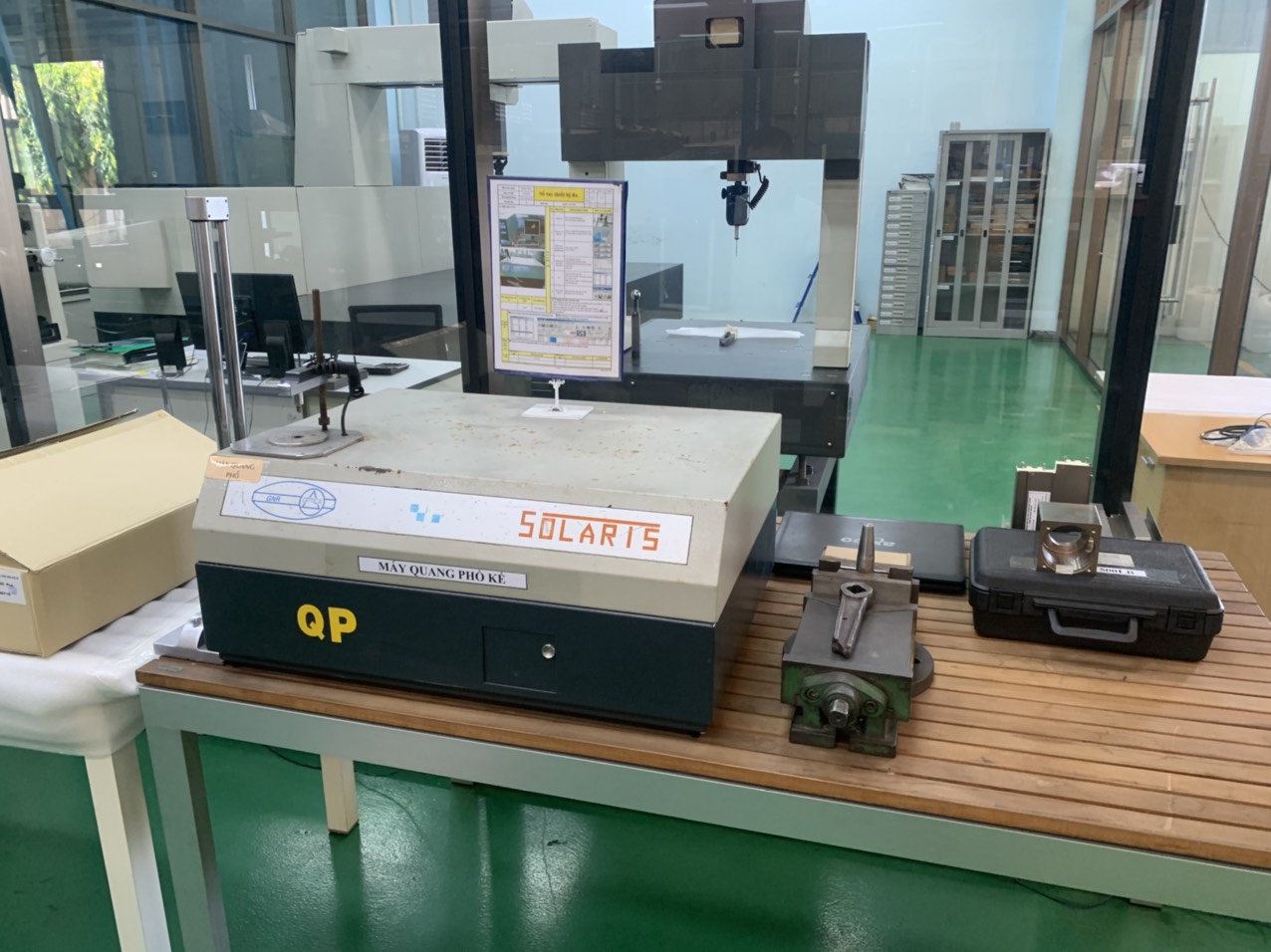
The records your supplier maintains are the backbone of their traceability system. Without organized, accessible documentation, no amount of technology can save an audit. Here is what you should demand — and what we always verify.
The Core Record Set
Every stamping part supplier must maintain a specific set of documents. These records serve different purposes but together form a complete audit trail.
| Record Type | Contents | Retention Period |
|---|---|---|
| Mill test certificate | Chemical composition, mechanical properties, heat number, material grade | Minimum 15 years (automotive) |
| Incoming inspection report | Verification of material spec against purchase order, visual and dimensional checks | Duration of contract + 3 years |
| Batch linkage log | Maps raw material lot to finished part serial or batch number | Duration of contract + 3 years |
| SPC charts | Xbar-R or Xbar-S charts for critical dimensions during stamping | Duration of contract + 1 year |
| FMEA document | Risk analysis for each process step, severity/occurrence/detection ratings | Updated annually or per process change |
| Final inspection report | CMM data, gauge results, visual inspection notes, pass/fail status | Duration of contract + 3 years |
| Packaging and shipping log | Pallet ID, box quantity, shipment date, carrier, destination | Duration of contract + 1 year |
How Records Should Be Organized
Paper-based systems still exist in many stamping shops, especially smaller ones. They are not inherently bad — but they are slow. When an OEM auditor asks for a specific batch record, the supplier must retrieve it quickly. We recommend that suppliers organize records in two ways: by date and by part number. This dual indexing lets them find records no matter how the auditor frames the request.
Digital systems are better. A well-configured ERP system can pull a mill certificate in seconds. We have seen suppliers invest in basic document management software — not expensive, but effective. The key is consistency. Every record must be filed the same way, every time.
Statistical Process Control and Process Documentation
OEM auditors do not just want to see that parts passed inspection. They want evidence that the process was in control. Statistical Process Control 9 charts show this. They demonstrate that critical dimensions — hole diameters, bend angles, flange heights — stayed within tolerance throughout the production run.
A Control Plan ties everything together. It lists each process step, the characteristic being controlled, the measurement method, the sample size, and the reaction plan if something goes out of spec. Without a Control Plan, a supplier's quality system is reactive, not preventive. And OEM auditors can spot the difference immediately.
We also look for evidence of Failure Mode and Effects Analysis 10. This document identifies what could go wrong at each step and how the supplier plans to prevent it. For stamping parts, common failure modes include material cracking during forming, burr formation on cut edges, and dimensional drift due to die wear. A thorough FMEA shows the supplier has thought about these risks and has countermeasures in place.
How can I ensure my supplier's traceability system effectively links raw materials to my finished stamping parts?
The trade-off we constantly weigh is cost versus depth. A full direct part marking system with laser engraving on every bracket adds cost. But when a recall hits and you need to isolate exactly which coil of steel went into which shipment, that investment pays for itself overnight.
Ensure effective linkage by requiring suppliers to apply unique identifiers — through laser marking, QR codes, or Data Matrix codes — at the earliest production stage, integrate these identifiers with ERP and MES systems for real-time tracking, and conduct periodic trace-back exercises from finished parts to raw material certificates.

Linking raw materials to finished parts is the single most important function of a traceability system. It is also where most suppliers struggle. The gap usually occurs at the transition point — when raw material becomes a work-in-progress part. Here is how we close that gap.
Choosing the Right Identification Method
The marking method depends on the part. For stamping parts like brackets, clips, and mounting plates, you have several options. Each has pros and cons.
| Marking Method | Durability | Cost | Best For | Limitation |
|---|---|---|---|---|
| Laser marking | Very high — permanent, survives heat and chemicals | Higher upfront equipment cost | Safety-critical parts, automotive, aerospace | Requires capital investment in laser equipment |
| QR code labels | Moderate — can peel or smudge | Low | High-volume, low-criticality parts | Not suitable for high-temperature environments |
| Data Matrix codes (engraved) | Very high | Moderate | Small parts with limited surface area | Requires specialized readers |
| RFID tags | High — no line of sight needed | Moderate to high | Large assemblies, reusable containers | Tags can be damaged during stamping operations |
| Ink dot peen marking | High | Low to moderate | Flat surfaces on brackets and plates | Less precise than laser for small characters |
For most stamping parts we manage, direct part marking with laser engraving is the preferred method. It creates a permanent, machine-readable code on the part surface. The code typically encodes a serial number or batch number that links back to the production record in the supplier's system.
System Integration Is Non-Negotiable
A marking on the part is useless if it does not connect to a database. The supplier's Manufacturing Execution System must capture the marking at the point of creation and link it to the production order, material batch, machine, and operator. When our team audits a supplier, we test this by scanning a part and asking the system to return the full production history. If the system cannot do this in real time, the integration is incomplete.
Enterprise Resource Planning systems handle the broader picture — purchase orders, material receipts, shipping records. The MES handles the shop floor. Both must talk to each other. We have worked with suppliers who had excellent ERP systems but no MES. Their office records were perfect, but the shop floor was a black box. That gap is a major audit risk.
Trace-Back Exercises
We recommend running mock trace-back drills at least quarterly. Pick a finished part at random. Ask the supplier to trace it back to the raw material certificate within a defined timeframe — ideally under four hours for automotive parts. Document the results. If the supplier fails, issue a corrective action and re-test within 30 days.
These drills serve two purposes. First, they test the system. Second, they train the supplier's team. People who practice tracing parts regularly build habits that keep the system alive. Without practice, even the best system decays. This is a core part of recall management readiness.
What are the best ways for me to verify a supplier's traceability process during an on-site factory visit?
Last quarter, we visited a stamping supplier in southern China who had submitted flawless documentation. Every report was neat, every certificate was filed. But when we walked the production floor and asked an operator to show us how a part number linked to the material batch, he looked confused. The paperwork was good. The execution was not.
Verify a supplier's traceability process during a factory visit by conducting live trace-back tests on random parts, interviewing floor operators about their recording procedures, inspecting marking equipment calibration records, reviewing system access controls, and checking whether digital records match physical inventory and labeling on the shop floor.

An on-site visit is the most reliable way to verify traceability. Documents can be fabricated. Systems can be staged for auditors. But a well-designed visit protocol reveals the truth. Here is the approach we use.
The Walk-Through Protocol
Start at the receiving dock, not the conference room. Watch how incoming material is received, labeled, and logged. Check whether the coil or sheet batch number matches the mill certificate on file. Then follow the material to the stamping press. Observe how the operator identifies which batch is being run. Is there a traveler card? Is the batch number entered into an MES terminal? Or is there no system at all?
Move through each station: stamping, deburring, secondary operations (tapping, welding, plating), inspection, and packaging. At each station, ask the operator: "How do you know which batch this part came from?" Their answer tells you everything about the system's real-world function.
Live Trace-Back Test
This is the most powerful verification tool. Pick three to five finished parts from the shipping area at random. Hand them to the supplier's quality team and ask them to trace each part back to its raw material certificate. Time the exercise. Record the results.
For automotive stamping parts, a reasonable target is full trace-back within two to four hours. Some OEMs require it in under one hour. If the supplier cannot complete the exercise, note the specific failure point. Was it a missing batch linkage? A system that was down? An operator who did not record the data?
What to Look For on the Floor
Beyond the trace-back test, look for these indicators of a healthy traceability system:
- Clear labeling on every bin and container — material batch numbers should be visible at each workstation.
- Active MES terminals — operators should be scanning or entering data in real time, not batching entries at the end of a shift.
- Calibrated marking equipment — if the supplier uses laser marking, check the calibration records for the laser unit. An out-of-calibration laser produces unreadable marks.
- Segregation of non-conforming material — rejected parts should be physically separated and clearly tagged. Mixing good and bad parts destroys traceability.
- Training records — operators should have documented training on the traceability procedure. Ask to see the records.
Scoring the Visit
We use a simple scoring system to grade supplier traceability maturity. This helps us communicate findings to our U.S. clients in a clear, actionable format.
| Criteria | Score 0 (Fail) | Score 1 (Partial) | Score 2 (Pass) |
|---|---|---|---|
| Batch linkage: raw material to finished part | No linkage exists | Linkage exists but incomplete or delayed | Full linkage, retrievable in real time |
| Part identification method | No marking or labeling | Labels applied but not permanent | Direct part marking with laser or engraved codes |
| System integration (ERP/MES) | No digital system | ERP only, no shop-floor integration | ERP and MES integrated with real-time data capture |
| Operator knowledge | Operators unaware of traceability procedures | Some operators trained, inconsistent execution | All operators trained and demonstrate correct procedure |
| Document retrieval speed | Cannot retrieve records within 8 hours | Retrieval within 4–8 hours | Retrieval within 2 hours |
| Mock trace-back drill result | Drill not attempted or failed completely | Partial trace completed | Full trace-back completed within target time |
A supplier scoring below 8 out of 12 needs a corrective action plan. Below 4, and we recommend our client does not proceed with the contract until fundamental gaps are closed.
Supporting Smaller Suppliers
Not every stamping shop has the budget for an integrated MES and laser marking station. We have learned that a modular approach works best. Start with the basics: clear batch labeling, a paper-based traveler system, and organized filing. Then add digital tools incrementally — a barcode scanner here, a simple database there. The Production Part Approval Process itself provides a framework for building up traceability step by step.
We sometimes connect smaller suppliers with preferred vendors for traceability software. We also share process guides and templates. The goal is not to burden the supplier but to build a system that works and can be verified. When the OEM auditor arrives, the supplier must demonstrate not just documentation, but a living, functioning traceability chain from raw material to finished stamping part. Understanding what certifications are needed when sourcing automotive OEM sheet metal fabrication can also help you set the right qualification benchmarks before even beginning the traceability conversation.
Conclusion
Requiring suppliers to establish traceability systems for stamping parts demands clear contractual standards, thorough documentation, integrated digital systems, and hands-on verification through factory visits and trace-back drills — protecting your supply chain and ensuring every OEM audit is passed.
Frequently Asked Questions
How do I set clear traceability standards for my stamping part suppliers to satisfy OEM requirements?
A few years ago, one of our purchasing partners in the U.S. lost a major contract because their stamping supplier could not trace a batch of mounting brackets back to the original steel coil. That single failure cost months of qualification work and tens of thousands of dollars.
What specific material and batch records should I expect from my supplier during a quality audit?
During a recent audit at a stamping facility in Vietnam, our team asked the production manager to pull the material certificate for a batch of steel brackets shipped two months prior. mill test certificates 8 It took the team over four hours to locate the document. That delay alone would fail most OEM audits.
How can I ensure my supplier's traceability system effectively links raw materials to my finished stamping parts?
The trade-off we constantly weigh is cost versus depth. A full direct part marking system with laser engraving on every bracket adds cost. But when a recall hits and you need to isolate exactly which coil of steel went into which shipment, that investment pays for itself overnight.
Footnotes
1. Explains supply chain traceability and its importance. ↩︎
2. Provides insights into OEM audit expectations and preparation. ↩︎
3. Defines Critical Tracking Events in supply chain traceability. ↩︎
4. Explains Key Data Elements for product tracing. ↩︎
5. Explains what a Control Plan is and its importance in manufacturing. ↩︎
6. Details the IATF 16949 standard for automotive quality management. ↩︎
7. Introduces the concept and benefits of a quality management system. ↩︎
8. Defines mill test reports and their purpose. ↩︎
9. Explains Statistical Process Control and its tools. ↩︎
10. Describes Failure Mode and Effects Analysis (FMEA) methodology. ↩︎