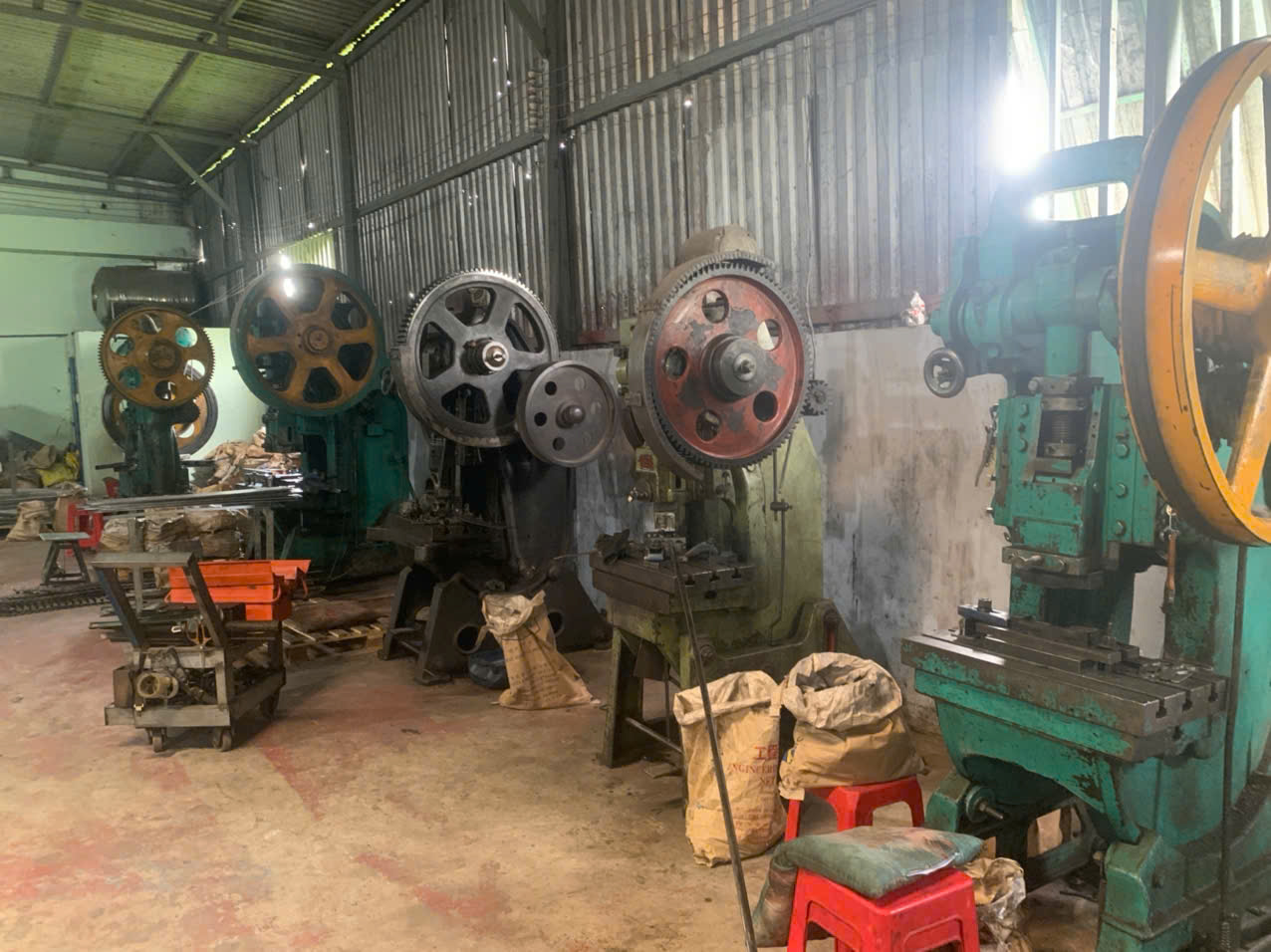

Screening stamping parts suppliers online in Vietnam feels risky when websites all look alike CMM inspection 1. Our Vietnam sourcing team has audited factories that looked great online but failed basic checks. One wrong pick can sink your whole program.
To screen qualified stamping parts suppliers online in Vietnam, verify business registration, ISO 9001 or IATF 16949 certificates, in-house die-making capability, press tonnage range, export history via customs databases, and documented quality systems like SPC and FAIR before sending any RFQ or deposit.
That is the short answer. Now let me walk you through each step in detail, using what we have learned from auditing stamping factories across Dong Nai, Binh Duong, and Ho Chi Minh City.
What Should I Check First When Reviewing a Vietnamese Stamping Supplier's Website?
Last year, a U.S. purchasing manager sent me three supplier websites he liked. Our Vietnam office visited all three. Only one actually owned a press line. The other two were trading offices.
First, check the supplier's business registration and tax code on Vietnam's National Business Registration Portal, then verify listed certifications, factory photos with real equipment, press tonnage specifications, and whether the company describes in-house tooling. These signals separate true manufacturers from trading intermediaries.

A website is a claim, not proof. But it still tells you a lot if you know where to look. When our team pre-screens stamping suppliers for U.S. clients, we run through the same signals every time. Most of them take less than an hour to check from your desk.
Start With Legal Identity
Vietnam has a public National Business Registration Portal 2. Every legitimate manufacturer has a tax code. Ask for it, or find it on the site footer. Cross-check the registered business scope. If the scope says "trading" only, you are not talking to a factory. This one check filters out a surprising number of "suppliers."
Then Read the Technical Pages
A real stamping factory talks about equipment. Look for press tonnage ranges, progressive die 3 capability, deep draw experience, and materials handled. Vague phrases like "advanced machinery" with no numbers are a warning sign.
Here is the quick checklist we use during a first-pass website review:
| Signal | What to Look For | Red or Green? |
|---|---|---|
| Tax code / registration | Verifiable on the national portal | Green if it matches |
| Certifications | ISO 9001 4, ISO 14001, IATF 16949 with certificate numbers | Green if scanned copies shown |
| Equipment list | Press tonnage (e.g., 25T–400T), number of presses | Green if specific |
| Tooling | In-house die shop, EDM, wire-cut mentioned | Strong green |
| Factory photos | Real presses, coil feeders, QC lab | Green if consistent |
| Product range | Focused on stamping and fabrication | Red if they "do everything" |
| Client logos | Tier-1 names like electronics or automotive OEMs | Green, but verify |
Also check location. High-quality stamping capacity in Vietnam concentrates in industrial zones in Dong Nai, Binh Duong, and around Ho Chi Minh City, driven by two decades of Samsung, Toyota, and Honda supply chain investment. A supplier inside these zones is not automatically good. But it usually means they operate near Tier-1 quality culture.
How Can I Verify a Vietnam Stamping Supplier's Quality Control Process Before Placing an Order?
Quality documents are where our audits get serious. During one factory visit near Trang Bom, we asked for die maintenance records. The manager went quiet. That silence told us everything.
Verify quality control by requesting ISO or IATF certificates with valid scope, First Article Inspection Reports, mill test certificates for raw material, SPC data showing Cpk of 1.33 or higher, and evidence of CMM inspection. Then confirm findings with a third-party or virtual audit.

You cannot inspect a factory through a screen. But you can force the factory to show its paperwork, and paperwork is very hard to fake consistently. When we run supplier audits for clients, we score factories on a structured checklist covering press capability, die quality, inspection systems, and financial stability. You can apply a lighter version of the same logic online.
Documents You Should Request Before Any Order
Ask for these five items by email. A qualified supplier sends them within a few days. A weak one stalls or sends excuses.
- Certificate copies. ISO 9001 at minimum. IATF 16949 5 if your parts are automotive-grade. Check the certificate scope covers metal stamping, not just "trading."
- A sample First Article Inspection Report (FAIR). This shows how they document dimensions against a drawing.
- Mill test certificates. These trace the steel coil back to its source. Vietnam still imports much of its steel, so traceability matters for cost and consistency.
- SPC records. Ask for a control chart on a key characteristic. Look for Cpk ≥ 1.33.
- Die maintenance logs. Preventive maintenance should happen every 50,000–100,000 strokes. No logs means dies degrade until parts go out of spec.
Match the Evidence to Your Risk Level
| Your Order Type | Minimum QC Evidence | Recommended Extra Step |
|---|---|---|
| Prototype / low volume | ISO 9001, sample FAIR | Production-intent samples |
| Repeat OEM orders | SPC data, mill certs, CMM reports | Pilot batch before scale-up |
| Automotive / safety parts | IATF 16949, full PPAP | Third-party or virtual audit |
For higher volumes, we always recommend a pilot batch and a virtual audit at minimum. On our own projects, we run PPAP and final inspection with our local team before anything ships. The point is simple: never let the first full container be the first test of the quality system.
What Red Flags Should I Watch for When Vetting Stamping Parts Suppliers Online in Vietnam?
There is a trade-off I weigh on every sourcing project: a cheap quote from an unknown factory versus a slightly higher quote from a verified one. The cheap quote almost always hides a red flag.
Watch for suppliers with no in-house die shop, outdated directory listings, vague equipment claims, missing export records in customs databases, no environmental or labor permits, and quotes that skip tooling details. These signs point to press runners, intermediaries, or non-compliant factories.

Red flags rarely appear one at a time. When we disqualify a stamping supplier during pre-screening, it is usually because three or four small warnings stack up. Let me break down the most common ones we see in Vietnam.
The Press Runner Problem
The biggest structural risk is the "press runner." This is a factory that owns presses but no die shop. They run tools someone else built. When your die chips or wears, they cannot debug it. They ship bad parts or stop production. The best suppliers build, debug, and maintain their own tooling with EDM and wire-cut equipment in-house. Always ask directly: "Who repairs your dies, and where?"
Data That Does Not Match
Cross-check claims against independent sources. Customs trade databases 6 like ImportGenius or Panjiva show real shipment records. A supplier claiming ten years of U.S. exports should have a visible trail. No trail, no trust. Also be careful with directories such as YellowPages.vn. Many entries date from 2021–2022. Companies close, move, or change ownership. Confirm current status by direct contact before you rely on any listing.
Compliance Gaps
Vietnam has tightened environmental and labor enforcement significantly since 2023. Factories without updated EHS permits fail audits more often now. Powder coating and plating lines are especially exposed because of wastewater rules. Since many stamped brackets and hardware parts we handle need powder coating or galvanizing, we always confirm whether finishing is in-house and permitted, or outsourced to a licensed partner.
Quote-Stage Warnings
A serious stamping quote separates tooling cost from piece price, states material grade, and covers finishing. A single lump-sum number with no breakdown means the supplier either does not understand your drawing or is hiding margin. Silence on critical drawing notes — tolerances, flatness, hole positions — is the same warning our clients complain about most: suppliers who overlook drawing requirements and ship non-conforming parts.
How Do I Confirm a Vietnamese Supplier Can Handle My Custom Stamping Project and Payment Terms?
A U.S. purchasing manager once told me his biggest fear was not price. It was wiring a 50% deposit to a factory he had never met, then chasing late shipments for months.
Confirm capability by submitting a full RFQ with 2D/3D CAD and material specs, requiring a detailed quote within about 48 hours, validating production-intent samples and a pilot batch, and negotiating payment terms in stages — or working through a partner that offers open account credit terms.

Capability and payment terms are two sides of the same trust question. A supplier proves capability through the RFQ process. You protect cash flow through payment structure. Here is the workflow we use when qualifying stamping suppliers for custom bracket and hardware projects.
The Five-Step Qualification Workflow
- Shortlist 3–5 suppliers based on the dominant process your part needs — progressive die, deep draw, or welded fabrication — and their location in proven industrial zones.
- Submit a complete RFQ. Send 2D drawings, 3D CAD, material grade, finish spec, and annual volume. A capable supplier returns a quote within roughly 48 hours, split into tooling cost and piece price.
- Review the technical response. Did they question your tolerances? Did they suggest a design-for-manufacturing change 7? Good suppliers push back. Silence means they did not read the drawing.
- Validate samples. Require production-intent samples off the actual die, then a pilot batch. Never scale from a hand-made prototype.
- Audit before volume. Use a virtual audit or a local team on the ground if you cannot travel. Our Vietnam office does exactly this for clients who cannot fly in.
Realistic Timeline and Payment Structure
Set expectations with data. A medium-complexity progressive die project typically runs like this:
| Stage | Typical Duration | Suggested Payment Milestone |
|---|---|---|
| Die design | 1–2 weeks | Tooling deposit (30–50%) |
| Die manufacturing | 4–8 weeks | Balance on approved samples |
| Production (approx. 50,000 pcs) | 2–4 weeks | Against shipping documents |
| Plating / painting / secondary ops | 1–2 weeks | Included in piece price |
| Total to first delivery | 8–14 weeks | — |
On payment terms, most Vietnamese factories want deposits and payment before shipment. Few offer 60–90 day terms directly to a new overseas buyer. This is where a supply chain partner changes the math. Because we manage the supplier relationship, run PPAP and final inspection locally, and handle door-to-door logistics, we can extend open account terms to qualified U.S. clients. The factory gets paid on their schedule. You pay on yours. That gap is exactly what a sourcing partner exists to bridge.
Conclusion
Screening stamping parts suppliers online in Vietnam works when you verify registration, certifications, tooling, and QC documents before paying anything. Follow the workflow above — or let our team handle it for you.
Frequently Asked Questions
What Should I Check First When Reviewing a Vietnamese Stamping Supplier's Website?
Last year, a U.S. purchasing manager sent me three supplier websites he liked. Our Vietnam office visited all three. Only one actually owned a press line. The other two were trading offices.
How Can I Verify a Vietnam Stamping Supplier's Quality Control Process Before Placing an Order?
Quality documents are where our audits get serious. During one factory visit near Trang Bom, we asked for die maintenance records. The manager went quiet. That silence told us everything.
What Red Flags Should I Watch for When Vetting Stamping Parts Suppliers Online in Vietnam?
There is a trade-off I weigh on every sourcing project: a cheap quote from an unknown factory versus a slightly higher quote from a verified one. The cheap quote almost always hides a red flag.
Footnotes
1. Background on coordinate measuring machines used for dimensional quality verification mentioned in the article. ↩︎
2. Official Vietnamese government portal for verifying business registration and tax codes as described. ↩︎
3. Wikipedia background on the progressive die stamping process referenced multiple times in the article. ↩︎
4. Official ISO standard page defines the quality management certification referenced throughout the article. ↩︎
5. Background explanation of the automotive quality standard mentioned as a certification requirement. ↩︎
6. US government trade resource relevant to verifying supplier export history via trade data. ↩︎
7. Wikipedia background on DFM concept referenced when evaluating supplier technical responsiveness. ↩︎