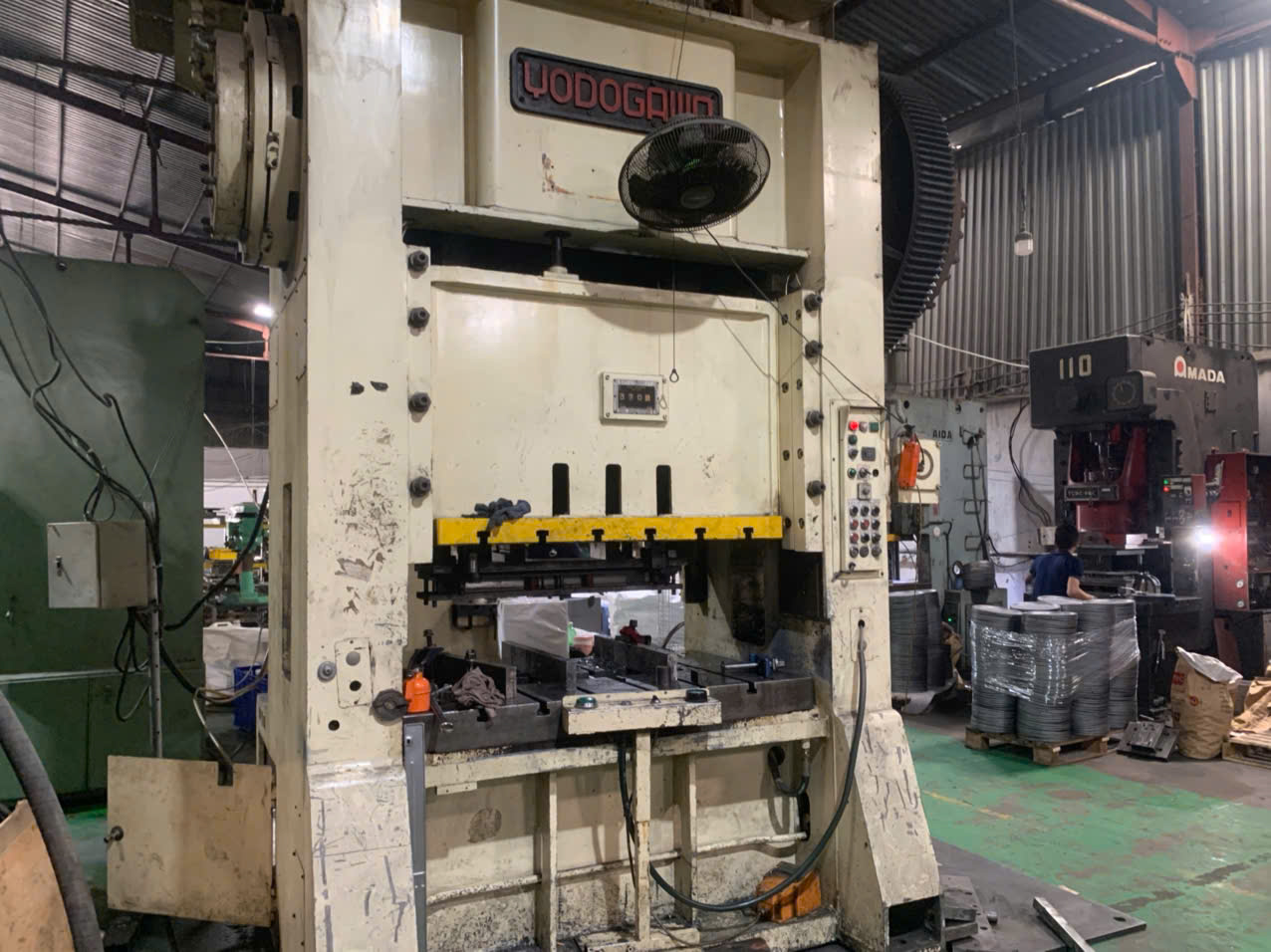

When our Vietnam office started vetting stamping suppliers for U.S. clients two years ago, the gap between what factories showed online and what their shop floors actually looked like was staggering — and costly for buyers who trusted listings alone.
To screen stamping parts suppliers in Vietnam effectively, combine Vietnam-specific B2B sourcing platforms for initial discovery with a rigorous technical checklist covering press tonnage, in-house tooling, and IATF 16949 certification, then validate everything through trade show meetings, remote audits, and on-site sample production runs.
This guide walks through each phase of the screening process China Plus One strategy 1. It is built on real sourcing work our teams do every week across provinces like Bac Ninh and Binh Duong. Let’s break it down step by step.
What Online Platforms Should I Trust to Find Reliable Stamping Parts Suppliers in Vietnam?
A lesson we learned early: the best Vietnamese stamping factories often have the worst websites progressive die work 2. One supplier in Hai Phong running six 600-ton presses had nothing more than a one-page site with a phone number and a blurry logo.
Trust Vietnam-specific platforms like Vietnam Export (vietnamexport.gov.vn), Vtown.vn, and VALO Vietnam over global marketplaces like Alibaba, because they provide verified capability profiles and connect you directly with actual manufacturers rather than trading intermediaries.

Why Global Platforms Fall Short for Vietnam Stamping
Alibaba and Global Sources 3 work well for commodity products. But for precision metal fabrication 4 like stamping brackets, progressive die work, and structural automotive parts, these platforms have a blind spot. Many top-tier Vietnamese factories simply do not invest in polished Alibaba storefronts. They get their orders through Japanese or Korean parent companies or through word-of-mouth referrals.
I have seen U.S. procurement managers spend weeks messaging suppliers on Alibaba only to discover the "factory" was a trading company in Ho Chi Minh City with no presses at all. That is wasted time and wasted trust.
Vietnam-Specific Platforms Worth Your Time
Here is where to start your digital discovery instead:
| Platform | Type | Key Strength | Best For |
|---|---|---|---|
| Vietnam Export (vietnamexport.gov.vn) | Government portal | Verified exporter profiles with capability data | Initial identification of registered manufacturers |
| Vtown.vn | Manufacturer directory | Exclusive focus on Vietnamese factories with facility details | Filtering by stamping-specific equipment |
| VALO Vietnam | Verified sourcing platform | Pre-vetted manufacturers, saves initial screening time | Buyers new to Vietnam sourcing |
| Cosmo Sourcing | Sourcing agent | Matches buyers with 2–3 vetted factories within 24 hours | End-to-end contract manufacturing services |
| VCCI Member Directory | Trade association | Proven track records, established businesses | Finding long-standing, reputable companies |
The "Spec Sheet First" Approach
Our team in Vietnam never sends a vague inquiry. We send a detailed spec sheet from day one. It includes material grade (e.g., SPCC, SPHC, SGCC), dimensions, tolerances, surface finish requirements, annual volume, and any certification needs like ISO 9001 certification.
The quality of the response tells you almost as much as the factory itself. A supplier who responds within 48 hours with organized questions about your drawing details is a supplier with real project management capability. A supplier who responds with a generic catalog PDF is likely a middleman.
We also cross-reference business licenses 5 on Vietnam's National Business Registration Portal. This confirms whether the entity is a registered manufacturer or just a trading company. It takes ten minutes and can save you months of headaches.
Leveraging LinkedIn and Zalo
One unconventional tactic: check LinkedIn profiles of the supplier's engineering and QC staff. If key personnel were trained at Japanese or South Korean firms, that often signals higher precision standards. And for real-time shop floor transparency, use Zalo — Vietnam's primary messaging app. Request informal photos of raw material stocks and current production runs. A factory willing to share this openly has nothing to hide.
How Can I Verify a Vietnamese Stamping Supplier's Quality Control Before Placing an Order?
One of our U.S. clients once received a batch of stamped steel brackets where every single mounting hole was 0.3 mm off-center. The supplier had no CMM, no SPC logs, and no incoming material inspection records. That order cost the client $40,000 in rework and a three-week production delay.
Verify quality control by requesting a detailed equipment list including CMM and SPC systems, confirming IATF 16949 or ISO 9001 certification on official registries, conducting a remote or on-site factory audit using a structured checklist, and demanding sample production in target materials before committing to volume orders.

The Technical Screening Checklist
Before any order leaves our desk, we run every prospective stamping supplier through a technical checklist. This is not a formality. It is the single most important step in the screening process. Here is the core of what we evaluate:
| Criteria | What to Ask | Green Flag | Red Flag |
|---|---|---|---|
| Press fleet | List all presses with tonnage, brand, and year | Diverse fleet (80T–1200T+), machines under 10 years old | Only 1–2 presses, all over 15 years old |
| In-house tooling | Do you design and build dies in-house? | CNC machining centers, wire EDM, tool steel inventory | Outsources all tooling to third parties |
| Material capability | Can you process AHSS or specific aluminum grades? | Named grades with test data | "We can do any material" with no specifics |
| Certifications | IATF 16949, ISO 9001, ISO 14001 scope | Certificates verified on official registries | Photocopied certificates, no registry confirmation |
| QC systems | What inspection equipment do you use? | CMM, optical comparators, live SPC on critical dims | Calipers only, no documented inspection plan |
| Traceability | Can you trace material from coil to finished part? | Heat number tracking, material test reports on file | No incoming material inspection at all |
Press Fleet: Why Tonnage Matters
For structural stamping parts — the kind used in automotive, construction hardware 6, and heavy brackets — you need presses that exceed 800 tons. Our experience sourcing mounting brackets and post bases for U.S. clients has taught us that suppliers who only operate light-gauge, high-speed presses cannot handle the forming forces required for thick-gauge steel or advanced high-strength steel.
Ask for the actual press list. Not a brochure. Not a summary. A list with brand names, tonnage ratings, bed sizes, and year of manufacture. If the supplier hesitates, that is your first warning sign.
Certifications: Verify, Don't Trust
IATF 16949 standards are mandatory for any supplier entering the automotive supply chain. But here is the problem: certification fraud 7 exists. I have personally seen suppliers present ISO 9001 certificates from accreditation bodies that do not appear on any recognized registry.
Always verify certificates on the certifying body's public database. For IATF 16949, check the IATF global oversight database. It takes five minutes.
The 50-Checkpoint Scorecard and Remote Audits
Professional sourcing networks score factories on approximately 50 checkpoints before placing an order. These checkpoints span the press floor, the die shop, inspection systems 8, material storage, and even housekeeping and 5S practices. Our Vietnam team conducts video-tour audits as a first step, walking through the facility on a live call with the client's engineering team. We look at press condition, die storage racks, the calibration status of measuring instruments, and how organized the shop floor is.
A production capacity assessment during this phase helps determine whether the factory can handle your volumes without overloading their equipment. Overloaded presses lead to tool wear, dimensional drift, and missed deliveries — exactly the pain points our clients are trying to escape.
Sample Production: The Ultimate Test
Request samples made from the exact material and to the exact tolerances your production parts require. Not prototype samples from a different grade. Not "similar" parts from another customer's run. Your material, your drawing, your specs.
Any supplier who resists making samples before a volume commitment is a supplier you should walk away from. We build sample validation into every sourcing project because it is the only way to confirm that the factory can actually do what they claim.
Are Trade Shows Still Worth My Time When Sourcing Stamping Parts Suppliers in Vietnam?
A colleague once told me trade shows are dead — that everything can be sourced online. Then he flew to Metalex Vietnam, met a Taiwanese-owned stamping operation in Binh Duong, inspected their progressive die samples on the show floor, and signed a contract within six weeks. He has been a repeat attendee ever since.
Trade shows like Vietnam Manufacturing Expo, Metalex Vietnam, and VIMEXPO remain highly valuable because they let you physically inspect stamped samples, verify tooling sophistication, meet factory leadership face-to-face, and compare multiple suppliers in a single trip — something no online platform can replicate.

Which Events to Prioritize
Not all trade shows are equal. For metal stamping specifically, focus on events that attract precision metal fabrication companies and tooling suppliers, not general consumer goods fairs.
| Trade Show | Location | Focus | Why It Matters for Stamping |
|---|---|---|---|
| Metalex Vietnam | Ho Chi Minh City | Metalworking, machine tools | Stamping press manufacturers and stamping part suppliers exhibit together |
| Vietnam Manufacturing Expo (VME) | Hanoi | Manufacturing technology | Strong presence of northern Vietnam's industrial cluster suppliers |
| VIMEXPO | Hanoi | Supporting industries | Targets component makers for automotive, electronics, and industrial hardware |
| VIA (Vietnam International Automotive Exhibition) | Ho Chi Minh City | Automotive supply chain | Attracts IATF 16949-certified stamping suppliers serving OEMs |
What to Do on the Show Floor
Walking a trade show without a plan is tourism, not sourcing. Here is how we approach it:
Step 1: Pre-show targeting. Download the exhibitor list two weeks before the event. Filter by "metal stamping," "press parts," or "die and mold." Email your top 10 targets with your spec sheet and request a meeting at their booth.
Step 2: Inspect physical samples. At the booth, examine actual stamped parts. Look at edge quality, burr levels, hole concentricity, and weld seam consistency. Bring a caliper. Measure something on the spot. The supplier's reaction tells you a lot about their confidence in their own quality.
Step 3: Ask about tooling. Inspect die samples if available. Ask what tool steel grades they use (D2, DC53, SKD11). Ask about die life expectations. A supplier who can discuss tooling specifics with fluency has real in-house capability.
Step 4: Evaluate communication. This is especially important when comparing domestic Vietnamese factories with foreign-owned operations (Japanese, Korean, Taiwanese subsidiaries). Foreign-owned operations often communicate more clearly in English and respond faster to technical questions. Domestic factories may offer lower pricing but require more relationship-building time and patience with technical English.
The China Plus One Angle
Many buyers attending these shows are executing a China Plus One strategy 9 — diversifying their supply chain away from sole dependence on Chinese manufacturing. At trade shows, you can quickly determine whether a Vietnamese supplier is truly independent or a subsidiary of a Chinese parent company. This matters for tariff structures, origin documentation, and long-term supply chain resilience.
We help our clients map this out by asking direct questions about ownership structure and capital origin at the show itself. It is much easier to get a straight answer face-to-face than over email. For a deeper dive into evaluating Vietnamese sheet metal fabrication suppliers at trade shows like FABTECH, we have covered the full methodology separately.
What Red Flags Should I Watch for When Screening Stamping Suppliers Online or In Person?
The most expensive lesson in sourcing is learning to recognize red flags after you have already placed the order. I recall a situation where a factory's website showed gleaming new presses. During our on-site visit, we found those machines in a brochure on the wall — the actual shop floor had 20-year-old equipment in a tin-roofed building with no climate control.
Watch for suppliers who refuse sample production, present unverifiable certifications, lack in-house tooling capability, show inconsistencies between their online profiles and physical facilities, respond to technical questions with vague or generic answers, and resist video or on-site factory audits.

Red Flags vs. Green Flags: A Side-by-Side Comparison
The table below is a practical reference we use internally when evaluating new stamping suppliers. It applies whether you are screening online or standing on the factory floor.
| Area | Red Flag | Green Flag |
|---|---|---|
| Sample request | Refuses or delays indefinitely | Agrees with clear timeline and cost estimate |
| Certifications | Provides scanned copies, no registry info | Provides certificate number and registry link |
| Equipment list | Vague ("we have many presses") | Detailed list with tonnage, brand, year, bed size |
| Tooling | Outsources all dies, no tool room on site | In-house CNC, wire EDM, dedicated die maintenance team |
| Communication | Slow replies, generic responses | Asks clarifying questions about your drawing within 48 hours |
| Factory tour | Declines video or on-site visit | Proactively offers live video walk-through |
| Material sourcing | Claims to handle "any material" | Specifies which grades they stock and which they procure per order |
| Customer references | Will not share any current customer names | Provides references in your target market or industry |
| Geographic location | Isolated from supporting industry clusters | Located near Bac Ninh, Binh Duong, or Hai Phong industrial zones with access to heat treatment and surface finishing sub-contractors |
The "Website vs. Reality" Problem
This is the core risk in sourcing stamping parts from Vietnam — or any developing manufacturing market. A well-designed website with stock photos of modern equipment does not mean the factory has those machines. Our team in Vietnam has visited over a hundred facilities. In at least a third of cases, the online presentation was significantly more polished than the reality.
The fix is straightforward: demand a live video tour before you commit. Use a structured factory audit checklist. Have someone on the ground — whether your own team or a third-party inspection agency like QIMA or SGS 10 — walk through the press floor, the tool room, the QC lab, and the material storage area.
Middlemen Disguised as Manufacturers
This is perhaps the most common trap on B2B sourcing platforms. A company presents itself as a factory but is actually a trading company that subcontracts your order to an unknown shop. You lose visibility into quality, lead times, and material traceability.
How to detect this: Ask for the business license and cross-reference it on Vietnam's National Business Registration Portal. Ask for photos of their factory name displayed on the building exterior. Ask for a list of their own employees by department. A real factory will have a die shop team, a press operation team, a QC team, and a shipping team. A trading company will have a sales team and not much else. Learning how to verify OEM experience when sourcing stamping parts from Vietnam is another critical step in distinguishing real manufacturers from intermediaries.
The "Too Good to Be True" Quote
If a supplier's price is 30% below every other quote you received, something is missing. Either the material grade is lower, the tooling is being amortized over unrealistic volumes, or the factory is planning to cut corners on quality control. In our experience managing contract manufacturing services for U.S. clients, the lowest quote almost never delivers the lowest total cost. Rework, returns, air freight for replacements, and production line shutdowns on the buyer's end quickly erase any initial savings.
Our approach is to present clients with two or three vetted options, clearly explaining the price-quality trade-off for each. The goal is not the cheapest part. The goal is the right part, on time, the first time. For buyers looking for a partner that covers every stage, understanding how to find a stamping parts supplier for one-stop prototyping to mass production can streamline the entire process.
Conclusion
Screening stamping parts suppliers in Vietnam requires a hybrid approach — digital discovery, technical vetting, trade show validation, and on-site confirmation. No single step is enough. Combine all four, and you find partners who deliver the right parts, on time, every time.
Frequently Asked Questions
What Online Platforms Should I Trust to Find Reliable Stamping Parts Suppliers in Vietnam?
A lesson we learned early: the best Vietnamese stamping factories often have the worst websites progressive die work 2 . One supplier in Hai Phong running six 600-ton presses had nothing more than a one-page site with a phone number and a blurry logo.
How Can I Verify a Vietnamese Stamping Supplier's Quality Control Before Placing an Order?
One of our U.S. clients once received a batch of stamped steel brackets where every single mounting hole was 0.3 mm off-center. The supplier had no CMM, no SPC logs, and no incoming material inspection records. That order cost the client $40,000 in rework and a three-week production delay.
Are Trade Shows Still Worth My Time When Sourcing Stamping Parts Suppliers in Vietnam?
A colleague once told me trade shows are dead — that everything can be sourced online. Then he flew to Metalex Vietnam, met a Taiwanese-owned stamping operation in Binh Duong, inspected their progressive die samples on the show floor, and signed a contract within six weeks. He has been a repeat attendee ever since.
Footnotes
1. Background context on the supply chain diversification strategy referenced in the article. ↩︎
2. Technical overview of the progressive stamping process used in mass production. ↩︎
3. Reference the global B2B platform mentioned as less effective for Vietnam-specific sourcing. ↩︎
4. Authoritative definition of the metal fabrication industry and its processes. ↩︎
5. Official Vietnamese government portal for verifying the legitimacy of registered business licenses. ↩︎
6. ISO technical committee responsible for international standards in steel structures. ↩︎
7. Official database used to verify certificates and prevent certification fraud in the automotive industry. ↩︎
8. Official ISO page explaining the global standard for quality management systems. ↩︎
9. Explanation of the global supply chain strategy for diversifying manufacturing locations. ↩︎
10. Third-party inspection agencies buyers use to verify factory claims on-site. ↩︎