

Every week, I get calls from U.S. buyers who lost months—and thousands of dollars—partnering with the wrong stamping supplier 1 they found online. The profile looked great, the price was right, but the first shipment arrived with dimensional failures and zero traceability. Our Vietnam office now spends half its time helping clients recover from exactly these situations.
To screen Vietnamese suppliers on B2B platforms for stamping parts, verify their business registration, check ISO 9001 certification and IATF 16949 standards, examine equipment lists for press tonnage and tooling capabilities, request sample production runs, and cross-reference profiles across Vietnam-specific and global platforms before committing to orders.
This guide walks through every step our team uses when qualifying Vietnamese stamping manufacturers. Whether you are sourcing brackets, clips, or precision automotive components, the process below will help you separate real factories from trading companies and avoid costly mistakes.
What Should I Look for in a Vietnamese Supplier's B2B Platform Profile Before Contacting Them?
A buyer recently told me he contacted 30 suppliers on Alibaba 2 and got nearly identical responses. The problem was not the number of suppliers—it was that he did not know what to filter for before clicking "Send Inquiry."
Before contacting a Vietnamese stamping supplier, look for verified business licenses, detailed equipment lists showing press tonnage, export performance records to your target market, ISO 9001 certification badges, factory photos with timestamps, and clear descriptions of stamping processes such as progressive die or transfer die capabilities.

Start with the Right Platform
Not all B2B platforms 3 offer the same level of supplier verification. When our team in Ho Chi Minh City begins a supplier search, we always compare results across multiple platforms. Here is how they stack up for stamping parts 4 specifically:
| Platform | Verification Level | Best For | Risk Level |
|---|---|---|---|
| VietnamExport.gov.vn | Government-verified exporters | High-confidence initial shortlist | Low |
| Valo Vietnam | Pre-screened before listing | Filtering by certification and export country | Low–Medium |
| VTown.vn / VietFactory | Detailed capability descriptions | Niche manufacturing searches | Medium |
| Alibaba | Self-reported + optional A&V check | Broad exploration, large database | Medium–High |
| Global Sources | Verified Supplier badge available | Cross-referencing Alibaba findings | Medium |
I recommend starting with Vietnam-specific platforms like VietnamExport.gov.vn because their listings are tied to government trade promotion records. Every supplier on that portal has been validated by VIETRADE with business license checks. You get a cleaner starting pool. For a deeper dive into platform-based screening strategies, see our guide on how to screen stamping parts suppliers in Vietnam using online platforms and trade shows.
What to Scan on the Profile Page
Once you are on a platform, here is what matters most for stamping suppliers specifically. Do not just look at the company overview. Dig into the technical details.
Equipment and machinery. A serious stamping factory lists its press tonnage range, the number of presses, and whether they run progressive dies or single-hit operations. If the profile only says "stamping services" with no machine details, that is a red flag. Look for mentions of CNC equipment, laser cutters, and CMM devices for quality measurement.
Photos and videos. Timestamps on factory photos matter. A well-maintained profile shows the production floor, raw material storage, and the quality inspection area. If the photos look like stock images or the factory floor is suspiciously empty, move on.
Export performance record. Check which countries the supplier has shipped to. A factory that regularly exports to the U.S. or Europe already understands packaging standards, documentation requirements, and lead-time expectations. Our experience shows that suppliers with established Western export history handle communication and compliance far better.
Response time. Alibaba tracks how fast a supplier responds. Anything over 24 hours is a concern. Quick, detailed responses signal an organized operation with dedicated sales engineering support—not just a broker forwarding your message.
Define Your Requirements First
Before you contact anyone, write a clear RFQ. Specify your materials (cold-rolled steel, stainless, aluminum), thickness ranges, tolerance requirements, target annual volumes, and any compliance standards. Listings with detailed technical specs attract three times more qualified inquiries than generic ones. This works both ways—suppliers who respond to a detailed RFQ with specific, relevant answers are more likely to be genuine manufacturers.
How Can I Verify a Vietnamese Stamping Supplier's Quality Control Certifications on Alibaba or Similar Platforms?
One lesson I learned early in this business: certification logos on a supplier's profile page mean almost nothing by themselves. I have seen PDF copies of ISO 9001 certificates that were expired, issued to a different legal entity, or simply fabricated.
To verify a Vietnamese stamping supplier's quality certifications, cross-check the certificate number and issuing body directly on the certifying organization's website, confirm the legal entity name matches the supplier's business registration, and request the full audit report—not just the certificate front page.

Which Certifications Matter for Stamping?
Not every certification is relevant to your project. Here is a breakdown of which ones to prioritize based on the end-use of your stamped parts:
| Certification | Relevance | What It Proves |
|---|---|---|
| ISO 9001 | Universal baseline | Quality management system is documented and audited |
| IATF 16949 | Automotive stamping | Meets automotive-specific QMS requirements including PPAP |
| ISO 13485 | Medical device components | Quality system designed for medical regulatory compliance |
| BSCI / SA8000 | Social compliance | Labor practices meet international ethical standards |
| ISO 14001 | Environmental management | Relevant for buyers with ESG requirements |
For most precision stamping projects, ISO 9001 certification 5 is the minimum. If you are sourcing automotive brackets, clips, or structural components, IATF 16949 standards 6 are non-negotiable. Our team always asks for the full certificate—not a screenshot—and then verifies it independently.
How to Actually Verify
Here is the process our quality team follows:
- Ask for the full certificate PDF. It must show the legal entity name, scope of certification, certificate number, issuing body, and expiration date.
- Check the issuing body. Legitimate certifying bodies 7 include TÜV, SGS, Bureau Veritas, and BSI. Search the certifying body's online database using the certificate number.
- Match the legal entity. The name on the certificate must match the supplier's Enterprise Registration Certificate (ERC). Vietnamese companies sometimes operate under trade names that differ from their registered legal names. A mismatch is not always fraud—but it demands clarification.
- Confirm the scope. An ISO 9001 certificate might cover "metal fabrication" but not "precision stamping" specifically. The scope line matters. A factory certified for welding is not automatically certified for progressive die stamping.
- Check expiration. Certificates are typically valid for three years with annual surveillance audits. If the certificate expires in two months and the supplier has no renewal documentation, that is a concern.
Trade Assurance Is Not a Substitute
Alibaba's Trade Assurance program 8 protects payment for specific orders but does not validate quality systems. It is a financial safeguard, not a quality control inspection mechanism. I have seen buyers confuse Trade Assurance with quality certification, and that misunderstanding creates real problems when parts arrive out of spec. Use Trade Assurance for payment protection, but conduct your own certification verification separately.
What Questions Should I Ask to Confirm a Supplier's Real Production Capacity and Tooling Capabilities?
During a recent project for stamped mounting brackets—parts very similar to the multi-planar steel brackets and Z-shaped spring clips we regularly source—I discovered that the supplier's claimed "50-ton monthly capacity" was actually shared across three other customers. By the time our order came up, lead times had doubled.
Ask suppliers to specify their press tonnage range, number of active stamping lines, monthly output in pieces for comparable parts, in-house tooling and die design capabilities, typical lead time for new tool development, and whether they can provide a production capacity assessment with current utilization rates.

The Right Questions, in the Right Order
Generic questions get generic answers. Here is the structured question set our procurement engineers use when evaluating a new Vietnamese stamping factory. I organize them by category so you can adapt this to your own RFQ process.
Stamping Equipment Questions:
- What is the tonnage range of your stamping presses? (e.g., 25-ton to 300-ton)
- How many stamping lines are currently operational?
- Do you run progressive dies, transfer dies, or compound dies?
- What is the maximum sheet metal thickness you can process?
- Do you have servo presses for precision work, or only mechanical presses?
Tooling and Die Design Questions:
- Do you have an in-house tool and die shop, or do you outsource tooling?
- What is your typical lead time for designing and building a new progressive die?
- Can you perform rapid mold maintenance and design adjustments in-house?
- What CAD/CAM software does your tooling team use?
Capacity and Utilization Questions:
- What is your current utilization rate across all stamping lines?
- Can you share a production schedule showing how much capacity is available for new projects?
- What is your demonstrated monthly output for parts of similar complexity?
How to Interpret Their Answers
The answers themselves tell you a lot—but so does how they answer. A genuine manufacturer will respond with specific numbers and possibly photos of their equipment. A middleman will give vague answers or need extra time to "check with the factory."
| Response Type | What It Likely Means | Action |
|---|---|---|
| Specific tonnage, machine counts, and tooling lead times | Likely a real manufacturer | Proceed to sample stage |
| Vague answers like "we can handle any volume" | Possibly a trading company or broker | Ask for factory walkthrough video |
| Very long response delay (3+ days) | May be relaying questions to actual factory | Request direct factory contact |
| Sends generic brochure instead of answering questions | Low engagement or mismatch | Deprioritize |
Evaluate Secondary Operations
Stamped parts rarely ship straight off the press. Ask about deburring, plating, heat treatment, and surface finishing capabilities. For the zinc-galvanized brackets and brushed-finish clips typical in our projects, the supplier needs either in-house plating lines or reliable, audited sub-contractors nearby. Suppliers located in industrial clusters like Bac Ninh or Binh Duong province generally have better access to specialized sub-contractors for these secondary operations.
Digital Maturity as a Capacity Indicator
I have started paying attention to whether a supplier uses ERP systems 10 and can offer real-time production tracking. Factories with integrated digital systems provide automated quality data, shipment updates, and production status reports. This signals operational maturity that directly correlates with on-time delivery performance. If a factory still relies on manual paper reports for production tracking, their ability to manage complex, high-volume stamping orders is limited.
How Do I Avoid Middlemen and Ensure I'm Screening an Actual Manufacturer on These Platforms?
A colleague on our team once visited a "factory" in Vietnam only to find a small office with two employees and a catalog of products made at three different facilities. The company presented itself as a manufacturer online, but it was a pure trading intermediary. This happens more often than buyers expect.
To avoid middlemen, verify the supplier's Enterprise Registration Certificate matches their claimed factory address, request a live video walkthrough of the production floor, cross-check the business name on Vietnam's National Business Registration Portal, and ask technical questions that only a factory engineer—not a salesperson—could answer.
The Middleman Problem in Vietnamese Stamping
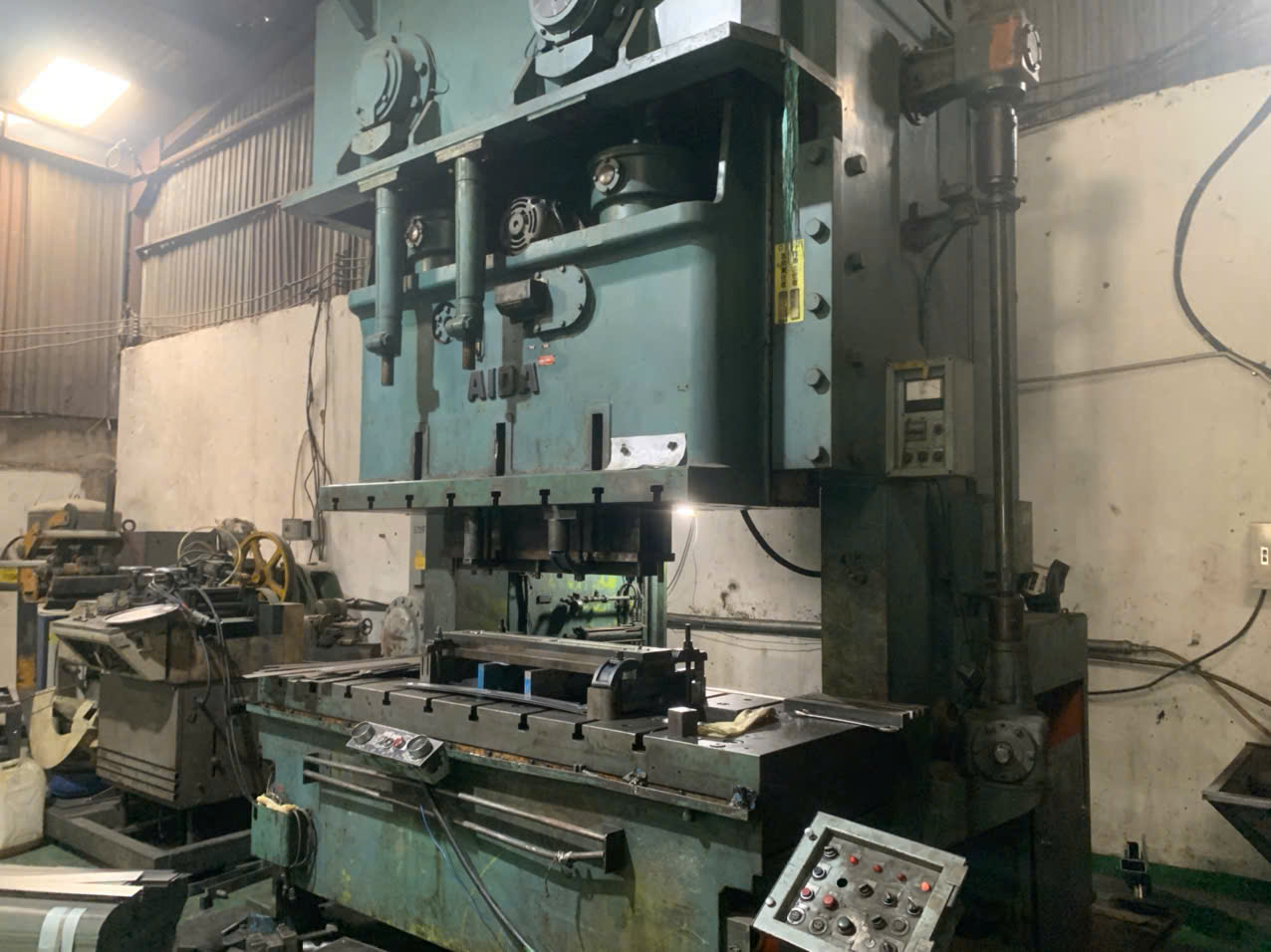
Trading companies serve a purpose in some supply chains. But for precision stamping where tooling and die design, tight tolerances, and process control matter, you want direct access to the factory. Middlemen add cost, slow down communication, and create a barrier between your engineering team and the people actually running the presses.
Here are the warning signs:
- No factory address on the profile, or the address is in a commercial district rather than an industrial zone.
- Product range is too broad. A real stamping factory makes stamped parts and related components. If the same supplier also offers injection molding, PCB assembly, and textiles, they are almost certainly a trading company.
- They cannot answer technical questions quickly. Ask about press tonnage, die maintenance schedules, or material certifications. A real factory engineer answers immediately. A middleman needs time to forward your question.
- The business registration scope does not include manufacturing. You can verify this on Vietnam's National Business Registration Portal by searching the company's tax ID.
The Factory Audit Checklist Approach
When platform screening is complete, the next step is a factory audit. This can be done physically or remotely via video call. Here is the factory audit checklist we use to assess professionalism and trustworthiness of Vietnamese stamping parts suppliers:
- Verify the legal entity. Match the ERC and IRC to the B2B profile name and address.
- Walk the production floor. Count the presses. Check if they are running. Look at the condition of the tooling.
- Inspect the quality lab. A credible stamping factory has CMM devices, hardness testers, and documented inspection procedures.
- Review raw material storage. Check where they source their steel or aluminum. Investigate whether they depend on Chinese imports, which affects lead times and may trigger anti-dumping duty risks.
- Talk to floor workers. Even through a translator, brief conversations reveal whether staff are experienced machine operators or temporary hires.
- Request production records. Ask to see recent quality control inspection reports, first-article inspection data, or PPAP documentation from previous projects.
Sample Approval as the Final Filter
The sample approval process is the most reliable test. Send your drawings and request a small production run—typically 50 to 200 pieces. Evaluate dimensional accuracy against your tolerance specifications. Check surface finish consistency. For parts like the precision-punched mounting brackets and Z-shaped spring clips common in our sourcing work, we specifically look for burr height, bend angle accuracy, and hole position repeatability. A supplier that passes the sample stage with minimal revisions is far more likely to be a genuine, capable manufacturer.
Consider a Sourcing Partner with Local Presence
Even with thorough screening, managing a supplier relationship across borders and time zones is challenging. Our Vietnam office, with seven team members on the ground, conducts supplier background checks, runs process audits, and manages quality control throughout production. Having a local team dramatically reduces the risk of miscommunication, delivery delays, and the non-conforming parts that plague so many cross-border stamping projects. If your volumes justify it, working with a sourcing partner who has local presence in Vietnam is one of the most effective ways to ensure you are dealing with a real factory—and that the factory delivers what it promises. For buyers evaluating partners for ongoing supply, we also cover how to choose a reliable Vietnamese stamping parts supplier for long-term supply.
Conclusion
Screening Vietnamese suppliers on B2B platforms for stamping parts requires systematic verification—not shortcuts. Define your technical requirements first, compare platforms, verify certifications independently, test with samples, and consider working with a local partner like our team at DEWIN to reduce risk and get it right the first time.
Frequently Asked Questions
Which Certifications Matter for Stamping?
Not every certification is relevant to your project. Here is a breakdown of which ones to prioritize based on the end-use of your stamped parts:
What Should I Look for in a Vietnamese Supplier's B2B Platform Profile Before Contacting Them?
A buyer recently told me he contacted 30 suppliers on Alibaba 2 and got nearly identical responses. The problem was not the number of suppliers—it was that he did not know what to filter for before clicking "Send Inquiry."
How Can I Verify a Vietnamese Stamping Supplier's Quality Control Certifications on Alibaba or Similar Platforms?
One lesson I learned early in this business: certification logos on a supplier's profile page mean almost nothing by themselves. I have seen PDF copies of ISO 9001 certificates that were expired, issued to a different legal entity, or simply fabricated.
Footnotes
1. Wikipedia overview of metal stamping processes and industry terminology. ↩︎
2. Official website for the global B2B sourcing platform mentioned in the text. ↩︎
3. Government resource explaining the role of e-commerce platforms in global trade and supplier discovery. ↩︎
4. Authoritative encyclopedia entry explaining metal stamping processes and components. ↩︎
5. Official ISO page defining the international standard for quality management systems. ↩︎
6. Official industry body page for the automotive quality management standard. ↩︎
7. Official ISO page explaining the role of independent certifying bodies in the certification process. ↩︎
8. Official Alibaba page explaining the financial protection service for B2B buyers. ↩︎
9. Official site for a world leader in testing, inspection, and certification services. ↩︎
10. Wikipedia entry explaining how enterprise resource planning software manages business processes. ↩︎