Choosing sheet metal fabrication materials 1 incorrectly cost one of our U.S. clients six months of rework — the wrong alloy corroded within weeks of installation at a coastal facility.
Selecting the best sheet metal fabrication materials requires matching material properties — corrosion resistance, strength, formability, and cost efficiency — to your specific operating environment, including temperature, moisture, chemical exposure, and mechanical stress, then verifying grade compliance through your supply chain.
This guide walks you through environment analysis, material comparison, budget balancing, and supplier verification Mill Test Certificates 2. Each section targets a real decision point our engineering team and clients face on every custom parts project.
How do I choose the right sheet metal material for high-corrosion or extreme temperature environments?
A buyer from the Gulf Coast once sent us drawings for outdoor electrical enclosures. The original spec called for cold-rolled steel 3. Our Vietnam-based engineers flagged the problem immediately — salt air would eat through uncoated carbon steel in under a year.
For high-corrosion or extreme temperature environments, prioritize stainless steel grades like 304 or 316L for chemical and marine exposure, or consider titanium and nickel alloys for extreme heat. Match the material's corrosion resistance and thermal tolerance directly to the specific environmental stressors your parts will face.
Define Your Operating Environment First
Before picking any material, list every stressor your part will encounter. This sounds obvious, but many buyers skip it. They focus on dimensions and tolerances and overlook the environment where the part lives. Here are the key factors to assess:
- Moisture levels: Is the part indoors, outdoors, or submerged?
- Temperature range: Will it see continuous heat above 400°C, or freeze-thaw cycles?
- Chemical exposure: Acids, alkalis, salts, cleaning agents?
- UV radiation: Prolonged sun exposure degrades some coatings.
- Mechanical stress: Vibration, impact, cyclic loading?
Each of these factors narrows your material options. A part that sits in a climate-controlled warehouse has very different needs than one bolted to the hull of a fishing vessel.
Material Recommendations by Environment
| Operating Environment | Recommended Material | Key Reason |
|---|---|---|
| Marine / Salt spray | 316L Stainless Steel | Molybdenum content resists chloride pitting |
| Chemical processing (acids, alkalis) | 304 / 316 Stainless Steel | Chromium content ≥10.5% forms passive oxide layer |
| High temperature (>500°C continuous) | Titanium alloys 4 / Nickel alloys (Inconel) | Retain strength and resist oxidation at extreme heat |
| Outdoor, moderate weather | Galvanized Steel | Zinc coating provides sacrificial corrosion protection |
| Coastal but weight-sensitive | 5052 or 6061 Aluminum alloys 5 | Natural oxide layer plus low density |
| Indoor, dry, controlled | Cold-Rolled Steel | Smooth finish, high precision, no corrosion risk if kept dry |
Stainless Steel: The Default for Harsh Conditions
Stainless steel remains the go-to choice for corrosive and demanding environments. The chromium in stainless steel forms a self-healing oxide layer on the surface. This layer blocks further corrosion. Grade 304 handles most indoor and mildly corrosive outdoor applications. Grade 316L adds molybdenum, which resists chloride attack — critical near oceans or in chemical plants.
On our production floor, we process both 304 and 316L regularly. The fabrication cost difference is modest. But the performance gap in salt-heavy or acidic conditions is enormous. Choosing 304 where 316L is needed leads to premature failure.
When to Step Up to Exotic Alloys
Titanium and nickel alloys enter the conversation when stainless steel is not enough. If your parts operate above 500°C continuously, or face highly concentrated acids, these materials hold up where stainless steel softens or corrodes. The trade-off is clear: cost goes up significantly. Titanium can cost three to five times more than stainless steel per kilogram. But in aerospace, oil and gas, or medical implant applications, the performance justifies the price.
We always recommend discussing extreme-environment requirements early in the co-development phase. Getting the material right the first time avoids costly rework and field failures.
How can I balance material durability with my project's budget and cost-saving goals?
Last quarter, a purchasing manager asked us to quote the same bracket in three materials: 316 stainless steel, 6061 aluminum, and galvanized mild steel. The price spread was over 40%. But when we factored in maintenance and expected lifespan, the picture changed completely.
Balance durability and budget by evaluating total cost of ownership — not just unit price. Factor in fabrication complexity, surface finishing, maintenance frequency, and replacement cycles. Aluminum alloys and galvanized steel often deliver strong cost efficiency for moderate environments, while stainless steel pays off long-term in harsh conditions.
Think Beyond the Per-Unit Price
The cheapest material on a quote sheet is not always the cheapest material over the life of your product. Carbon steel costs less per kilogram than stainless steel. But carbon steel in a wet outdoor application needs primer, paint, and periodic recoating. Miss one maintenance cycle and you face rust, then replacement. Stainless steel costs more upfront but needs minimal maintenance. Over a five-to-ten-year span, the total cost often favors stainless steel.
Here is how we break down total cost of ownership 8 for our clients:
| Cost Factor | Carbon Steel | Galvanized Steel | Aluminum (6061) | Stainless Steel (304) |
|---|---|---|---|---|
| Raw material cost | Lowest | Low–Moderate | Moderate | Higher |
| Fabrication cost | Low | Low | Moderate | Moderate–High |
| Surface finishing needed | Yes (paint/powder coat) | Minimal | Optional (anodizing) | Usually none |
| Maintenance frequency | High (recoat every 2–3 years) | Low–Moderate | Very Low | Very Low |
| Expected lifespan (outdoor) | 3–7 years without coating | 10–20 years | 15–25+ years | 20–30+ years |
| Recyclability | High | High | Very High | Very High |
Where Aluminum Delivers Hidden Savings
Aluminum alloys deserve a closer look for cost-conscious projects. Yes, raw aluminum costs more than mild steel. But aluminum is roughly one-third the weight of steel. This means lower shipping costs — a big deal when we manage door-to-door logistics from Vietnam or other Asian suppliers to the U.S. Lighter parts also reduce installation labor and structural support requirements.
Technology advances over the past two decades have brought aluminum fabrication costs much closer to steel fabrication costs. Fiber laser cutting handles aluminum sheet efficiently. Our teams in Vietnam run aluminum brackets and housings on the same CNC equipment used for steel, with minor tooling adjustments.
The Formability and Weldability Factor
Material cost is not just about the raw sheet. Some materials are harder to form, cut, or weld. This drives up fabrication time and cost. Cold-rolled steel and mild carbon steel are very easy to work with — they bend cleanly, weld predictably, and machine well. Stainless steel work-hardens during forming, so it requires more force and sometimes specialized tooling. Titanium is notoriously difficult to weld and requires inert gas shielding.
When we quote a project, we consider both material cost and fabrication complexity. Sometimes choosing a slightly more expensive material with better formability actually lowers the total part cost because fabrication goes faster with fewer rejects. Understanding how material selection impacts durability is essential to making these trade-off decisions correctly.
Recycled Materials: Same Performance, Lower Environmental Impact
Recycled steel and aluminum offer the same mechanical properties as virgin material. Using recycled feedstock reduces the carbon footprint of your parts and can lower costs in some supply chains. For buyers with sustainability goals or ESG reporting requirements, this is a meaningful advantage. We can source recycled-content sheet metal and document it for your records. The environmental impact reduction is real and measurable.
How do I verify that my overseas supplier is using the exact material grade specified in my drawings?
A recurring frustration I hear from U.S. purchasing managers: "I specified 304 stainless steel, but the parts arrived and they're magnetic. Is this really 304?" Material substitution — intentional or accidental — is a real risk when sourcing custom parts from Asia.
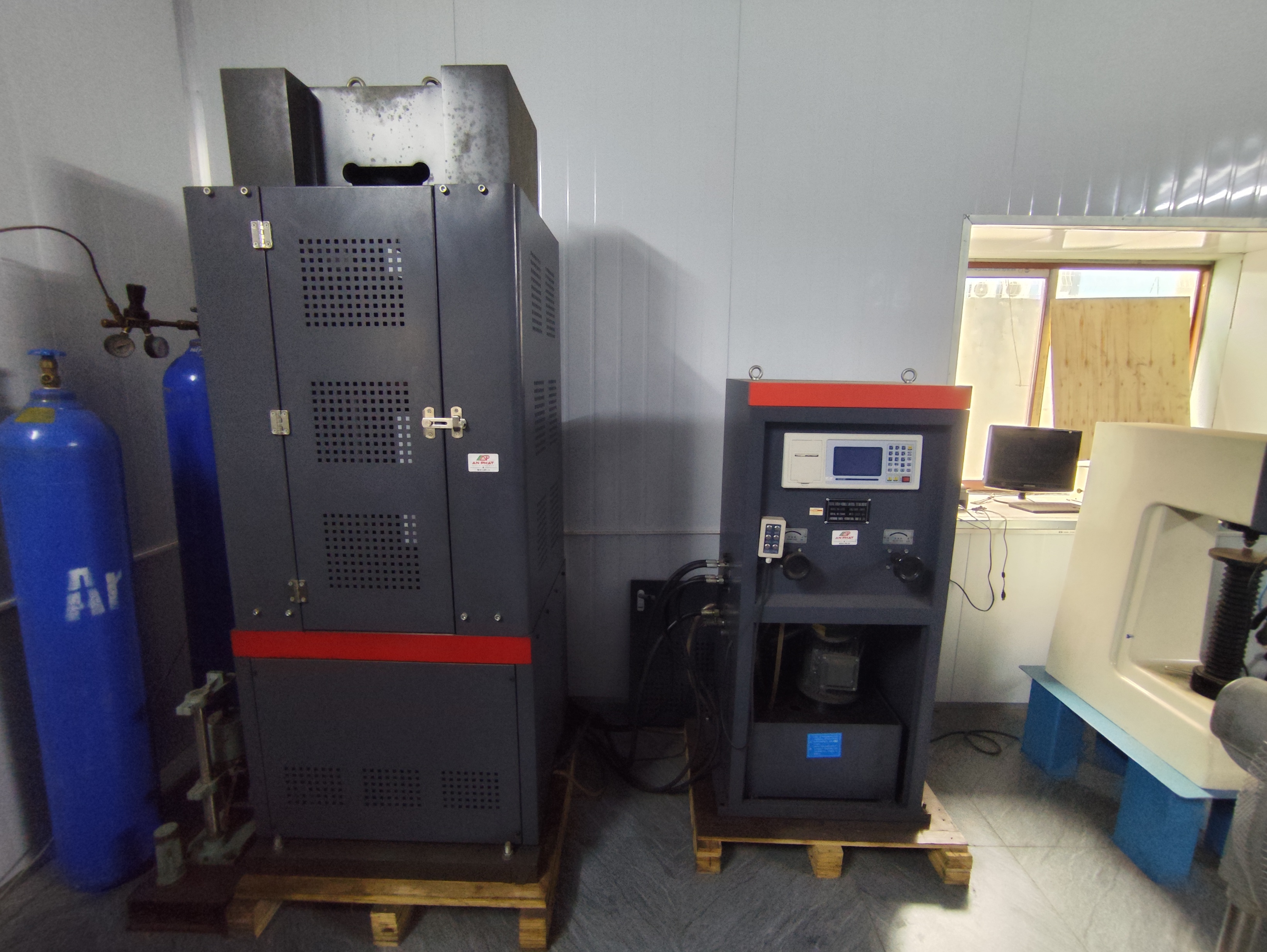
Verify material grades by requiring mill test certificates (MTCs) with each shipment, conducting third-party material testing (PMI or spectrometry), and performing supplier audits that include raw material receiving inspections. A reliable supply chain partner will build these checkpoints into the PPAP and process control workflow.
Why Material Substitution Happens
Material substitution is not always fraud. Sometimes a supplier's purchasing team buys from a sub-supplier who mislabels stock. Other times, a shop floor worker grabs the wrong sheet from the rack. The result is the same: your parts do not meet spec.
In our experience managing supplier networks across Vietnam and China, we have found that preventing material mix-ups requires systems, not just trust. Here is the verification process we follow:
A Step-by-Step Verification Process
- Specify material grade explicitly on drawings: Include the full grade designation (e.g., ASTM A240 Type 304, EN 1.4301) and any special requirements (surface finish, temper).
- Require Mill Test Certificates (MTCs): These certificates trace each batch of raw material back to the steel mill or smelter. They list the chemical composition and mechanical properties.
- Conduct incoming material inspection at the supplier: Before fabrication starts, verify the material with Positive Material Identification 9 (PMI) using a handheld XRF analyzer. This takes seconds and confirms the alloy composition.
- Include material verification in your PPAP package: The Production Part Approval Process 10 should document the material source, MTC, and PMI test results.
- Perform periodic supplier audits: Visit the facility or have your supply chain partner visit. Check how raw materials are stored, labeled, and segregated.
- Final inspection before shipment: Test finished parts with PMI or send samples to a third-party lab for spectrometric analysis.
What to Look for in a Trustworthy Supply Chain Partner
| Verification Checkpoint | What It Confirms | Who Should Perform It |
|---|---|---|
| Mill Test Certificate (MTC) | Chemical composition, mechanical properties | Raw material supplier → reviewed by fabricator and buyer |
| Positive Material Identification (PMI) | Alloy grade matches MTC and drawing | Fabricator's QC team or third-party inspector |
| Dimensional + visual inspection | Parts meet drawing tolerances and surface finishing specs | Fabricator's QC team |
| PPAP documentation | Full process and material traceability | Fabricator, reviewed and approved by buyer |
| Supplier audit (annual or project-based) | Facility capability, QC systems, material handling | Buyer or buyer's supply chain partner |
Our team in Vietnam and China performs these checks as standard practice. We have seen cases where a PMI test caught a 430 stainless steel sheet labeled as 304. That single test saved the client from shipping hundreds of non-conforming parts to the U.S. Getting it right the first time is not a slogan for us — it is the core of our process control methodology.
Which sheet metal properties should I prioritize to ensure my custom parts perform reliably in their end-use application?
During a recent co-development project for an industrial equipment OEM, we had to balance five competing material properties for a single mounting bracket. The part needed high strength, moderate corrosion resistance, good weldability, a clean surface finish, and a competitive price. No single material checked every box perfectly.
Prioritize material properties based on your part's function: corrosion resistance for longevity, strength-to-weight ratio for load-bearing or mobile applications, formability for complex geometries, and conductivity for electrical or thermal requirements. Rank these properties against your operating conditions before selecting a specific grade.
Build a Properties Priority Matrix
Not all properties matter equally for every project. A bracket inside a server rack has very different priorities than a housing on an offshore oil platform. Before you compare materials, rank the properties that matter most for your specific application.
Here is a framework we use with our clients during the quoting and co-development phase:
| Property | Why It Matters | High-Priority Applications |
|---|---|---|
| Corrosion resistance | Determines lifespan in wet, chemical, or outdoor environments | Marine, chemical processing, food equipment |
| Tensile strength | Ability to handle loads without deformation | Structural brackets, load-bearing frames |
| Strength-to-weight ratio | Performance vs. mass trade-off | Aerospace, automotive, portable devices |
| Formability | How easily the material bends and shapes without cracking | Complex brackets, deep-drawn housings |
| Weldability | Ease and reliability of welded joints | Multi-piece assemblies, structural weldments |
| Thermal conductivity | Heat transfer performance | Heat sinks, thermal management enclosures |
| Electrical conductivity | Current carrying capacity | Bus bars, electrical enclosures, connectors |
| Surface finish quality | Aesthetic and functional surface appearance | Consumer-facing products, medical devices |
Matching Properties to Common Materials
Once you know which properties rank highest, you can map them to the right material. Here is how the most common sheet metal materials perform across key properties:
- Stainless steel (304/316): Excellent corrosion resistance, good strength, moderate formability, challenging but manageable weldability. Ideal for parts needing long life in hostile environments.
- Aluminum alloys (5052, 6061): Outstanding strength-to-weight ratio, good corrosion resistance from the natural oxide layer, excellent formability. Best for weight-sensitive designs and coastal environments.
- Galvanized steel: Good outdoor durability at a lower price point. The zinc coating provides sacrificial corrosion protection. Formability is good, but the coating can crack at tight bend radii.
- Cold-rolled steel: Superior dimensional precision and smooth surface finish. Excellent formability and weldability. But it has virtually no corrosion resistance without a protective coating. Ideal for indoor, dry applications where tight tolerances matter.
- Copper: Best-in-class electrical and thermal conductivity. Forms a protective patina over time. Used for bus bars, heat exchangers, and decorative architectural elements.
- Carbon steel (mild steel): The workhorse of heavy-duty construction. High strength, low cost, easy to fabricate. Needs paint or coating to prevent rust.
Don't Overlook Surface Finishing Compatibility
The material you choose affects your surface finishing options. Aluminum anodizes beautifully, producing a hard, corrosion-resistant, and aesthetically appealing surface. Stainless steel can be electropolished for a mirror finish or passivated for enhanced corrosion resistance. Carbon steel and galvanized steel take powder coating and wet paint well. Copper develops a green patina naturally, which some designers want and others avoid.
When our engineering team reviews a client's drawings, we flag any mismatch between the specified material and the desired finish. For example, anodizing is not an option for steel. If a client wants a specific color on a stainless steel part, powder coating or PVD coating are the practical routes. These details matter because they affect both appearance and long-term performance. Learning how surface treatments extend the service life of sheet metal products can help you make more informed finishing decisions.
Future-Proofing: Emerging Material Trends
Aluminum-steel hybrid structures are gaining traction. These combine the corrosion resistance and low weight of aluminum with the structural strength of steel. They cost more to fabricate due to the joining challenges, but they deliver superior performance in applications where neither material alone is optimal.
Smart technologies and embedded sensors are another emerging factor. If your design might integrate strain gauges, RFID tags, or temperature sensors in the future, the material's electromagnetic properties and structural integrity around cutouts and mounting points become relevant selection criteria. Plan for these possibilities now, and you avoid costly redesigns later.
Conclusion
Selecting the right sheet metal fabrication materials comes down to environment analysis, property prioritization, honest cost comparison, and rigorous supplier verification — partner with an experienced supply chain team to get it right the first time.
Frequently Asked Questions
How do I choose the right sheet metal material for high-corrosion or extreme temperature environments?
A buyer from the Gulf Coast once sent us drawings for outdoor electrical enclosures. The original spec called for cold-rolled steel 3 . Our Vietnam-based engineers flagged the problem immediately — salt air would eat through uncoated carbon steel in under a year.
How can I balance material durability with my project's budget and cost-saving goals?
Last quarter, a purchasing manager asked us to quote the same bracket in three materials: 316 stainless steel, 6061 aluminum, and galvanized mild steel. The price spread was over 40%. But when we factored in maintenance and expected lifespan, the picture changed completely.
How do I verify that my overseas supplier is using the exact material grade specified in my drawings?
A recurring frustration I hear from U.S. purchasing managers: "I specified 304 stainless steel, but the parts arrived and they're magnetic. Is this really 304?" Material substitution — intentional or accidental — is a real risk when sourcing custom parts from Asia.
Footnotes
1. Guide to common materials and selection considerations in sheet metal fabrication. ↩︎
2. Explains the purpose, content, and importance of Mill Test Certificates for material quality. ↩︎
3. Explains properties, advantages, and common applications of cold-rolled steel. ↩︎
4. Provides a concise explanation of titanium alloys, their properties, and uses. ↩︎
5. Authoritative source on aluminum alloys, their designations, and properties. ↩︎
6. Authoritative overview of different stainless steel grades and their typical applications. ↩︎
7. Provides fundamental information on corrosion, its mechanisms, and material resistance. ↩︎
8. Wikipedia is an authoritative source for a general definition of total cost of ownership. ↩︎
9. Describes Positive Material Identification (PMI) and its use with XRF technology. ↩︎
10. Wikipedia is an authoritative source for the definition and purpose of Production Part Approval Process. ↩︎