Every week, our project team reviews new RFQs from U.S. buyers who struggle to pick the right process — sheet metal fabrication 1 or CNC machining — for their custom parts.
Sheet metal fabrication and CNC machining differ in application scope because sheet metal excels at large, thin-walled, high-volume enclosures and housings, while CNC machining is ideal for small, solid components requiring intricate geometries and tight tolerances — each process serves distinct design and production needs.
Choosing the wrong process wastes time and money subtractive manufacturing process 2. It can also cause quality failures that ripple through your entire supply chain 3. Below, I break down the key decision factors our engineering team evaluates on every sourcing project we manage across Asia.
Which process should I choose for my thin-walled enclosures versus solid, complex components?
A buyer in the Midwest once sent us a drawing package that mixed electronics enclosures with precision gear housings — all quoted under one process. That mismatch nearly doubled his unit cost before we stepped in.
Choose sheet metal fabrication for thin-walled enclosures, brackets, and panels made from flat stock. Choose CNC machining for solid, complex components like gears, shafts, and engine parts that demand intricate geometries and deep internal features from a solid block of material.
Understanding the Fundamental Difference
Sheet metal fabrication is a metal forming process. It starts with a flat sheet — typically 0.5 mm to 6 mm thick — and uses cutting, bending, and stamping to shape it. The result is a thin-walled, often hollow structure. Think of an electronics enclosure, an HVAC panel, or an automotive chassis bracket. These parts are lightweight and cover large surface areas.
CNC machining 4 is a subtractive manufacturing process. It starts with a solid block or billet. A cutting tool removes material layer by layer until the final shape emerges. This lets you create blind holes, deep pockets, complex curves, and varying wall thicknesses — features that sheet metal simply cannot produce.
When to Pick Sheet Metal
If your part is essentially a shell — a box, a cover, a frame — sheet metal is the natural fit. Our Vietnam office recently coordinated a run of server rack enclosures for a U.S. distributor. Each panel was laser-cut from 1.2 mm stainless steel, brake-formed, and spot-welded. The whole assembly was light, strong, and ready for powder coating. No CNC mill could produce that part economically.
When to Pick CNC Machining
If your part has tight internal channels, threaded bores, or surfaces that must mate with other precision components, CNC is the answer. We source CNC-turned hydraulic valve bodies, for example, where a tolerance of ±0.025 mm on bore diameters is non-negotiable. A sheet metal approach would be impossible here because the part is solid and three-dimensional.
Quick Decision Table
| Decision Factor | Sheet Metal Fabrication | CNC Machining |
|---|---|---|
| Part geometry | Flat, angular, hollow shells | Solid, 3D, intricate features |
| Wall thickness | Uniform, 0.5–6 mm | Variable, any thickness |
| Typical parts | Enclosures, brackets, panels | Gears, shafts, valve bodies |
| Internal features | Very limited | Blind holes, pockets, threads |
| Component strength from geometry | Relies on bends and ribs | Monolithic solid structure |
The key takeaway: let your part geometry drive the process choice, not habit or supplier preference.
How does my required production volume impact the cost-effectiveness of sheet metal versus CNC machining?
One trade-off we weigh daily is whether a buyer's annual volume justifies the tooling investment for stamping or whether CNC's flexibility makes more sense for smaller batches.
For high volume production of simple, flat parts, sheet metal fabrication is 30–60% cheaper than CNC machining due to faster cycle times and lower material waste. For low-volume runs or prototyping services on complex parts, CNC machining is more cost-efficient because it requires no dedicated tooling.
The Cost Curve Explained
Cost efficiency in manufacturing is not fixed. It shifts with volume. Here is why.
Sheet metal processes like laser cutting and brake forming are fast. A single bend takes seconds. A stamping die can produce hundreds of parts per hour. But if you need a custom stamping die, the upfront cost can be thousands of dollars. That investment only pays off when you spread it across a large production run — say 5,000 pieces or more.
CNC machining has no expensive die to amortize. You program the machine, load the raw material, and start cutting. Setup costs are relatively low. But cycle times are long. Milling a single complex feature can take minutes, not seconds. Multiply that by thousands of units, and the per-part cost stays high.
Cost Breakdown by Volume
| Production Volume | Sheet Metal Cost per Unit | CNC Machining Cost per Unit | Recommended Process |
|---|---|---|---|
| 1–50 (prototype) | Higher (tooling not amortized) | Lower (no tooling needed) | CNC machining |
| 50–500 (low volume) | Moderate | Moderate to high | Depends on geometry |
| 500–5,000 (mid volume) | Lower | High | Sheet metal (if geometry fits) |
| 5,000+ (high volume) | Lowest | Very high | Sheet metal |
Material Waste and Material Selection
Sheet metal fabrication uses nesting software 5 to arrange parts on a sheet and minimize scrap. Material utilization can exceed 85%. CNC machining starts with a solid block and removes everything that is not the final part. Material waste can reach 60–80% on complex components. When you are working with expensive alloys like titanium or Inconel, that waste is costly. Understanding the material to processing cost ratio is essential when comparing these two approaches.
However, material selection is broader with CNC. It handles plastics, composites, ceramics, and exotic metals. Sheet metal is limited to ductile metals 6 — aluminum, steel, stainless steel, copper, and brass — that can bend without cracking.
Hidden Costs to Watch
Our quality team often flags a hidden cost that buyers overlook: rework. If a supplier lacks strict process controls, CNC parts may need re-machining, and sheet metal parts may need re-bending or re-welding. Either way, you pay twice. That is why we run PPAP 7 and first-article inspections on every new part number. Getting it right the first time is cheaper than getting it fast and wrong.
Real-World Example
We recently helped a U.S. sourcing company compare quotes for a mounting bracket. The CNC quote came in at $14.20 per unit for 1,000 pieces. The sheet metal quote — laser cut plus two bends — came in at $5.80 per unit. Same material, same finish. The 59% savings came entirely from faster cycle times and less material waste. The bracket's simple geometry made sheet metal the obvious winner.
Which method will better ensure my tight tolerances and "right first time" quality requirements are met?
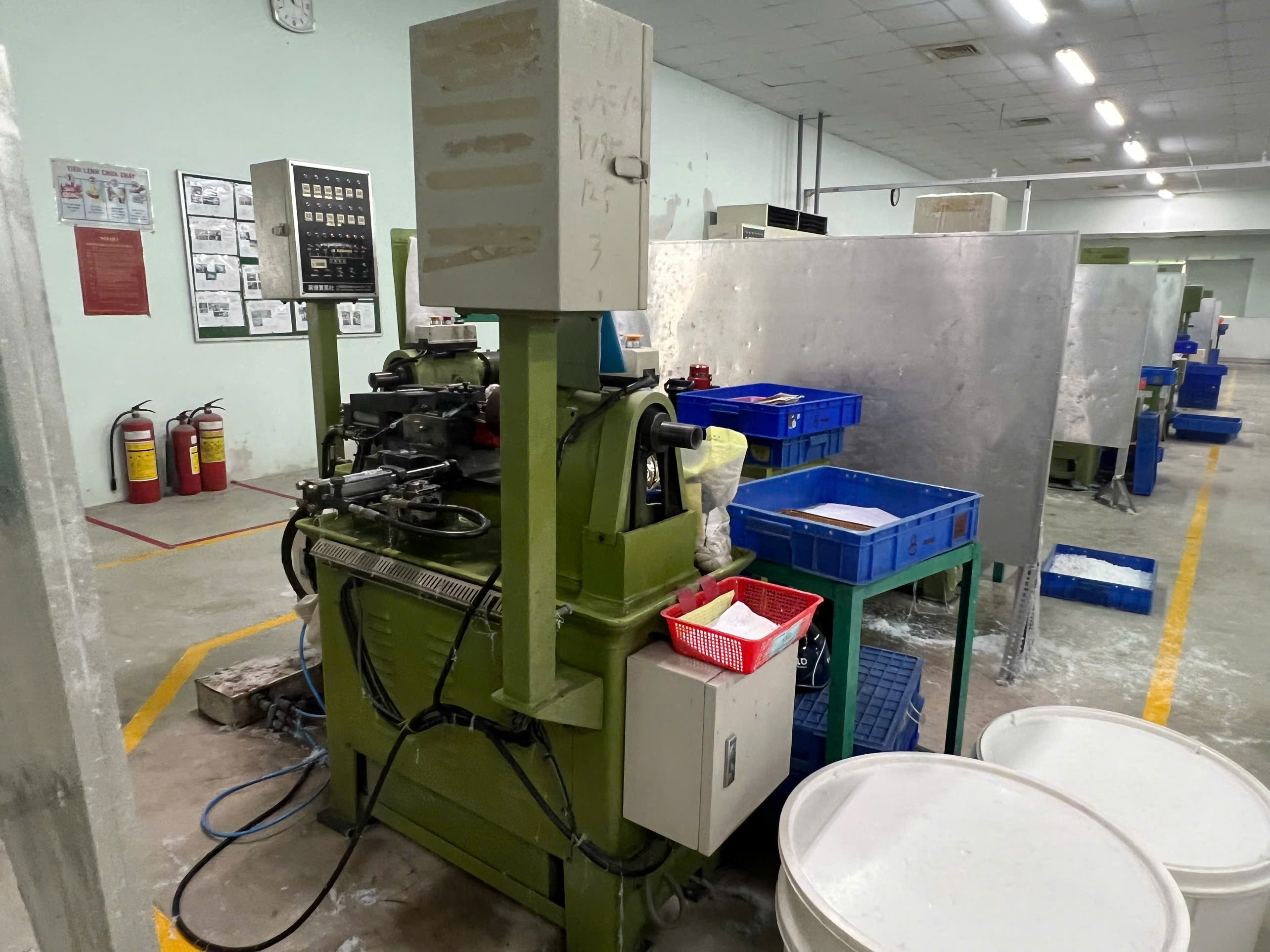
During a recent supplier audit in Vietnam, I watched a CNC operator hold ±0.02 mm on a bore diameter across a 200-piece batch. That level of repeatability simply is not possible with a manual brake press.
CNC machining delivers tighter tolerances — as fine as ±0.025 mm — making it the superior choice for precision-critical assemblies in aerospace, defense, and medical applications. Sheet metal tolerances typically range from ±0.1 mm to ±0.5 mm, which is adequate for enclosures and brackets but insufficient for close-fitting mechanical components.
Why Tolerance Matters
Tolerance defines how much a finished dimension can deviate from the design intent. Tighter tolerances mean parts fit together more precisely. In a hydraulic manifold, a bore that is 0.05 mm oversize can cause a catastrophic leak. In an electronics enclosure, a 0.3 mm gap on a panel edge is perfectly acceptable.
Tolerance Comparison
| Attribute | Sheet Metal Fabrication | CNC Machining |
|---|---|---|
| Typical tolerance | ±0.1 mm to ±0.5 mm | ±0.025 mm to ±0.05 mm |
| Best achievable tolerance | ±0.05 mm (with premium tooling) | ±0.01 mm (with grinding) |
| Surface finish requirements | Generally smooth from forming | Tool marks may need post-processing |
| Repeatability across batches | Moderate (spring-back variation) | High (digital program control) |
| Inspection method | Go/no-go gauges, CMM | CMM, optical comparators |
The Spring-Back Problem in Sheet Metal
When you bend a sheet of metal, it springs back slightly after the tool releases. The amount of spring-back depends on the material type, thickness, grain direction, and bend radius. Experienced operators compensate for it, but it introduces variability. On a 90-degree bend in 1.5 mm stainless steel, spring-back can shift the angle by 1–3 degrees. That is why sheet metal tolerances are wider.
CNC machining does not have this problem. The tool removes material to a programmed coordinate. Repeatability is governed by the machine's resolution, which on modern CNCs is 0.001 mm or finer.
Quality Control for "Right First Time"
Our clients — especially purchasing managers sourcing from Asia — care deeply about getting parts right the first time. Rework delays shipments and erodes trust. Here is how we approach quality differently for each process:
For CNC parts, we require suppliers to run a first-article inspection report (FAIR) against every critical dimension. We verify with our own CMM checks 8. The digital nature of CNC means once the program is proven, every subsequent part should be identical.
For sheet metal parts, we add fixture checks and weld-quality inspections. We also monitor spring-back trends across production runs and adjust bend programs as needed. Surface finish requirements are typically easier to meet because the formed surfaces are naturally smooth and ready for powder coating or painting.
When Precision Outweighs Cost
If your application is in aerospace, defense, or medical devices, the cost of failure far exceeds the cost of CNC machining. A misaligned prosthetic joint or a loose-fitting turbine blade mount is not just a quality issue — it is a safety issue. In those cases, evaluating CNC machining capabilities with multi-axis capabilities is the only responsible choice. It produces monolithic, high-precision parts with integrated features, reducing part count and eliminating assembly-related tolerance stack-up 9.
How do these different manufacturing scopes affect my project lead times when sourcing custom parts?
A lesson we learned early in our sourcing operations: lead time is not just about how fast the machine runs. It includes engineering review, material procurement, tooling, production, inspection, and shipping.
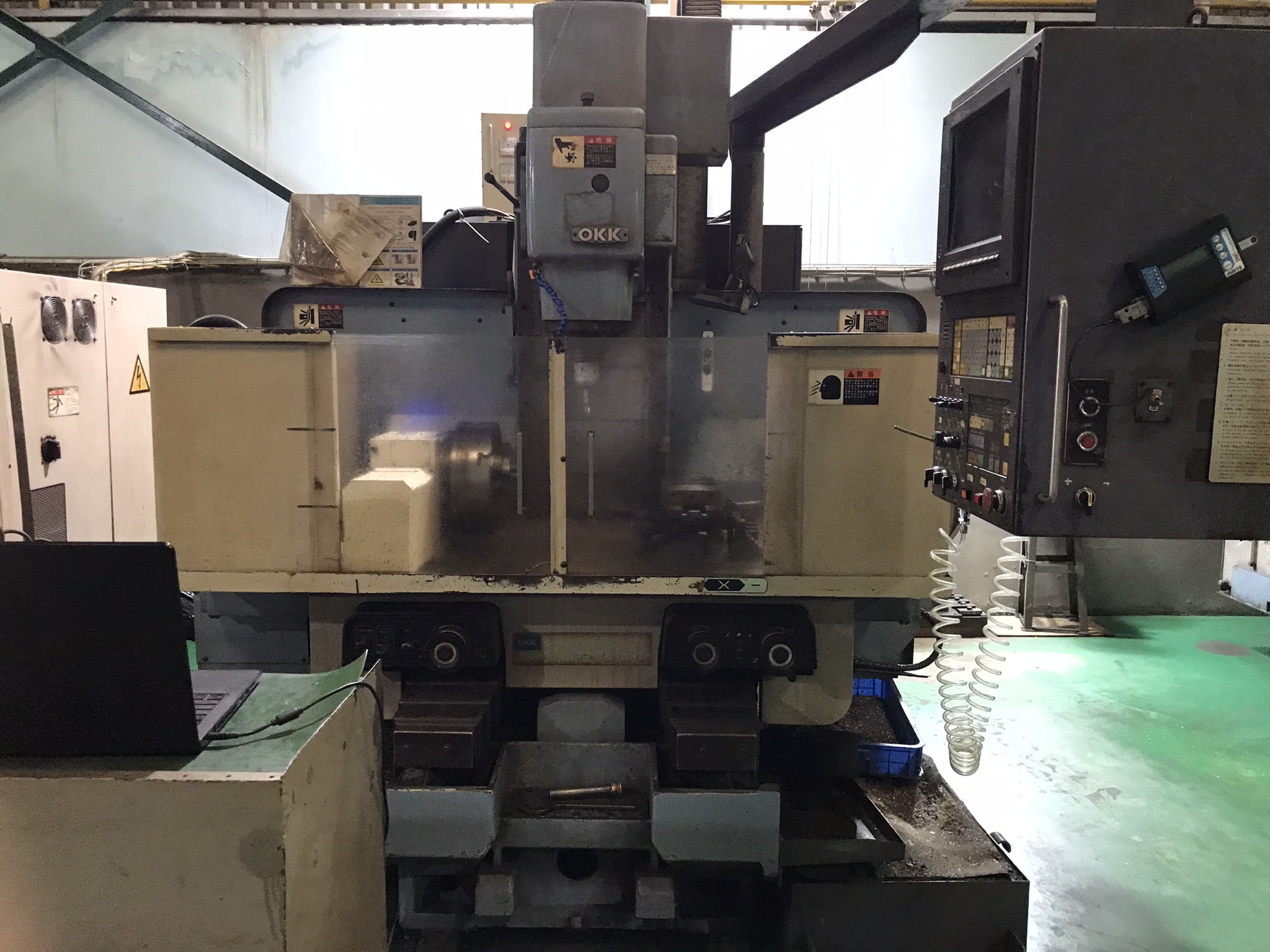
Sheet metal fabrication generally offers shorter lead times for high-volume simple parts because cycle times are faster and tooling is reusable. CNC machining lead times are longer per part but shorter for low-volume prototypes since no custom tooling is required — only CAM programming and machine setup.
Breaking Down Lead Time by Phase
Lead time is the total elapsed time from order placement to parts arriving at your dock. It is rarely just "machining time." Here is how the phases compare:
| Lead Time Phase | Sheet Metal | CNC Machining |
|---|---|---|
| Engineering / DFM review | 1–3 days | 1–3 days |
| Material procurement | 3–7 days (standard sheet stock) | 3–10 days (billets, specialty alloys) |
| Tooling / fixtures | 5–15 days (if custom dies needed) | 1–3 days (soft jaws, fixtures) |
| Production (per 100 units) | 1–3 days | 3–10 days |
| Post-processing / finishing | 2–5 days | 2–7 days |
| Inspection / QC | 1–2 days | 1–3 days |
| Packing and shipping | 2–5 days | 2–5 days |
| Total typical range | 15–40 days | 13–41 days |
The numbers above assume standard materials are available. Exotic alloys or specialty sheet gauges can add weeks.
Why Sheet Metal Can Be Faster at Scale
Once a sheet metal die or brake-press program exists, production flies. Stamping can produce a finished part every few seconds. Laser cutting runs continuously with automatic sheet loading. Bending is quick. The bottleneck shifts from production to finishing and inspection.
For a repeat order, our team in Vietnam can turn around 5,000 sheet metal brackets in under two weeks from order confirmation — because the tooling already exists and the program is proven.
Why CNC Can Be Faster for Prototypes
Need five pieces of a new design? CNC wins. There is no die to build, no stamping setup to validate. A skilled CAM programmer can generate tool paths in a few hours. The machine starts cutting the same day. We have delivered CNC prototypes in as few as seven business days, including international shipping to the U.S.
Managing Lead Time Risk
Delivery delays are the number one pain point we hear from U.S. purchasing managers. Suppliers promise aggressive timelines and then miss them. Our approach is to build buffer into the schedule at the front end — during DFM review and material procurement — rather than rushing production and risking quality. We track every milestone and send weekly status updates. If a supplier falls behind, we escalate before it becomes a crisis.
The choice between sheet metal and CNC also affects your ability to dual-source. Sheet metal parts with custom dies are harder to move between suppliers because each shop's die is slightly different. CNC parts are more portable — any qualified shop with the right machine can run the same program.
Conclusion
Sheet metal fabrication and CNC machining serve complementary roles. Match your process to your part geometry, volume, tolerance, and timeline — and partner with a sourcing team that controls quality at every step.
Frequently Asked Questions
Which process should I choose for my thin-walled enclosures versus solid, complex components?
A buyer in the Midwest once sent us a drawing package that mixed electronics enclosures with precision gear housings — all quoted under one process. That mismatch nearly doubled his unit cost before we stepped in.
How does my required production volume impact the cost-effectiveness of sheet metal versus CNC machining?
One trade-off we weigh daily is whether a buyer's annual volume justifies the tooling investment for stamping or whether CNC's flexibility makes more sense for smaller batches.
Which method will better ensure my tight tolerances and "right first time" quality requirements are met?
During a recent supplier audit in Vietnam, I watched a CNC operator hold ±0.02 mm on a bore diameter across a 200-piece batch. That level of repeatability simply is not possible with a manual brake press.
Footnotes
1. Explains the fundamental process of sheet metal fabrication. ↩︎
2. Clearly defines subtractive manufacturing as a material removal process. ↩︎
3. Defines the concept of a supply chain in a business context. ↩︎
4. Provides a clear definition and overview of CNC machining. ↩︎
5. Explains how nesting software optimizes material usage in manufacturing. ↩︎
6. Describes the property of ductility in metals and its manufacturing relevance. ↩︎
7. Explains the Production Part Approval Process for quality assurance. ↩︎
8. Describes Coordinate Measuring Machines for precise dimensional inspection. ↩︎
9. Defines tolerance stack-up analysis for evaluating dimensional variation in assemblies. ↩︎