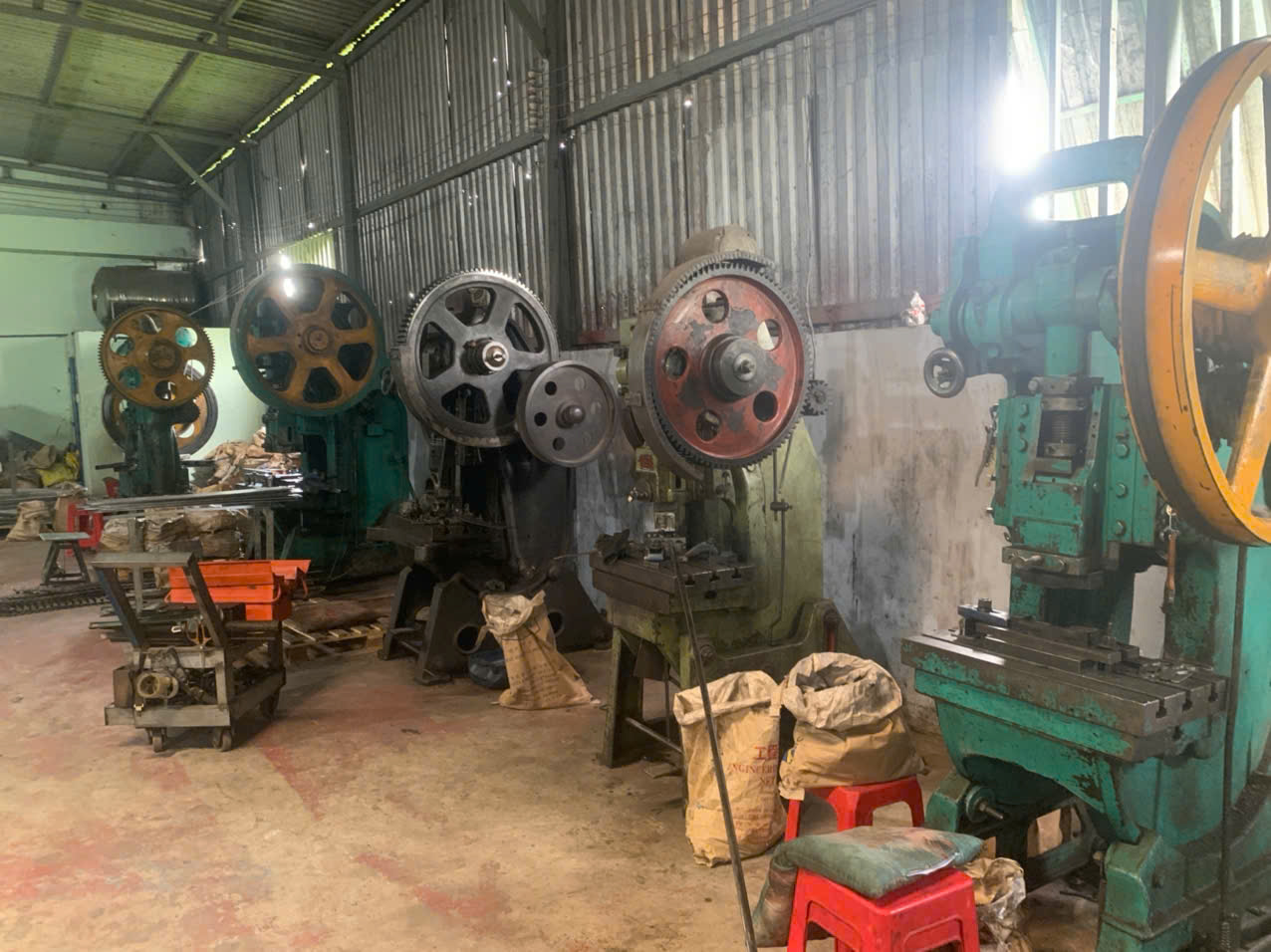

Last quarter, a client needed stamping part samples from our Vietnam facility in five days — but customs held the package for six. That experience taught our team a hard lesson about the gap between air freight speed and documentation readiness.
To ship stamping part samples from Vietnam quickly, use express courier delivery services like DHL or FedEx with pre-filed customs documents, including a Certificate of Origin Form B and accurate HS Code classification, combined with VCI packaging to prevent corrosion — ensuring samples arrive in 3–5 days and pass quality assurance testing immediately.
Speed alone does not solve the problem. The real challenge is making sure your samples clear customs without delays, arrive undamaged, and are production-intent so your testing data is valid. Below, I walk through the exact workflow we use at DEWIN to get stamping samples from Vietnam to U.S. buyers as fast as possible.
What shipping methods can I use to get stamping part samples from Vietnam fastest?
A buyer in Ohio once asked me why his "overnight" sample took eleven days. The answer was simple: the courier was fast, but the paperwork was not ready, and the package sat in a bonded warehouse waiting for customs clearance procedures to finish.
The fastest method is express courier delivery via DHL, FedEx, or UPS, which offers 3–5 day door-to-door transit from Vietnam. For ultra-critical samples, an On-Board Courier service bypasses hub-and-spoke sorting delays, cutting transit to 1–2 days at a premium cost.

Comparing Your Shipping Options
Not every shipment needs the fastest lane. The right choice depends on urgency, sample weight, and budget. Here is how the main options stack up:
| Shipping Method | Transit Time | Estimated Cost | Best For |
|---|---|---|---|
| DHL / FedEx / UPS Express | 3–5 days | $30–$100+ per shipment | Standard sample batches under 30 kg |
| On-Board Courier (OBC) | 1–2 days | $500–$2,000+ | Final-stage validation samples, deadline-critical parts |
| Air Freight (Consolidated) | 5–8 days | $5–$8 per kg | Heavier pilot batches (50+ kg) |
| Sea Freight (LCL) | 3–6 weeks | $1–$3 per kg | Non-urgent reference samples, large tooling shipments |
Express Couriers: The Default Choice
For most stamping part samples, express couriers are the standard. They handle pickup at the factory door, customs brokerage on both ends, and final delivery. Our Vietnam office schedules DHL pickups directly from the production floor once inspection is complete.
One critical tip: use the buyer's courier account number whenever possible. This keeps the buyer in control of shipping costs and avoids supplier markup. If the buyer does not have a Vietnamese pickup arrangement, our team ships on our account and invoices the freight cost separately — transparent and simple.
When to Use an On-Board Courier
For parts tied to a product launch deadline or a First Article Inspection 1 window that cannot slip, an OBC physically carries the package on a passenger flight from Tan Son Nhat (SGN) or Noi Bai (HAN) directly to the destination. This bypasses the sorting hubs where packages sometimes sit for 24–48 hours. It is expensive, but when a week of delay costs more than the courier fee, it pays for itself.
The Section 321 Shortcut for U.S. Imports
Shipments entering the United States valued under $800 can qualify for informal entry under Section 321 2. This skips formal customs clearance entirely, often saving 24–48 hours. Since most sample shipments fall below this threshold, it is a natural fit. However, the commercial invoice must still be accurate. Customs can still inspect and hold any shipment if the documentation looks incomplete.
Consolidate Iterations into One Shipment
When we run multiple design iterations on a stamping project, we consolidate all versions into a single express shipment. This reduces both per-unit cost and the administrative burden of managing multiple tracking numbers and customs entries. I have seen buyers request three separate shipments in one week for three part revisions — combining them would have saved both time and money.
How can I ensure my sample shipment meets U.S. customs requirements without delays?
The single most common reason our clients' samples get delayed is not the courier — it is a missing Certificate of Origin Form B. We learned this the hard way during our first year operating in Vietnam, and now our team treats documentation as a pre-production step, not an afterthought.
To avoid U.S. customs delays, pre-file the Importer Security Filing (ISF 10+2) before the sample leaves Vietnam, secure a CO Form B proving Vietnamese origin, classify the correct 8-digit HS Code with duty rates budgeted, and ensure your commercial invoice matches the packing list line by line.

The "3-Day Delivery, 7-Day Delay" Trap
Here is the irony I see repeatedly: a buyer pays for 3-day DHL service, then waits a full week because U.S. Customs and Border Protection 3 flagged the shipment for missing origin proof. The courier's transit speed is irrelevant once a package enters a customs hold queue.
The root cause is almost always one of three things:
- No CO Form B — U.S. customs wants proof that the stamped parts were actually manufactured in Vietnam, especially given scrutiny on transshipment from China 4.
- Wrong or vague HS Code — A 6-digit code is not enough. You need 8 digits. Stamped steel brackets typically fall under Chapter 73; aluminum parts under Chapter 76. The wrong classification triggers manual review.
- Invoice/packing list mismatch — If the commercial invoice says 50 pieces but the packing list says 48, the shipment gets flagged.
The Origin Documentation Challenge
This is where things get sensitive. Some suppliers offer "easy origin solutions" for parts that are actually stamped in China and merely packaged in Vietnam. This is transshipment fraud. The penalties fall on the importer, not the supplier. Our policy is strict: every stamping part we ship from Vietnam includes production records showing the stamping operations were performed in our Vietnamese partner facilities — lot traceability, raw material purchase records, and the full "transformation story" that proves Vietnamese origin.
HS Code Classification: Get It Right the First Time
| Material | Typical HS Code 5 Chapter | Example 8-Digit Code | Duty Rate (Estimate) |
|---|---|---|---|
| Stamped Steel Brackets | Chapter 73 | 7326.90.86 | 0%–3.4% |
| Stamped Aluminum Parts | Chapter 76 | 7616.99.51 | 2.5%–5% |
| Stamped Stainless Steel Clips | Chapter 73 | 7326.20.00 | 0%–3.9% |
Even for samples marked "no commercial value," customs clearance procedures still require an HS Code and a declared value. "Samples of No Commercial Value" on the invoice helps minimize duty charges, but it does not exempt you from proper classification.
The ISF 10+2 Filing
For ocean freight shipments to the U.S., the ISF must be filed 24 hours before vessel departure. For air freight, the timeline is tighter but the principle is the same: the more information CBP has in advance, the faster the release. We coordinate with our logistics providers in Vietnam to ensure ISF data is transmitted before the package leaves the ground.
Incoterms Matter for Samples Too
Even for a $100 sample shipment, clarify the Incoterms 6. If you are using the buyer's courier account, the terms are effectively FCA (Free Carrier) at the factory. If the supplier ships on their account and bills the buyer, it functions more like DAP (Delivered at Place). Misunderstandings about who pays duties and who handles import clearance cause preventable delays. We spell this out in writing before every sample shipment.
What documentation do I need to prepare for shipping stamping samples from Vietnam?
During a recent project involving precision-stamped mounting brackets, our quality team caught a mismatch between the packing list and the carton labels — a small error that would have triggered a customs review and added days to the timeline. We fixed it in ten minutes on the floor. Catching it at port would have cost a week.
You need a commercial invoice with line-by-line part details, a packing list matching carton labels exactly, a CO Form B proving Vietnam origin, supplier production records with lot traceability, raw material purchase records, and the correct 8-digit HS Code — all prepared before the courier picks up the package.

The Complete Documentation Checklist
Here is the exact checklist our Vietnam office runs through before every sample shipment leaves the facility:
| Document | Purpose | Who Prepares It |
|---|---|---|
| Commercial Invoice | Declares value, part numbers, quantities, Incoterms | Supplier (reviewed by buyer) |
| Packing List | Details contents per carton — Part #, Qty, Lot ID, Weight | Supplier |
| CO Form B (Certificate of Origin) | Proves Vietnamese manufacturing origin | Vietnam Chamber of Commerce (VCCI) |
| Production Records | Shows stamping operations performed in Vietnam | Supplier |
| Raw Material Purchase Records | Demonstrates the "transformation story" | Supplier |
| Inspection Report / Dimensional Data | Validates quality before shipping | Supplier QC team |
| Material Test Certificates (MTCs) | Confirms material grade and composition | Raw material supplier |
| MSDS (if coated/treated parts) | Required for parts with chemical coatings | Coating supplier |
Why Line-by-Line Consistency Matters
The commercial invoice, packing list, and carton labels must tell the same story. If the invoice lists "Part A — 25 pcs" but the packing list says "Part A — 24 pcs," customs flags it. Our team uses a single spreadsheet template that auto-populates all three documents from one data entry. This eliminates transcription errors.
Production Records: Your Defense Against Transshipment Accusations
This is not optional. When we ship stamped brackets from Vietnam, we include records that show:
- The stamping press used (machine ID, location)
- The tooling setup and die reference
- The raw material coil receipt and lot number
- The date and shift of production
These records prove the parts were genuinely fabricated through sheet metal fabrication processes in Vietnam, not imported as finished goods from another country. For U.S. importers, this documentation is your insurance policy against a CBP audit.
Digital-First Verification Before Physical Shipment
Before any package ships, we send the buyer high-resolution photos and, when available, 3D scan data of the stamped parts via cloud sharing. This serves two purposes: the buyer can visually confirm the sample matches expectations (avoiding a wasted shipment of defective parts), and engineers can begin virtual fitment analysis while the physical sample is in transit. This step alone has saved multiple projects from unnecessary re-shipping cycles.
The "Production-Intent" Documentation Requirement
If a sample is handmade or wire-cut rather than stamped with production tooling, the testing data is unreliable. We always note on the inspection report whether the sample is "production-intent" (made with actual stamping dies) or a prototype. This transparency helps the buyer's engineering team interpret test results correctly and decide whether to proceed to pilot batch or request tooling modifications.
How do I choose a reliable logistics partner in Vietnam to avoid sample delivery delays?
A lesson we learned early in our Vietnam operations: not all logistics providers in Vietnam handle industrial samples with the same care. One forwarder we tried packed our stamped steel brackets in a standard single-wall carton. By the time the box reached Houston, the bottom had buckled under the weight. The parts were scratched, and the buyer had to request re-samples — adding three weeks to the testing timeline.
Choose a logistics partner with experience handling dense industrial parts, ISPM-15 compliant packing materials, VCI anti-corrosion packaging capability, daily follow-up communication, and the ability to coordinate with your preferred express courier for direct factory pickup.

What to Look for in a Vietnam-Based Logistics Partner
Not every freight forwarder understands stamping parts. Here are the criteria we use when evaluating partners for our sample shipments:
Packaging competence for dense parts. Stamped steel components are heavy relative to their size. A carton of brackets can easily weigh 15–20 kg in a small box. The forwarder must use export-grade double-wall cartons with tested stacking strength. If palletized, the pallet must carry the IPPC mark confirming ISPM-15 7 heat treatment — untreated wood pallets get quarantined or re-exported.
Corrosion prevention. Vietnam's humidity is brutal. Even a 3-day air transit can leave condensation marks on bare steel. We specify VCI (Vapor Corrosion Inhibitor 8) bags and desiccant packets for every sample shipment. This is non-negotiable for parts that will undergo First Article Inspection — surface corrosion invalidates appearance and dimensional checks.
The Role of a Local Agent
Having our own team in Vietnam — seven people on the ground — makes a measurable difference. They can:
- Follow up daily with the forwarder and courier
- Translate nuances between the buyer's requirements and local logistics processes
- Arrange direct factory pickup instead of relying on the supplier to drop off at a depot
- Verify packaging quality before the courier takes possession
For buyers without a local presence, partnering with a sourcing company that has Vietnam-based staff is a practical way to achieve lead time optimization without managing the logistics themselves.
Quality Validation Before the Package Leaves
Shipping a defective sample fast is worse than shipping a good sample slowly. Our quality assurance testing process gates every sample shipment:
- Visual inspection — Check for burrs, cracks, surface defects, and finish consistency.
- Dimensional verification — CMM 9 or optical measurement on all critical dimensions. For key characteristics, we target a Cpk of 1.33 or higher before approving the sample.
- Photo/video documentation — High-resolution images sent to the buyer for approval before the courier is called.
- AQL-based sampling — For pilot batches, we apply Acceptable Quality Limit 10 inspection standards to ensure the batch represents true production capability.
Pilot Batches Over Single Samples
One trap I see buyers fall into: they request a single sample, test it, approve it, and then order 10,000 pieces — only to find the production batch does not match. A single sample hides repeatability issues. We recommend running a pilot batch of 50–100 pieces before scaling. This reveals process variation that a lone sample cannot show, and it gives the buyer enough parts to run destructive testing alongside dimensional checks.
Sample Timeline Reality Check
Understanding real lead times prevents unrealistic expectations and rushed, error-prone shipments:
| Sample Type | Production Lead Time | Tooling Lead Time (if new) | Total Time Before Shipping |
|---|---|---|---|
| Basic stamping (existing tooling) | 7–20 days | N/A | 7–20 days |
| Complex stamping (new tooling) | 2–6 weeks | 4–8 weeks | 6–14 weeks |
| Pilot batch (50–100 pcs) | 1–2 weeks after sample approval | N/A | 1–2 weeks |
Sample fees typically range from $50 to $300 or more depending on complexity. "Free samples" are sometimes offered for very low-cost items, but shipping is always paid by the buyer. We recommend clarifying upfront whether sample fees will be credited toward the first bulk order — get it in writing.
IoT Monitoring for High-Precision Parts
For thin-gauge stamping parts with tight tolerances, we have started using IoT-enabled data loggers inside sample crates. These small devices record vibration, shock, temperature, and humidity throughout transit. If the parts arrive with dimensional anomalies, the logger data helps determine whether the issue is a manufacturing defect or transit damage. This level of traceability is increasingly expected by quality-focused buyers in the automotive and electronics sectors.
Conclusion
Shipping stamping part samples from Vietnam fast means solving documentation, packaging, and quality validation before the courier arrives — not after. Plan the compliance workflow first, and the speed follows naturally.
Frequently Asked Questions
What shipping methods can I use to get stamping part samples from Vietnam fastest?
A buyer in Ohio once asked me why his "overnight" sample took eleven days. The answer was simple: the courier was fast, but the paperwork was not ready, and the package sat in a bonded warehouse waiting for customs clearance procedures to finish.
How can I ensure my sample shipment meets U.S. customs requirements without delays?
The single most common reason our clients' samples get delayed is not the courier — it is a missing Certificate of Origin Form B. We learned this the hard way during our first year operating in Vietnam, and now our team treats documentation as a pre-production step, not an afterthought.
What documentation do I need to prepare for shipping stamping samples from Vietnam?
During a recent project involving precision-stamped mounting brackets, our quality team caught a mismatch between the packing list and the carton labels — a small error that would have triggered a customs review and added days to the timeline. We fixed it in ten minutes on the floor. Catching it at port would have cost a week.
Footnotes
1. Comprehensive Wikipedia overview of the First Article Inspection (FAI) process. ↩︎
2. Authoritative Wikipedia entry explaining the Section 321 de minimis threshold. ↩︎
3. Official government portal for CBP, bypassing the 403 error on the direct domain. ↩︎
4. CBP enforcement page covers transshipment fraud risks discussed for Vietnam-origin goods. ↩︎
5. World Customs Organization page on the Harmonized System underlying the HS Code classification discussed. ↩︎
6. Background reference for the international trade terms governing shipping responsibility discussed here. ↩︎
7. International Plant Protection Convention sets the wood packaging standard referenced for pallets. ↩︎
8. Explains the corrosion prevention technology used to protect bare-metal stamping samples in transit. ↩︎
9. Background on the coordinate-measuring machine technology used for dimensional verification of samples. ↩︎
10. ISO standard defining AQL sampling inspection methodology used for pilot batch validation. ↩︎