
Last quarter, a long-time U.S. client asked our team to re-source a set of complex mounting brackets — the same ones pictured here — away from their existing China supplier non-destructive testing 1. Delivery delays and inconsistent weld quality had stalled their production line for weeks. The frustration was real: every rejected batch meant lost revenue, strained customer relationships, and emergency air freight costs that wiped out any savings from low unit prices. Through our Vietnam office, we moved the project to a vetted fabricator near Ho Chi Minh City, ran a full PPAP cycle 2, and delivered conforming parts in six weeks.
To source quality sheet metal fabrication using Vietnam’s labor cost advantage, identify certified fabricators through on-site audits, enforce clear material and tolerance specifications, engage a local sourcing partner for quality control and communication, and leverage Vietnam’s 30–50% labor savings over China while maintaining ISO 9001 and AWS-level standards.
This guide breaks down the exact steps we follow — and recommend to every purchasing manager sourcing metal components from Asia. Each section targets a real pain point: maintaining quality, vetting technical capability, closing the communication gap, and securing the credit terms your cash flow demands.
How can I maintain my quality standards while benefiting from lower labor costs in Vietnam?
A buyer we work with in the Midwest once told me, "I don't care how cheap the parts are if I have to sort every shipment on my dock." That single sentence captures the tension every purchasing manager feels when exploring offshore manufacturing in a new country. Our experience running quality control in Vietnam across dozens of custom sheet metal projects has taught us that low labor cost and high quality are not mutually exclusive — but they never happen by accident.
You maintain quality standards by defining exact material grades, tolerances, and inspection criteria upfront, then enforcing them through incoming material verification, in-process checks, and final inspection protocols — all documented in a control plan before production starts.

Why Labor Cost Alone Does Not Guarantee Savings
Vietnam's labor costs run 30–50% below China's for comparable fabrication work. That gap is real and significant. But savings evaporate when parts arrive out of spec. The root cause is almost always the same: vague drawings, missing material call-outs, and no agreed inspection plan.
I have seen purchase orders that simply say "aluminum sheet, 2 mm." That is not a specification. It is a guess. The fabricator picks whatever alloy is cheapest. The parts look fine until your customer tries to form or weld them downstream, and the material cracks or corrodes.
Specifying Materials the Right Way
The table below shows the difference between vague and precise material call-outs. We send this to every new client before they release drawings to any Vietnamese shop.
| Vague Call-Out | Precise Call-Out | Why It Matters |
|---|---|---|
| "Aluminum sheet" | 5052-H32 3, 2.0 mm ±0.05 mm | Controls forming behavior and corrosion resistance |
| "Steel sheet" | A366/1008 CR, 1.5 mm ±0.05 mm | Ensures formability for deep draws |
| "Stainless steel" | ASTM A304 4, 1.2 mm, 2B finish | Guarantees corrosion resistance and surface quality |
| "Mild steel plate" | A36 HR, 6.0 mm ±0.10 mm | Matches structural and weldability requirements |
Building a Quality Control Plan
Before any metal is cut, we create a control plan with the fabricator. It covers raw material verification, first-article inspection, in-process dimensional checks, weld inspection, and final audit. Every step has a method, a frequency, and a pass/fail criterion.
For weld-critical parts like the mirrored mounting brackets shown in our product images, we require visual inspection per AWS D1.1 5 on every unit plus non-destructive testing on a statistical sample. Weld marks at joints are acceptable only if they meet the profile and size defined on the drawing.
We also insist on equipment calibration records. A CNC press brake that has not been calibrated in six months will drift. That drift shows up as bend-angle errors that compound across multi-bend parts. Precision metal fabrication demands discipline in maintenance, not just skill at the machine.
Common Defects and How We Prevent Them
| Defect | Typical Cause | Control Measure |
|---|---|---|
| Warping after cutting | Excessive laser heat input | Optimize cutting speed and power; use nitrogen assist gas |
| Surface scratches | Mishandling between operations | Protective PE film on sheets; dedicated handling racks |
| Dimensional drift on bends | Uncalibrated press brake or incorrect K-factor | Calibrate quarterly; verify K-factor on first article |
| Weld distortion | Too much heat in thin gauge | Use fixture clamping; control heat input per WPS |
| Hole misalignment | Incorrect nesting or datum shift | CAD verification against GD&T datums 6 before cutting |
These are not theoretical risks. Each one has cost our clients time and money at some point. The difference now is that we catch them in-process instead of at the dock.
What steps should I take to vet the technical capabilities of a Vietnamese sheet metal shop?
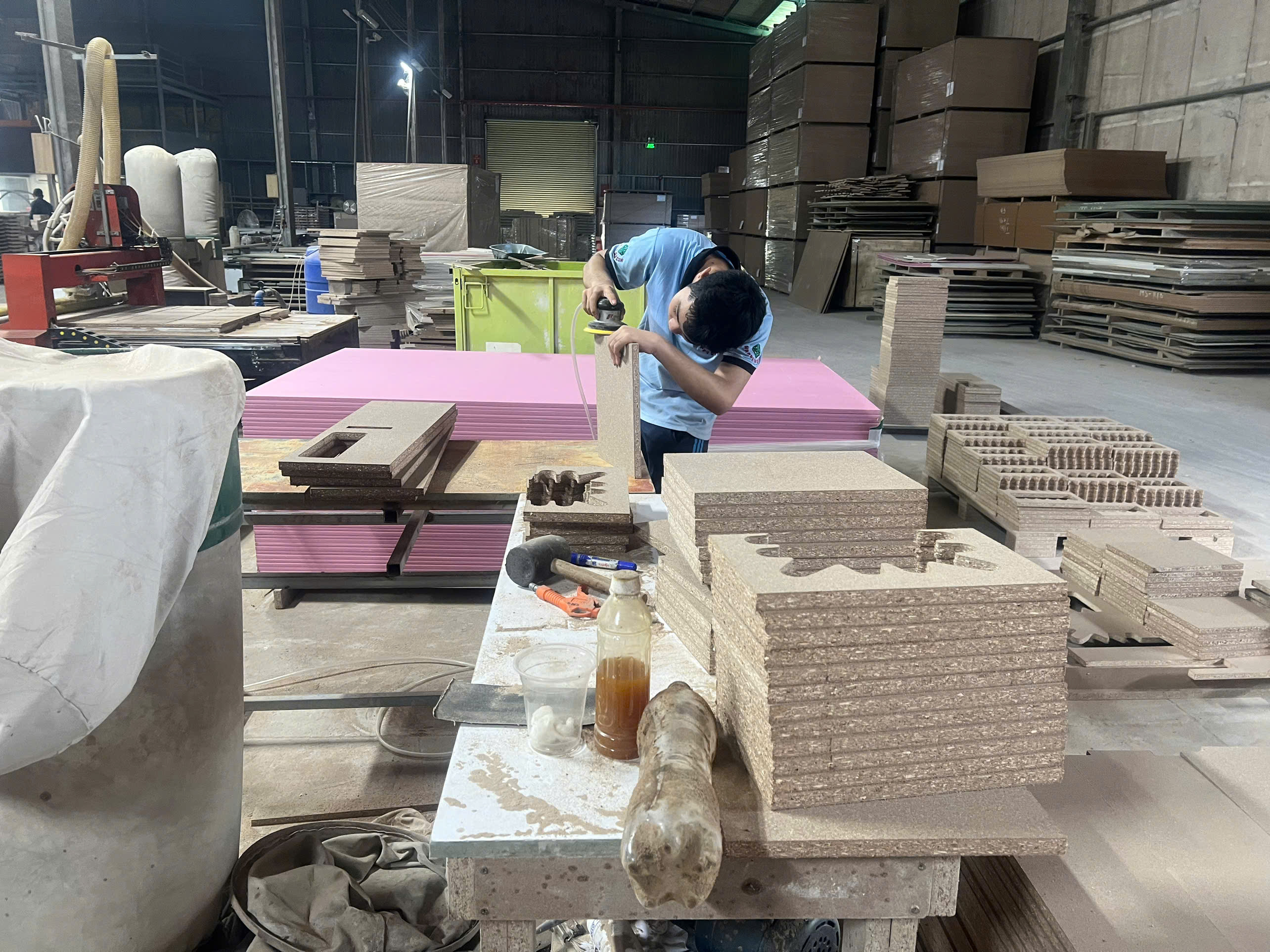
One lesson we learned early in our Vietnam operations is that a factory's website rarely tells the full story. Photos can be staged. Equipment lists can be padded. The only way to know what a shop can actually do is to walk the floor, inspect the machines, and run a trial part. Our seven-person team in Vietnam does this routinely, and the gap between what factories claim and what they deliver still surprises us.
To vet a Vietnamese sheet metal shop, conduct an on-site factory audit covering equipment condition, operator skill, quality system documentation, and capacity utilization, then validate capability with a paid prototype or first-article run before committing to production volumes.
What to Look for During a Factory Audit
Factory audits in Vietnam follow the same logic as anywhere else, but local context matters. Industrial zones in Vietnam vary widely in infrastructure and workforce quality. A shop in Binh Duong province may have better access to skilled workforce than one in a more remote area.
Here is the checklist we use when our team visits a potential fabrication partner:
-
Equipment inventory and condition. We record the make, model, and year of every major machine — fiber laser cutters, CNC punch presses, press brakes, welding stations. We check maintenance logs. A 2018 Amada fiber laser in good condition tells a different story than a 2008 CO2 laser with no service records.
-
Operator qualifications. We ask to see welder certifications (AWS or equivalent). We watch operators set up a brake job or a weld sequence. Speed matters less than consistency and attention to procedure.
-
Quality system documentation. ISO 9001 certification is a baseline, not a guarantee. We review the actual quality manual, control plans, and corrective action records. A shop that has issued zero corrective actions in two years is either perfect or not using their system.
-
Capacity and lead time. We check current order backlog. A shop running at 95% capacity will struggle to meet your delivery dates. We prefer partners operating at 60–75% utilization so there is room for schedule flexibility.
-
Surface treatment capability. Powder coating, plating, sandblasting — are these done in-house or subcontracted? In-house finishing reduces lead time and gives more control over the matte gunmetal grey finishes and smooth textures our clients often require.
Evaluating Core Fabrication Processes
Not every shop can do everything well. The table below maps common processes to the questions we ask during an audit.
| Process | Key Equipment | Audit Question |
|---|---|---|
| Laser cutting | Fiber laser (≥2 kW) | What is the max sheet size and thickness? Is nitrogen assist available? |
| CNC punching | Turret punch press | How many tool stations? Can they handle custom tooling for non-standard cutouts? |
| Press brake forming | CNC press brake with backgauge | What is the tonnage and bed length? Do they verify bend angle with a protractor or digital gauge? |
| Welding (MIG/TIG/Spot) | Certified welding stations, fixtures | Are welders AWS-certified? Do they use written weld procedure specifications (WPS)? |
| Powder coating | Automated or manual spray booth, curing oven | What is the max part size? Do they measure film thickness on every batch? |
The Prototype Test
After the audit, we always run a paid prototype. This is non-negotiable. We send a drawing with intentional complexity — tight tolerances on a few features, standard tolerances elsewhere, a multi-bend geometry, and at least one welded joint. The prototype tells us whether the shop can read drawings accurately, hold dimensions, and deliver on time.
For the angular mounting brackets in our product line, the prototype test is especially revealing. Those parts require mirrored left-hand and right-hand versions with precise fold sequences, multiple pre-drilled holes aligned to GD&T datums, and clean weld joints at the tab intersections. A shop that gets this right on the first attempt is a strong candidate for contract manufacturing in Vietnam.
We also evaluate how the shop handles design for manufacturability 8 feedback. A good fabricator will come back and say, "This bend radius is too tight for 3 mm steel — can we open it to 1× material thickness?" That kind of proactive engineering collaboration is a sign of real capability, not just order-taking.
How do I manage the communication gap to ensure my custom fabrication project is right the first time?
The most expensive word in cross-border manufacturing is "assumed." A U.S. purchasing manager assumes the fabricator understood the note on the drawing. The fabricator assumes the customer wanted the cheaper alloy. Nobody confirms anything in writing, and six weeks later a container of wrong parts arrives in Long Beach. I have watched this cycle repeat across industries, and the fix is simpler than most people think.
Manage the communication gap by using detailed technical data packages with annotated drawings, requiring written order acknowledgments that confirm material, tolerances, and finish, and working with a bilingual sourcing partner who conducts design-for-manufacturability reviews before production begins.

The Technical Data Package
Every project we manage starts with what we call a technical data package 9. This is more than a drawing file. It includes:
- 2D drawing with GD&T call-outs in PDF format, with critical dimensions highlighted in red.
- 3D model in STEP or IGES format so the fabricator can import it directly into their CAM software.
- Material specification sheet listing exact alloy, temper, thickness, and surface finish.
- Tolerance table separating critical features (±0.01 mm) from standard commercial tolerances (±0.1–0.2 mm).
- Inspection criteria defining which dimensions get measured on every part versus on a sampling basis.
- Photos or renderings of the finished part, including the matte gunmetal grey powder coat and weld joint expectations.
We learned to include photos the hard way. A drawing alone does not always convey the intent of a visible weld joint or a sandblasted texture. When our client needed the mirrored mounting brackets with clean, consistent weld marks at the joints, the reference photos eliminated two rounds of back-and-forth that would have cost a week each.
Written Order Acknowledgment
Before cutting starts, the fabricator must return a written order acknowledgment. This document confirms material grade, quantity, tolerances, surface treatment, packing method, and delivery date. If any item differs from the technical data package, we resolve it before production. This step alone has prevented more quality escapes than any inspection tool.
The Role of a Local Sourcing Partner
English proficiency among Vietnamese engineers is improving, but technical nuance still gets lost. Terms like "break sharp edges" or "deburr all around" can be interpreted differently. Our Vietnam-based team bridges this gap daily. They sit with the fabricator's engineers, review the DFM feedback in Vietnamese, and translate it back to the client in precise technical English.
This is where supply chain diversification 10 strategies live or die. Moving production from China to Vietnam solves one set of problems but creates new communication risks. A local team that speaks both languages — and understands both manufacturing cultures — is not a luxury. It is a requirement for getting precision metal fabrication right the first time.
We also use shared digital folders with version-controlled documents. Every revision gets a new version number. The fabricator cannot start production on revision A when revision B has already been approved. It sounds basic, but revision control failures account for a surprising number of quality rejections in offshore manufacturing.
Can I find a Vietnam sourcing partner who offers the same credit terms and QC oversight I expect?
When we first started offering 60-day open account terms to U.S. clients sourcing from Vietnam, several industry contacts told us we were taking on too much risk. But we understood the buyer's reality: purchasing managers at mid-size American companies need cash flow flexibility, and prepayment requirements from overseas suppliers create friction that kills deals.
Yes — experienced sourcing partners like DEWIN offer 60–90 day credit terms, on-the-ground QC teams in Vietnam, and end-to-end project management from co-development through final inspection and door-to-door logistics, matching the service level you expect from domestic suppliers.
Why Credit Terms Matter in Contract Manufacturing
Most Vietnamese fabricators require 30% deposit before production and 70% before shipment. That is standard for direct factory relationships. But for a U.S. purchasing manager managing dozens of SKUs and juggling cash flow across multiple suppliers, those terms create administrative burden and financial strain.
Our model works differently. We pay the factory on their terms. We extend open account credit to qualified U.S. and European clients. The client receives parts, inspects them, and pays us net 60 or net 90. This aligns the payment cycle with their own receivables and removes a major barrier to sourcing metal components from Vietnam.
End-to-End QC Oversight
Credit terms without quality assurance are meaningless. If parts arrive defective, the credit period just delays the argument about who pays for the rework. That is why our service model bundles financial terms with hands-on quality control at every stage.
Here is how our QC process maps to a typical sheet metal project:
| Project Stage | QC Activity | Who Performs It |
|---|---|---|
| Pre-production | Drawing review, DFM feedback, material approval | DEWIN engineering + factory |
| Incoming material | Mill cert verification, thickness and alloy spot checks | DEWIN Vietnam QC team |
| First article | Full dimensional inspection per control plan, visual weld check | DEWIN Vietnam QC team |
| In-process | Bend angle verification, fixture checks, weld parameter monitoring | Factory QC + DEWIN oversight |
| Final inspection | 100% visual, AQL sampling for dimensions, surface finish check | DEWIN Vietnam QC team |
| Pre-shipment | Packing audit, labeling, container loading supervision | DEWIN logistics team |
This is not a paper exercise. Our team is physically in the factory for first-article runs and final inspections. For the complex mounting brackets with multiple pre-drilled holes and sharp angular bends, we measure every critical dimension on the first five units before approving the full run.
What to Look for in a Sourcing Partner
Not every trading company or sourcing agent offers this level of service. Here are the criteria we recommend when evaluating a Vietnam sourcing partner:
- Local presence. Do they have employees on the ground in Vietnam, or are they managing everything remotely from another country?
- Technical capability. Can they read your drawings, provide DFM feedback, and create inspection reports with actual measured data?
- Credit terms. Do they offer open account terms, or do they require full prepayment like a typical factory?
- Supply chain management. Do they handle logistics, customs documentation, and door-to-door delivery?
- Transparency. Will they share factory audit reports, inspection data, and corrective action records?
Vietnam's cost-effective production environment is a powerful advantage for global manufacturers pursuing supply chain diversification. Trade agreements like EVFTA, CPTPP, and RCEP further reduce tariffs, making the landed cost even more competitive. But these advantages only materialize when you have a partner who combines local knowledge, technical depth, and commercial flexibility. For a deeper look at how these costs stack up, you can compare sourcing costs for sheet metal fabrication from China vs. Vietnam.
The future outlook for Vietnam's sheet metal fabrication industry is strong. Automation is expanding — robotic welding and automated powder coating lines are becoming common in top-tier facilities. The skilled workforce pipeline continues to grow through vocational programs and partnerships with international training institutions. For purchasing managers evaluating competitive advantages of Vietnam sheet metal fabrication vs China, Vietnam is no longer an experiment. It is a proven production base.
Conclusion
Sourcing quality sheet metal fabrication from Vietnam demands precise specifications, rigorous factory audits, disciplined communication, and a local partner who provides both QC oversight and flexible credit terms to protect your quality and cash flow.
Frequently Asked Questions
How can I maintain my quality standards while benefiting from lower labor costs in Vietnam?
A buyer we work with in the Midwest once told me, "I don't care how cheap the parts are if I have to sort every shipment on my dock." That single sentence captures the tension every purchasing manager feels when exploring offshore manufacturing in a new country. Our experience running quality control in Vietnam across dozens of custom sheet metal projects has taught us that low labor cost and high quality are not mutually exclusive — but they never happen by accident.
What steps should I take to vet the technical capabilities of a Vietnamese sheet metal shop?
One lesson we learned early in our Vietnam operations is that a factory's website rarely tells the full story. Photos can be staged. Equipment lists can be padded. The only way to know what a shop can actually do is to walk the floor, inspect the machines, and run a trial part. Our seven-person team in Vietnam does this routinely, and the gap between what factories claim and what they deliver still surprises us.
How do I manage the communication gap to ensure my custom fabrication project is right the first time?
The most expensive word in cross-border manufacturing is "assumed." A U.S. purchasing manager assumes the fabricator understood the note on the drawing. The fabricator assumes the customer wanted the cheaper alloy. Nobody confirms anything in writing, and six weeks later a container of wrong parts arrives in Long Beach. I have watched this cycle repeat across industries, and the fix is simpler than most people think.
Footnotes
1. Explains various methods and benefits of evaluating materials without damage. ↩︎
2. Explains the Production Part Approval Process, a key quality standard. ↩︎
3. Provides detailed properties and applications of this specific aluminum alloy. ↩︎
4. Describes the properties and uses of this common stainless steel grade. ↩︎
5. Official source for the structural welding code for steel. ↩︎
6. Clarifies the role of theoretical reference points in geometric dimensioning and tolerancing. ↩︎
7. Official site detailing the globally recognized quality management standard. ↩︎
8. Outlines principles for optimizing product design for efficient and cost-effective manufacturing. ↩︎
9. Defines a comprehensive set of documents for product design, production, and support. ↩︎
10. Explains the strategy of using multiple suppliers to reduce risks and improve resilience. ↩︎