Sourcing US NEMA-compliant sheet metal fabrication for energy infrastructure 1 has become one of the trickiest procurement challenges I encounter working with American buyers.
To source NEMA-compliant sheet metal fabrication for energy infrastructure, partner with a vertically integrated supplier that holds ISO 9001 certification, demonstrates proven NEMA enclosure ratings expertise, offers design for manufacturability collaboration, and provides end-to-end quality control from prototyping through final inspection and logistics.
The stakes are high. A single non-conforming enclosure can delay an entire power distribution project by weeks. Below, I break down the critical steps our team has refined over years of helping US procurement managers source custom metal fabrication from Asia — specifically Vietnam — while meeting the strict standards American energy infrastructure demands.
How can I ensure my offshore sheet metal supplier fully complies with US NEMA standards for energy infrastructure?
Last year, a purchasing manager from Texas reached out after his previous supplier delivered 200 electrical enclosures that failed NEMA 4X 2 corrosion resistance testing — every single unit needed rework, and the project stalled for two months.
Ensure offshore compliance by requiring documented NEMA enclosure ratings traceability, verifying ISO 9001:2015 certification, demanding material test reports for corrosion resistance, and conducting pre-production sample approvals with your own engineering team before mass production begins.
The core challenge is straightforward. NEMA standards define how well an enclosure protects electrical equipment from water, dust, ice, and corrosive agents. NEMA enclosure ratings 3 For energy infrastructure — think power distribution systems, renewable energy components, and industrial control panels — getting the NEMA rating wrong is not just inconvenient. It is dangerous and expensive.
Understanding NEMA Ratings for Energy Applications
NEMA ratings are not one-size-fits-all. A NEMA 1 enclosure works fine indoors. But a solar farm junction box in Florida needs NEMA 4X for windblown rain and corrosion resistance. Our Vietnam-based engineering team reviews every client drawing against the intended installation environment before we even quote a project.
| NEMA Rating | Protection Level | Typical Energy Infrastructure Use |
|---|---|---|
| NEMA 1 | Indoor, general purpose | Indoor switchgear rooms |
| NEMA 3R | Outdoor, rain and sleet | Utility pole-mounted transformers |
| NEMA 4 | Watertight, dust-tight | Outdoor substations |
| NEMA 4X | Corrosion-resistant, watertight | Coastal wind farms, chemical plants |
| NEMA 12 | Dust-tight, drip-tight | Industrial control panels in factories |
Material Selection Drives Compliance
Material selection is where many offshore suppliers fail. A NEMA 4X rating demands stainless steel 4 (typically 304 or 316 grade) or properly powder-coated carbon steel. When we source sheet metal for energy projects, our team verifies mill certificates, checks material thickness against design specs, and confirms that powder coating meets salt spray test requirements. Aluminum works for lighter enclosures, but it must be anodized or coated for corrosion resistance in harsh environments.
Certification Verification Checklist
Do not take a supplier's word for it. Request their ISO 9001:2015 certificate and confirm it is current. For projects touching defense-related energy infrastructure, ITAR registration 5 becomes a regulatory requirement. Our approach is to conduct supplier audits at the factory level — our Vietnam office staff visit production floors, review calibration records, and verify that welding, bending, and finishing processes align with the specifications your project demands.
Beyond NEMA compliance, many US energy projects also require UL certification 6 for the final enclosure assembly. This adds another layer of testing and documentation. We coordinate with UL-listed testing labs to ensure our clients' enclosures pass on the first submission. Understanding what UL certification is required when sourcing sheet metal fabrication for the US market is essential for avoiding costly compliance delays.
What quality control processes should I look for to guarantee my custom enclosures are right the first time?
One trade-off I weigh constantly is speed versus thoroughness. Buyers want fast turnarounds. But in custom metal fabrication for energy infrastructure, skipping a single inspection step can mean hundreds of non-conforming parts arriving at a US port.
Look for suppliers with structured PPAP documentation, first article inspection reports, in-process dimensional checks, final visual and functional inspections, and a clear non-conformance escalation process — these quality control processes ensure your custom enclosures meet specifications the first time.

Getting it right the first time is not luck. It is process. Here is what I have learned managing quality across our Vietnam and China operations for US-bound custom parts.
The PPAP Framework
Production Part Approval Process (PPAP) 8 is the gold standard for custom fabrication quality. It originated in automotive, but it applies perfectly to energy infrastructure enclosures. Our team prepares PPAP documentation packages that include dimensional reports, material certifications, process flow diagrams, and control plans — all before mass production starts.
| QC Stage | What We Check | Tools Used |
|---|---|---|
| Design Review | Drawing tolerances, material specs, NEMA requirements | CAD software, DFM analysis |
| First Article Inspection | Dimensional accuracy of initial samples | CMM, calipers, gauges |
| In-Process Inspection | Bend angles, weld quality, hole positions | Jigs, fixtures, go/no-go gauges |
| Surface Finish Inspection | Powder coat thickness, adhesion, color match | Coating thickness gauge, cross-hatch test |
| Final Inspection | Full dimensional check, visual inspection, fit test | AQL sampling per ISO 2859 |
| Packaging Audit | Protection against transit damage | Drop test simulation, cushioning review |
Design for Manufacturability Feedback
One of the most valuable things we do is provide design for manufacturability feedback before production. Our engineers review client drawings and flag potential issues — a bend radius that is too tight for the material thickness, a hole too close to a fold line, or a weld joint that will create distortion. This collaborative step prevents rework and ensures the final product matches the 3D model.
Non-Conformance Management
No process is perfect. What matters is how you handle problems. We maintain a formal non-conformance reporting system. Every deviation is logged, root-caused, and corrected before shipment. For critical energy infrastructure parts, we apply a zero-defect acceptance standard on safety-critical dimensions while using AQL sampling on cosmetic features. This balanced approach keeps costs reasonable without compromising safety.
I recall a project where our in-process inspection caught a 0.3mm deviation on mounting hole positions across a batch of heavy-duty mounting brackets. We stopped production, adjusted the CNC punch tooling, and re-ran the affected pieces. The client never saw a single bad part. That is the difference between a reactive and a proactive quality system.
How do I manage the logistics and lead times for heavy metal fabrication when sourcing from Vietnam?
A buyer interaction last quarter taught me something important. A client assumed that sourcing from Vietnam meant the same lead times as domestic US fabrication. It does not. But with proper planning, the total cost-to-delivery equation often favors Vietnam — even for heavy sheet metal components used in power distribution systems.
Manage logistics and lead times by establishing clear production milestones, building four to six weeks of buffer into project timelines, using reliable freight forwarders experienced with heavy fabrication, and requiring weekly progress reports with photographic evidence from your supplier's production floor.

Heavy metal fabrication introduces unique logistics challenges. Enclosures and brackets for energy infrastructure are bulky, heavy, and sensitive to transit damage. Here is how we handle it.
Realistic Lead Time Planning
The North American sheet metal fabrication market is valued at roughly USD 7.7 billion with a projected 6.4% CAGR through 2030. Domestic US fabricators lead with 75% of total output, but capacity constraints and rising labor costs push many buyers to explore offshore options. Vietnam offers competitive pricing and growing fabrication capability, but you need to plan for longer lead times.
| Project Phase | Typical Duration (Vietnam Sourcing) | Key Actions |
|---|---|---|
| RFQ and DFM Review | 5–10 business days | Drawing review, material sourcing confirmation |
| Sample Production | 15–20 business days | First article fabrication, inspection, approval |
| Mass Production | 20–35 business days | Depends on volume and complexity |
| Surface Treatment | 5–10 business days | Powder coating, plating, anodizing |
| Final Inspection and Packing | 3–5 business days | AQL inspection, export packaging |
| Ocean Freight to US | 25–35 days | Door-to-door, including customs clearance |
| Total Estimated Lead Time | 10–16 weeks | From PO to US warehouse delivery |
Freight and Packaging Considerations
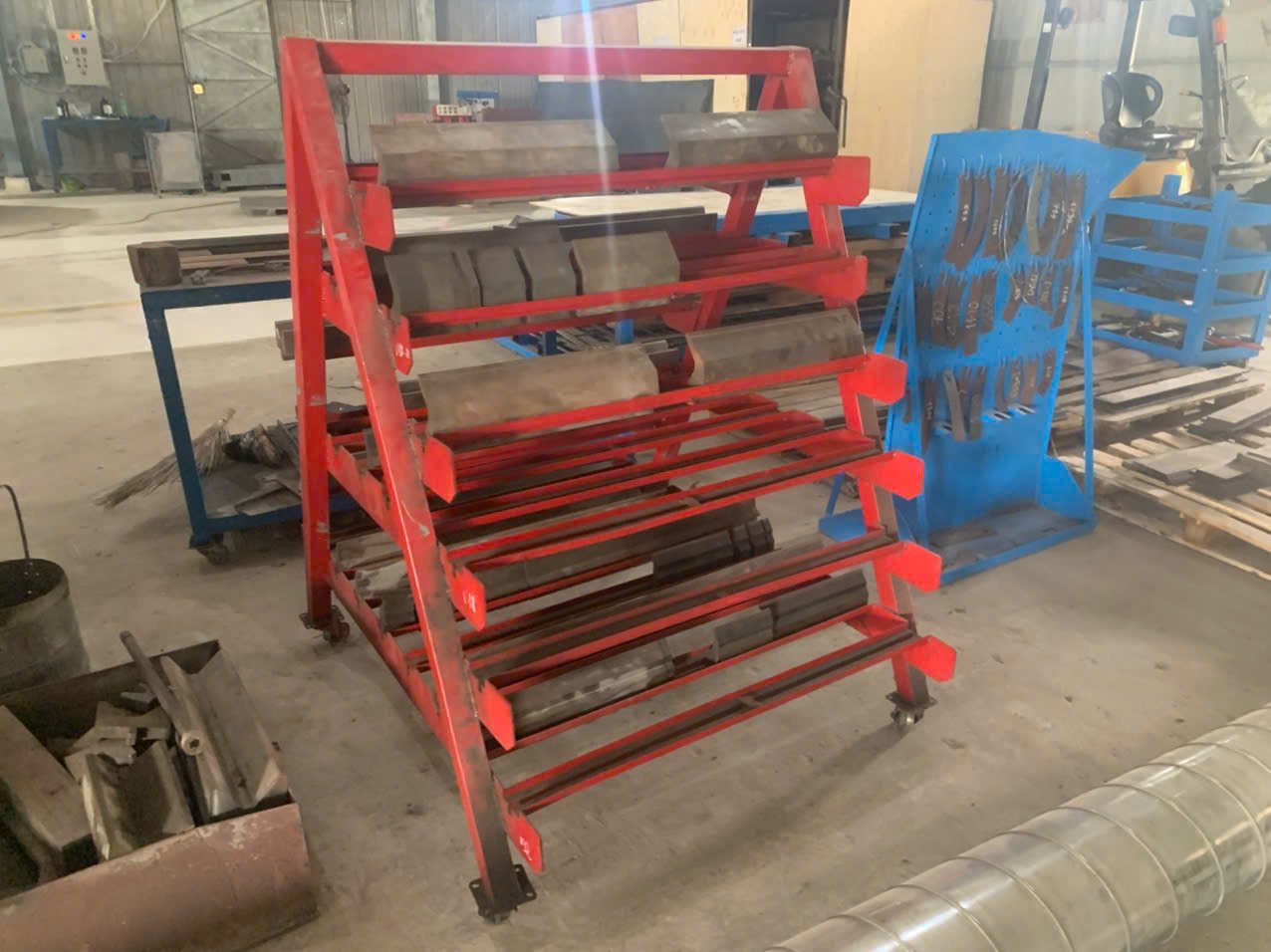
Heavy fabricated parts need reinforced packaging. We use custom wooden crates with foam inserts for precision components like the angular mounting brackets and housing bases common in energy infrastructure. For renewable energy components such as battery housings and charging infrastructure parts, we apply VCI (vapor corrosion inhibitor) wrapping to prevent rust during ocean transit.
Our logistics team in Vietnam coordinates directly with freight forwarders who specialize in heavy cargo. We provide accurate weight and dimension data upfront to avoid surprise surcharges. For time-sensitive projects, sea-air hybrid shipping is an option — ocean freight to a hub like Japan or Korea, then air freight to the US — cutting transit time by roughly 10 days at a moderate cost premium.
Communication and Milestone Tracking
Weekly progress reports with photos are non-negotiable in our workflow. Our project managers send updates every Friday showing production status, in-process inspection results, and any issues encountered. This level of transparency helps US buyers plan their downstream assembly schedules with confidence. We also use shared project trackers so clients can see real-time status without waiting for email replies.
Can I secure open account payment terms for my large-scale energy infrastructure sourcing projects?
The lesson I learned early in my career was that payment terms can make or break a sourcing relationship. Most Asian suppliers demand T/T (telegraphic transfer) with 30% deposit upfront and 70% before shipment. That ties up working capital and creates cash flow pressure — especially on large-scale energy infrastructure projects with six-figure purchase orders.
Yes, open account payment terms of 60 to 90 days are available from select suppliers like DEWIN that have established credit frameworks, typically after an initial relationship-building period with smaller orders and a satisfactory credit review process.
Cash flow is the lifeblood of any sourcing operation. When you are importing custom metal fabrication for power distribution systems or industrial control panels, the gap between paying your supplier and receiving payment from your end customer can stretch to 90 days or more. Open account terms bridge that gap.
How Open Account Terms Work
At DEWIN, we offer open account (credit) payment terms to qualified US buyers. This means you receive the goods first and pay 60 or 90 days later — no deposit, no letter of credit. We absorb the financial risk because we invest in long-term partnerships, not one-off transactions.
Qualification Criteria
Not every buyer qualifies immediately. We typically follow a graduated approach.
The first one or two orders use standard payment terms — usually 30% T/T deposit with the balance against copy of bill of lading. This lets both sides build trust. After demonstrating reliable payment history and consistent order volume, we extend open account terms. We review the buyer's credit profile and business references as part of this process.
Why This Matters for Energy Infrastructure
Energy infrastructure projects are large, phased, and capital-intensive. A purchasing manager sourcing electronic enclosures, mounting brackets, and renewable energy components for a multi-site deployment cannot afford to have cash locked up in supplier deposits across dozens of SKUs. Open account terms free up that capital for other project needs — tooling, installation labor, or additional inventory.
This financial flexibility, combined with our end-to-end supply chain services — from OEM co-development and supplier audits to process control, final inspection, and door-to-door logistics — creates a sourcing model that reduces both financial and operational risk for US buyers.
Conclusion
Sourcing NEMA-compliant sheet metal fabrication for energy infrastructure demands the right supplier, rigorous quality control processes, realistic logistics planning, and flexible payment terms — reach out to our team at sa***@*******ch.com to start your next project.
Frequently Asked Questions
How can I ensure my offshore sheet metal supplier fully complies with US NEMA standards for energy infrastructure?
Last year, a purchasing manager from Texas reached out after his previous supplier delivered 200 electrical enclosures that failed NEMA 4X 2 corrosion resistance testing — every single unit needed rework, and the project stalled for two months.
What quality control processes should I look for to guarantee my custom enclosures are right the first time?
One trade-off I weigh constantly is speed versus thoroughness. Buyers want fast turnarounds. But in custom metal fabrication for energy infrastructure, skipping a single inspection step can mean hundreds of non-conforming parts arriving at a US port.
How do I manage the logistics and lead times for heavy metal fabrication when sourcing from Vietnam?
A buyer interaction last quarter taught me something important. A client assumed that sourcing from Vietnam meant the same lead times as domestic US fabrication. It does not. But with proper planning, the total cost-to-delivery equation often favors Vietnam — even for heavy sheet metal components used in power distribution systems.
Footnotes
1. Provides an overview of electricity infrastructure components and importance. ↩︎
2. Details the specific protection levels and applications of NEMA 4X enclosures. ↩︎
3. Provides a comprehensive overview of NEMA enclosure types and their protection levels. ↩︎
4. Provides detailed specifications, grades, and properties of various stainless steels. ↩︎
5. Explains the requirements and process for ITAR registration with the DDTC. ↩︎
6. Describes UL’s product certification services and their importance for compliance. ↩︎
7. Explains what ISO 9001 is and its importance for quality management systems. ↩︎
8. Provides a comprehensive overview of the PPAP framework and its purpose in quality assurance. ↩︎