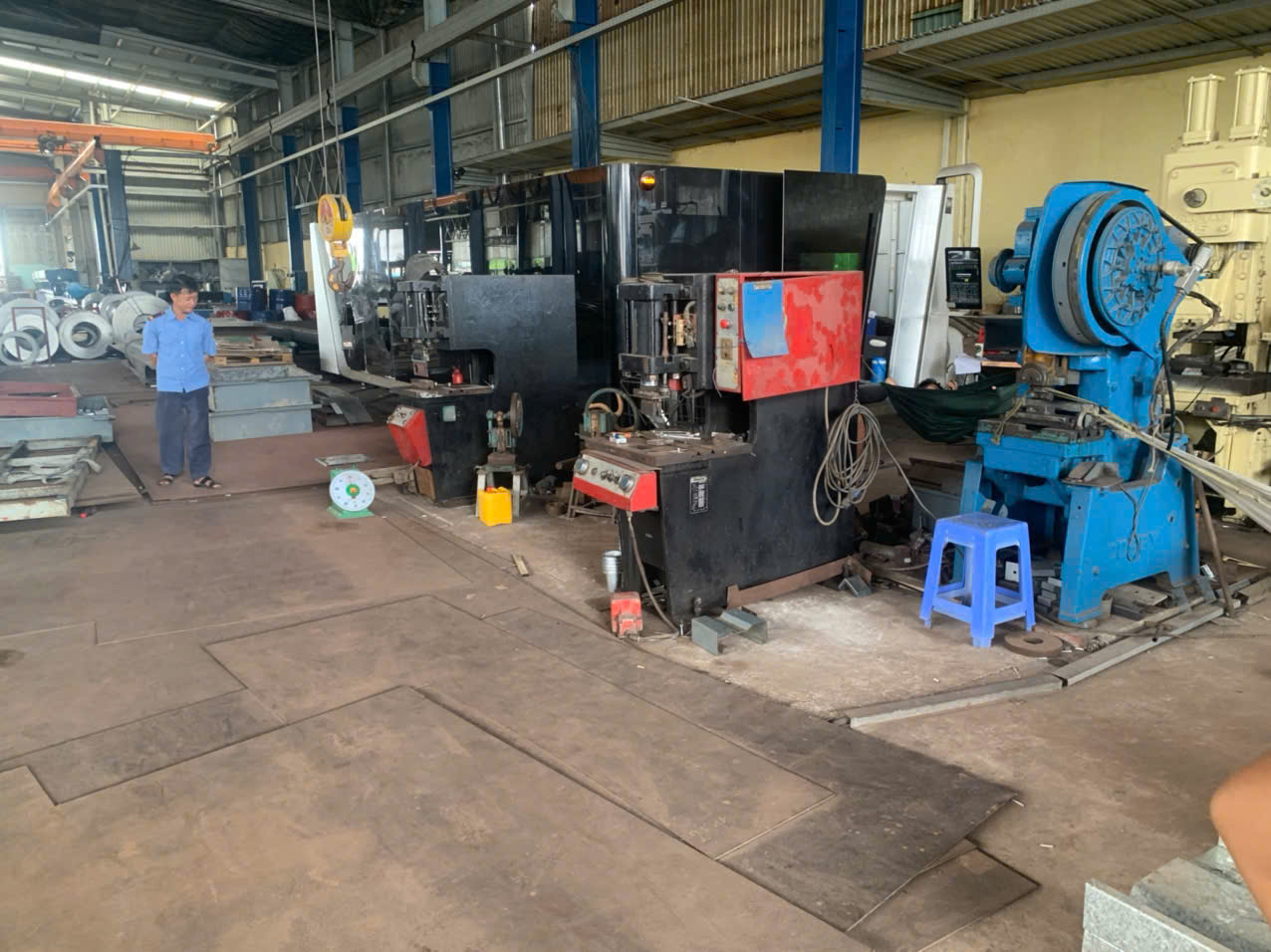

Every week, our team in Vietnam fields calls from US buyers watching their China-sourced stamping parts get hit with 25% tariffs — and margins vanishing overnight.
Sourcing stamping parts from Vietnam boosts US market competitiveness by eliminating Section 301 tariffs, cutting piece prices 35–50% below domestic costs, reducing tooling investment by 40–60%, and leveraging a Japanese-trained workforce that delivers precision metal stamping at internationally recognized quality standards.
This article breaks down the financial case, quality benchmarks, delivery strategies, and payment flexibility that make Vietnam the strongest sourcing option for US stamping buyers today ISO 9001 certification 1. Each section addresses a real concern we hear from purchasing managers every month.
How Can Sourcing Stamping Parts From Vietnam Help Me Avoid China Tariffs and Reduce Import Costs?
A lesson we learned early when helping clients shift tooling out of China: the tariff math alone changes everything, but the full picture — piece price, tooling, labor — is where Vietnam truly pulls ahead.
Sourcing stamping parts from Vietnam eliminates the 25% Section 301 tariffs applied to Chinese-origin metal goods, while delivering 35–50% lower piece prices and 40–60% lower tooling costs than US suppliers, resulting in significant import duty savings and total cost reduction.

The Section 301 Tariff Gap
The numbers are straightforward. Vietnamese-origin stamping parts enter the US at standard MFN rates — typically 0% to 3.5% depending on HS classification. Chinese stamping parts face an additional 25% on top of that. For a company importing 100,000 stamped brackets at $0.50 each, the tariff alone costs $12,500 per year when sourcing from China. From Vietnam, that cost drops to near zero. This is not a minor line item. It is a direct hit to gross margin.
Our Singapore office coordinates these transitions regularly. We help US buyers classify their parts, confirm origin requirements, and ensure the documentation is clean for customs. A single misclassified HS code can undo the entire savings.
Total Cost of Ownership Breakdown
Tariff elimination is the headline. But the real story is the total cost of ownership. Here is how Vietnam compares across every major cost driver:
| Cost Factor | US Price | China Price (incl. tariff) | Vietnam Price | Vietnam Advantage |
|---|---|---|---|---|
| Die-making labor (per hour) | $35–65 | $20–35 | $8–15 | 60–75% lower |
| Wire EDM (per hour) | $50–80 | $50–80 | $20–35 | 50–60% lower |
| 6-station progressive die | ~$40,000+ | $25,000 | $12,000–$18,000 | 40–60% lower |
| Section 301 2 tariff | 0% | 25% | 0% | 25% savings |
| Piece price vs. US baseline | Base | ~25–40% lower | 35–50% lower | 35–50% savings |
When you stack these factors, Vietnam delivers roughly 42% total cost savings compared to China and about 17% compared to Thailand. For high-volume progressive die stamping 3 — brackets, mounting plates, structural connectors — the math is hard to argue with.
The China Plus One Strategy in Practice
This is not just about chasing the lowest price. Smart supply chain diversification 4 means building a second production hub that can absorb volume if your primary source gets disrupted. We see this play out every quarter. A US buyer loses three weeks of production because a Chinese port shuts down or a new tariff round gets announced. Vietnam, with its political stability and growing manufacturing infrastructure, provides a genuine hedge.
The Vietnamese dong has also shown less volatility against the dollar than the Chinese yuan. That makes budgeting more predictable over 12- to 24-month contracts. For purchasing managers who need to lock in costs for annual bids, currency stability matters.
One more point worth noting: Vietnam's network of free trade agreements — CPTPP 5, RCEP, EVFTA — means parts made there can also ship to Canada, Japan, Australia, and Europe at preferential rates. If your company sells globally, Vietnam becomes a platform, not just a supplier.
What Quality Control Standards Should I Expect When Sourcing Stamping Parts From Vietnam?
One of the first questions Greg, a purchasing manager we work with in the US, asked us was blunt: "Can Vietnam actually hold ±0.05mm on a progressive die part?" The answer surprised him — and it came down to who trained the workforce.
When sourcing stamping parts from Vietnam, you should expect ISO 9001 certification, PPAP documentation, SPC-based process control, and first-article inspection protocols — standards shaped by decades of Japanese precision manufacturing investment that now match or exceed many Chinese competitors.

The Japanese Training Legacy
Vietnam's precision metal stamping capability did not appear overnight. Japanese and Korean electronics and motorcycle manufacturers built factories across the country starting in the 1990s. They brought their quality systems with them. Today, many Vietnamese tool-and-die shops are staffed by workers who trained under Japanese masters. They understand tolerance stacking, die maintenance schedules, and statistical process control 6 at a level that often surprises first-time buyers.
Our Vietnam office — seven team members on the ground — conducts supplier audits that go beyond checking a certificate on the wall. We verify press lists, coil-feeding automation, in-house toolroom capability, and actual SPC data from recent production runs. The gap between the best and worst Vietnamese stamping shops is wide, so equipment-level vetting is not optional.
What to Verify Before Committing Tooling Dollars
Supplier capability varies widely in Vietnam. Here is the vetting checklist we use internally:
| Vetting Criteria | What to Confirm | Why It Matters |
|---|---|---|
| Press list | Tonnage range, brands, age of equipment | Determines part size and precision capability |
| Coil feeding automation | Servo feeders, decoilers, straighteners | Affects consistency on progressive die runs |
| In-house toolroom | CNC, wire EDM, surface grinders | Shows ability to maintain and repair dies on-site |
| Quality certifications | ISO 9001, IATF 16949 7 (if automotive) | Baseline for systematic quality management |
| Measurement equipment | CMM, optical comparators, go/no-go gauges | Ensures dimensional verification capability |
| PPAP 8 readiness | Ability to produce PPAP Level 3 packages | Required by most US OEMs and tier-1 suppliers |
Contract Essentials for Tooling
Die ownership is a critical contract point. We always specify that the tooling belongs to the buyer, the supplier is responsible for maintenance, and expected die life is stated in number of hits. First-article inspection criteria — dimensions, material certification, surface finish — must be defined before die cutting begins. Without these clauses, disputes arise when a die wears prematurely or a supplier claims ownership of tooling you paid for.
Custom metal fabrication projects, especially those involving complex bracket assemblies or multi-station progressive dies, demand this level of contractual clarity. Our experience managing tooling and prototyping projects across Vietnam has taught us that the upfront documentation effort pays for itself many times over in avoided rework and returns.
How Do I Ensure On-Time Delivery When Working With Vietnamese Stamping Parts Suppliers?
Delivery delays are the single biggest pain point we hear from US purchasing managers — not quality, not price, but the missed ship date that shuts down an assembly line 8,000 miles away.
To ensure on-time delivery from Vietnamese stamping suppliers, establish clear tooling lead times of 4–8 weeks, use milestone-based production schedules, leverage Vietnam's improving port infrastructure for direct-to-US shipping, and work with a local project management team that monitors progress daily.

Lead Time Management: What to Plan For
Lead time management starts at the tooling phase. A typical progressive die in Vietnam takes 4–8 weeks to build. First-article samples add another 1–2 weeks. Production runs for standard volumes (10,000–100,000 pieces) generally take 2–4 weeks depending on press availability. Shipping from Vietnam to the US West Coast runs about 18–22 days by sea, and 25–30 days to the East Coast.
Here is a realistic timeline for a new stamping project:
| Phase | Duration | Notes |
|---|---|---|
| Tooling design and build | 4–8 weeks | Depends on die complexity |
| First-article inspection | 1–2 weeks | Includes dimensional report and buyer approval |
| Production run | 2–4 weeks | Based on 10,000–100,000 pcs |
| Final inspection and packing | 3–5 days | 100% visual + AQL sampling |
| Ocean freight to US West Coast | 18–22 days | Direct from Cai Mep or Ho Chi Minh City |
| Ocean freight to US East Coast | 25–30 days | Via transshipment or direct |
| Total (new project) | 9–16 weeks | First order; reorders are faster |
Infrastructure That Supports Reliability
Vietnam's deep-water ports — Cai Mep and Lach Huyen — have dramatically improved in recent years. Direct shipping routes to Long Beach and other US ports mean fewer transshipment delays. Our logistics team manages door-to-door shipping, including customs documentation, so the buyer receives parts at their warehouse without coordinating multiple freight forwarders.
How We Manage the Process
Our seven-person Vietnam office does not just find suppliers and walk away. We run weekly progress calls during tooling. We visit the factory floor for in-process checks. We verify packing and labeling before containers are sealed. This hands-on lead time management is what turns a "supplier in Vietnam" into a reliable extension of your own supply chain.
For repeat orders, the timeline compresses significantly. Tooling already exists. Material can be pre-ordered based on a rolling forecast. We have seen reorder cycles drop to 4–6 weeks from PO to delivery at the US port.
Can I Get Flexible Payment Terms When Sourcing Stamping Parts From Vietnam?
A trade-off that keeps coming up in our client conversations: you want to diversify away from China, but your cash flow cannot absorb 100% prepayment on a new supplier relationship in a country you have never sourced from before.
Yes, flexible payment terms are available when sourcing stamping parts from Vietnam — including 30% deposit with 70% before shipment for new projects, and open account terms of 60–90 days for established relationships, which significantly eases cash flow pressure for US buyers.

Why Payment Terms Matter More Than You Think
Most Vietnamese stamping factories default to a simple structure: 50% deposit, 50% before shipment. This is reasonable for first orders. But for US purchasing managers running multiple projects with tight working capital, that structure locks up cash for weeks or months before goods arrive at the warehouse.
This is where our business model adds clear value. Because we are headquartered in Singapore with a track record across both US and European markets, we can offer open account terms — typically net 60 to net 90 days — once a relationship is established. That means you receive the stamping parts, inspect them, and pay after they are already in your inventory or delivered to your end customer.
How Payment Structures Typically Evolve
The progression usually looks like this:
- First order: 30% deposit at PO, 70% at shipment (T/T wire transfer).
- Second and third orders: 100% payment at shipment, no deposit.
- Ongoing relationship (6+ months): Open account, net 60 or net 90 days from bill of lading date.
This staged approach reduces risk for both sides. The buyer builds confidence in quality and delivery. We build confidence in the buyer's payment reliability. After three to four successful orders, most of our US clients are on open account terms.
Comparing Payment Flexibility Across Sourcing Regions
| Payment Factor | US Domestic Supplier | China Supplier | Vietnam (via DEWIN) |
|---|---|---|---|
| Typical first-order terms | Net 30 | 30–50% deposit, balance before shipment | 30% deposit, 70% before shipment |
| Repeat order terms | Net 30–45 | 30% deposit or L/C | Open account, net 60–90 |
| MOQ flexibility | High | Medium–High (often thousands) | High (hundreds accepted) |
| Currency risk | None (USD) | Moderate (CNY volatility) | Low (VND stability, invoiced in USD) |
| Credit availability | Standard | Rare for overseas buyers | Available after relationship established |
Smaller Vietnamese factories also tend to accept lower minimum order quantities — sometimes in the hundreds rather than the thousands that Chinese factories require. This is especially valuable for US mid-market firms that need to test a new bracket design or mounting component before committing to high-volume production. You can validate fit, finish, and function without a large upfront capital outlay.
The combination of flexible payment terms, low MOQs, and competitive tooling costs means that the barrier to entry for sourcing stamping parts from Vietnam is significantly lower than most buyers expect. The key is working with a partner who can structure the commercial terms properly and manage the supplier relationship on the ground.
Conclusion
Sourcing stamping parts from Vietnam delivers tariff elimination, lower total costs, proven quality, reliable delivery, and flexible payment terms — a complete competitive advantage for US buyers ready to diversify their supply chain.
Frequently Asked Questions
How Can Sourcing Stamping Parts From Vietnam Help Me Avoid China Tariffs and Reduce Import Costs?
A lesson we learned early when helping clients shift tooling out of China: the tariff math alone changes everything, but the full picture — piece price, tooling, labor — is where Vietnam truly pulls ahead.
What Quality Control Standards Should I Expect When Sourcing Stamping Parts From Vietnam?
One of the first questions Greg, a purchasing manager we work with in the US, asked us was blunt: "Can Vietnam actually hold ±0.05mm on a progressive die part?" The answer surprised him — and it came down to who trained the workforce.
How Do I Ensure On-Time Delivery When Working With Vietnamese Stamping Parts Suppliers?
Delivery delays are the single biggest pain point we hear from US purchasing managers — not quality, not price, but the missed ship date that shuts down an assembly line 8,000 miles away.
Footnotes
1. ISO’s official page defining ISO 9001 quality management certification requirements. ↩︎
2. Official USTR page explaining Section 301 tariff investigations and enforcement against China. ↩︎
3. Background reference explaining metal stamping and progressive die processes discussed throughout. ↩︎
4. Authoritative Wikipedia entry covering diversification as a core strategy for global supply chain resilience. ↩︎
5. Wikipedia overview of the CPTPP trade agreement mentioned as a Vietnam sourcing advantage. ↩︎
6. Wikipedia background on SPC methodology used for quality control in stamping production. ↩︎
7. Background on the automotive-specific quality management standard referenced in the vetting checklist. ↩︎
8. ISO/IATF reference documenting Production Part Approval Process requirements cited in quality checklist. ↩︎