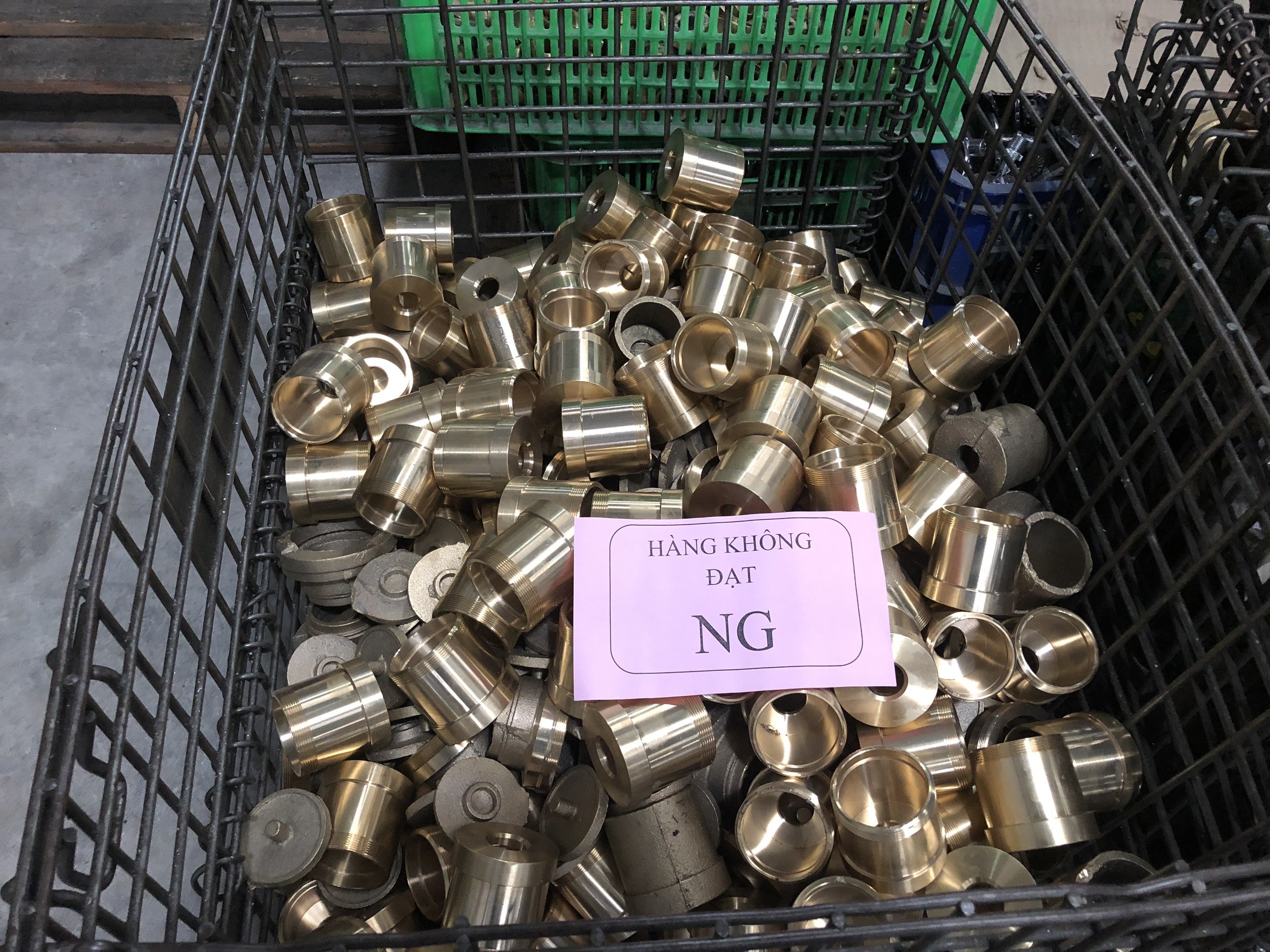

Stamping parts in high-temperature environments fail more often than buyers expect aluminum-silicon coatings 1. I have seen brackets warp, coatings flake, and fasteners lose grip—problems our sourcing team works to prevent daily.
Stamping parts perform reliably in high-temperature environments only when the material, coating, and process are engineered for heat. Standard cold-stamped steel softens, oxidizes, and expands above roughly 400–500°C, while heat-resistant alloys, protective coatings, and hot-stamped ultra-high-strength steels maintain strength and dimensional stability.
The difference between a part that survives heat and one that fails early comes down to four decisions. Let me walk you through each one, based on projects we manage for U.S. clients every week.
How can I choose stamping materials that maintain strength in high-temperature applications?
A client once sent us a drawing for an exhaust-side clip specified in plain carbon steel. Our engineers flagged it before tooling started. That one email saved him a full production run.
Choose materials by service temperature: coated carbon steel works below 300°C, 400-series stainless handles 300–600°C, 300-series stainless resists oxidation to about 800°C, and nickel-based alloys like Inconel serve above 800°C. Match the alloy to peak temperature plus a safety margin.

Material selection is the single biggest decision you will make. Everything else—coatings, tooling, inspection—builds on top of it. In our experience sourcing custom stamping parts for American buyers, most heat-related failures trace back to a material chosen for price rather than for the real service temperature.
Start with the real operating temperature
Ask three questions before picking an alloy. What is the peak temperature, not the average? How long does the part stay hot? Does the temperature cycle up and down? Cyclic heat causes thermal fatigue 2, which kills parts long before simple yield failure does. A bracket that survives one hour at 500°C may crack after a thousand heating cycles at 350°C.
Common material options at a glance
| Material | Practical Service Limit | Key Strength | Relative Cost |
|---|---|---|---|
| Coated carbon steel | ~300°C | Low cost, easy forming | Low |
| 400-series stainless | 300–600°C | Good strength retention | Medium |
| 300-series stainless | Up to ~800°C | Excellent oxidation resistance | Medium-high |
| Nickel alloys (Inconel 3 type) | 800°C+ | Retains strength at extreme heat | High |
| Press-hardened UHSS | Structural use after hot forming | 1300–1700 MPa tensile strength | Medium-high |
Do not over-specify
There is a real trade-off here. Superalloys are impressive, but for applications below 500°C, a well-chosen stainless grade or coated steel often delivers comparable service life at 30–50% lower cost. We routinely help clients step down from an over-specified alloy without sacrificing performance. That is money back in your program budget.
One more point. Hot stamping deserves a mention. In that process, steel is heated to around 900°C, formed, and quenched in the die. The result is a martensitic 4 part with yield strength of 950–1200 MPa. Heat, when controlled, is not the enemy—it can be the tool.
What quality control steps ensure my stamping parts won't fail under thermal stress?
Early in my career, a shipment passed dimensional inspection at room temperature, then jammed in the customer's hot assembly. The lesson stuck with me: heat changes everything, including how you must inspect.
Effective quality control for thermal stress includes material certification review, hardness testing after heat treatment, dimensional checks that account for thermal expansion coefficients, thermal cycling or fatigue testing on samples, coating adhesion verification, and PPAP documentation confirming the process is stable and repeatable.

Quality control for high-temperature stamping parts is different from standard inspection. A part can be dimensionally perfect at 20°C and still fail at 400°C. Our process control team in Vietnam and China builds heat-specific checks into every project where the drawing lists an elevated service temperature.
A step-by-step QC sequence we recommend
- Verify raw material first. Request mill certificates and confirm the alloy chemistry matches the drawing. A substituted grade is the most common root cause of thermal failure we see.
- Confirm heat treatment results. Annealing, quenching, and tempering directly control how the part retains hardness under heat. Test hardness on every lot, not just the first article.
- Check dimensions with expansion in mind. Thermal expansion alters tolerances in service. Critical fits should be reviewed against the material's expansion coefficient. Tight room-temperature tolerances may need adjustment.
- Run thermal cycling on samples. Thermal fatigue and creep, not simple overload, are the real long-term failure modes. Cycling a sample batch between ambient and service temperature reveals cracking risks that a tensile test never will.
- Inspect surfaces and coatings. Scaling, decarburization 5, and coating defects weaken parts under heat. Visual and adhesion checks belong in final inspection.
- Lock the process with PPAP. For our U.S. clients, we complete PPAP so every stamping stroke after approval matches the validated condition. "Right first time" is not a slogan; it is a documented process.
Why simulation helps before steel is cut
Thermal-mechanical FEA simulation 6 is increasingly used before prototyping. It predicts warping, residual stress, and thinning specific to your geometry. When a client's design team shares CAD early, we can flag heat-related risks during co-development rather than during a failed inspection. That is weeks of schedule saved.
Which surface treatments or coatings help my stamping parts resist heat-related degradation?
Cost versus protection is a trade-off I weigh on almost every quotation. A bare steel bracket is cheap, but above a few hundred degrees, oxidation eats its surface—and your service life—fast.
Aluminum-silicon coatings protect hot-stamped steel from scaling during heating, while aluminizing, zinc-nickel plating, ceramic-based coatings, and black oxide with high-temperature sealants protect parts in hot service. The right coating blocks oxidation, preserves surface quality, and extends part life significantly.

Coatings are the quiet enablers of high-temperature performance. In many projects our team quotes, the coating decision matters almost as much as the base alloy. It also affects downstream steps your assembly line cares about, like paintability and bonding.
What heat does to unprotected surfaces
At elevated temperatures, bare steel oxidizes and forms scale. Scale weakens the surface, ruins appearance, and can flake off into assemblies. Decarburization—carbon loss at the surface—softens the outer layer where wear resistance matters most. Both problems get worse with time and temperature.
Matching coatings to temperature and purpose
| Coating / Treatment | Typical Use Range | Main Benefit | Watch-Outs |
|---|---|---|---|
| Zinc plating | Below ~200°C | Low-cost corrosion protection | Degrades quickly in real heat |
| Zinc-nickel plating 7 | Up to ~300°C | Better heat tolerance than zinc | Higher cost than plain zinc |
| Aluminum-silicon (Al-Si) | Hot stamping process protection | Prevents scaling during 900°C heating | Applied to sheet before forming |
| Aluminizing | Up to ~600°C+ | Strong oxidation barrier | Adds process lead time |
| Ceramic-based coatings | 600°C and above | Thermal barrier, wear resistance | Cost; application control needed |
Coatings serve the process, not just the part
Here is a point buyers often miss. In hot stamping, the Al-Si coating protects the blank inside the furnace, so no scale removal is needed after forming. That means better dimensional accuracy and cleaner surfaces for welding or painting. The coating is doing its job before the part ever reaches your product.
Friction is the other hidden factor. Conventional lubricants can break down at high temperature, which raises friction, worsens metal flow, and increases galling and cracking risk during forming. When we audit stamping suppliers for clients, we check how they manage lubrication and die surface treatments—because a coating on the part cannot compensate for a poorly managed process behind it.
How do I verify a supplier's high-temperature stamping capabilities before placing an order?
A purchasing manager from Texas once asked me a simple question: how do I know a supplier can really do this, and not just say yes? That question shaped how our audit checklist works today.
Verify a supplier through an on-site or third-party audit covering material traceability, heat treatment controls, die maintenance records, thermal testing equipment, and PPAP experience. Request sample parts with full test reports, then confirm process stability before releasing a production order.

Supplier verification is where good sourcing programs succeed or fail. Since our team audits stamping suppliers across Vietnam and other Asian countries for U.S. buyers, I can tell you the gap between a confident sales pitch and a capable factory floor is often wide. Heat-critical parts leave no room for that gap.
The five things an audit must confirm
| Audit Area | What to Check | Red Flag |
|---|---|---|
| Material traceability | Mill certs linked to each lot | "Equivalent" substitutions without approval |
| Heat treatment | Furnace calibration, hardness logs | No records, outsourced with no oversight |
| Tooling condition | Die maintenance schedule, wear tracking | Reactive repairs only |
| Testing capability | Hardness testers, thermal test access | Room-temperature checks only |
| Quality system | PPAP, process control, final inspection | No documented "right first time" process |
Ask for evidence, not promises
Request a sample run with a full inspection report, hardness results, and coating verification. Ask how the supplier controls furnace temperature and transfer time if hot stamping is involved—a blank that cools too early hardens and cracks before forming finishes. A capable supplier answers with data. A weak one answers with reassurance.
Consider a partner on the ground
Distance is the honest challenge here. Reviewing documents from the U.S. cannot replace standing on the shop floor. That is why our clients lean on our local teams for supplier audits, in-process checks, and final inspection before shipment. We also structure projects with clear drawing reviews up front, because in our experience most non-conformances start with a critical drawing note that a supplier overlooked. Catching that during quotation costs nothing. Catching it at your receiving dock costs weeks of schedule and a strained customer relationship.
Payment terms deserve a mention too. Verification takes time, and tying up cash while you validate a new supplier hurts. Open account terms can ease that pressure while quality is being proven.
Conclusion
Heat destroys unprepared stamping parts through oxidation, softening, and fatigue. The fix is deliberate: match materials to temperature, coat surfaces properly, test thermally, and verify your supplier before ordering.
Frequently Asked Questions
How can I choose stamping materials that maintain strength in high-temperature applications?
A client once sent us a drawing for an exhaust-side clip specified in plain carbon steel. Our engineers flagged it before tooling started. That one email saved him a full production run.
What quality control steps ensure my stamping parts won't fail under thermal stress?
Early in my career, a shipment passed dimensional inspection at room temperature, then jammed in the customer's hot assembly. The lesson stuck with me: heat changes everything, including how you must inspect.
Which surface treatments or coatings help my stamping parts resist heat-related degradation?
Cost versus protection is a trade-off I weigh on almost every quotation. A bare steel bracket is cheap, but above a few hundred degrees, oxidation eats its surface—and your service life —fast.
Footnotes
1. Authoritative standards reference supports coating specification claims for hot-stamped steel protection. ↩︎
2. Explains cyclic heat-driven fatigue mechanism referenced when discussing part failure modes. ↩︎
3. Background on nickel-based superalloy family used for extreme high-temperature stamping applications. ↩︎
4. Defines the metallurgical phase formed during hot stamping quenching described in the text. ↩︎
5. Authoritative technical background on surface carbon loss phenomenon affecting stamped steel parts. ↩︎
6. Explains the finite element analysis technique used to predict warping and stress before prototyping. ↩︎
7. General reference explaining the plating process used for heat-tolerant surface protection. ↩︎