Long-term sheet metal fabrication agreements can make or break your supply chain — I learned this firsthand managing procurement for custom parts across Asia.
Long-term sheet metal fabrication agreements achieve price and supply stability by locking in formula-based pricing tied to raw material indices, mandating strict quality and delivery standards, including force majeure and renegotiation clauses, and rigorously vetting the fabricator’s financial health and production capacity before commitment.
The metal market is volatile. Specialty alloy demand is rising. Lead times are stretching. If you buy custom fabricated parts without a structured agreement, you expose your business to unpredictable costs and delivery failures. This article walks you through the four pillars of a resilient contract manufacturing agreement — pricing, delivery, quality, and payment terms — so you can build supply chain resilience 1 that lasts.
How can I protect my sheet metal pricing from raw material cost fluctuations in a long-term contract?
A buyer we work with in the Midwest once locked in a fixed-price contract for stainless steel brackets — then watched helplessly as nickel prices dropped 18% over six months, knowing competitors were paying far less for the same material.
To protect sheet metal pricing from raw material fluctuations, use formula-based pricing tied to public indices like the London Metal Exchange, include price escalation clauses with quarterly adjustment windows, and negotiate material cost allowances that cap your exposure while preserving fair supplier margins.
Why Fixed-Price Contracts Can Backfire
Fixed-price contracts feel safe. You know exactly what you will pay per piece for 12 or 24 months. But raw materials account for 30–40% of total fabrication costs. When steel or aluminum prices swing 15–25% in a single quarter, someone absorbs the pain. If prices rise, your fabricator may cut corners on quality or delay shipments to manage losses. If prices fall, you overpay significantly. Neither outcome supports a healthy long-term partnership.
Formula-Based Pricing: The Balanced Approach
A smarter procurement strategy ties the material portion of your unit price to a verified, publicly available index. We typically recommend the London Metal Exchange 2 (LME) for aluminum and nickel, or regional steel indices for carbon steel. The fabrication and overhead portion remains fixed. The material portion adjusts quarterly based on index movement.
Here is how a typical formula-based pricing 3 structure works:
| Cost Component | % of Unit Price | Adjustment Method | Frequency |
|---|---|---|---|
| Raw Material | 30–40% | Tied to LME or regional index | Quarterly |
| Fabrication Labor | 25–35% | Fixed for contract term | Annual review |
| Tooling & Setup | 10–15% | Fixed (amortized) | One-time or annual |
| Overhead & Margin | 15–25% | Fixed for contract term | Annual review |
This model gives you price stability on the controllable costs while allowing fair adjustment on the volatile material component.
Price Escalation Clauses That Work
Your contract should include specific escalation clauses. Define a threshold — for example, if the index moves more than 5% from the baseline, a renegotiation window opens. Set a cap and floor: material cost adjustments cannot exceed ±10% per quarter. This protects both parties from extreme swings. Without these guardrails, one side will eventually feel trapped, and trapped partners become unreliable partners.
Volume Consolidation for Leverage
One approach we use with clients is standardizing materials across multiple part numbers. If you buy brackets, housings, and mounting plates, try to design them from the same alloy and gauge. This enables your fabricator to purchase material in bulk, spreading costs and earning volume discounts. Codify this in your agreement: the fabricator must pass through a defined percentage of bulk purchasing savings. Combined with Design for Manufacturability reviews 4 — reducing unnecessary bends, standardizing hole sizes — you can lower per-piece costs by 8–15% without changing function. You can also negotiate tiered pricing with sheet metal fabrication suppliers to unlock further savings as your order volumes grow over time.
What clauses should I include to ensure my custom fabricated parts are always delivered on time?
Late deliveries cost more than most procurement teams realize — last year, a client's production line sat idle for three days because a fabricator in Southeast Asia missed a shipment window by one week due to a typhoon-related port closure.
To ensure on-time delivery, your agreement must include defined lead times with penalty and incentive clauses, force majeure provisions with clear notification timelines, mandatory safety stock or buffer inventory requirements, and quarterly supplier scorecard reviews tracking on-time delivery rates against agreed benchmarks.
Defining Lead Times Precisely
Vague delivery terms cause disputes. Your contract should specify lead times for each order type: initial production runs, repeat orders, and engineering change orders. Typical lead time management for custom sheet metal parts looks like this:
| Order Type | Expected Lead Time | Expedite Option | Penalty Trigger |
|---|---|---|---|
| First Article / New Part | 6–8 weeks | +15% surcharge for 4 weeks | >10 business days late |
| Repeat Production Order | 3–4 weeks | +10% surcharge for 2 weeks | >5 business days late |
| Engineering Change Order | 4–6 weeks | Case-by-case | >7 business days late |
| Emergency / Rush Order | 1–2 weeks | +25–30% surcharge | Not applicable |
Attach specific consequences to missed deadlines. Liquidated damages of 1–2% per week of delay (capped at 10%) are standard. But also consider positive incentives — early delivery bonuses encourage proactive lead time management rather than reactive firefighting.
Force Majeure and Risk-Sharing Mechanisms
No contract can prevent a natural disaster. But it can define what happens next. Your force majeure clause 5 should list specific qualifying events: natural disasters, pandemics, government actions, and extreme market disruptions. Require the affected party to notify within 48 hours and provide a recovery plan within 10 business days. If the disruption exceeds 60 days, either party should have the right to terminate without penalty.
Beyond force majeure, include a general risk mitigation planning clause. This obligates the fabricator to maintain a documented disaster recovery plan. We always recommend working with fabricators who operate multiple facilities — geographic redundancy means a flood in one region does not shut down your entire supply.
Safety Stock and Buffer Inventory
For critical components like the precision mounting brackets and housings we help source, require the fabricator to maintain 2–4 weeks of finished goods safety stock. Define who owns this inventory and who bears the carrying cost. A common arrangement: the buyer commits to purchase the safety stock within 90 days, and the fabricator carries it at no additional charge as part of the service agreement.
Supplier Scorecards
Quarterly review meetings with formal scorecards keep everyone accountable. Track on-time delivery rate, order accuracy, communication responsiveness, and corrective action closure time. Set minimum performance thresholds — for example, 95% on-time delivery. Two consecutive quarters below threshold trigger a formal improvement plan. Three quarters trigger the right to source from a secondary backup supplier. This kind of supplier relationship management structure transforms vague promises into measurable commitments. To formalize this process, consider learning how to build a supplier evaluation system for sourcing sheet metal fabrication.
A diversified supplier network also plays a role here. For critical parts, we typically recommend dual sourcing: a primary fabricator handles 70–80% of volume, and a qualified secondary source handles the remainder. This provides competition and redundancy without excessive management overhead.
How do I build strict quality control and PPAP requirements into my long-term supply agreement?
The most expensive bracket is the one that arrives on time but fails inspection — our team in Vietnam once caught a dimensional non-conformance on a batch of 2,000 mounting plates during final inspection that would have caused a full line rejection at the client's facility in Ohio.
Build quality control into your agreement by specifying PPAP submission levels for each part, defining inspection criteria with AQL standards, requiring documented process control plans, mandating first article inspection reports, and reserving the right to conduct unannounced quality assurance audits at the fabricator's facility.
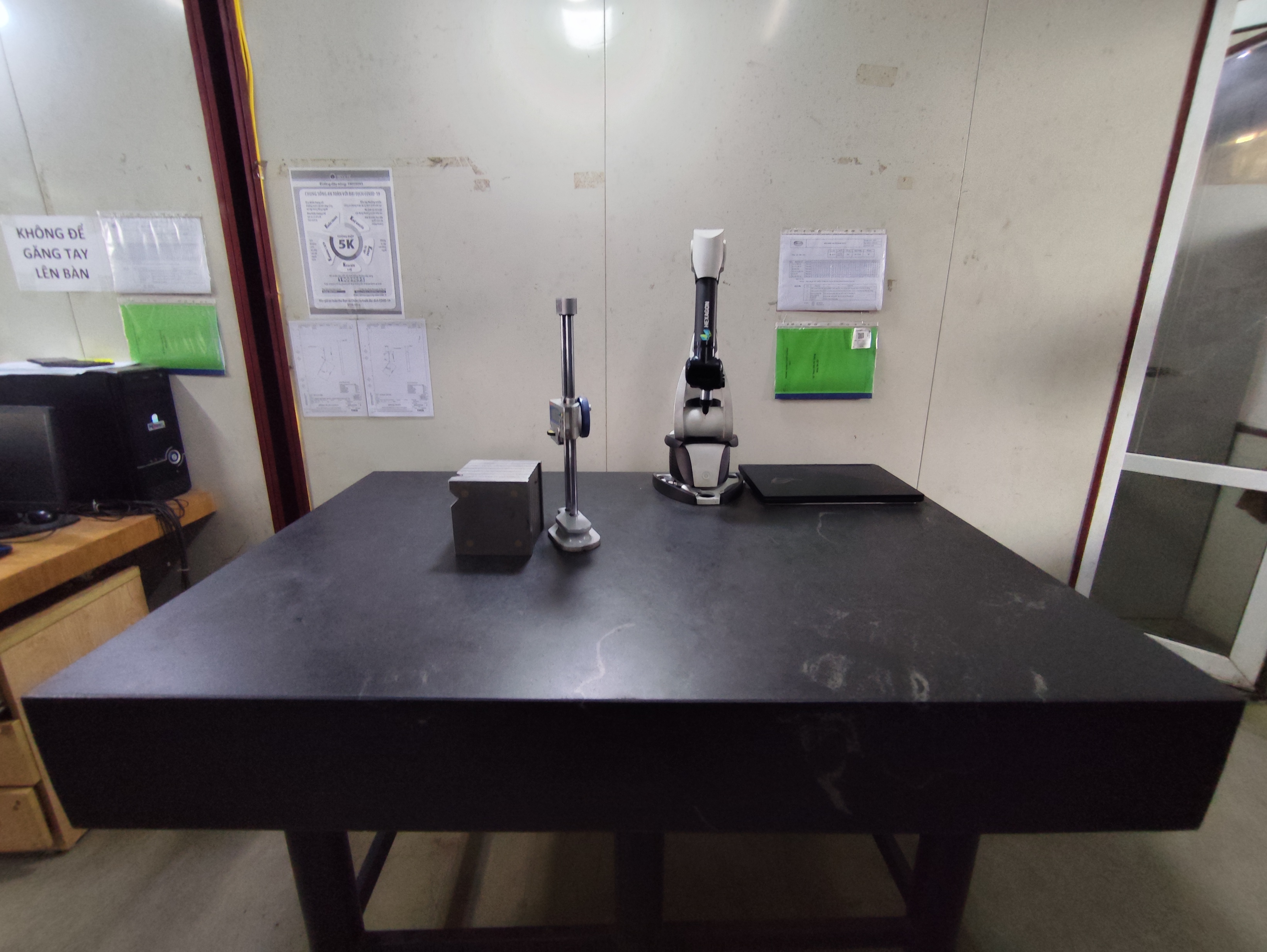
PPAP Levels and When to Use Each
The Production Part Approval Process 6 (PPAP) is not optional for mid-to-high quality custom parts. It ensures the fabricator can consistently reproduce parts that meet your engineering specifications. But not every part needs Level 5 PPAP. Here is a practical guide:
| PPAP Level | What Is Submitted | Best For |
|---|---|---|
| Level 1 | Part submission warrant + appearance approval report | Low-risk, non-critical parts |
| Level 2 | Level 1 + samples + limited supporting data | Moderate-risk parts with simple geometry |
| Level 3 | Full documentation package (control plan, FMEA, MSA, dimensional results, material certs) | Critical structural components, safety-related parts |
| Level 4 | Level 3 + additional requirements per customer specification | Aerospace, medical, or highly regulated industries |
| Level 5 | Full Level 3 documentation available for review at the fabricator's facility | High-volume, mission-critical assemblies |
For the precision brackets and complex angular components we help source — parts with multiple bends, tight tolerances, and weld requirements — Level 3 is typically the minimum standard. Your agreement should state the required PPAP level for each part number and specify that no production shipment occurs before PPAP approval.
First Article Inspection and Ongoing Process Control
First Article Inspection 7 (FAI) verifies that the initial production run meets all drawing requirements. Your agreement should require FAI reports for every new part, every engineering change, and every process change (new tooling, new equipment, new facility). The FAI must include full dimensional inspection results, material certifications, and surface finish measurements.
Beyond the first article, define ongoing inspection requirements. Specify the Acceptable Quality Level 8 (AQL) for each defect category: critical defects at AQL 0 (zero tolerance), major defects at AQL 1.0, and minor defects at AQL 2.5. Require the fabricator to maintain Statistical Process Control 9 (SPC) on critical dimensions and submit Cpk data quarterly.
Audit Rights and Corrective Action
Reserve the contractual right to conduct quality assurance audits — both scheduled and unannounced — at the fabricator's facility. This is non-negotiable for any serious long-term relationship. The agreement should define:
- Audit frequency (at least annual, with the right to additional audits after quality escapes)
- Corrective action response time (e.g., 8D report within 10 business days of a non-conformance notification)
- Root cause analysis methodology requirements
- Continuous improvement expectations (year-over-year defect reduction targets)
When our team conducts quality audits in Vietnam and across Asia, we look at more than just the parts. We review calibration records, operator training logs, incoming material inspection procedures, and traceability systems. These process-level controls are what separate fabricators who get it right the first time from those who rely on sorting and rework.
Intellectual Property Protection
Your agreement must include robust IP protection clauses. Intellectual Property Protection 10 Require NDAs before sharing any engineering files. Specify that all tooling, fixtures, and design data remain your property. Control access to CAD files — limit who within the fabricator's organization can view them. Include explicit cybersecurity and data protection protocols: encryption for file transfers, access controls with audit trails, and defined liability in case of a data breach. In today's environment, IP leakage is a real risk, especially when sourcing from regions with varying enforcement standards.
Can I negotiate open account payment terms to improve my cash flow within a fabrication partnership?
When we first started offering open account payment terms to U.S. clients, some on our finance team questioned the risk — but the buyers who received those terms became our most loyal, highest-volume partners within 18 months.
Yes, you can negotiate open account payment terms — typically Net 30, 60, or 90 days — within a fabrication partnership, provided the supplier has assessed your creditworthiness, the agreement includes clear payment milestones, late payment penalties, and the relationship has been established through initial orders with standard prepayment or letter of credit terms.
Why Payment Terms Matter More Than Most Buyers Realize
Cash flow is the lifeblood of any sourcing business. If you must pay 30% upfront and 70% before shipment on every order, your working capital is constantly tied up in transit inventory. Open account terms — where you receive goods and pay 60 or 90 days later — free up that capital for other investments, larger orders, or emergency purchases. But not every fabricator offers these terms, and those who do need to trust your financial reliability.
How to Earn Favorable Payment Terms
Payment terms are earned, not demanded. Here is a typical progression we follow when building a new partnership:
Phase 1 — Trial Orders (Months 1–6): Payment via wire transfer or letter of credit. The buyer proves order consistency and the fabricator proves quality and delivery reliability.
Phase 2 — Established Relationship (Months 6–12): Transition to Net 30 terms on repeat orders. The fabricator may request a credit application and trade references.
Phase 3 — Strategic Partnership (12+ Months): Net 60 or Net 90 terms for qualified buyers with consistent volume. This phase often coincides with annual pricing agreements and dedicated production capacity.
Structuring Payment Clauses in the Agreement
Your contract should address several payment-related elements clearly:
- Standard Terms: Net 60 from date of invoice (or date of shipment — specify which).
- Early Payment Discount: 2% discount for payment within 10 days (known as 2/10 Net 60).
- Late Payment Penalty: 1.5% per month on overdue balances.
- Milestone Billing for Large Orders: For orders exceeding a defined threshold (e.g., $100,000), the fabricator may invoice for raw material procurement upon order placement and for completed sub-assemblies at defined milestones.
- Dispute Resolution: Payment disputes do not halt deliveries on unrelated orders. A formal dispute resolution process (30-day negotiation, then mediation) is defined.
Milestone billing is common in our industry. When a client places a large custom order requiring $50,000 or more in specialty alloy material, the fabricator needs to purchase that material upfront. A milestone billing clause allows invoicing for the material upon procurement, with the balance due upon shipment. This protects both parties: the buyer does not pay for unperformed work, and the fabricator does not carry excessive material risk. For more guidance on structuring payment terms to minimize risk sourcing sheet metal fabrication from Vietnam, we have a dedicated resource.
Evaluating the Fabricator's Financial Health
Before you commit to open account terms, evaluate the fabricator's financial stability. Request Dun & Bradstreet reports or equivalent financial references. Companies operating 15 or more years demonstrate market viability. Check customer concentration: if one or two customers represent more than 50% of the fabricator's revenue, that business is fragile. A sudden volume drop from a major customer could cascade into your supply chain. A diversified customer base signals stability and reduces your risk.
Profit margins also matter contextually. Margins generally decrease as contract size increases — a seven-figure annual contract will carry a lower percentage margin than a five-figure spot order. Understanding this dynamic helps you negotiate realistic terms that the fabricator can sustain without compromising quality or delivery.
Conclusion
Long-term sheet metal fabrication agreements succeed when they balance pricing fairness, delivery accountability, quality rigor, and payment flexibility — structure yours around these four pillars, vet your fabricator thoroughly, and build a partnership that withstands market volatility.
Frequently Asked Questions
How can I protect my sheet metal pricing from raw material cost fluctuations in a long-term contract?
A buyer we work with in the Midwest once locked in a fixed-price contract for stainless steel brackets — then watched helplessly as nickel prices dropped 18% over six months, knowing competitors were paying far less for the same material.
What clauses should I include to ensure my custom fabricated parts are always delivered on time?
Late deliveries cost more than most procurement teams realize — last year, a client's production line sat idle for three days because a fabricator in Southeast Asia missed a shipment window by one week due to a typhoon-related port closure.
How do I build strict quality control and PPAP requirements into my long-term supply agreement?
The most expensive bracket is the one that arrives on time but fails inspection — our team in Vietnam once caught a dimensional non-conformance on a batch of 2,000 mounting plates during final inspection that would have caused a full line rejection at the client's facility in Ohio.
Footnotes
1. Explains the concept of supply chain resilience and its importance. ↩︎
2. Official website of the London Metal Exchange, a primary source for metal prices. ↩︎
3. Defines formula pricing and its application in contracts. ↩︎
4. Provides principles and importance of Design for Manufacturability. ↩︎
5. Explains the definition and legal implications of a force majeure clause. ↩︎
6. Details the Production Part Approval Process (PPAP) and its significance. ↩︎
7. Describes the First Article Inspection (FAI) process and its purpose. ↩︎
8. Explains the Acceptable Quality Level (AQL) and its use in quality control. ↩︎
9. Defines Statistical Process Control (SPC) and its principles in manufacturing. ↩︎
10. This article from GTsetu provides a comprehensive guide specifically on ‘IP Ownership in Contract Manufacturing,’ detailing key IP clauses and strategies relevant to the context. ↩︎