

Surface treatments decide [how long stamping parts survive in the field](https://dewintech.com/blog/what-factors-affect-service-life-stamping-parts-the/). I learned this the hard way when a batch of our brackets rusted in a client’s warehouse—before installation. Bare stamped steel corrodes fast, and the right finish is the fix.
Surface treatments affect corrosion resistance of stamping parts by either sealing the metal behind a barrier layer, adding a sacrificial coating that corrodes first, or strengthening the metal’s own passive oxide film. The right choice depends on base material, environment, part geometry, and cost.
That answer sounds simple. In practice, choosing and verifying a treatment is where most sourcing projects go wrong. Let me walk you through it step by step.
How do I choose the right surface treatment for my stamping parts to maximize corrosion resistance?
A purchasing manager once asked me why two identical steel clips, sourced from two suppliers, aged so differently. The answer was not the steel. It was the finish—and how it matched the substrate.
Choose the surface treatment by matching it to the base metal first, then the service environment. Use passivation or electropolishing for stainless steel, zinc plating or phosphating for carbon steel, and anodizing for aluminum. Then balance corrosion resistance against cost, appearance, and dimensional tolerance.
Stamping itself is the hidden variable most buyers overlook. Forming a flat sheet into a stepped bracket creates micro-cracks, rough zones, and work-hardened corners. These flaws trap moisture and contaminants. On stainless steel, tooling can even embed free iron particles into the surface, which later show up as rust spots or "tea staining." So the finish is not cosmetic. It is a corrosion-control step that compensates for damage the press introduced.
Start with the substrate
Each base metal has natural strengths and weaknesses. The treatment should work with them, not against them.
| Base Material | Best-Fit Treatments | Why It Works |
|---|---|---|
| Carbon steel | Zinc plating, phosphating, powder coating, hot-dip galvanizing 1 | Steel rusts readily; it needs a barrier or sacrificial layer |
| Stainless steel | Passivation 2, electropolishing | Restores and strengthens the natural chromium oxide film |
| Aluminum alloys | Anodizing, conversion coatings, micro-arc oxidation | Thickens the native oxide layer for hardness and protection |
Then think by mechanism, not by name
I always explain treatments to clients in three groups. Barrier coatings, like powder coating, block moisture and oxygen. Sacrificial coatings, like zinc, corrode instead of the steel underneath. Passive-film treatments, like passivation and electropolishing, improve the metal's own resistance. Two stamped parts from the same steel can behave completely differently in service depending on which mechanism protects them. Once you frame it this way, the choice becomes logical rather than a guessing game. In our sourcing projects, we lock the treatment spec on the drawing before we ever request a quote, because a vague note like "zinc plated" leaves too much room for a supplier to cut corners.
What surface treatment options should I consider for stamping parts used in harsh or outdoor environments?
Marine air, road salt, and industrial fumes punish stamped hardware. Our team in Vietnam once re-specified a bracket finish three times before it survived a client's coastal installation requirement.
For harsh or outdoor environments, consider hot-dip galvanizing for maximum sacrificial zinc protection, powder coating for a thick weatherproof barrier, zinc plating with sealed trivalent passivate for moderate exposure, and electropolished or passivated stainless steel for marine or chemical contact.

Here is how the main outdoor-capable options compare at a glance:
| Treatment | Protection Type | Relative Cost | Typical Use Case |
|---|---|---|---|
| Hot-dip galvanizing | Thick sacrificial zinc | Low–medium | Structural parts, marine and industrial exposure |
| Zinc electroplating 3 + sealer | Thin sacrificial zinc | Low | Moderate humidity, indoor-outdoor hardware |
| Powder coating | Thick polymer barrier | Medium | Visible outdoor parts needing color and durability |
| Anodizing / micro-arc oxidation | Hardened oxide layer | Medium–high | Aluminum parts in weather or wear conditions |
| Electropolishing + passivation | Enhanced passive film | High | Stainless parts in marine or chemical service |
Match the treatment to the exposure severity
Standard zinc electroplating is thin. It handles humid storage and mild outdoor use, but salt spray and constant wetness will exhaust it. Hot-dip galvanizing deposits a much thicker zinc layer, so it lasts far longer in severe conditions. Powder coating adds an excellent moisture barrier, but if it chips, corrosion can creep underneath the film. That is why we often recommend a duplex approach for the harshest environments: galvanize first, then powder coat over it. The zinc protects any spot where the polymer gets damaged.
Do not forget geometry
Deep draws, sharp bends, and overlapping flanges create crevices that trap water. A coating alone cannot fix a moisture trap. When we co-develop parts with U.S. engineering clients, we flag these design details early, because adjusting a flange radius is cheaper than upgrading the entire coating system later.
How can I verify that my supplier's surface treatment process meets corrosion resistance standards?
Trust is good; audits are better. Before we place any custom-part order for our U.S. clients, our engineers walk the plating line ourselves—because a certificate on paper proves very little on its own.
Verify supplier compliance by requiring salt spray testing to ASTM B117 with a defined hour rating, coating thickness reports at critical locations, adhesion test results, and documented process controls. Support this with on-site audits, PPAP-style documentation, and independent third-party testing of production samples.
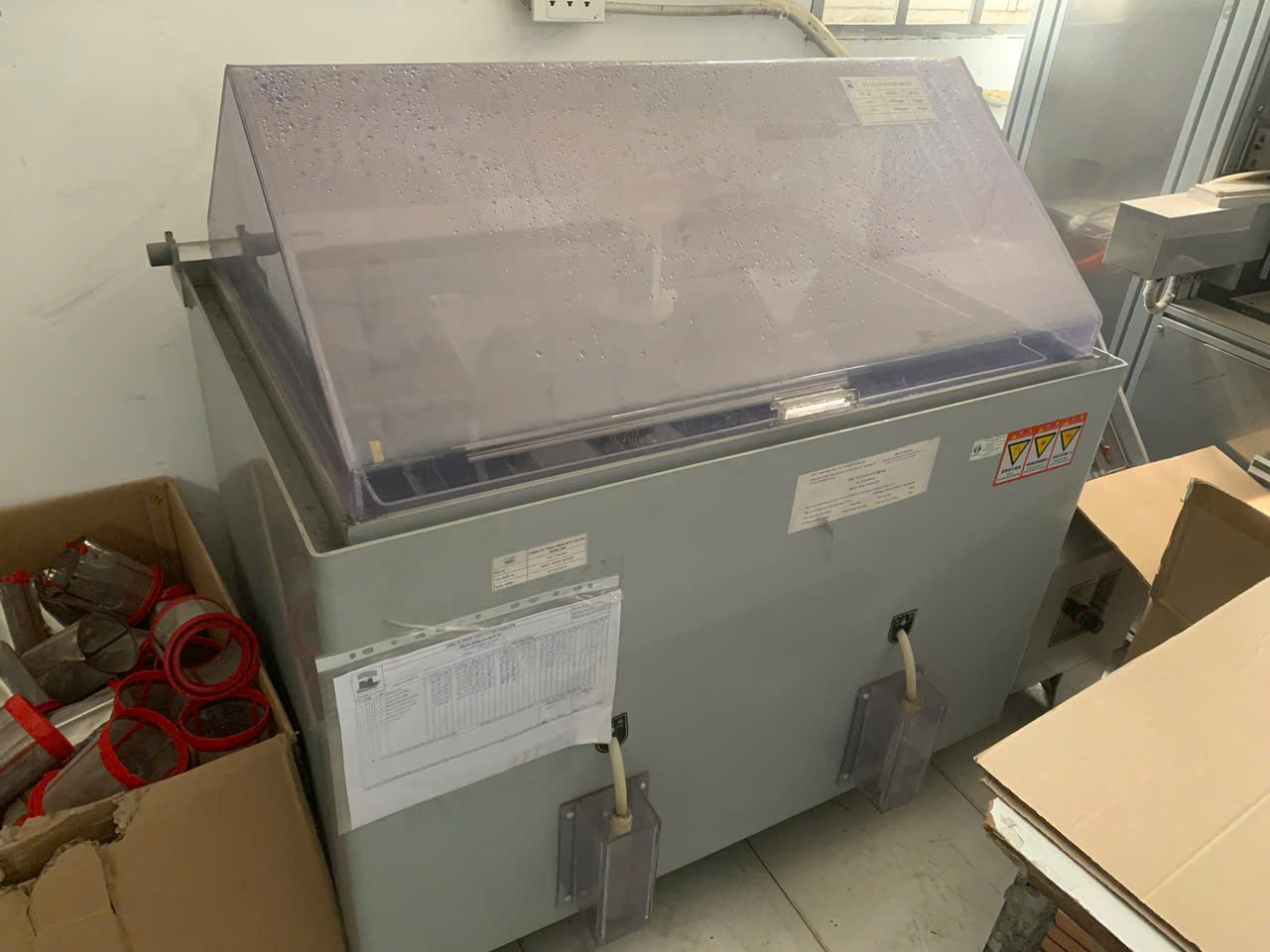
Many suppliers can pass a flat-panel salt spray test. Far fewer can prove that a complex stamped bracket—with sharp edges, deep bends, and punched holes—carries uniform coating everywhere. Edges and corners are where plating thins out and corrosion starts first. So verification has to go deeper than a generic test report.
A practical verification sequence
- Define the standard on the drawing. State the treatment, the specification, the minimum thickness, and the required salt spray hours. "Zinc plated" is not a spec. "Zinc plated 8 µm minimum, trivalent passivate, 72 hours to white rust per ASTM B117 4" is.
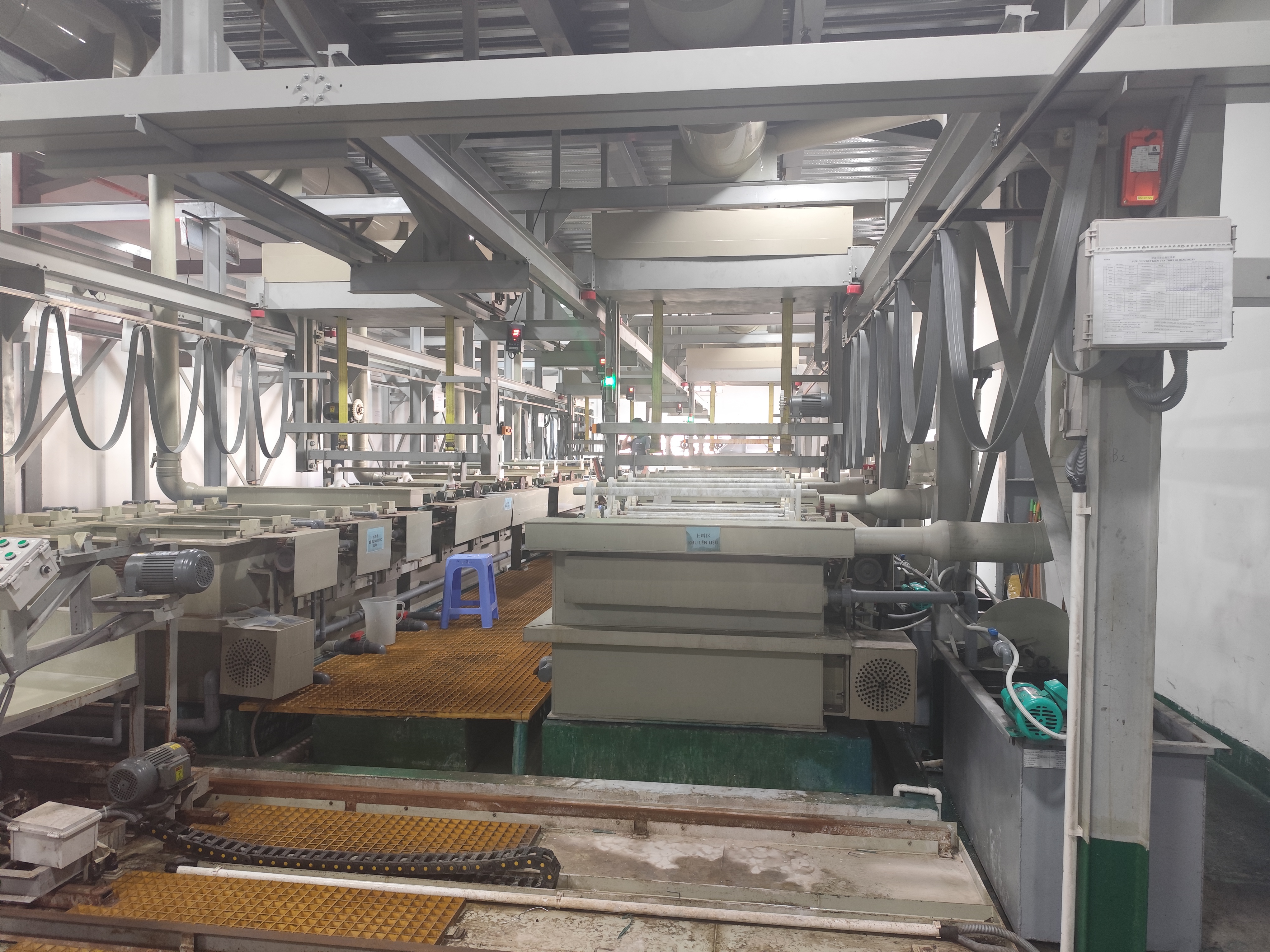
- Audit the process, not just the product. Check bath chemistry logs, degreasing and pre-treatment steps, rinse water quality, and rectifier records. Poor cleaning is a leading cause of premature coating failure.
- Test real parts, not coupons. Insist that salt spray samples come from actual production stampings, including their worst-case corners and edges.
- Measure thickness at defined points. Require readings at edges, bends, and flat faces, not a single average value.
- Confirm regulatory compliance. Ask for REACH and RoHS documentation, especially if the passivate could contain hexavalent chromium 5, which is restricted in most Western markets.
In our supplier audits across Vietnam and other Asian regions, the plants that keep clean pre-treatment records almost always deliver consistent corrosion performance. The ones that cannot show a rinse-tank maintenance log are the ones we walk away from. Documentation discipline predicts coating quality with remarkable reliability.
What quality control checks should I request to ensure surface treatments perform consistently across production batches?
One passing sample means little. A client of ours was once burned by a supplier whose first article was flawless—and whose third production batch rusted in transit. Batch-to-batch consistency is its own discipline.
Request per-batch coating thickness measurements, periodic salt spray testing on production parts, adhesion checks, visual and hole-coverage inspection, and process parameter logs for each lot. Tie these to a control plan with defined sampling frequency, acceptance criteria, and traceable batch records.

Consistency fails for boring reasons: plating baths drift, degreasing tanks get contaminated, racking positions change, or a new operator shortcuts the pre-treatment cycle. A good QC plan catches drift before it becomes rejected cargo. When we manage process control for clients, we build the checks into a control plan 6 the supplier signs before mass production—so "right first time" is a system, not a hope.
Recommended per-batch check plan
| QC Check | Method | Suggested Frequency | What It Catches |
|---|---|---|---|
| Coating thickness | Magnetic or X-ray gauge at edges and flats | Every batch | Bath drift, thin edges, racking issues |
| Salt spray test | ASTM B117 7 on production parts | Periodic, per agreed interval | Gradual loss of corrosion performance |
| Adhesion | Cross-hatch or bend test | Every batch or per shift | Poor cleaning and pre-treatment |
| Visual inspection | Defined lighting and criteria | Every batch, sampled | Blisters, bare spots, staining, burrs |
| Hole and recess coverage | Sectioning or targeted measurement | First article + periodic | Thin coating inside punched holes |
| Process logs review | Bath chemistry, temperature, current records | Every batch | Uncontrolled process drift |
Make traceability non-negotiable
Every shipment should link back to a plating lot, its process records, and its test results. If a corrosion issue appears in the field, traceability turns a full-inventory crisis into a contained, single-lot investigation. We also recommend retaining sealed reference samples from each approved batch. When a dispute arises months later, a physical golden sample settles arguments faster than any email chain. Finally, agree on a re-validation trigger: any change in bath chemistry, plating vendor, or passivate type should require fresh salt spray data before the next batch ships.
Conclusion
Corroded stamping parts mean returns, delays, and lost trust. The fix is straightforward: match the surface treatment to the metal and environment, specify it precisely, and verify it every batch. I have seen this discipline turn risky sourcing projects into reliable, long-term supply programs—and it can do the same for yours.
Frequently Asked Questions
How do I choose the right surface treatment for my stamping parts to maximize corrosion resistance?
A purchasing manager once asked me why two identical steel clips, sourced from two suppliers, aged so differently. The answer was not the steel. It was the finish—and how it matched the substrate.
What surface treatment options should I consider for stamping parts used in harsh or outdoor environments?
Marine air, road salt, and industrial fumes punish stamped hardware. Our team in Vietnam once re-specified a bracket finish three times before it survived a client's coastal installation requirement.
How can I verify that my supplier's surface treatment process meets corrosion resistance standards?
Trust is good; audits are better. Before we place any custom-part order for our U.S. clients, our engineers walk the plating line ourselves—because a certificate on paper proves very little on its own.
Footnotes
1. Background on the molten-zinc process referenced as a sacrificial coating method. ↩︎
2. Explains the chemistry of passive oxide films central to stainless steel corrosion protection. ↩︎
3. Explains the electroplating process behind thin sacrificial zinc coatings discussed in the article. ↩︎
4. Official standard defining the salt spray corrosion test used for supplier verification. ↩︎
5. CDC guidance on hexavalent chromium hazards, the restricted substance mentioned in passivate compliance. ↩︎
6. ISO quality management standards underpin the production control plan approach described. ↩︎
7. Official standard defining salt spray testing methodology referenced for corrosion resistance verification. ↩︎